- English
- French
- German
- Portuguese
- Spanish
- Russian
- Japanese
- Korean
- Arabic
- Greek
- German
- Turkish
- Italian
- Danish
- Romanian
- Indonesian
- Czech
- Afrikaans
- Swedish
- Polish
- Basque
- Catalan
- Esperanto
- Hindi
- Lao
- Albanian
- Amharic
- Armenian
- Azerbaijani
- Belarusian
- Bengali
- Bosnian
- Bulgarian
- Cebuano
- Chichewa
- Corsican
- Croatian
- Dutch
- Estonian
- Filipino
- Finnish
- Frisian
- Galician
- Georgian
- Gujarati
- Haitian
- Hausa
- Hawaiian
- Hebrew
- Hmong
- Hungarian
- Icelandic
- Igbo
- Javanese
- Kannada
- Kazakh
- Khmer
- Kurdish
- Kyrgyz
- Latin
- Latvian
- Lithuanian
- Luxembou..
- Macedonian
- Malagasy
- Malay
- Malayalam
- Maltese
- Maori
- Marathi
- Mongolian
- Burmese
- Nepali
- Norwegian
- Pashto
- Persian
- Punjabi
- Serbian
- Sesotho
- Sinhala
- Slovak
- Slovenian
- Somali
- Samoan
- Scots Gaelic
- Shona
- Sindhi
- Sundanese
- Swahili
- Tajik
- Tamil
- Telugu
- Thai
- Ukrainian
- Urdu
- Uzbek
- Vietnamese
- Welsh
- Xhosa
- Yiddish
- Yoruba
- Zulu
Private Jet Steel Hangar vs. Fabric: Which Is Better for Owners?
A private jet steel hangar is the better choice for most owners who need a permanent, secure, climate-controlled home for a high-value aircraft. Steel offers a longer service life, stronger security, easier insulation, and room for cranes, offices, and expansion. A fabric hangar still makes sense for seasonal storage, overflow space, or a temporary base, where speed and lower upfront cost matter most. I will compare both options by design, performance, cost, and procurement, so you can decide with confidence. The right answer always depends on your aircraft, climate, site, and budget.

Choosing the Right Private Jet Hangar Structure
Start With Your Aircraft and Your Use
It's not clear which of the two structures is better. This choice is best based on the size of the plane, the weather, the condition of the site, the budget, plans for growth, and the rules in the area. Before you get prices, you should think about what the building will be used for. When it comes to height, floor space, warmth, and fire safety, private storage, repair, lease operations, and a fixed base operator (FBO) have different needs. There is no bigger thing than the plane. The Gulfstream G650 has wings that are about 100 feet long and a tail that is about 25 feet high. This means that the door and clear span need to be longer than those sizes to allow for pulling.
Steel Hangar vs. Fabric Hangar: Quick Comparison
The main difference is that one lasts longer than the other. Hangars made of steel are always useful for aviation because they protect well, are easy to insulate, and have space for cranes, offices, and growth. Another type of building that is smaller and more adaptable is the tension-fabric hangar. It can be set up quickly and can be used for short-term, seasonal, extra, or moved needs. For a simple building, cloth can sometimes cost less at first. Every part of the house is made of steel, which makes it last longer. Steel is often used to keep airports open for a long time. People often choose fabric when they need space quickly and only for a short time.
Compare the Full Project Scope
There might be more to a cheap frame price than meets the eye. Engineering, insulation, heating and cooling, lighting, permits, installation, and maintenance are just a few of the things that can change how much each option costs and how well it works. The door package might be the hardest thing on the site by itself. When I look at them, I put ideas next to each other and write down what each one includes and doesn't include. Quotes about the same thing should be the only ones you compare. There won't be any shocks at the end of the deal if you get clear bids early on.
How Private Jet Steel Hangars Are Designed and Perform?
Sizing the Building Around the Aircraft
There is no normal floor plan at the beginning of a private jet steel hangar. Instead, there is information about the planes. The building shell is made up of the wings' length, width, height, tow ways, and service rooms. The length of the tail does too. This is also important because the garage might not be big enough for the next medium jet if it was built for the first one. It's also important to move people around and plan for future fleet changes. To move around and keep up, a single-span layout is better because the floor doesn't have any columns. Having more than one span in a wide building can save steel, but the beams inside make it harder to park and move planes. DFX makes steel houses that are very long and leave a lot of space between them. There are 60 to 300 feet of clear space.
Main Components of a Complete Hangar Package
There's more to a full package than just the frame. It has the foundations, the siding on the roof and walls, the doors, the insulation, the lights, the air flow, and the drains. Standard kits work well for making easy things that are the same size. Full-custom options are better for big planes, heavy doors, and other odd loads. The most important parts of the DFX steel frame are these:
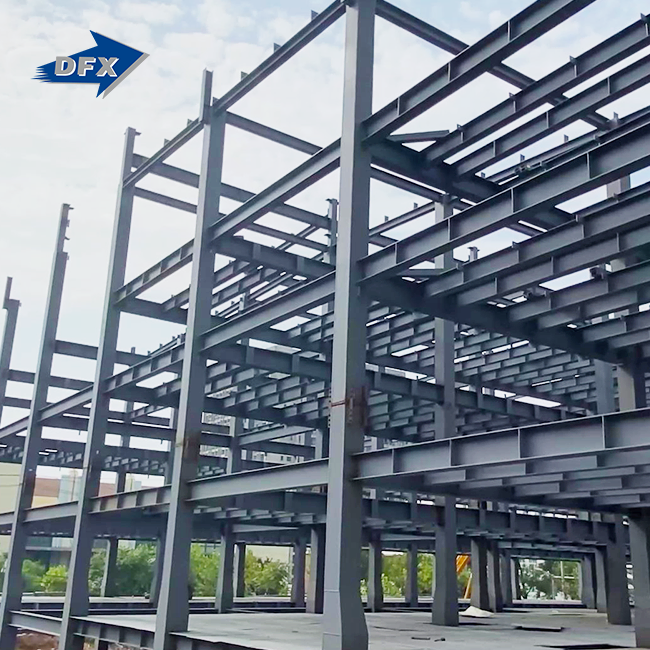
• Main structure: A main structure made of welded H-section steel and a stronger set of braces hold up the weight. Steels like Q345B or ASTM A572 Grade 50 are often used for the main frame. People who make long-span designs can put tall vertical stabilizers and wings that are very wide apart. This means that planes can move around without having columns inside get in the way.
• Corrosion protection: After steel parts are shot-blasted to SA 2.5, they are either hot-dip galvanized or covered with zinc-rich epoxy paint to keep them from rusting. The frame doesn't rust and is made to last up to 50 years because of how it's covered. This is important for airfields near water or the coast.
• Door and fire interface: The dynamic and static loads can be found for bi-fold or hydraulic hangar doors with stronger header systems. NFPA 409 says that pipes used for fire control must be strong enough to hold extra weight. Roof purlins and beams are used for this.
These parts address the lack of space, rust, and the way the door opens and closes.
Weather, Fire, and Maintenance Performance
You can tell how well something works by how you use it. Building codes like ASCE 7 say that the steel frame needs to be strong enough to handle the wind and snow in the area. The building stays cool and dry thanks to its insulated sandwich walls. People who own boats should plan to have the membranes serviced and cleaned. Fabric covers wear out in the sun and can be changed. Fire safety is very important. NFPA 409 sets the rules for fire safety in airplane hangars. Water pipes can be held up by a steel frame. Keep the air clean, control the fuel gas, weld, and get rid of fumes in maintenance hangars. Designers who know a lot about architecture, engineering, flight, and structure should work together on the project from the start.
Cost Comparison and Owner Fit Why Cost per Square Foot Varies
The price per square foot of a private jet steel hangar changes a lot. The price varies based on the type of door, its size, height, clear span, foundations, the amount of dirt, insulation, HVAC, fire systems, utilities, labor, shipping, engineering, and building codes in the area. So, I'm careful with general online prices because of this. A picture of a different door or from another site doesn't tell us much about your project. Also, because they cover more space, hydraulic doors cost more than slide doors. It's best to get proposals that are very clear about what they cover and don't cover, and then compare them in the same way.
Upfront Price vs. Lifecycle Value
Fabric buildings that are simple cost less most of the time at first. When you add up all the costs of damage from bad weather, repairs, insurance, property value growth, and replacing the membrane, steel has a higher lifetime value. Metal surfaces and gadgets are safer when they are kept in a steel building that is closed off. The land can also be worth more if there is a building that stays put. But a cloth structure that can be moved around is only needed for a short time most of the time. Find out how much it costs you all together, not just the first bill.
Which Solution Fits Which Owner
Steel is best for private airports, storing valuable planes in a climate-controlled space, repair work, big doors, built-in offices or workshops, and planned growth because it lasts a long time. Fabric works well in places that don't need to fuss with the surroundings too much, need to set up quickly, need to store things for a short time, have extra room, or are only there for a short time. On different sites, the answer might be different. It's important to think about things like earthquakes, wind, snow, being close to the coast, flooding, soil, airport rules, and how strong the foundation is. Also, I think you should quickly read the FAA's rules on airport design and the building code in the area. Flaws or general claims about a product that are advertized should never be more important than structure projections that are unique to a project and local licenses.
Procurement, Installation, and Quality Control
Kits, Custom Packages, and Turnkey Scope
When planning a private jet steel hangar, write down in simple terms the kind of plane, the size of the building, the doors that need to be installed, the weight of the building, the insulation, the ventilation, the fire protection, the security, the foundations, how to get to the site, delivery, paperwork, and warranties. For normal sizes and easy jobs, you can use kits that are already put together. Big planes, heavy doors, cranes, and other strange things can fit in custom-made boxes. Make a list of who does what next. Making plans, making the building, and putting it all together are all part of full construction. The owner and workers will have to lay the groundwork, put the goods, and do any other work that needs to be done. You need only give them the goods. You should write down these chores.
How I Evaluate an International Manufacturer
I need to see examples of your work, proof that you know what you're doing, good systems, sales experience, clear Incoterms, help with installation, shielding against rust, and service after the sale. Qingdao Director Steel Structure Co., Ltd. has owned the DFX brand since 2011. This company has been making structural steel since 2011. The building is 40,000 square meters and has six robots that weld H-beams together. They can make about 20,000 tons of H-beams and columns every year. There are more than 200 workers there. ISO9002, CE, COC, and PVOC have given their approval for the goods. As part of our services, we help people put things together, do math for structures, give them ideas, and make things.
Installation Sequence and Quality Checks
In most projects, the first step is to survey the site and look at any geotechnical problems that might be there. Then it plans, builds, ships, installs, sets up, and tests the systems before giving them to the customer. Every step is safe when there are good checks. On mill test reports, you can see the chemical makeup and the yield strength. Under AWS D1, X-rays or ultrasonic waves are used to check important butt welds on main columns and beams. The coating levels are correct, as shown by tests of the dry film layer. Then, before it is shipped, a test assembly makes sure that the holes for the bolts are lined up correctly. When it comes to big hydraulic doors, gaps bigger than 5 mm can hurt the door frames. There are a lot of risks that can happen, like not having full quotes, planes not having enough room to fly, roots not being looked at, bad condensation planning, and unclear installation tasks. International buyers are safe because there are written rules for inspections and final acceptance.
Conclusion
There are different jobs that a private jet steel hangar and a cloth hangar are used for. Steel is safe, strong, protective, has clear spans, can be kept up, and has room to grow, so it's a good choice for stable bases. It's worth more in the long run than the extra money it costs at first. Fabric is a good choice for short-term, seasonal, extra, or movable needs that need to be met quickly and cheaply. You need to think about more than just frame prices. The project as a whole, the size of the plane, the weather, the number of people on the spot, and the rules in the area are all important. To get good results, use data from an airplane to figure out how big the building is, get specific quotes for the same work, make sure rules like NFPA 409 are followed, and look into the planning, quality control, and installation help that the provider gives.
FAQ
Q1: Why choose a steel hangar over fabric?
Steel is better for insulation, lasts longer, and is safer. Other things it can support are high cranes, buildings, and growth in the future. It's good for people who want a base that stays put. Textiles can be used for short-term, seasonal, or movable jobs.
Q2: How tall should a private jet hangar be?
Find out what kind of door your plane has by learning about it. The minimums are the tail's height, the wings' span, and the space between the planes. The design team should make sure of these things before they start making the thing.
Q3: What affects hangar cost per square foot?
The price covers the length, width, doors, supports, insulation, fire systems, shipping, work, and local building rules. Compare quotes that show what comes with and what doesn't come with them.
Q4: Can a steel hangar kit suit an international project?
Yes, as long as engineers plan it so that it meets the needs of the airport, the building rules, and the loads that will be in the area. Still, there are rules about fire, engines, buildings, and planes that need to be mapped out by experts.
Request a Private Jet Steel Hangar Design and Construction Quote from DFX
Do you plan to build your own hangar for your jet? Qingdao Director Steel Structure Co., Ltd. makes DFX, which helps with planning, building, and putting buildings in place. Make a private jet steel hangar. Your schedule, the type of plane, the size of the hangar, and the doors it needs are all things we need to know. Also, we need to know where the site is and what the weather is like. We'll send you an engineering-led proposal that spells out what's included and what's not after you email us at jason@bigdirector.com.
References
1. NFPA 409: Standard on Aircraft Hangars, National Fire Protection Association, 2022
2. Advisory Circular 150/5300-13B: Airport Design, Federal Aviation Administration, 2022
3. International Building Code, International Code Council, 2021
4. ASCE/SEI 7-22: Minimum Design Loads and Associated Criteria for Buildings and Other Structures, American Society of Civil Engineers, 2022
5. ANSI/AISC 360-22: Specification for Structural Steel Buildings, American Institute of Steel Construction, 2022
6. AWS D1.1/D1.1M: Structural Welding Code – Steel, American Welding Society, 2020
Learn about our latest products and discounts through SMS or email