- English
- French
- German
- Portuguese
- Spanish
- Russian
- Japanese
- Korean
- Arabic
- Greek
- German
- Turkish
- Italian
- Danish
- Romanian
- Indonesian
- Czech
- Afrikaans
- Swedish
- Polish
- Basque
- Catalan
- Esperanto
- Hindi
- Lao
- Albanian
- Amharic
- Armenian
- Azerbaijani
- Belarusian
- Bengali
- Bosnian
- Bulgarian
- Cebuano
- Chichewa
- Corsican
- Croatian
- Dutch
- Estonian
- Filipino
- Finnish
- Frisian
- Galician
- Georgian
- Gujarati
- Haitian
- Hausa
- Hawaiian
- Hebrew
- Hmong
- Hungarian
- Icelandic
- Igbo
- Javanese
- Kannada
- Kazakh
- Khmer
- Kurdish
- Kyrgyz
- Latin
- Latvian
- Lithuanian
- Luxembou..
- Macedonian
- Malagasy
- Malay
- Malayalam
- Maltese
- Maori
- Marathi
- Mongolian
- Burmese
- Nepali
- Norwegian
- Pashto
- Persian
- Punjabi
- Serbian
- Sesotho
- Sinhala
- Slovak
- Slovenian
- Somali
- Samoan
- Scots Gaelic
- Shona
- Sindhi
- Sundanese
- Swahili
- Tajik
- Tamil
- Telugu
- Thai
- Ukrainian
- Urdu
- Uzbek
- Vietnamese
- Welsh
- Xhosa
- Yiddish
- Yoruba
- Zulu
Cost Benefits of Building a Logistics Park Steel Warehouse System
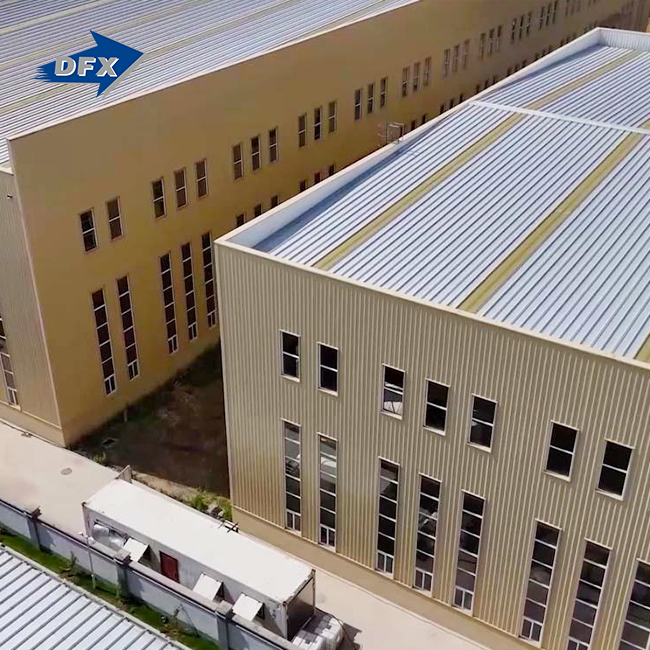
When looking at investments in infrastructure for modern supply lines, the Logistics Park Steel Warehouse stands out as a smart choice that strikes a good balance between initial capital costs and long-term operating efficiency. Steel warehouse systems save a lot of money because they can be built 30 to 50 per cent faster than concrete options, require less work, and are very flexible structurally, so they can be expanded in the future without having to spend a lot of money again. The modular premade method cuts down on waste on-site, lowers base costs by making the structure lighter, and offers better clear-span capabilities that increase the amount of space that can be used. These factors work together to make building companies, EPC firms, and industrial operations that want reliable, scalable logistics infrastructure more competitive by speeding up their return on investment (ROI) and lowering their financing costs.

Understanding Logistics Park Steel Warehouses
What Defines a Modern Steel Warehouse System?
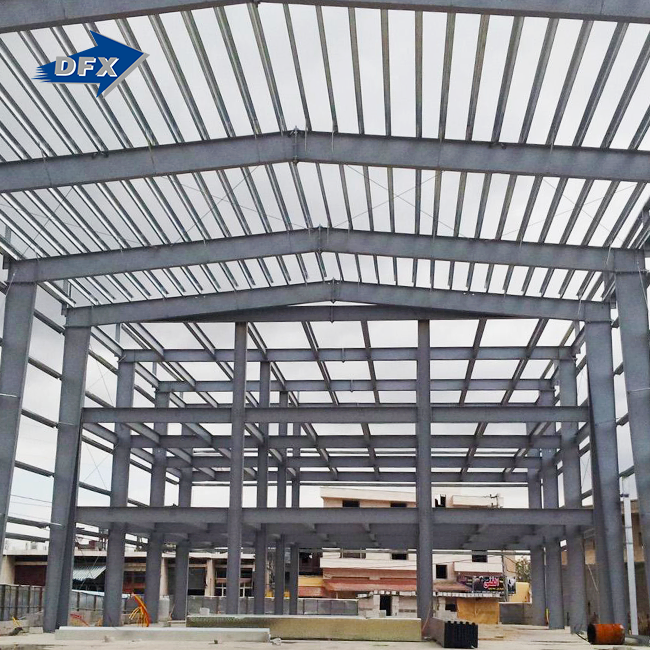
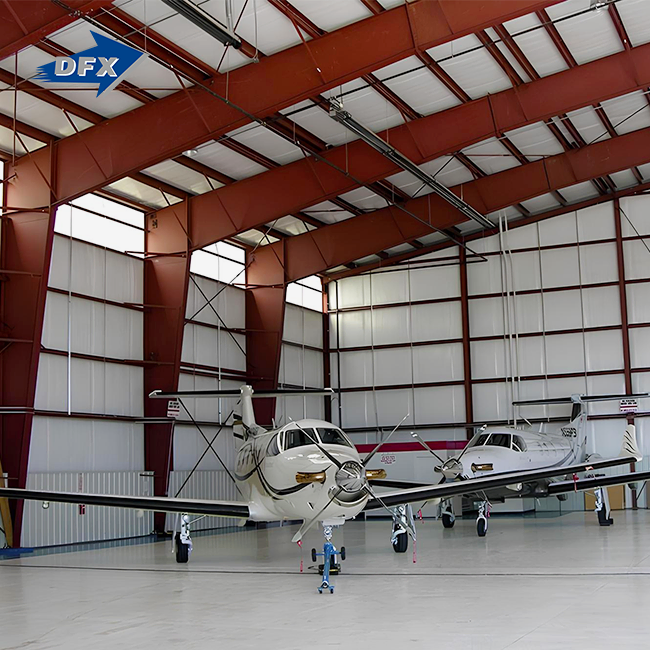
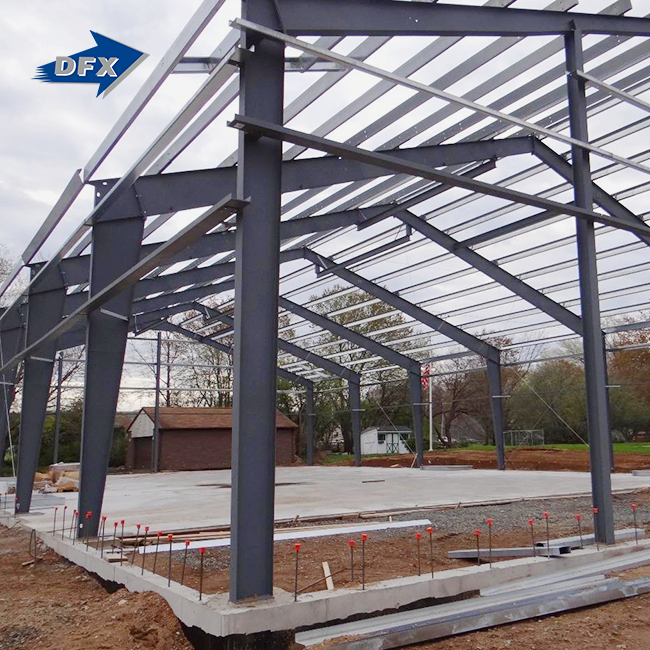
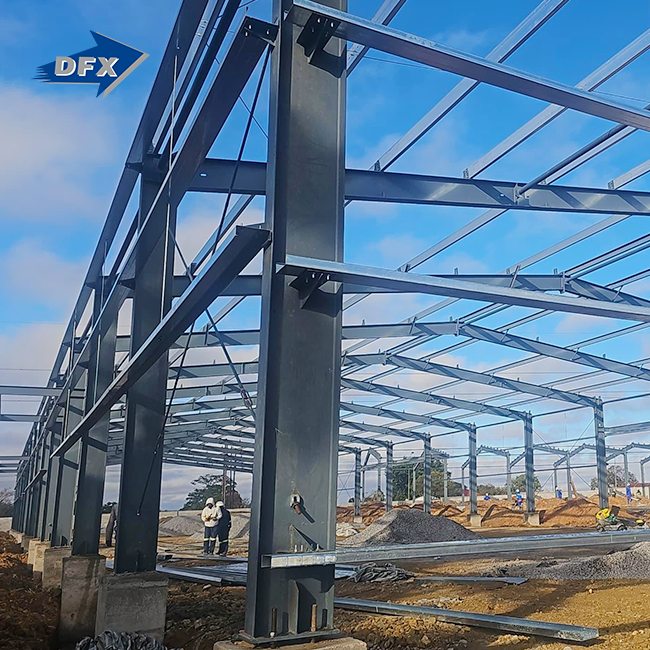
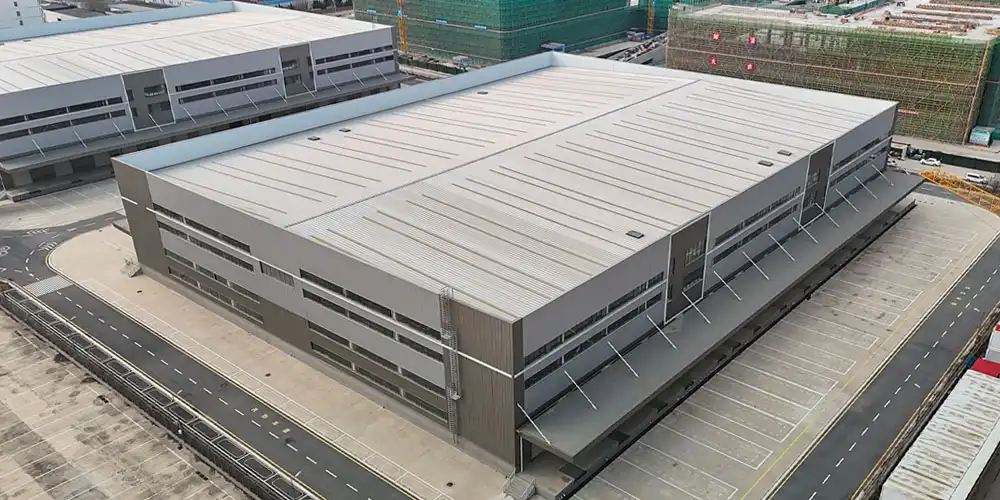
A steel warehouse for logistics parks is an example of specialized infrastructure designed using the Pre-Engineered Building (PEB) method. These buildings are different from most because they use high-strength H-section steel frames and beams, along with galvanised C/Z purlins to make the interiors bigger. The main benefit is that you can get clear spans of more than 30 to 50 meters without having to use internal columns. This directly meets the practical need for flexible floor plans that can handle high-bay shelving systems, automatic storage and retrieval equipment, and efficient forklift traffic patterns. These structures are made in China, strictly following ISO9001 standards and can have extra CE and EN1091 certificates. They have H-beam main frames and full bracing systems that keep the structure strong even under heavy loads.
Core Components and Structural Advantages
The technology underpinning these buildings uses materials that are strong and affordable. High-tensile steel (Grade Q355B or ASTM A572 Gr. 50) having a yield strength of 345 MPa or greater is utilised for primary framing. To avoid rust in various situations, cold-formed galvanised steel with a zinc coating thickness of 275 g/m² or greater is recommended for secondary framing. Our blend creates structures that can withstand earthquakes (Grade 8+), wind speeds (120-150 km/h), and roof loads (0.3-0.5 kN/m²). These structures can support roof-mounted solar panels or mechanical systems. Flexible PU/PIR sandwich panels let project managers specify thermal insulation values in the modular design. This saves energy in temperature-controlled rooms and maintains 2–4-hour fire resistance with intumescent coatings or rockwool core materials.
Application Versatility Across Logistics Operations
Steel platforms are versatile and can be utilised for many transportation purposes. E-commerce delivery centres benefit from superflat floor integration (Fmin 100) for narrow hallway vehicles. The long-span design lets mezzanine picking and packaging not disrupt ground-floor operations. Cold chain transport hubs maintain -25°C to +5°C temperatures with thermal break technology and 100mm to 200mm polyurethane walls. A unique steel treatment prevents condensation corrosion. Portal frames protect many loading bays with 5m–10m overhangs in intermodal cross-docking facilities. Goods can move swiftly between modes of transportation without waiting for severe weather or structural degradation.
Exploring the Cost Benefits of Steel Warehouses in Logistics Parks
Initial Construction Cost Advantages
Logistics Park Steel Warehouses are cheaper to build than concrete or stone choices. Project-based production reduces material waste by 15–20% because parts are fabricated off-site to exact specs. Steel requires less foundation groundwork due to its reduced weight. Standard steel buildings weigh 40–60% less than concrete ones, saving $8–$15 per square foot on base engineering. Modular assembly cuts building time drastically. Steel warehouses may be weathertight in 6–9 months, while concrete ones take 12–18 months. This reduces financing costs and boosts revenue for fast-paced logistics companies.
The benefits of buying go beyond reducing raw material costs. One service package usually includes engineering calculations, production, transportation coordination, and erection advice. This avoids subcontractor communication gaps and cost overruns. Project managers like steel because its price is more consistent than concrete, which fluctuates based on where the cement is available and how long it cures.
Operational Efficiency and Energy Savings
Steel construction has long-term cost benefits. The right envelope systems save 20–30% energy. High-R sandwich panels prevent thermal bridging, reducing ambient and fridge HVAC loads. Steel frames resist concrete flaking, timber rot, and brickwork crumbling, reducing maintenance expenses. Annual inspections focus on gutter cleaning, coating touch-up, and fastener checks, not structure. This cuts 20-year care costs by 30–40% compared to ordinary buildings.
Clear-span interiors maximise cubicle storage space for long-term value. Warehouse workers can maximise racking configurations, reduce aisle space, and move products faster without internal columns. It offers 15-20% more space per square foot than grid-column arrangements, which reduces pallet spot costs.
Flexibility for Business Growth and Adaptation
Steel construction systems are versatile and timeless because they can be enlarged. Pre-engineered frames have expandable end-wall systems. This allows the building to grow linearly by removing siding and adding bays without pausing operations. Because the foundations, utilities, and access facilities are all there, adding 10,000 square feet costs 25–35% less than building from scratch. Making layout adjustments is also advantageous; shifting doors, adding mezzanines, or strengthening ceiling portions to support new equipment can be done with simple engineering changes instead of costly structural changes.
Comparison of Steel Warehouses with Alternative Solutions in Logistics Parks
Lifecycle Cost Analysis Versus Concrete and Wood
Logistics Park Steel Warehouse has outperformed alternatives in purchasing managers' total cost of ownership for decades. A concrete building costs 20–30% more for the same space, but the problem persists. Concrete is exceptionally durable, making modifications expensive. Cutting through load-bearing walls or constructing holes needs planning and reinforcement, costing over $50,000 every change. Wood structures are cheaper upfront, but they need to be insured more expensively since they are more likely to catch fire, and water damage requires structural updates every 15 to 25 years. Over 50 years, wood constructions cost 40% more to maintain than steel structures.
Materials are less durable than steel. The load-bearing capacity of the skeletal frame lasts 50 years or more with little maintenance, whereas cladding systems only need to be changed every 20–30 years to be cost-effective. Even in seaside logistics parks where salty air damages other materials, 80–120 micron galvanised paints and varnishes protect the environment.
Environmental Impact and Sustainability Metrics
Sustainability factors are becoming more important in purchasing choices, especially for EPC companies that work with clients who care about the environment. Precision fabrication cuts down on field cutting and material overages, so steel buildings produce 30–40% less construction trash than options built on-site. The fact that structural steel can be recycled is very important because it has recovery rates of 90% or more at the end of its life, while concrete just turns into waste aggregate. Better envelope performance means that less energy is used when the building is occupied, and the roof structure can easily accommodate solar panel arrays (15–20 kg/m² extra load capacity) without expensive reinforcement. This means that logistics parks can use renewable generation to lower their operational electricity costs.
Selecting Appropriate Solutions for Operational Demands
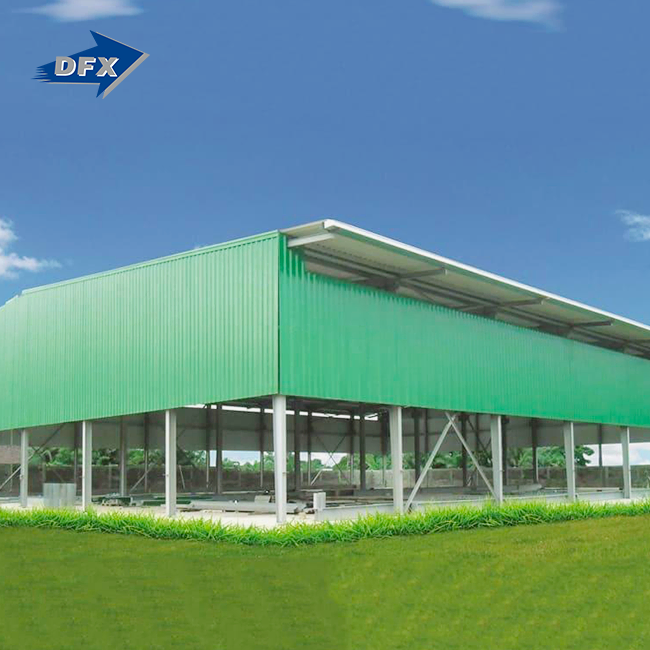
By matching SS316 efficient steel logistics warehouse specs to transportation needs, you can avoid overbuilding and spending money you don't need to. Single-storey clear-span designs with multiple dock positions are best for distribution hubs that want to maximise flow speed. Usually, 24m to 36m bay spacing makes the most of standard racking aisle lengths while minimising column interference. Engineered thermal breaks and specialized rust protection are needed for cold storage operations. These add 15 to 20 percent to the base cost but are necessary for performance. Agricultural storage facilities that deal with large amounts of materials may ask for bigger spans (up to 50m) and strengthened floor slabs. On the other hand, manufacturing workshops that use production equipment need to plan for overhead cranes and high load points during the early stages of engineering.
Strategic Procurement and Partnering for Steel Warehouses in Logistics Parks
Evaluating Manufacturers and Supplier Credentials
Pricing clarity helps project managers budget and value. Project raw material prices are 40–50%. Production labour is 20–25%, logistical planning is 10–15%, and installation advice and manages the rest. Structure design and engineering calculations may be charged individually or together depending on project complexity. Compare providers and see how personalisation affects prices using precise data. Speciality coatings, insulated panels, and seismic adjustments cost more and must be justified.
Delivery plans impact upfront and long-term costs. Turnkey contracts plan-to-commission. It costs 10-15% more than component supply schemes but lowers coordination risks. Project-based manufacturing reduces on-site storage and theft by delivering things quickly. Knowing production timings matters. Steel warehouse parts require 8–12 weeks to build and 4–8 weeks to transport abroad after technical approval. Time-sensitive projects should involve suppliers early.
Understanding Cost Components and Delivery Models
Clear pricing helps project managers budget and value. Raw material costs 40–50% of project expenditures. Production labour costs 20–25%, logistics planning 10–15%, and installation advice and managing the rest. Engineering calculations and structure design may be charged individually or together depending on project complexity. Compare providers and discover how personalisation affects prices with precise data. Insulated panels, seismic adjustments, and speciality coatings cost more and should be justified by the project.
Delivery plans affect the initial investment and ongoing costs. Complete turnkey contracts include planning and commissioning. Coordination risks are reduced but cost 10-15% more than part-supply solutions. Items come quickly for installation using project-based manufacturing, reducing on-site storage and theft. Understanding production timelines is key. After technical approval, steel warehouse pieces require 8–12 weeks to build and 4–8 weeks to ship abroad. Early supplier involvement is best for time-sensitive projects.
Real-World Implementation Success
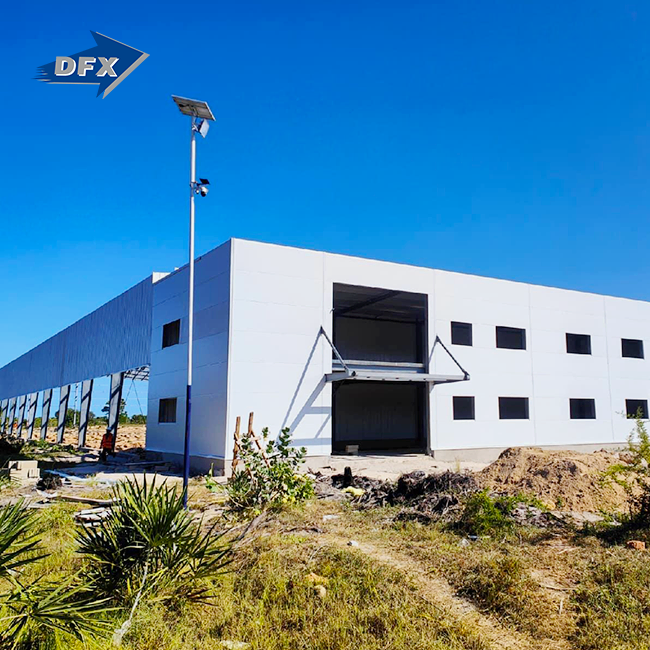
Looking at finished projects shows how they save money in the real world. A Nigerian construction company recently built a 15,000-square-meter industrial warehouse out of pre-engineered steel. The project was finished in seven months, compared to the 14 months that were expected for building with concrete. The faster plan let the client's renter start doing business six months earlier, which brought in an extra $180,000 in rent and covered 40% of the cost of construction. An Australian farm purchased specialized chicken housing made of steel framing and better ventilation systems. The structure was expected to last 25 years and needed very little maintenance, so it had a lifecycle cost 35% less than traditional wood-frame options. Better environmental controls also improved the health of the flock and production efficiency.
Maintenance, Safety, and Long-Term ROI of Steel Warehouses
Practical Maintenance Protocols for Extended Lifespan
Keeping Logistics Park Steel Warehouse purchases safe requires basic maintenance. The annual integrity test for the paint system should involve steel corrosion-exposing coating degradation. After rust, full repainting costs $15–$20 per square foot, although early spotting permits $2–$5 touch-ups. Gutters and downspouts should be cleaned to prevent rusting. Cleaning them every three months, when high debris minimises costly drainage system damage. Checking fasteners can uncover loose connections before structural movement causes holes or damage. Normal maintenance tightens bolts you can reach, but unregulated connections may require engineering assistance and member replacement.
The package structure is protected by panel seal examination. Walking the roof and walls annually to check for defective sealant or bolt seals helps avoid water damage to insulation and finishes. Immediate repairs save energy and avoid further harm.
Integrated Safety Features Reducing Operational Risk
There are many safety benefits to steel buildings that make insurance rates and risk exposure lower. When compared to combustible construction, fire resistance achieved through intumescent coatings or mineral wool sandwich panels (meeting REI 120 standards) greatly lowers the risk of property loss. In fact, insurance companies usually lower premiums by 15–25% for buildings that don't catch fire and have the right fire ratings. Structural stability during earthquakes protects both building investments and valuable goods. Properly designed steel frames bend during earthquakes, releasing energy without the catastrophic fall that happens with brittle masonry.
Steel construction's high strength-to-weight ratio makes it strong against wind without requiring a lot of base work. Logistics parks in hurricane-prone areas have designed links and bracing systems that keep the structure stable during harsh weather events. This keeps businesses from having to shut down and lose goods, which happens when facilities aren't up to par.
Calculating Return on Investment and Long-Term Value
ROI requires more than building cost savings. Optimised plans can boost operational efficiency and output by 10–15%, allowing for more profit without increasing labour costs. Energy savings of $0.30 to $0.50 per square foot per year mount up over decades, and lower care expenses increase the building's worth by 2% to 3% per year compared to other solutions. Compared to 40–50% for concrete and 20–30% for wood, steel keeps 60–70% of its replacement cost, allowing for more profit without work.
Financial analysis suggests high gains. Building a 50,000-square-foot storage building with steel instead of concrete, which costs $3.2 million more, saves $700,000. The economy gains more than $2.5 million, and firms have greater freedom to evolve by adding $75,000 a year in real cost savings (from lower energy consumption, upkeep expenses, and increased efficiency) for 25 years. Even though they may be familiar with traditional building technologies, smart procurement managers are increasingly adopting steel solutions for transportation infrastructure due to these measurable benefits.
Conclusion
In conclusion, Logistics Park Steel Warehouse systems for industrial parks are more cost-effective than other types of warehouses in many ways. Every time project managers look at things like shorter timelines, lower costs, easier upkeep, the ability to grow, and long-lasting sturdiness over a building's lifetime, steel construction comes out on top. Steel warehouses are the best choice for infrastructure for construction companies, engineering and procurement firms, industrial operations, and farming businesses that want to build competitive supply chain skills because the costs are predictable, the risk is low, and the overall performance is high. By understanding these cost benefits, you can make smart purchasing choices that protect your capital, speed up your return on investment, and build flexible facilities that will help your business succeed in the long run.
FAQ
1. How does column spacing impact storage efficiency and costs?
By making the most of the useful floor space, reducing the number of internal columns immediately improves Logistics Park Steel Warehouse costs. Most steel buildings have clear spans of 24 to 36 meters, which means that normal pallet racking systems can be used without any problems. This increases storage density by 15 to 20 per cent compared to concrete buildings, which usually have a grid spacing of 6 to 8 meters. This gets rid of hidden column spaces that make pockets that can't be used and makes moving material handling equipment easier. The better productivity cuts costs per pallet spot while increasing the amount of goods that can be stored in the same amount of space.
2. Can steel warehouses support rooftop solar installations?
When properly defined during planning, photovoltaic panels can be easily installed on steel warehouse roofs. Standard roof systems can handle 0.3 to 0.5 kN/m² of weight, which is enough for solar equipment that adds about 15 to 20 kg/m². During the first calculations, engineering teams increase the capacity of the rafter and purlin to support the loads of panel mounting systems, inverter equipment, and servicing access. This unified method avoids expensive upgrades and lets logistics companies use renewable energy to lower their power costs, which is better for their long-term business economics.
3. What expansion capabilities exist after initial construction?
Pre-engineered steel systems are intended to be expandable, which cuts down on the costs of future additions by a huge amount. End-wall frames are not just barriers; they can be expanded as well. This means that the cladding can be taken off and new bays can be added without stopping current activities. Because the foundations, utilities, and site infrastructure are already there, this modular method cuts the cost of growth by 25–35% compared to building something from scratch. The adaptability keeps the system from becoming useless as business needs change or the number of transactions increases.
Partner with Proven Logistics Park Steel Warehouse Manufacturers
Our company, Director Steel, has been making pre-engineered steel warehouses for logistics parks in global markets for more than 12 years. We offer full solutions, from engineering calculations to fabrication, logistics planning, and erection help. Our ISO9001-certified production facilities cover 40,000 square meters and employ more than 200 trained pros. With our six automatic H-beam welding lines, dedicated sandwich panel production, and C/Z section equipment, we make 20,000 tons of precision-manufactured parts every year that meet CE and extra EN1091 standards. Our method is valued by project managers, procurement directors, and engineering teams because it combines structural design knowledge with dependable manufacturing capacity and quick technical support. Get in touch with jason@bigdirector.com to discuss your needs for a Logistics Park Steel Warehouse project and find out how working with a well-known steel structure provider can help you cut down on costs, accelerate the building process, and create a structure that will last for decades.
References
1. American Institute of Steel Construction (2021). "Design Guide for Pre-Engineered Metal Buildings," AISC Publication, Chicago, Illinois.
2. Building Research Establishment (2020). "Life Cycle Assessment of Industrial Steel Structures: Comparative Analysis of Construction Systems," BRE Environmental Engineering Research Division, Watford, United Kingdom.
3. International Code Council (2022). "International Building Code Chapter 22: Steel Construction Standards and Load Requirements", ICC Publications, Washington D.C.
4. Logistics Management Association (2021). "Infrastructure Investment Trends in Supply Chain Facilities: Cost-Benefit Analysis of Modern Warehouse Construction," Annual Industry Report, Atlanta, Georgia.
5. National Steel Construction Institute (2020). "Economic Performance Metrics for Industrial Steel Buildings: Maintenance, Energy Efficiency and Total Cost of Ownership," Technical Bulletin Series, Melbourne, Australia.
6. Society of Logistics Engineers (2022). "Design Standards for Distribution Center Infrastructure: Structural Requirements and Operational Optimisation", Professional Practice Guidelines, Toronto, Canada.
Learn about our latest products and discounts through SMS or email