- English
- French
- German
- Portuguese
- Spanish
- Russian
- Japanese
- Korean
- Arabic
- Greek
- German
- Turkish
- Italian
- Danish
- Romanian
- Indonesian
- Czech
- Afrikaans
- Swedish
- Polish
- Basque
- Catalan
- Esperanto
- Hindi
- Lao
- Albanian
- Amharic
- Armenian
- Azerbaijani
- Belarusian
- Bengali
- Bosnian
- Bulgarian
- Cebuano
- Chichewa
- Corsican
- Croatian
- Dutch
- Estonian
- Filipino
- Finnish
- Frisian
- Galician
- Georgian
- Gujarati
- Haitian
- Hausa
- Hawaiian
- Hebrew
- Hmong
- Hungarian
- Icelandic
- Igbo
- Javanese
- Kannada
- Kazakh
- Khmer
- Kurdish
- Kyrgyz
- Latin
- Latvian
- Lithuanian
- Luxembou..
- Macedonian
- Malagasy
- Malay
- Malayalam
- Maltese
- Maori
- Marathi
- Mongolian
- Burmese
- Nepali
- Norwegian
- Pashto
- Persian
- Punjabi
- Serbian
- Sesotho
- Sinhala
- Slovak
- Slovenian
- Somali
- Samoan
- Scots Gaelic
- Shona
- Sindhi
- Sundanese
- Swahili
- Tajik
- Tamil
- Telugu
- Thai
- Ukrainian
- Urdu
- Uzbek
- Vietnamese
- Welsh
- Xhosa
- Yiddish
- Yoruba
- Zulu
Industrial Fuel Storage Shed Safety: 7 Design Checks Before Buying
Here are seven design tests to do before you get estimates on an industrial fuel storage shed, which is the best approach to buying one: 1. Regulatory compliance 2. Site layout 3. Ventilation and electrical design 4. Fire protection 5. Spill containment 6. Structure and foundation 7. Fuel compatibility. The shed is the building that surrounds your tanks; thus, each inspection defines how well the fuel storage shed protects people, equipment, and groundwater. I prepared this handbook for project managers, procurement teams, plant engineers and farm owners across the United States. The final word rests with your local fire official, so check each point with that agency early on.

Seven Design Checks for an Industrial Fuel Storage Shed
Work through these checks in order, because each one removes a risk before it becomes a change order.
Check 1: Confirm Regulatory Compliance First
I start every fuel job with the rules, since the code tells me what the design is going to be. NFPA 30 classifies liquids according to the flash point. Petrol is a Class IB flammable liquid, and diesel is usually a Class II liquid. That implies petrol rules need to be tougher. 29 CFR 1910.106 covers the storage of hazardous liquids in the workplace under OSHA. The EPA SPCC rule (40 CFR Part 112) may apply if more than 1,320 gallons of oil are stored above ground in containers of 55-gallon capacity or more. Many areas adopt the International Fire Code. The AHJ (Authority Having Jurisdiction) decides how to interpret it. Ask suppliers for inspection records, structural calculations, and a list of the materials they use.
Check 2: Review Site Layout, Separation, and Access
It will be reviewed depending on how you lay out your plan. Both the International Fire Code (IFC) and NFPA 30 require a distance from property borders, occupied structures, and sources of fire. Tanks come in many different sorts and sizes and have varying ranges. Before you make a footprint, ask your AHJ for exact numbers. The equipment is exposed to the weather, so you should consider both, but it’s easier to control fumes while you’re outside. Then inspect the entrance. Firefighters need to go to work, tankers need to be able to turn, and the lanes need to be clean." A scaled site layout showing all the doors, valves, and emergency shutoffs helps eliminate weeks of back and forth.
Check 3: Plan Ventilation and Hazardous-Area Electrical Design
Fuel fumes accumulate in areas where air cannot flow. Petrol vapours are heavier than air and tend to collect in pits, low areas and under tanks. It is essential to be aware of the fuel's volatility, its shedding rate and how often you refuel or give out the fuel. If the sides of a shed are open, the air can flow through it naturally. But when the sides are closed, automatic extraction, alarms, and backup power may be needed. The National Electrical Code (NFPA 70) defines hazardous locations as follows. The lights, pumps, motors, and switches that are in those places have to be the proper grade. Get the proposal reviewed by a certified electrician.
Check 4: Match Fire Protection to the Fuel and Quantity
When designing an industrial fuel storage shed, look at fire safety in the big picture, not simply a substance on the wall. Steel can't be burnt. But it does soften in really hot heat. Depending on how much fuel is around or how far away it is, see whether you need a fire-resistance grade. You may need tracking, alarms, NFPA 10 portable fire extinguishers, or fixed suppression if the code requires it. NFPA 77 is the method of bonding and grounding to prevent static electricity while in motion. NFPA 780 informs us how to keep lightning out. Install signs that read "do not smoke," perform hot work controls and document emergency instructions, and then demonstrate to each worker how to utilise them.
Check 5: Build In Spill Containment and Environmental Protection
Water and debris can easily enter a leaking hose or tank. The SPCC rule of the EPA requires secondary containment to capture the largest single container plus a little extra for rain. This is crucial while you are out in the field since rain eats up space that could be used for fuel. A roofed shed keeps the water out of the space being held. Select stairs that are taller than you can step over, surfaces that are unbreakable, and drain valves that remain closed. Always have spill kits on hand. Leave room to clean and inspect the sump. "Just write down the estimate for containment and give it to your provider.
Check 6: Verify Foundation, Structure, and Weather Resistance
Even a pre-engineered shelter still requires site-specific engineering. “You have about 7,100 pounds of diesel in a 1,000-gallon tank before you put the steel in. That’s the weight of a gallon of diesel. That weight is going to have to be sustained by the base, the frame, the pumps, the pipes and the other pieces, according to your dirt report. The wind, snow, and seismic load methods in ASCE 7-22 are used in U.S. construction regulations, although the numbers are substantially different in other areas. Steel can also be coated with a protective layer or galvanised sections, making it resistant to water in coastal or wet areas. Get to know all about the bases and lifting points before you start dumping stone.
Check 7: Confirm Fuel Compatibility and Operational Safety
Build your shed around your tank and dispensing system. From drums to double-wall tanks to single-wall tanks inside confinement to intermediate bulk containers, you can choose what you require. The fuel is maintained in the tank. The shed protects, supports, and stores safety gear. Facilities using more than one type of fuel require their own research, because diesel, petrol and lubricants all require distinct quantities of airflow and separation. Level indications. Plan for measures to keep the tank from getting too full. A location to store the hoses. Restricted access. Emergency stop. Post a sign (where personnel can see it) showing them how to clean up a spill.
How to Compare, Size, and Buy an Industrial Fuel Storage Shed?
Once the checks are done, you can look at different deals with the same terms.
Compare Shed Types Side by Side
Forget about the size and the pricing when choosing an industrial fuel storage shed. A fuel bottle is easy to move but does not as much room to adjust or make changes. Concrete is more durable but takes longer to construct and is not movable. The parts for a steel shed are fabricated in a workshop so they can be added later. It also takes less time to assemble. Open-sided designs permit air movement and cut the expense of insulation. Designs with enclosed sides protect from the weather and make the structure more secure. Don't only look at the ex-works price but the entire installed cost. Installed cost covers foundation, shipping, putting it together, and securing clearances.
Calculate the Right Shed Size
Pick a shed size that allows you room to work and store fuel. Create a daily or weekly plan for how much you want to eat, a delivery timetable, and a reserve for when things go wrong. Then subtract the actual capacity of the tank from the most your code will let you utilise. Leave ample room around the tanks for safety, inspection, piping, and transport equipment. A farm that uses many tools that need refuelling needs a spot for the truck to park so it does not get in the way of work. Scale it out before you quote. If you think the demand will increase, leave additional space for another tank or berth. The length of steel frames can be increased.
Use a Procurement Checklist
With a list, you can easily see the quotes and spot any hidden expenses. Then request each supplier to provide general arrangement drawings, base and anchor bolt information, structural formulas, coating data, and assembly instructions. Confirm if the company has the proper credentials and a track record of exporting goods. Then price each shed, tank, confinement, safety gear, base, shipment, set up, and extra items separately. The lines for each supplier indicate what they are missing. Write down the warranty terms to make sure the production time works with your plans.
Installation and DFX Steel Shed Solutions
With a good installation and a clear scope split, your project stays on track.
Plan Installation, Delivery, and Commissioning
Site work for an industrial fuel storage shed is the start of a smooth setup. Before arrival, inspect the cured base, the unloading area, drainage, and connections to utilities. Verify the coatings, holes, wires, and electrical work that are fastened together while it is being assembled. During installation, all alarms, shutoffs, vents, leak sensors and tank hookups should be tested. Operators need training too. The handover package comprises as-built drawings, certificates, inspection reports, and instructions to maintain the building in good condition. Before the project is begun, it would be useful for the builder, installer and seller to speak by phone about their schedules.
What DFX Supplies for Fuel Storage Projects
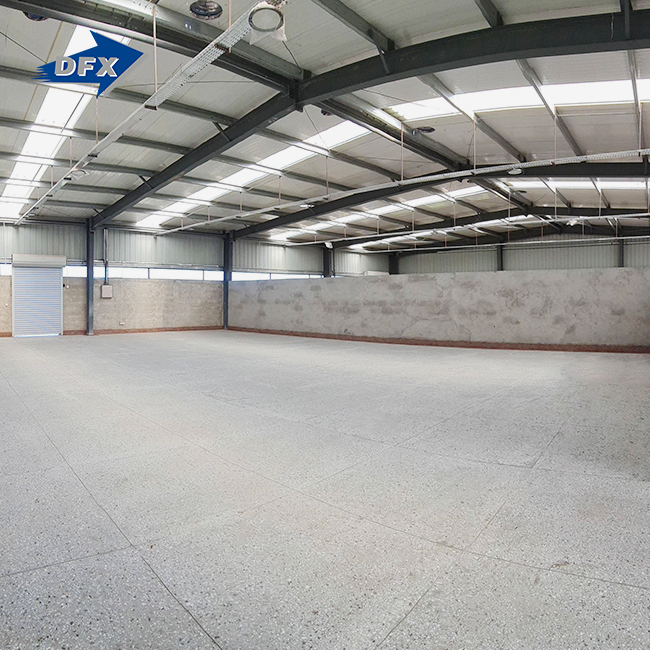
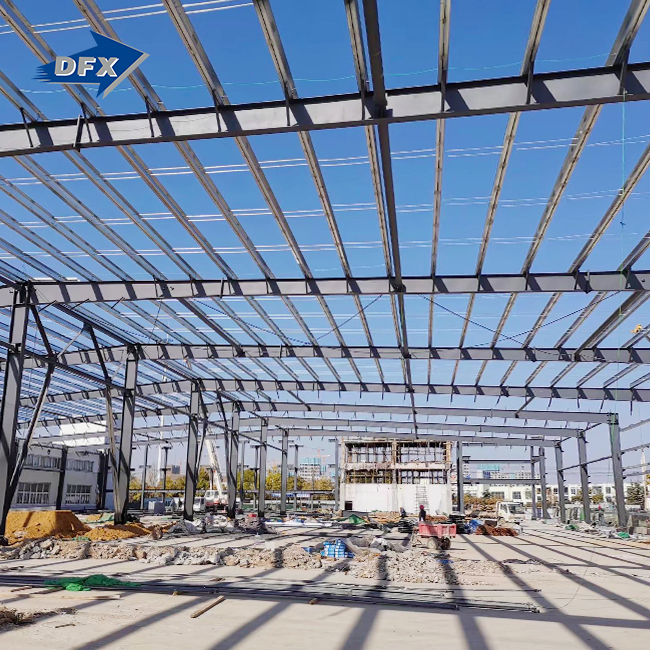
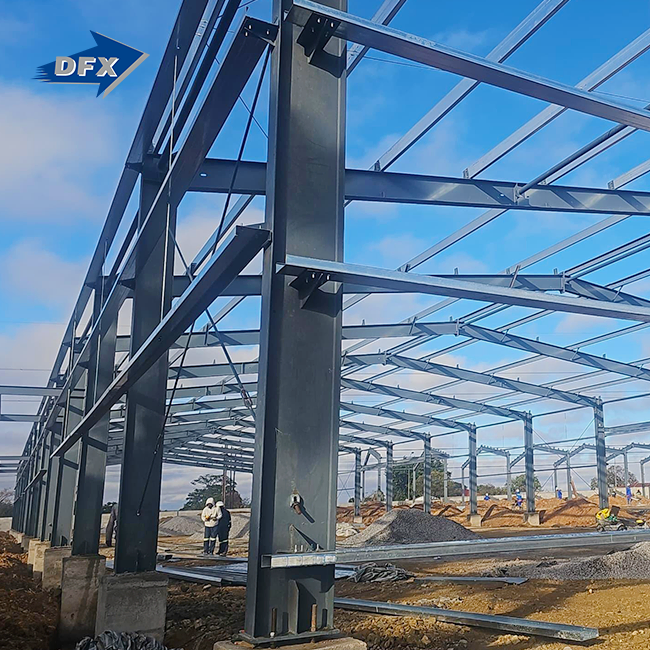
Qingdao Director Steel Structure Co., Ltd. (DFX) is a company that has been building steel structures since 2011. The China plant has 40,000 square meters with more than 200 employees. It has twenty corrugated sheet lines, six automatic welded H-beam lines, two C/Z section lines, and fourteen other lines. All commodities of the company are CE certified, and the plant is in accordance with ISO quality management. Our shed offers enclosed sides as well as open sides with space. The beams and posts are H-shaped, and the C/Z purlins are galvanised. The production cycle is brief. Orders arrive with standard drawings for design, fabrication, packing, and installation. These include certs such as ISO, CE, COC, and PVOC. They are commonly used for maintenance sheds, parking areas, equipment storage, and hay barns.
Choose the Right Fit for Your Project
The steel frame is from DFX. Trained professionals who have passed AHJ inspection must build your electrical equipment, gasoline tank, and spill containment equipment. That division should be in a gasoline storage structure. A DFX shed with open sides can provide protection for a fuel tank and dispenser on a farm, in a building yard, or in a maintenance area. It allows air and rain to travel easily through. A closed variant keeps out weather and hazards. A stop button in case of emergency should also be there at generator sites, and check the level. Please advise our design staff as to the type of fuel, the quantity, and the weight of the site. Then they’ll make sure the frame works with your idea.
Conclusion
The first step to safe fuel storage is to select the design before you buy. An industrial fuel storage shed has seven checks to comply with fire, environmental, and structural requirements. The checks cover some of the following: compliance, site layout, ventilation and electrical design, fire protection, containment, structural and foundation, and fuel compatibility. Diesel and petrol are in various NFPA 30 classifications. A lot of alternatives rely on fuel type. The floor of the enclosure should be able to support the largest container plus the rain-freeboard. The base’s weight increases by around 7,100 pounds with a 1,000-gallon diesel tank. Quotes don’t change when you utilise a shopping list, check the installation costs, and match the size to the workspace. A steel shed gives you structure and safety, but you have to buy tanks, containment and fire systems from professionals and gain the government’s consent beforehand.
FAQ
Q1: Is a fuel storage shed the same as a fuel tank?
No. There is gas in the tank. The house on top of it is called a shed, and it holds safety gear like fences, signs, and fire extinguishers. Each is important in its own way and must be met.
Q2: Can an open-sided shed protect a diesel tank?
The rain won't get to you, and the air will flow freely, which is helpful for many farm and yard tasks. Your AHJ will tell you what is okay for your area and amount. Even if the SPCC rule applies, you still need extra protection.
Q3: What should I send to get an accurate quote?
Tell us what kind of fuel you want, how much you want, the size of the tank, the site address, how much wind and snow there is in the area, whether you want to use it inside or outside, and what kind of covering you want. A simple sketch of the place helps our team figure out how to draw it and how long the wait will be.
Request an Industrial Fuel Storage Shed Quote from DFX
Do you want to find a business that sells an industrial fuel storage shed for businesses? The steel base and top are made by DFX. They have been in business for over 12 years, have a 40,000-square-meter building, and make things quickly. To get a project-specific suggestion, drawings, and a quote, email jason@bigdirector.com with information about your spot, the type of fuel you use, and the volume.
References
1. National Fire Protection Association, NFPA 30: Flammable and Combustible Liquids Code, 2021
2. U.S. Environmental Protection Agency, Oil Pollution Prevention (SPCC), 40 CFR Part 112, 2023
3. Occupational Safety and Health Administration, Flammable Liquids, 29 CFR 1910.106, 2024
4. International Code Council, International Fire Code, 2021
5. National Fire Protection Association, NFPA 70: National Electrical Code, 2023
6. American Society of Civil Engineers, ASCE 7-22: Minimum Design Loads and Associated Criteria for Buildings and Other Structures, 2022
Learn about our latest products and discounts through SMS or email