- English
- French
- German
- Portuguese
- Spanish
- Russian
- Japanese
- Korean
- Arabic
- Greek
- German
- Turkish
- Italian
- Danish
- Romanian
- Indonesian
- Czech
- Afrikaans
- Swedish
- Polish
- Basque
- Catalan
- Esperanto
- Hindi
- Lao
- Albanian
- Amharic
- Armenian
- Azerbaijani
- Belarusian
- Bengali
- Bosnian
- Bulgarian
- Cebuano
- Chichewa
- Corsican
- Croatian
- Dutch
- Estonian
- Filipino
- Finnish
- Frisian
- Galician
- Georgian
- Gujarati
- Haitian
- Hausa
- Hawaiian
- Hebrew
- Hmong
- Hungarian
- Icelandic
- Igbo
- Javanese
- Kannada
- Kazakh
- Khmer
- Kurdish
- Kyrgyz
- Latin
- Latvian
- Lithuanian
- Luxembou..
- Macedonian
- Malagasy
- Malay
- Malayalam
- Maltese
- Maori
- Marathi
- Mongolian
- Burmese
- Nepali
- Norwegian
- Pashto
- Persian
- Punjabi
- Serbian
- Sesotho
- Sinhala
- Slovak
- Slovenian
- Somali
- Samoan
- Scots Gaelic
- Shona
- Sindhi
- Sundanese
- Swahili
- Tajik
- Tamil
- Telugu
- Thai
- Ukrainian
- Urdu
- Uzbek
- Vietnamese
- Welsh
- Xhosa
- Yiddish
- Yoruba
- Zulu
Why Choose a Specialized Mining Equipment Steel Workshop?
Choose a specialised mining equipment steel workshop if your facility needs to manage big cranes, oversized machines and hard site conditions that a typical warehouse can't handle. Purpose-built design matches frame, floor, doors and coatings to your real loads. It allows you vast clear spans for easy equipment movement, safer workspaces and fewer costly upgrades down the road. On-site work is minimised by factory-produced steel pieces. This resource is for United States project managers, plant engineers, and contractors who want the facts straight before they compare providers. Below I outline design needs, prices, and supplier selection.

What a Mining Equipment Steel Workshop Includes and Why It Differs
Definition and Core Components
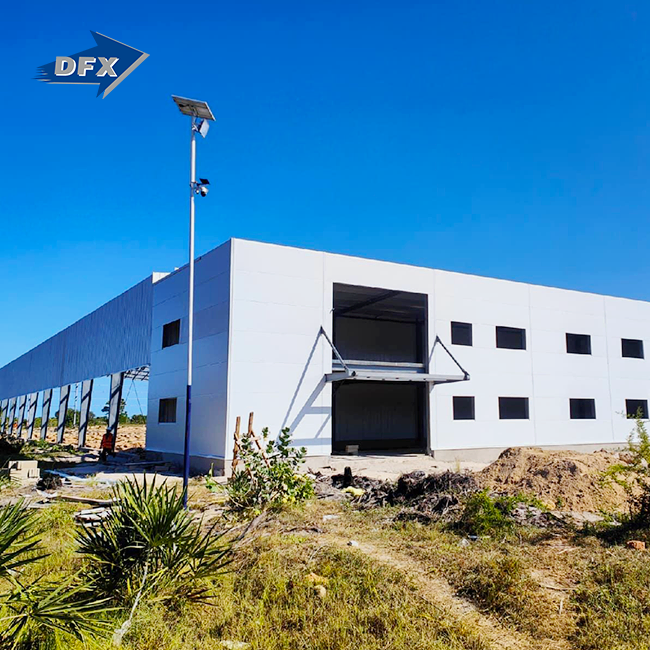
A mining equipment steel workshop is a site where large machines are built, assembled, repaired, maintained, and shipped. It has foundations, industrial flooring, entrances, ventilation, loading areas, and a steel frame. The roof and walls are clad. Sometimes people who have it make things out of it. Some folks use it to repair items or assemble things. It is contingent upon the building codes in the area, weather, soil, and type of machine employed. I start with the list of tools and not the floor space, because each area is different.
How Mining Machines Shape the Layout
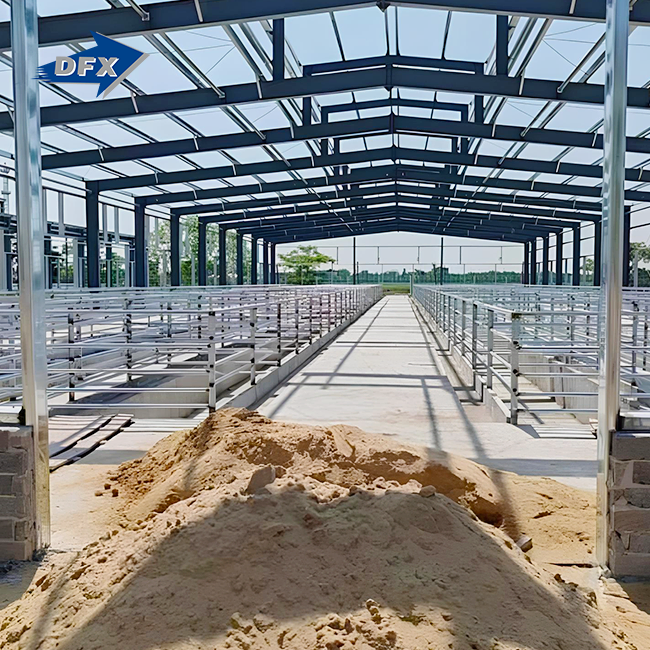
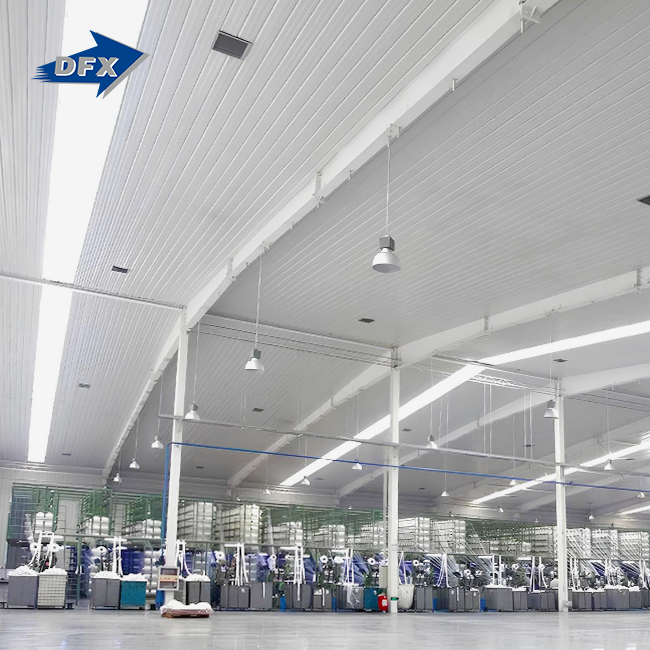
Crushers, screens, conveyors, mills, and haul trucks are just a few of the heavy machinery that has its own rules. Things that are taller need more room. Strong bases and a crane that can reach a lot of space are needed for heavy items. Long pieces of conveyor need open bays so they can be tested and put together. Trucks need big doors and room to turn. Our large-span industrial steel buildings are open on the inside, so crews can move parts without having to deal with columns. If you plan the bay width and eave height around the biggest machine you expect to handle, you won't have to do any extra work after the first arrival.
Why Standard Warehouses Fall Short
In an average building, there aren't many things to store. Mining equipment steel workshops also need to be able to handle shaking, rough dust, water, and equipment that is moving around. Moving weight is added to walls and runway beams when an overhead crane is used. AISC Design Guide 7 talks about how to load a crane and how to build a ramp for an industrial building. In most building plans, these things aren't taken into account. If you build a crane workshop based on warehouse standards, you might get members that are too small, welds that crack, and costs that are too high to fix.
Core Design Requirements for Heavy-Duty Performance
Structural Frame and Crane Support
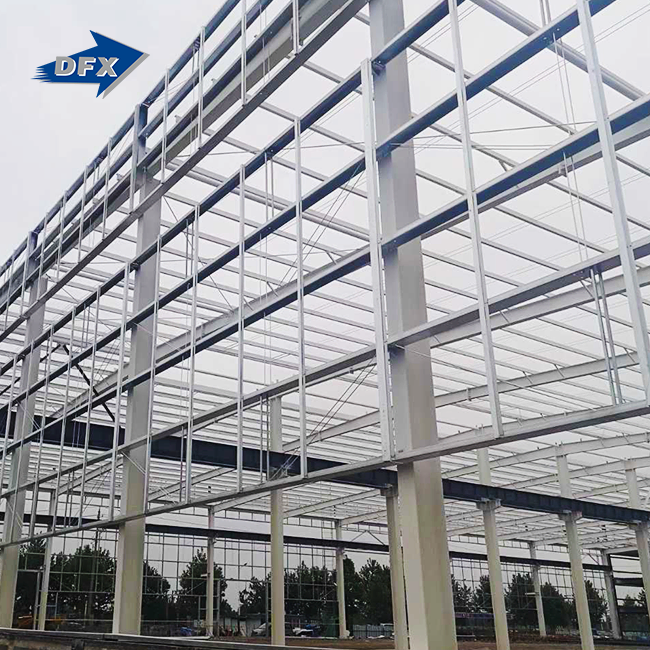
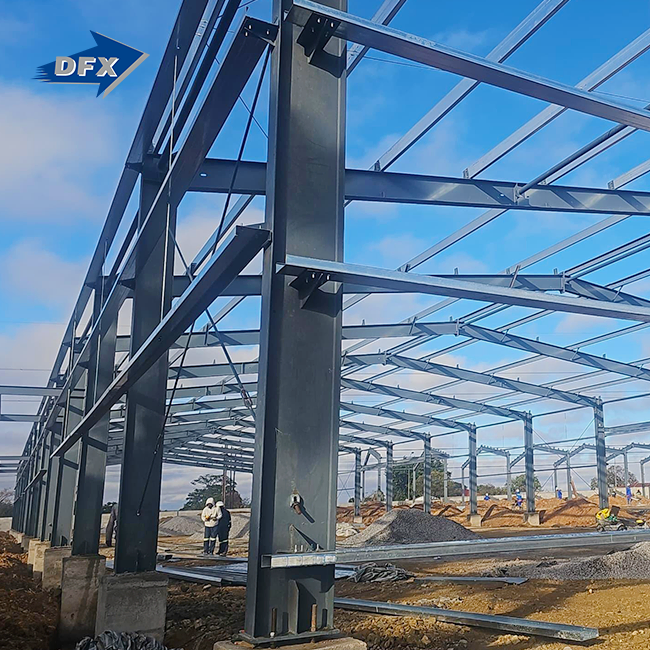
This is our main frame. Forged H-section steel in grades Q235 or Q355 is used to make it, along with fixed joints and C/Z steel purlins. Parts that need to hold more weight, like columns and crane beams, should be made of Q355. We build our frames and stepped beams around the weight of the wheels and the force needed to stop them. This is because every mining equipment steel workshop often has to move 50- to 200-ton bridge cranes. Different places have different wind, snow, and earthquake forces, and the local engineer of record confirms the code. In the US, ASCE/SEI 7 sets rules for these kinds of loads.
Corrosion Protection and Surface Treatment
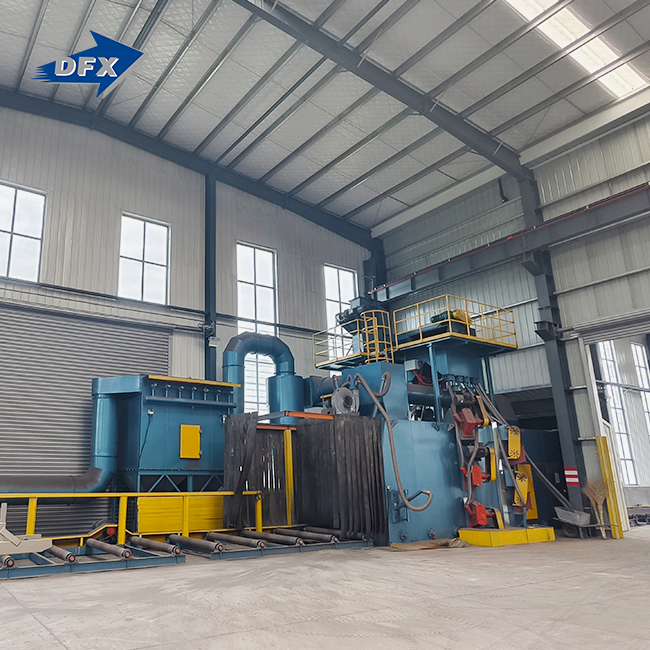
In a mine, the air can carry sulfur, salt, and rough dust. As per ISO 12944, the work that is done on the surface should be safe. An easy way to start a heavy-duty standard is to shot-blast it to Sa 2.5. Then a zinc-rich epoxy base, a thick coat of iron oxide mica, and a finish of polyurethane are added. The hot-dip method could also be used. A dry film thickness gauge checks that the coating meets the agreed-upon standards. We'll help you choose a method if you tell us about your site.
Ventilation, Insulation, and Worker Safety
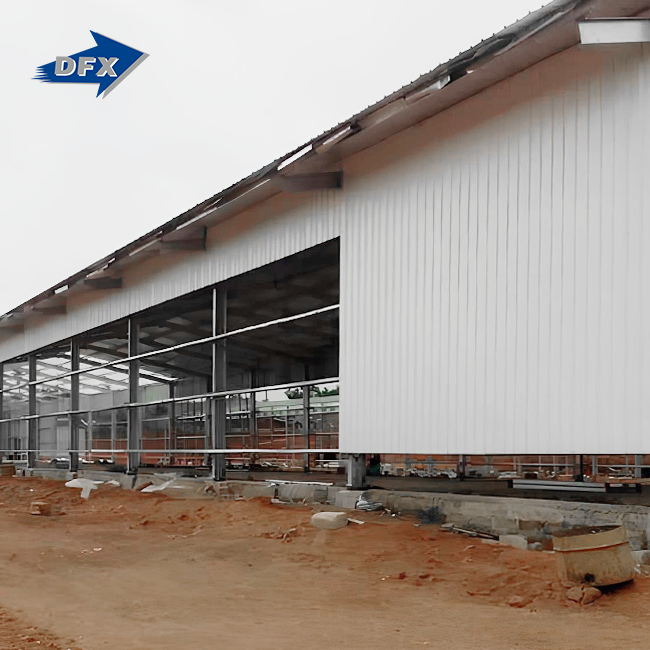
Heavy metal smells, paint mist, engine smoke, and dust all build up quickly in a small shop. Parts of a good design are extraction at the source, mechanical ventilation, and fresh make-up air. Inside the walls and roof are sandwich plates made of PU or rock wool. In cold or hot places, this helps keep fog from forming. Our production lines make sandwich panels, which is why we can give them to you with the frame. The local building codes tell us how to set up fire safety, emergency exits, and places to store dangerous materials, so we work with your team to get the models ready.
Steel Versus Traditional Construction: Cost, Speed, and Process
Steel Compared With Concrete
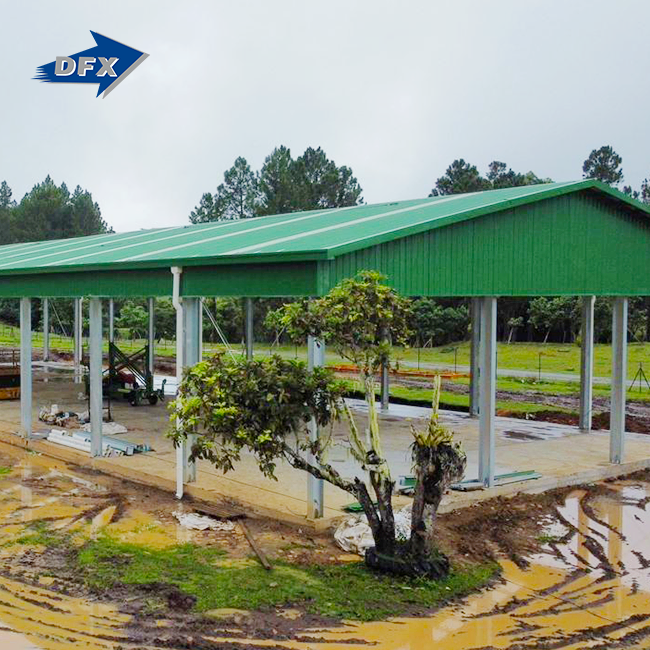
Long spans can be built quickly with pre-engineered steel, and it's easy to add a crane. A mining equipment steel workshop cuts, welds, and coats parts, so there is less trash and work to do on-site. It's also easier to add more bays in the future when the frames are bolted together. Concrete or a mix of concrete and other materials is still the best choice for some foundations, equipment pits, and fire doors. For most big mine workshops, I believe the best way to build them is with steel frames on concrete footings. Crane bays made of heavy H-section frames work better than steel sheds made of light steel.
Cost and Quotation Factors
Price per square foot is only useful for making budgets at the start. Weight, span, eave height, crane loads, supports, cladding, insulation, doors, ventilation, defense against corrosion, shipping, and installation all play a role in the end price. Request a price quote that includes a detailed price list of all the parts and materials that will be used, as well as any extras, crane supports, installation directions, and fees that aren't covered. Not only how much it costs to buy, but also how much it will cost to run, fix, and use energy over the building's lifetime. Most of the time, getting a price that doesn't include crane supports or finishes will cost you more in the long run.
From Brief to Handover
There are clear steps for a good job. First, you talk about the type of site and the size, weight, and type of the equipment. Next, we finish the detailed plans for building, finishing, shipping, and setting up the structure. Most of the time, made-to-order production takes between 25 and 49 days, depending on how big the job is. During the construction, our team gives advice right there on the spot. A lot of the time, quality records have mill test certificates, welding inspection reports, dimensional checks, and readings of how thick the coating is. AWS D1.1 is the code that many buyers want for welding.
How to Choose the Right Structure and Supplier? Matching the Structure to Your Operation
Repair shops come in different sizes. Some are small, some are medium, and some are very large. Each one needs a different frame. Write down the crane's safe working load, width, lifting height, job class, and hook covering. One-girder cranes are best for lifting lighter things. Double-girder cranes are the best way to move big things or a lot of them. These are the crane repair groups that are laid out in CMAA Specification 70. Making a production flow chart that shows how things will be stored, made, put together, tested, and sent out is important. Before the base is poured, make sure there is enough space for extra bays and cranes.
Evaluating a Supplier: What DFX Offers
In 2011, Qingdao Director Steel Structure Co., Ltd. (DFX) was founded. A 40,000-square-meter production space that is closed off to the public is where more than 200 people work. Our lines are made up of twenty corrugated sheet lines, two C/Z section lines, six automatic H-beam lines, and two sandwich panel lines. Every year, C and Z steel can be made in amounts of 8,000 tons and 20,000 tons, respectively. Our goods have been approved by ISO9001, CE, and ASTM, and they meet the standards for materials. We plan and do the details of every job in-house, which helps.
Checklist Before You Request a Quote
Prepare these items first, so the supplier can price your mining equipment steel workshop project accurately.
- Site and building data: Let them know the length, width, and clear height of the building and the location of the project. Tell them more about the soil, the building regulations in the area, and the threats of wind, snow, and earthquakes. Put them in first; they tell you how wide the frame should be and how much weight the foundation should hold. Meaning, they have the biggest say on the style and price.
- Equipment and crane data: Name the largest and heaviest machine, its length, width, door size, and floor weight. Write down your requirements for airflow, insulation, fire safety, etc. This way the engineer can be certain that the columns, landing beams and holes are of the correct size the first time. This will prevent any issues or delays down the line.
- Delivery and papers: Please provide the date and time you would like the delivery to happen and who will be responsible for the foundations and anchor bolts. Look at the materials they claim to use. Learn about the coating, how to examine it, the terms of the warranty, and obtain blueprints for how it will be installed. You want to compare pricing since import taxes and fees can alter the price of a structure imported from another country. Clearly defined project boundaries prevent disputes and postponements at the construction phase.
With this information ready, the price will be based on the job itself, not just a guess.
Conclusion
A mining equipment steel workshop is not like a normal building because it has to deal with heavy loads from cranes, tools that are too big for their space, vibrations, and conditions that cause rust. A good plan starts with the equipment details and then looks at the frame, the crane supports, the foundations, the coatings, the airflow, and the insulation as a whole. You can see a lot of room on the inside because the frames are made of welded H-section steel with bolted joints and C/Z purlins. Building with steel from a factory saves time and makes it easier for the structure to grow over time than with concrete. However, concrete is still good for some supports and pits. You shouldn't look at the price per square foot when you want to buy something. Instead, you should look at the line-item scale and the long-term value. It is less likely that there will be delays and extra work if the supplier has clear installation drawings, in-house design, and written records of quality control.
FAQ
Q1: Can a prefabricated steel building support overhead cranes?
Yes, when the expert tells them to. The frame needs supports that are strong enough to hold the wheels and the brakes' force. These supports can be runway beams, crane hooks, or stepping columns. We provide information on reaction forces to your civil engineer for your mining equipment steel workshop.
Q2: How long does delivery take?
There is a lead time of 25 to 49 days because each item is made to order. How long it takes will depend on how big the project is, how hard the design is, and how quickly the approvals come in. It takes longer to ship something than to set it up.
Q3: What documents should I request from a supplier?
You should get proof of the materials, details about the covering, ways to test them, and ideas for how to put them together. As part of our services, we create structures, build them, finish the outside, pack them, make plans for placement, and give advice on-site.
Q4: Which coating suits a mining site?
The openness is what makes it work. One popular choice is hot-dip galvanizing, which uses an epoxy and polyurethane method to blast the surface. Tell us what your site needs, and we'll give you good system ideas.
Request a Mining Equipment Steel Workshop Quote from DFX
Do you want to start a steel company in the US to make mining tools? DFX builds steel structures and has its own teams for designing, building, and putting them up. We'll help you find a mining equipment steel workshop supplier or a full design-and-supply package if you send us your sizes, crane data, location, and plan. Send an email to jason@bigdirector.com to learn more.
References
1. American Institute of Steel Construction, Design Guide 7: Industrial Buildings—Roofs to Anchor Rods, 2004
2. American Society of Civil Engineers, Minimum Design Loads and Associated Criteria for Buildings and Other Structures (ASCE/SEI 7-22), 2022
3. International Organization for Standardization, ISO 12944-2: Paints and Varnishes—Corrosion Protection of Steel Structures by Protective Paint Systems, Classification of Environments, 2017
4. American Welding Society, AWS D1.1/D1.1M Structural Welding Code—Steel, 2020
5. Crane Manufacturers Association of America, Specification No. 70 for Top Running Bridge and Gantry Type Multiple Girder Electric Overhead Traveling Cranes, 2015
6. American Institute of Steel Construction, Specification for Structural Steel Buildings (ANSI/AISC 360-22), 2022
Learn about our latest products and discounts through SMS or email