- English
- French
- German
- Portuguese
- Spanish
- Russian
- Japanese
- Korean
- Arabic
- Greek
- German
- Turkish
- Italian
- Danish
- Romanian
- Indonesian
- Czech
- Afrikaans
- Swedish
- Polish
- Basque
- Catalan
- Esperanto
- Hindi
- Lao
- Albanian
- Amharic
- Armenian
- Azerbaijani
- Belarusian
- Bengali
- Bosnian
- Bulgarian
- Cebuano
- Chichewa
- Corsican
- Croatian
- Dutch
- Estonian
- Filipino
- Finnish
- Frisian
- Galician
- Georgian
- Gujarati
- Haitian
- Hausa
- Hawaiian
- Hebrew
- Hmong
- Hungarian
- Icelandic
- Igbo
- Javanese
- Kannada
- Kazakh
- Khmer
- Kurdish
- Kyrgyz
- Latin
- Latvian
- Lithuanian
- Luxembou..
- Macedonian
- Malagasy
- Malay
- Malayalam
- Maltese
- Maori
- Marathi
- Mongolian
- Burmese
- Nepali
- Norwegian
- Pashto
- Persian
- Punjabi
- Serbian
- Sesotho
- Sinhala
- Slovak
- Slovenian
- Somali
- Samoan
- Scots Gaelic
- Shona
- Sindhi
- Sundanese
- Swahili
- Tajik
- Tamil
- Telugu
- Thai
- Ukrainian
- Urdu
- Uzbek
- Vietnamese
- Welsh
- Xhosa
- Yiddish
- Yoruba
- Zulu
How to Choose a Reliable Dry Cargo Steel Warehouse Supplier?
Choosing the right dry cargo steel warehouse supplier is one of the most consequential procurement decisions your business will make. A well-sourced prefabricated steel storage building delivers decades of structural integrity, operational flexibility, and cost control — while a poor supplier choice can mean costly delays, structural failures, or compliance headaches. In this guide, I'll walk you through exactly what to look for, from defining your storage needs to verifying supplier credentials, so you can make a confident, well-informed decision.

Understanding Your Dry Cargo Steel Warehouse Needs
You need to have a clear idea of what your building needs before you talk to any suppliers. It is easier to find sources who are a good fit for your project if you are clear about what you need from the start.
Choosing the Right Warehouse Type
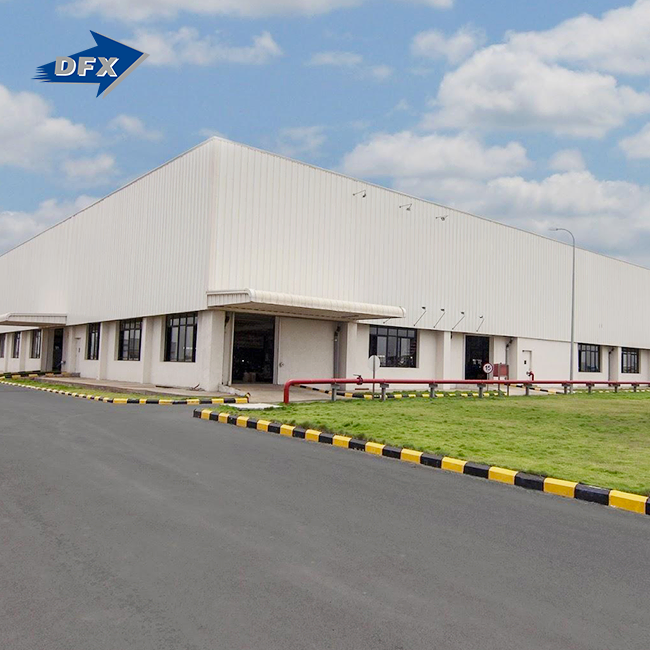
There are three main types of dry goods storage buildings: modular built, fixed engineered, and movable structures. Most logistics warehouses, distribution hubs, and storage centers choose modular manufactured steel buildings, like those made in China by companies like Director Steel. This is because they are the best mix of speed, cost, and structural performance.
Capacity Planning and Layout Design
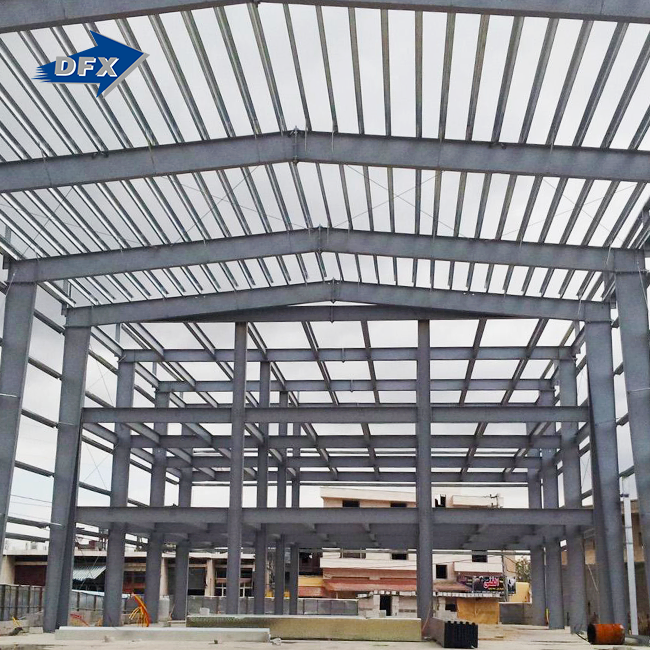
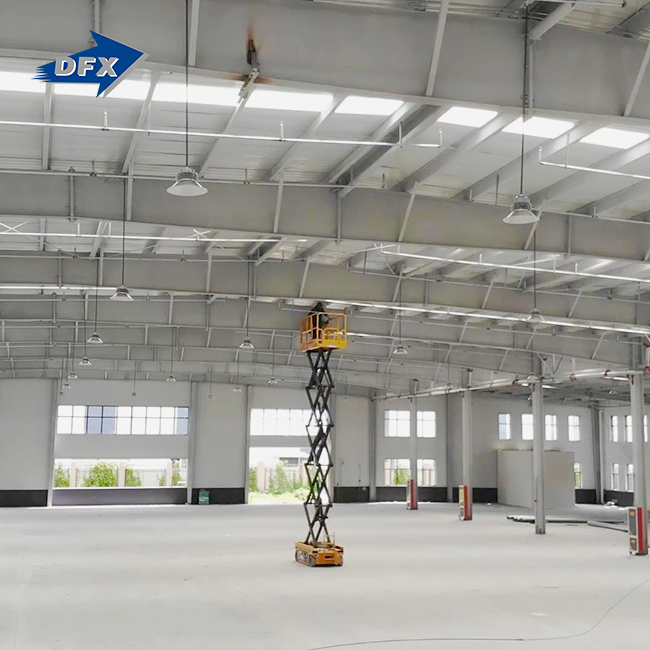
How well your business runs is directly related to how your plan is set up. Forklifts and reach stackers can move around easily because a clear-span portal frame design doesn't have any internal columns. For warehouses with spans longer than 30 meters, H-beam primary steel frames with galvanized C/Z purlins give you the load-bearing ability you need without taking up too much floor room.
Environmental and Regulatory Conditions
What your building's engineering needs are based on things like local building codes, wind load requirements (like ASCE 7-16 in the U.S.), seismic zone classifications, and the weather. In the long run, it will save you money to work with a supplier that does site-specific engineering calculations instead of just template designs.
Core Criteria to Evaluate Steel Warehouse Suppliers
Once you know what you need, using consistent criteria to evaluate suppliers keeps the process objective and lowers the risk of buying something.
Certifications and Manufacturer Track Record
Always ask for certificates that have been checked for a dry cargo steel warehouse. ISO 9001 makes sure that there are methods in place for quality control. Getting a CE certificate means that a building meets European safety standards for structures. EN 1093 may also be used for projects that have to follow certain European buying rules. Director Steel has been in business since 2011, and all of its products are certified with ISO 9001 and CE, which is a standard that all serious steel warehouse manufacturers should meet.
Material Quality and Structural Specifications
The choice of material has a direct effect on how long something will last. A good dry cargo steel building must meet the following structural requirements:
- Primary frame: High-frequency welded H-beams in Q355B or ASTM A572 Gr.50 steel, capable of clear spans up to 60 meters
- Secondary framing: Hot-dip galvanized C/Z purlins and girts with a minimum zinc coating of 600g/m²
- Cladding system: Galvalume steel sheets (AZ150 coating, yield strength exceeding 550 MPa) with rock wool or fiberglass insulation to prevent condensation
- Bracing system: X-bracing and knee brace configurations engineered to local wind and seismic load requirements
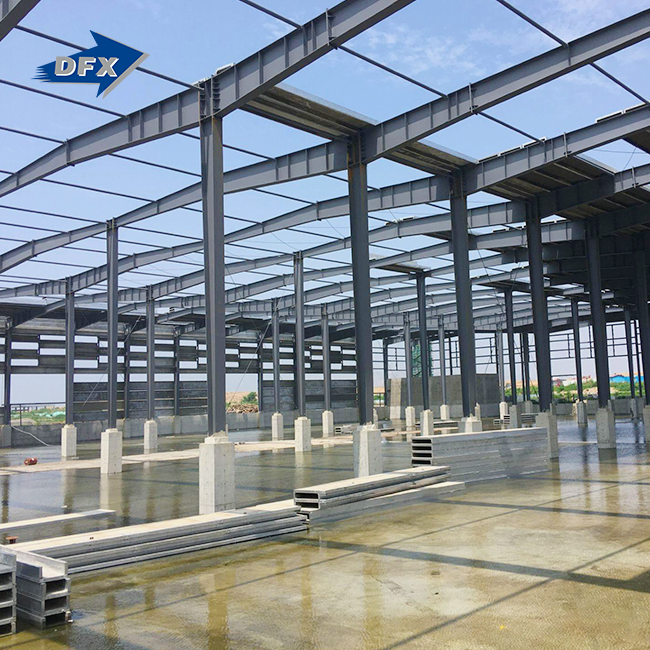
High-frequency welded H-beams made of Q355B or ASTM A572 Gr.50 steel, with clear spans of up to 60 meters, make up the main frame. These requirements are not just for looks; they decide if your building will work safely for 50 years.
Customization Flexibility and Design Support
If your supplier cuts corners on material grades or skips surface treatment audits, you could be responsible for maintenance costs within the first ten years of operation. As always, ask for mill certificates and find out if ultrasonic or magnetic particle testing of welds is an accepted method.
Procurement and Transaction Considerations
The way you pay for things has just as much of an effect on the success of your project as the technical details. To get this right, we need to be clear on a number of fronts.
Purchase vs. Total Lifecycle Cost
The cost of making something up front is only one part of the picture. Think about the base needs, the work needed to build it, the roofing and siding systems, and the upkeep that will be needed over the next 10 to 20 years. Putting up prefabricated steel structures usually costs 20–30% less than putting up similar concrete-frame buildings, and they also need a lot less upkeep over their lifetime.
Logistics Coordination and Lead Times
Prefabricated steel warehouse providers usually use project-based manufacturing, which means that your building is made to order instead of being taken from stock. Lead times usually last between 8 and 16 weeks, but this depends on the size of the project and how complicated the customization is. When suppliers handle their own logistics arrangements, such as sending paperwork, helping with port clearance, and planning deliveries, you don't have to do as much work, and there is less chance of delays on the job site.
After-Sales Support and Erection Guidance
On-site erection guidance is a feature that sets us apart that many buyers don't notice until there are problems. If your provider gives you thorough erection plans, bolt torque specs, and online or on-site expert help during installation, it can cut down on building time by 15–25% compared to just using general paperwork.
How to Verify and Shortlist Potential Suppliers
Doing your research before investing money or starting a project helps keep both safe. This is how I think you should go about verifying a seller.
Review Certifications and Technical Documentation
Get the supplier's ISO and CE certificates for a dry cargo steel warehouse, which should have clear issue dates and the names of the organizations that issued them. Ask for examples of engineering calculation reports and structural drawing packages for projects of the same size that have already been finished. A maker who really knows how to do tech work will gladly give these to you.
Analyze Client References and Project History
Ask at least three references from B2B procurement managers or project engineers at companies that have worked with the supplier on projects. These references should be able to be checked out. Ask the seller about the accuracy of the delivery, the quality of the paperwork, and how they handled any technical problems that came up on-site. Director Steel has done work in many foreign markets to provide steel structures for business buildings, airport hangars, industrial plants, and logistics warehouses.
Request a Technical Consultation Before Signing
A preliminary consultation, which could be a video call or a written technical exchange, shows how well the engineering team of the seller knows the needs of your project. Most of the time, suppliers who listen carefully, ask specific questions about your site's conditions and how it will be used, and give you an organized preliminary bid do well throughout the project lifecycle.
Making the Final Decision: Matching Solutions to Your Business Needs
You now have a short list of sources that have been checked out and a clear idea of what the project needs. The final choice is based on how well four factors match up: how much it costs, how well it's built, how well it can be customized, and how reliably it can be delivered.
Prioritize Long-Term Value Over Lowest Quote
Most of the time, the lowest bid is not the best deal. If a seller offers 10% cheaper prices but doesn't have CE certification, in-house engineering, or post-erection support, the project may take longer, more work needs to be done, or compliance fails, which will cost you a lot more. Make sure you give your evaluation criteria the right amount of weight.
Confirm Modular Expandability
You will likely need more space to store things. You can make a modular prefabricated steel building longer by adding bays to the end walls. The original end frames can often be turned into interior frames, which saves you money. Check with your supplier to see if this expansion plan was included from the start.
Lock In Warranty and Service Terms in Writing
Before construction starts, the deal should make it clear what kinds of warranties are offered for structural parts, surface coatings, and roofing systems. A seller who is sure of the quality of their goods will give you written guarantee terms that cover at least the main steel frame, the cladding system, and the waterproofing details.
Conclusion
Selecting a dry cargo steel warehouse supplier is a decision that affects your infrastructure for decades. The process works best when you start with a precise definition of your operational needs, evaluate suppliers against consistent technical and commercial criteria, and verify credentials through documentation and direct references. Prefabricated steel storage buildings manufactured to ISO and CE standards — with H-beam primary frames, galvanized secondary framing, and engineered cladding systems — represent the most cost-effective and adaptable solution for the majority of dry cargo storage applications. Take the time to shortlist carefully, and the right supplier will become a long-term project partner rather than a transactional vendor.
FAQ
1. How long does fabrication and delivery typically take?
Project-based fabrication for a standard dry cargo steel warehouse generally takes 8 to 16 weeks from order confirmation to factory completion, depending on building size and specification complexity. Shipping transit times vary by destination but typically add 3 to 6 weeks for ocean freight to U.S. ports.
2. What certifications should I require from a supplier?
At minimum, require ISO 9001 for quality management and CE certification for structural safety compliance. For projects with European procurement requirements, EN 1093 may also be specified. Always request certificates issued by a recognized third-party body with verifiable issue dates.
3. Can the structure support overhead cranes?
Yes, provided crane runway beams and bracket configurations are specified during the engineering phase. Structures can be designed to accommodate bridge cranes ranging from 5 to 100 tons, with column sizing and bracing loads adjusted accordingly.
4. Is the building expandable after initial construction?
Modular prefabricated steel buildings are designed for expansion. Additional bays can be added to end walls, and original end frames can frequently be converted to interior frames, protecting your initial investment.
Get a Custom Quote from Director Steel — Your Trusted Dry Cargo Steel Warehouse Manufacturer
Director Steel has been making certified prefabricated dry cargo steel warehouse buildings since 2011. They have ISO 9001 and CE certifications, the ability to make 40,000 m², and offer full support from engineering to installation. Our team provides on-time project-specific solutions, whether you need a single delivery hub or an industrial warehouse with multiple spans. Get a quote from us today by emailing Jason at jason@bigdirector.com.
References
1. American Institute of Steel Construction (AISC). Steel Construction Manual, 16th Edition. AISC, 2022.
2. Metal Building Manufacturers Association (MBMA). Metal Building Systems Manual. MBMA, 2022.
3. American Society of Civil Engineers. Minimum Design Loads and Associated Criteria for Buildings and Other Structures (ASCE 7-16). ASCE, 2017.
4. International Organization for Standardization. ISO 9001:2015 Quality Management Systems — Requirements. ISO, 2015.
5. European Committee for Standardization. EN 1993-1-1: Eurocode 3 — Design of Steel Structures. CEN, 2005.
6. Packer, J.A., & Henderson, J.E. Hollow Structural Section Connections and Trusses: A Design Guide. Canadian Institute of Steel Construction, 1997.
Learn about our latest products and discounts through SMS or email