- English
- French
- German
- Portuguese
- Spanish
- Russian
- Japanese
- Korean
- Arabic
- Greek
- German
- Turkish
- Italian
- Danish
- Romanian
- Indonesian
- Czech
- Afrikaans
- Swedish
- Polish
- Basque
- Catalan
- Esperanto
- Hindi
- Lao
- Albanian
- Amharic
- Armenian
- Azerbaijani
- Belarusian
- Bengali
- Bosnian
- Bulgarian
- Cebuano
- Chichewa
- Corsican
- Croatian
- Dutch
- Estonian
- Filipino
- Finnish
- Frisian
- Galician
- Georgian
- Gujarati
- Haitian
- Hausa
- Hawaiian
- Hebrew
- Hmong
- Hungarian
- Icelandic
- Igbo
- Javanese
- Kannada
- Kazakh
- Khmer
- Kurdish
- Kyrgyz
- Latin
- Latvian
- Lithuanian
- Luxembou..
- Macedonian
- Malagasy
- Malay
- Malayalam
- Maltese
- Maori
- Marathi
- Mongolian
- Burmese
- Nepali
- Norwegian
- Pashto
- Persian
- Punjabi
- Serbian
- Sesotho
- Sinhala
- Slovak
- Slovenian
- Somali
- Samoan
- Scots Gaelic
- Shona
- Sindhi
- Sundanese
- Swahili
- Tajik
- Tamil
- Telugu
- Thai
- Ukrainian
- Urdu
- Uzbek
- Vietnamese
- Welsh
- Xhosa
- Yiddish
- Yoruba
- Zulu
Equipment Protection Shed Design Ideas for Industrial Use
When you need to protect expensive machinery, vehicles, or bulk materials from weather exposure and operational damage, an equipment protection shed is one of the most cost-effective structural investments you can make. Whether you run a manufacturing plant, manage a construction site, or operate a large farm, the right shed design keeps your assets safe while reducing maintenance costs. In this guide, I walk through design ideas, material choices, sizing tips, and procurement advice to help B2B buyers make confident decisions.

Understanding Equipment Protection Shed Design for Industrial Use
What Is an Equipment Protection Shed?
A shed for protecting equipment is a strong building made for working with machines, cars, tools, or things that need to be kept. It protects things from UV rays, rain, changes in temperature, and physical damage. These structures directly stop costly downtime caused by weather-damaged equipment or corroded parts in industries like manufacturing, agriculture, and construction.
Key Benefits for Industrial Operations
If you build a security shed the right way, it will last longer, need fewer repairs, and help you follow safety rules at work. The U.S. Bureau of Labor Statistics says that a lot of workplace injuries are caused by accidents involving equipment every year. A well-built shed with enough space between things and a well-organized layout makes it much less likely that someone will hit something or get injured.
Critical Design Factors to Evaluate
Before choosing a shed, buyers should think about four main things: the size of the interior in relation to the equipment footprint, the grade of the structural material, the amount of ventilation, and safety features like fire-resistant cladding and lockable entry points. Long-term costs and business success are both directly affected by each factor.
Materials and Construction Methods for Durable Equipment Protection Sheds
Comparing Material Options
Steel is still the most popular material for building industrial sheds because it is strong for its weight, can be recycled, and can be bent to fit different needs. When used on an industrial scale, hot-dip galvanized C/Z purlins and welded H-section beams can hold more weight than plastic or wood framing. Composite panels are good at keeping heat out, and curved steel siding works well in places with a lot of impact.
Prefabricated vs. Custom-Built Structures
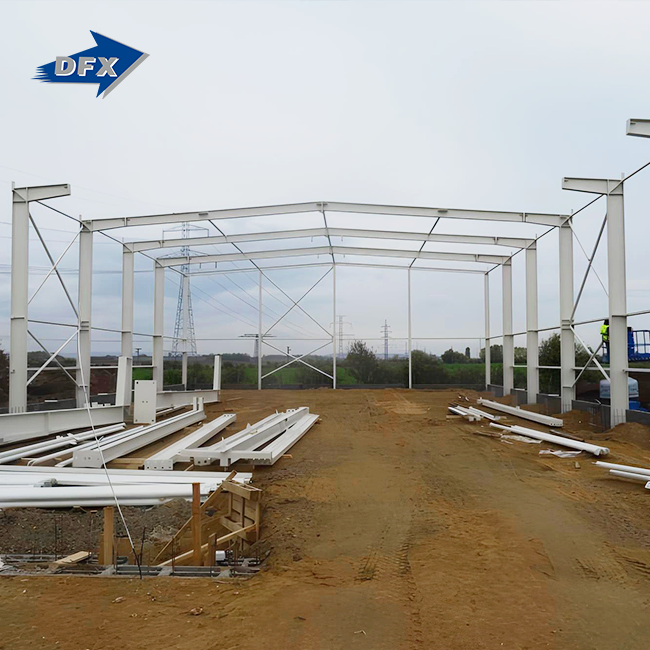
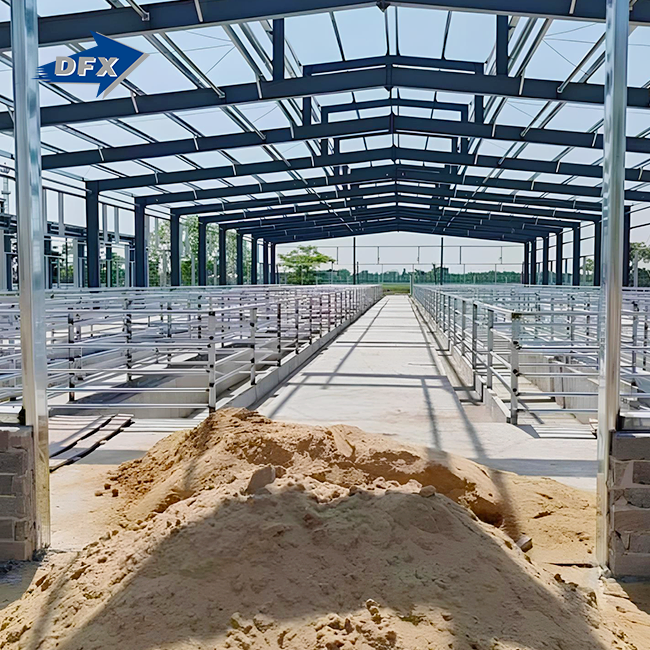
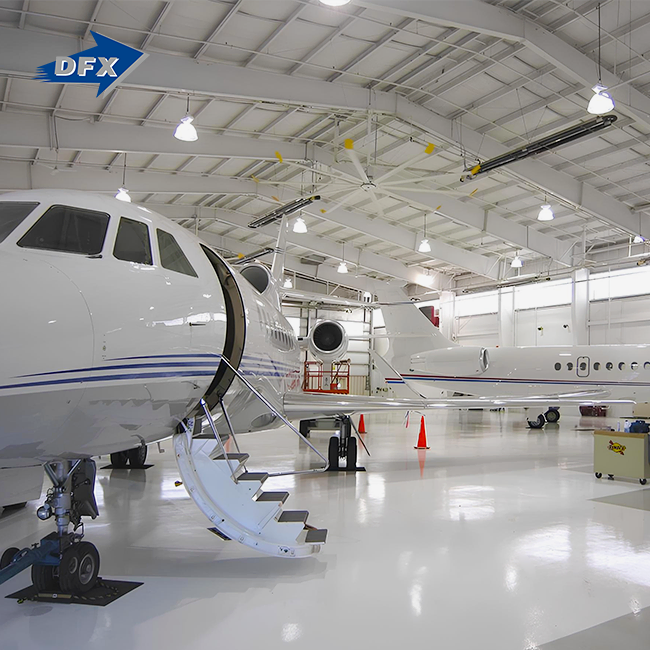
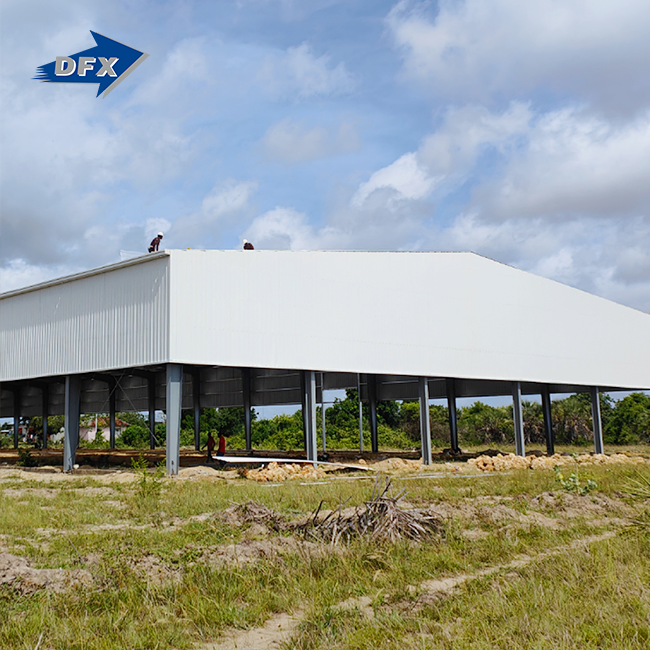
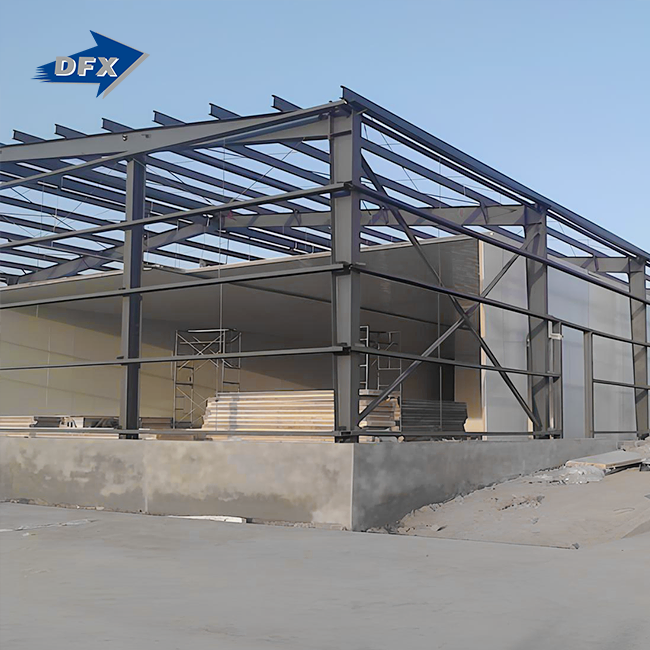
Prefabricated steel sheds are made off-site and then put together on-site, which greatly reduces the total project time. Director Steel's equipment safety sheds are made in Qingdao, China, and are mostly made up of welded H-beam frames and galvanized C/Z purlins. Sides can be fully covered or left open, based on how much airflow is needed. This gives buyers options for a wide range of uses, from covered parking garages to protected work bays.
Ventilation, Insulation, and Surface Protection
Good airflow keeps condensation from building up, which speeds up the rusting of equipment kept in an equipment protection shed. This is naturally taken care of by ridge vents, louvers, and open-side designs. Sandwich panels with polyurethane cores help keep sheds inside at a comfortable temperature when they are in humid places. When used properly, anti-corrosion primers and finish coats on all steel parts make the structure last much longer than 20 years.
Equipment Protection Shed Size and Layout Recommendations for Industrial Use
Sizing Guidelines for Common Applications
Make a plan of the biggest piece of equipment you need to store, then leave at least 1.2 meters of space on all sides for safe access and maintenance. A wide span of 15–30 meters is common for sheds that store farm hay or farm tools. In building yards, sheds for parking cars and doing repairs usually have spans of 12 to 24 meters and eaves that are 4.5 to 6 meters high.
Modular Layout Ideas to Improve Workflow
The inside may be divided into several spaces for purposes such as storage, maintenance, and staging, which not only makes mobility more efficient but also reduces the likelihood of accidents occurring. Consider the following suggestions for modular floor plans that are beneficial for industrial locations that range in size from medium to large:
- Open-bay storage zone: A bay that is completely open along one wall enables forklifts or heavy trucks to enter and depart without having to turn, which reduces the amount of time it takes for high-traffic activities to complete a cycle.
- A provision for lighting and electrical access panels is included in the enclosed maintenance zone, which is a partitioned enclosed portion located at the back of the building. This section offers a controlled location for repairing sensitive equipment.
- The staging and loading zone is a covered space with open sides that is located at the entrance end. This area serves as a buffer between the conditions outside and the conditions inside, therefore protecting the products while they are being loaded.
Not only can these zone layouts be modified to accommodate almost any span width, but they are also particularly effective in staging yards for construction projects, agricultural complexes, and small industrial locations.
Outdoor Installation Considerations
The design of the base is just as important as the design of the building above it. A slab-on-grade concrete foundation is what most equipment sheds have. Sloping the floor toward drainage pathways keeps water from building up, which is a major cause of floor corrosion and slip risks. Anchor bolt specs must match local building codes in places where there is a lot of wind.
Maintenance Tips to Extend the Lifespan of Your Equipment Protection Shed Routine Inspection Protocols
Check the connections between the column bases, the seams between the roof panels, and the points where the gutters drain every six months in an equipment protection shed. Check all of the bolts for signs that they are coming loose from heat expansion and contraction. Finding small problems early on stops the kind of structural fatigue that leads to expensive fixes in the end.
Corrosion Prevention and Common Repairs
Hot-dip treated and galvanized purlins naturally don't rust, but cut edges and holes in structural members show raw steel. Within 48 hours of drilling or cutting, paint any steel that is showing with zinc-rich touch-up paint. Overlaps between roof panels are common places where leaks happen. Depending on the weather, replace sealant tape at lap joints every three to five years.
Seasonal Maintenance by Climate
In places where it snows a lot, clear off the roof before it gets too heavy for the design snow load rating. In seaside or high-humidity areas, check zinc surfaces for white rust every three months instead of every six months. In dry areas, UV damage to the finish of cladding is the main worry. Coating the outside of surfaces every seven to ten years keeps the look and the protection.
Choosing and Procuring the Right Industrial Equipment Protection Shed
Key Selection Criteria for B2B Buyers
Make sure that the shed's specifications match the way you actually work. A shed for storing hay in the middle of nowhere needs different things than a shed for maintaining heavy machinery on a building site near the coast. Before you ask for quotes, think about these things:
- Structural certification: Products holding CE, ISO, COC, and PVOC certifications meet verifiable international quality benchmarks.
- Span and height flexibility: Confirm the supplier can produce the clear span your largest equipment requires without intermediate columns that restrict movement.
- Cladding configuration: Decide between fully enclosed, partially open, or fully open-sided designs based on your ventilation and security needs.
- Lead time and production cycle: Short production cycles from an experienced fabricator mean your project schedule stays on track.
These factors have a direct effect on the total cost of ownership, not just the price of the car itself.
Custom vs. Prefab: A Practical Comparison
Prefabricated steel sheds from seasoned manufacturers come with stable prices, clear structural calculations, and faster delivery. Structures that are made to order work well on places with odd shapes or specific load needs. As part of its standard service, Director Steel provides standard design, fabrication, packing, and installation drawings. This frees up your internal engineering team to focus on other tasks and speeds up the approval process.
Turnkey Solutions and After-Sales Support
A "turnkey" buying experience that includes design, fabrication, shipping, and installation help makes project planning a lot easier. Buyers who get their goods from companies that provide full paperwork, such as anchor bolt plans and erection models, say that there are fewer delays on-site and lower overall installation costs.
Conclusion
The best way to choose an equipment protection shed design is to match your structural needs to the environment where you will be using the shed. Steel framing with galvanized purlins and a variety of cladding options gives industrial buildings the strength, flexibility, and durability they need. It doesn't matter if you're building a shed for storage on a farm, a maintenance shed for a construction site, or a structure for parking cars. If you use the right size materials and keep up with the maintenance, your investment will last for decades.
Frequently Asked Questions
1. What span widths are available for industrial equipment protection sheds?
Standard prefabricated steel sheds typically range from 6 to 60 meters in clear span. Director Steel's H-beam column and C/Z purlin system supports a wide range of span configurations, making it suitable for both small maintenance bays and large agricultural or industrial storage buildings.
2. Can the shed sides be left open for ventilation purposes?
Yes. Sheds can be configured as fully open-sided, partially clad, or fully enclosed. Open-sided designs work well for hay storage, vehicle parking, and equipment staging where natural airflow is a priority. Enclosed configurations suit maintenance workshops or chemical storage areas where weather isolation is required.
3. What certifications should I look for when sourcing a steel protection shed?
Look for CE marking, ISO compliance, COC, and PVOC certification as baseline indicators of quality assurance. These certifications confirm that the structural members, fabrication processes, and material grades meet internationally recognized standards.
4. How long does production and delivery take?
Director Steel operates a short production cycle supported by six automatic welded H-beam lines and 40,000 square meters of enclosed production space, allowing fast turnaround on standard-design orders.
Get a Quote from DFX — Your Equipment Protection Shed Supplier
Beginning in 2011, DFX by Director Steel has provided certified steel structures to builders, manufacturers, and farming companies on several continents. Our equipment protection shed products are certified by CE, ISO, COC, and PVOC, and they come with full paperwork on how they were designed and built. Get in touch with our team right away to talk about your project needs and get a low price. Email jason@bigdirector.com to get in touch with us.
References
1. American Institute of Steel Construction (AISC). Steel Construction Manual, 16th Edition. AISC, 2022.
2. U.S. Bureau of Labor Statistics. Employer-Reported Workplace Injuries and Illnesses Summary. BLS, 2023.
3. Metal Building Manufacturers Association (MBMA). Metal Building Systems Manual. MBMA, 2023.
4. International Organization for Standardization. ISO 9001:2015 Quality Management Systems — Requirements. ISO, 2015.
5. Steel Framing Industry Association (SFIA). Technical Guide for Cold-Formed Steel Framing. SFIA, 2021.
6. Farm Buildings Information Centre (FBIC). Design and Construction of Agricultural Buildings. ADAS Publications, 2020.
Learn about our latest products and discounts through SMS or email