- English
- French
- German
- Portuguese
- Spanish
- Russian
- Japanese
- Korean
- Arabic
- Greek
- German
- Turkish
- Italian
- Danish
- Romanian
- Indonesian
- Czech
- Afrikaans
- Swedish
- Polish
- Basque
- Catalan
- Esperanto
- Hindi
- Lao
- Albanian
- Amharic
- Armenian
- Azerbaijani
- Belarusian
- Bengali
- Bosnian
- Bulgarian
- Cebuano
- Chichewa
- Corsican
- Croatian
- Dutch
- Estonian
- Filipino
- Finnish
- Frisian
- Galician
- Georgian
- Gujarati
- Haitian
- Hausa
- Hawaiian
- Hebrew
- Hmong
- Hungarian
- Icelandic
- Igbo
- Javanese
- Kannada
- Kazakh
- Khmer
- Kurdish
- Kyrgyz
- Latin
- Latvian
- Lithuanian
- Luxembou..
- Macedonian
- Malagasy
- Malay
- Malayalam
- Maltese
- Maori
- Marathi
- Mongolian
- Burmese
- Nepali
- Norwegian
- Pashto
- Persian
- Punjabi
- Serbian
- Sesotho
- Sinhala
- Slovak
- Slovenian
- Somali
- Samoan
- Scots Gaelic
- Shona
- Sindhi
- Sundanese
- Swahili
- Tajik
- Tamil
- Telugu
- Thai
- Ukrainian
- Urdu
- Uzbek
- Vietnamese
- Welsh
- Xhosa
- Yiddish
- Yoruba
- Zulu
AISC-certified large-span steel structure hangar Code Checklist
One question always guides procurement managers and engineering directors when they look for large-span steel hangars: Does this building meet known safety and performance codes? That question is directly addressed by an AISC-certified large-span steel structure hangar. The American Institute of Steel Construction (AISC) makes rules for building and designing things. These rules cover everything from choosing the right material grade to checking for welds. Working with suppliers who follow these standards is required for big industrial facilities, heavy equipment shelters, and airplane hangars. Not doing so is not a choice; it is the only way to protect valuable assets and lower long-term liability.

Understanding AISC Certification and Large-Span Steel Hangar Standards
The AISC 360 Specification for Structural Steel Buildings and the AISC 341 Seismic Provisions set the rules for AISC certification. These rules create a performance-based framework that goes far beyond basic material compliance. It talks about the integrity of the structure, designing connections, and managing quality throughout the whole process of fabrication.
What AISC Codes Actually Cover
The AISC 360 standard discusses load combinations, horizontal bracing, and column stability ratios, which are of extremely high importance for structures with clear spans above 30 meters. These guidelines have a direct impact on the way engineers size welded H-section columns and main rafter beams for hangars of 100 meters and longer. ASCE 7 wind uplift calculations are included in AISC-certified designs. This ensures that the building envelope can resist the open-field wind exposure typical of the airport environment.
Global Relevance of the Standard
Even though AISC is based in the US, its guidelines are very important in foreign procurement. To make project sponsors and government officials happy, EPC companies in Southeast Asia, Africa, and Australia often ask for CE and ISO9001 certifications along with AISC-aligned manufacturing. Structures with CE, COC, and PVOC certificates and design documentation that is in line with AISC standards make for a strong compliance package for infrastructure projects that cross borders.
Essential Code Checklist for AISC-Certified Large-Span Steel Structure Hangars
Before construction starts, every purchase plan for a wide-span hangar that meets regulations should make sure of the following things. Here are the main compliance checks that project managers and experts use:
- Steel Grade Verification: Checking the Grade of the Steel: The main parts of the structure should be ASTM A572 Grade 50 or an equivalent (Q355B), and they should have mill certificates that say the yield strength is at least 355 MPa. One of the most common reasons why uncertified buildings don't hold up structurally is that the steel grade isn't up to code.
- Welding Quality Control: The AWS D1.1 Structural Welding Code for Steel must be followed when welding. Welding Procedure Specifications (WPS) and welder training records must be written down for full penetration welds at moment connections and fillet welds at secondary connections.
- Bolted Connection Standards: Standards for Bolted Connections: For primary frame connections, you need high-strength bolts (ASTM A325 or A490, Grade 10.9). In the structural drawings, you need to show how to do pre-tensioning and how to classify slip-critical joints.
- Bracing System Design: Design of the Bracing System: Stronger bracing systems, like knee braces and diagonal rod bracing, need to be made so they can pass side loads to the foundation system without putting too much stress on the links between the purlins and rafters.
- Foundation Anchor Bolt Coordination: Base moment responses are big for large-span portal frames. The geotechnical report and structural modeling package must match the size of the anchor bolts, the depth of the embedment, and the shape of the base plate.
These stops are not for show. Structures may collapse in severe winds if the bolt requirements aren't followed or the welding procedure isn't monitored. No airline or industrial user can afford this risk.
Installation rules are as crucial as fabrication rules. A responsible delivery package also includes a proper sequence of erection, the use of temporary bracing during installation, and checking against the as-built blueprints once the building is erected. A supplier may also assist with structural calculations, custom designs, and on-site installation to help avoid errors in the field that might impact the structure’s long-term performance.
Comparing AISC-Certified Hangars with Non-Certified Alternatives
Over time, and sometimes much sooner than expected, the difference in performance between a code-compliant AISC-certified large-span steel structure hangar and one that isn't becomes clear. Buildings that don't have documented material traceability or quality control for the welding process are statistically more likely to crack at the connections over time, rust on poorly prepared surfaces, and become unstable when wind blows on them.
Long-Term Cost Reality
Even though a structure that isn't certified may cost less up front, it will cost you a lot more over time. Unplanned repairs, fines for not following the rules, and possible structural repairs can easily make up the difference in price within five to ten years. AISC-aligned hangars have service lives of more than 50 years in harsh settings, especially those that have been hot-dip galvanized or coated with high-build epoxy zinc-rich primer systems that have been shot-blasted to Sa2.5.
ROI Factors Worth Quantifying
When people are buying things, they should think about how certified buildings can lower insurance rates, how faster the licensing process is when code-compliant paperwork is included with the design package, and how much facilities that have proven engineering credentials are worth when they are sold or leased. All of these benefits add up over the life of the building, making the case for approved buying clear.
Procurement and Customization: Choosing the Right AISC-Certified Hangar
There's more to choosing the right supplier than just comparing prices. An Aisc-certified large-span steel structure hangar manufacturer should have their own engineering team, documented quality management under ISO 9001, and a history of projects that include a variety of uses, such as aircraft hangars, heavy equipment storage, and large industrial shelters.
Key Supplier Evaluation Criteria
When procurement teams look at possible partners, they should ask to see proof that the fabrication shop is certified, sample structural calculation packages, welding inspection records from previous projects, and client references from similar structures. Vertical integration is needed for consistent quality at scale, and suppliers who make welded H-section steel frames on automated production lines and keep dedicated C/Z section steel and sandwich panel lines show this.
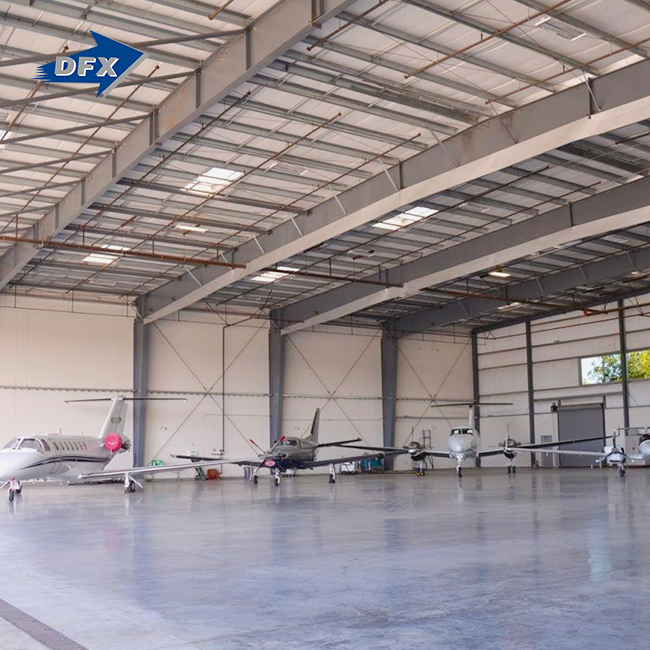
When you buy an AISC-certified large-span steel structure hangar, customization is standard. A pre-engineered building system can accommodate clear span lengths of 30 to over 100 meters, eave heights that can be changed to meet the needs of an aircraft tail or a crane runway, and roof pitch choices that range from a single slope to symmetrical double slopes. Bi-fold, hydraulic, and folding hangar door systems can be built into the frame of the building from the beginning, which saves money on changes that need to be made in the field.
Future Trends and Innovations in AISC-Certified Large-Span Steel Hangars
The design and construction of large-span steel structures is evolving. With Building Information Modeling (BIM), steel fabricators may detect conflicts and model how to erect a building before cutting a single beam. This computerized procedure reduces field errors and speeds up installation times, a huge gain for project managers working under tight schedules.
Improvements in modular pre-fabrication are making the time to make something shorter and shorter. "This allows manufacturers with big automated welded H-beam lines to provide whole frame packages that are more properly measured than field-produced alternatives. This allows for speedier bolt-up assembly on location. More and more clients are asking for the incorporation of green building solutions like cool-roof coatings and PU sandwich panel systems for thermal efficiency to achieve energy-efficient buildings in accordance with ESG reporting standards.
As AISC 360 and associated ASCE load requirements change, new climatic data will undoubtedly make it tougher for huge roofs to be lifted by wind. If procurement experts create connections with manufacturers that can adjust design packages to suit new code cycles, subsequent projects will go more easily.
Conclusion
It takes more than checking a certification box to find an AISC-certified large-span steel structure hangar that meets the requirements. The whole process of buying something, from checking the grade of the materials and making sure the welders are qualified to giving instructions on how to put it together and inspecting it afterward, affects how well the building works for decades. Getting an Aisc-certified large-span steel structure hangar along with ISO9001, CE, COC, and PVOC certifications and full structural calculation paperwork is what procurement managers need to show that the investment is worth it and that project risk is being managed well.
FAQ
1. What is the minimum steel grade required for a compliant large-span hangar frame?
The main parts of the structure should be made of ASTM A572 Grade 50 or an international grade that is the same or similar, such as Q355B or S355JR. Mill certificates should show that the yield strength is at least 355 MPa. A lower grade of steel doesn't meet the design standards for wide-span portal frames made by AISC 360.
2. How long do fabrication and delivery typically take for a customized hangar?
Customized manufacturing timelines depend on how complicated the project is and how long the span is. Most wide-span hangar kits, which include welding H-section main frames, purlins, braces, and cladding systems, are finished 45 to 90 days after engineering approves them. This depends on the number of orders and how they will be shipped.
3. What maintenance protocols extend the service life of a steel hangar?
It is standard practice to check connection bolts for loosening once a year, check the integrity of the anti-corrosion coating every six months, and to fix any coating damage at weld zones right away. Hot-dip steel frames or high-build epoxy primer systems need to be fixed less often than structures with only one coat.
4. Can a large-span steel hangar support an overhead bridge crane?
Yes. From the engineering stage on, crane runway beams and corbel brackets are built into the main column design. Before the final structural estimates are done, the static and dynamic crane loads, which are usually between 2 and 20 tons, must be provided. This is to make sure that the columns are the right size.
Partner with DFX for Your Next Large-Span Steel Hangar Project
Since 2011, DFX (Qingdao Director Steel Structure Co., Ltd.) has built engineered steel buildings for the aircraft, industry, and infrastructure sectors. Our team can help with every step, from figuring out the structure to putting it together. We have ISO9001, CE, COC, and PVOC standards, and we can build up to 40,000 m². Get in touch with our engineering team at jason@bigdirector.com right away to get a personalized price for your AISC-certified large-span steel structure hangar supplier needs.
References
1. American Institute of Steel Construction (AISC). Steel Construction Manual, 16th Edition. AISC, 2023.
2. American Institute of Steel Construction (AISC). AISC 360-22: Specification for Structural Steel Buildings. AISC, 2022.
3. American Society of Civil Engineers (ASCE). ASCE 7-22: Minimum Design Loads and Associated Criteria for Buildings and Other Structures. ASCE, 2022.
4. American Welding Society (AWS). AWS D1.1/D1.1M: Structural Welding Code — Steel. AWS, 2020.
5. National Fire Protection Association (NFPA). NFPA 409: Standard on Aircraft Hangars. NFPA, 2022.
6. Metal Building Manufacturers Association (MBMA). Metal Building Systems Manual. MBMA, 2021.
Learn about our latest products and discounts through SMS or email