- English
- French
- German
- Portuguese
- Spanish
- Russian
- Japanese
- Korean
- Arabic
- Greek
- German
- Turkish
- Italian
- Danish
- Romanian
- Indonesian
- Czech
- Afrikaans
- Swedish
- Polish
- Basque
- Catalan
- Esperanto
- Hindi
- Lao
- Albanian
- Amharic
- Armenian
- Azerbaijani
- Belarusian
- Bengali
- Bosnian
- Bulgarian
- Cebuano
- Chichewa
- Corsican
- Croatian
- Dutch
- Estonian
- Filipino
- Finnish
- Frisian
- Galician
- Georgian
- Gujarati
- Haitian
- Hausa
- Hawaiian
- Hebrew
- Hmong
- Hungarian
- Icelandic
- Igbo
- Javanese
- Kannada
- Kazakh
- Khmer
- Kurdish
- Kyrgyz
- Latin
- Latvian
- Lithuanian
- Luxembou..
- Macedonian
- Malagasy
- Malay
- Malayalam
- Maltese
- Maori
- Marathi
- Mongolian
- Burmese
- Nepali
- Norwegian
- Pashto
- Persian
- Punjabi
- Serbian
- Sesotho
- Sinhala
- Slovak
- Slovenian
- Somali
- Samoan
- Scots Gaelic
- Shona
- Sindhi
- Sundanese
- Swahili
- Tajik
- Tamil
- Telugu
- Thai
- Ukrainian
- Urdu
- Uzbek
- Vietnamese
- Welsh
- Xhosa
- Yiddish
- Yoruba
- Zulu
Aircraft Paint Hangar Structure: Ventilation and Fire Safety Basics
An aircraft paint hangar structure has to execute three jobs simultaneously. It protects the aircraft, it keeps air moving in a controlled manner in the painting area, and it reduces fire hazard from combustible coatings and solvent vapours. Ventilation whisks overspray and vapours away before they can accumulate. Fire protection, hazardous-area electrical devices, and grounding decrease sources of fire. These systems need freedom to perform without interior columns impeding the aircraft, which is why a clear-span steel frame is used. In this article, I explain the essentials in simple language so that project managers, contractors, and procurement teams can ask better questions before they ask for quotations.

Aircraft Paint Hangar Structure Basics and Design Requirements
Things that make an aircraft paint hangar structure unique must be known before we look at the fire and airflow systems.
What Makes a Paint Hangar Different
What you are looking at is not an aircraft paint hangar structure. It can be used to prepare the area, spray, dry, fix, and check. The company works with combustible coatings, chemical vapours, and overspray every day. The design includes a steel enclosure with aviation-type doors, airflow, filtration, HVAC, fire suppression, lighting, grounding, drainage, and electrical systems for potentially hazardous regions. Things like dust, static electricity, fire hazards, temperature, and humidity are things the building needs to be careful about, without interfering with planes flying. Designs are not based on a common building size because narrow-body, wide-body, helicopter, and military aircraft all have different requirements. Instead, the focus is on the kind of aircraft and the coating technique.
Start With the Aircraft, Process, and Site
The initial components of a good design are the plane and the manner of applying the paint. Also, we have to look at clear span, height, length, door size, scaffolding, ground-support equipment, engine clearance, exit routes, and inspection areas. Site conditions matter too. Wind, snow, earthquakes, corrosion, temperature, humidity, utilities, and building permissions all have an impact on how an aircraft paint hangar structure is designed. ASCE 7 is the design load used in most U.S. projects. Prepare for new planes and more stuff to accomplish at once. Adding span or height to the plan from the outset is far less expensive than making alterations to a building that is already built and in operation. Typically, a short meeting to plan with the engineer, the paint provider, and the safety officer can find issues early on.
Steel, Fabric, and Modular Options
Some styles of construction operate better in different ways. Steel is robust and can hold a lot. It can accommodate heavy ventilation, HVAC, doors, and fire safety systems. Fabric systems are easy to erect and transport, but they do require rigorous checks for fire safety, air movement, insulation, and permission to operate in the region. Sometimes the places that are far away or the places that can flourish need less time to wait. Steel is the greatest material for painting jobs that have to last, as it can stand the test of time. Look beyond the pricing; take into account the climate, throughput, maintenance plans, and long-term expenditures.
Ventilation, Temperature, and Humidity Control
As long as the basic needs of the aircraft paint hangar structure are met, air is the next most important thing. It keeps people and paint safe.
Airflow Patterns That Control Overspray
The most critical safety & quality system in an aircraft paint hangar structure is the airflow. It permits air to flow smoothly across the surface of the plane. It removes solvent fumes, paint aerosols, heat, and dust. These are known as cross-flow, downdraft, semi-downdraft, side-exhaust, and end-exhaust. Each has its merits and cons in terms of finish quality, collecting overspray, energy use, fitting problems, and upkeep. Slabs are present most of the time for cross-flow arrangements. Downdraft plans, however, require digging pits or trenches, adding to the civil work. Both the OSHA and NFPA 33 spray finishing standards require that the air in the spray area cannot exceed 25 percent of the lower flammable limit.
Filtration, Make-Up Air, and Exhaust
Filters keep the finish safe and clean. There are screens to prevent dust from hitting wet paint, and filters that catch overspray before it leaves the building. There may also be an EPA rule known as NESHAP that applies to coating activities in the U.S. (40 CFR Part 63, Subpart GG). Owners should make sure they realise their responsibilities immediately. Make-up air needs the same attention. Fans are used to exhaust air from an aircraft paint hangar structure and must also introduce clean, conditioned air to replace the exhausted air. Air balance can be thrown off when doors are opened, and wind blows outside. Check the standards for airflow and pressure measurements, filter layouts, and quick filter changing methods.
Temperature and Humidity Control
The weather and humidity directly affect the viscosity of the coating, the cooling time, the glue, and the quality of the finish. If there is a lot of dampness, paint doesn’t stick as well to cold metal. With a well-planned building, sensors that monitor temperature, pressure, dew point, relative humidity, and filter loads can be utilised to heat, cool, dehumidify, and manage airflow. Central controls with warnings and data logging allow operators to prove the consistency of the operation during client audits. Variable-speed fans and an insulated shell are two things that can assist in saving energy. But nobody should reduce airflow below a safe level only to save power. Lifecycle pricing is a useful way to understand how various solutions compare.
Fire Protection, Electrical, and Hazardous-Area Safety
Good airflow lowers risk, but it cannot replace a plan to control fires and sparks within an aircraft paint hangar structure.
Fire Protection as One Coordinated System
When you paint, there is a chance of a fire or explosion because of the paints, solvents, overspray, static electricity, hot work, and hidden materials that can catch fire. Fire safety is seen as a whole system that includes the building itself, the surfaces inside, the airflow, finding and putting out fires, emergency shut-downs, storage, cleaning, and letting the fire department in. Depending on the process and the rules in the area, sprinklers, foam systems, flame sensors, manual alarms, portable extinguishers, and equipment that turns off by itself may all work. NFPA 409 and NFPA 33 both talk about fire safety in aircraft paint hangar structures and how to use sprays. The International Fire Code also has rules about finishes that can catch fire. The review won't be a surprise because there is a code grid that shows each requirement and who checks it.
Hazardous-Area Electrical and Lighting
Tools for lighting and electricity must be safe to clean and check. Fixtures should give off good light, show colors correctly, avoid glare, and not get paint on them. The type of dangerous place determines what kinds of lights, motors, switches, sensors, control panels, wires, and fans can be used there. Article 516 of the National Electrical Code in the US says where spray treatments can take place. The local authority having jurisdiction is in charge of making the final choice. Because it takes time and money to replace parts that have already been put in place, teams should finish classifying before they choose their gear. In the purchase papers, you should ask for regional approval, records of installation that meet standards, and records of commissioning.
Grounding and Static Control
Static electricity can cause solvent vapor to catch fire, so bonding and grounding should each have their own line in the specification. It's possible that spray guns, paint cans, steel, filters, and ventilation parts will all need to be bonded to the same surface. In this grounding line, engineers can talk about how the steel frame is joined together. Every so often, resistance tests make sure that the system still works after years of use. The results need to be kept in the file for maintenance. This is because open containers and powder buildup are safety issues that can't be fixed by equipment alone. Operators should also teach their staff how to clean up after themselves.
Procurement, Installation, and Supplier Selection
The next step is to turn technical basics into a clean aircraft paint hangar structure purchase and a smooth build.
Procurement Checklist for Buyers
A total acquisition package includes building, process equipment, utilities, safety systems, paperwork, installation, and support. Ask for a general layout drawing, structural calculations, base data, ventilation calculations, machine layouts, fire safety concepts, hazardous area ratings, and plans for getting the facility up and operating. Ask for separate pricing for the building itself, its doors, its foundation, its ventilation, filtration, environmental control, power, fire safety, installation, testing, and warranty. Then look at the cost of owning everything. This is significant since overall cost can vary due to goods, permits, taxes, downtime, energy use, filters, maintenance, and public works. If the price is cheap, things that may come up later as change orders may not be included.
Installation, Commissioning, and Maintenance
During the installation, it’s best to follow a clear order: examine the foundations, build the structure, put up the enclosure and doors, line the booth, do the ventilation, HVAC, fire protection, electrical work, grounding, then the final inspection. Then, during commissioning, electrical systems, lighting, emergency stop, alarms, fire systems, and airflow are tested. Until the operators have been educated and issued documents, work cannot commence. Fire systems, doors, locks, grounding points, rust, filters, fans, motors, and fire systems need to be examined routinely with written records. And so often the error is made of treating the hangar like any other repair building and pulling out tools before the threats have been dealt with.
Choosing a Steel Structure Partner
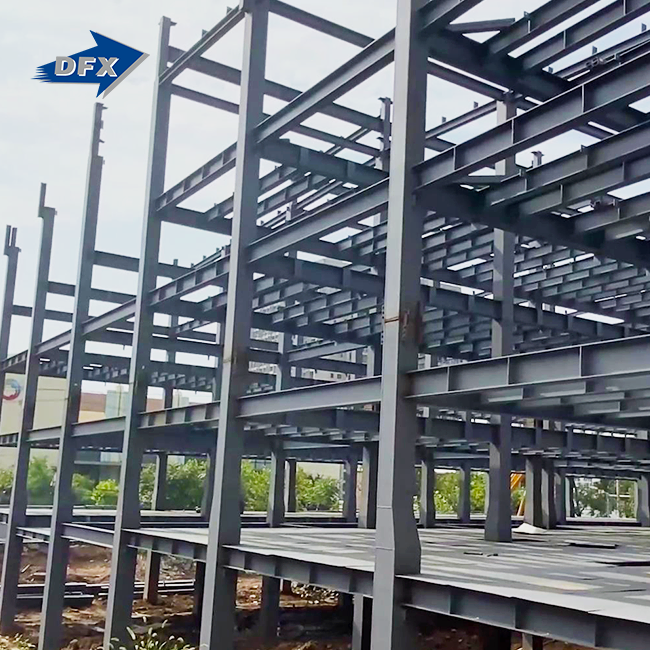
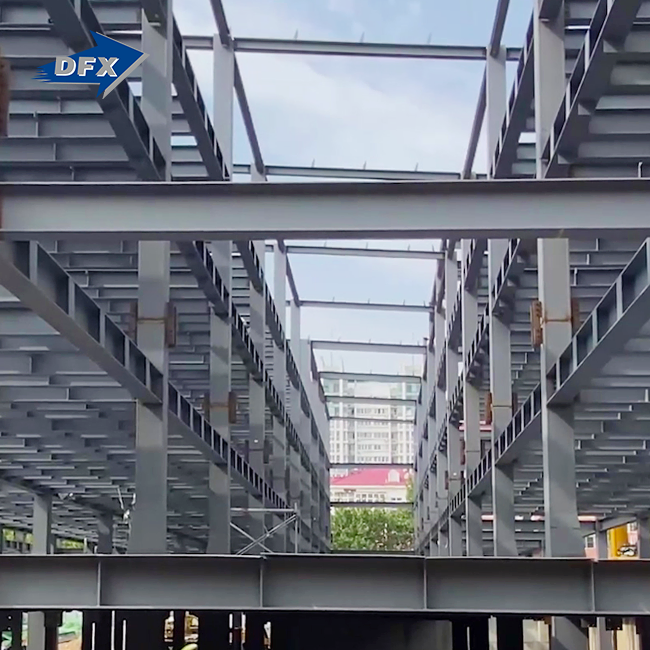
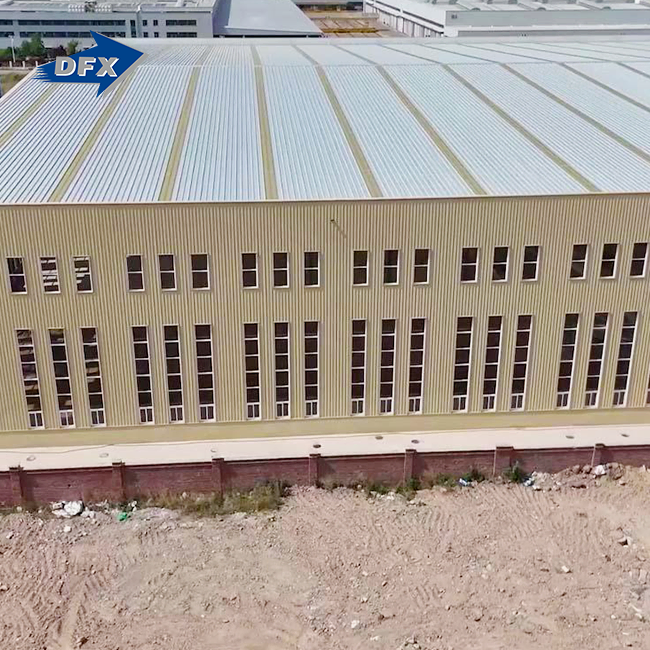
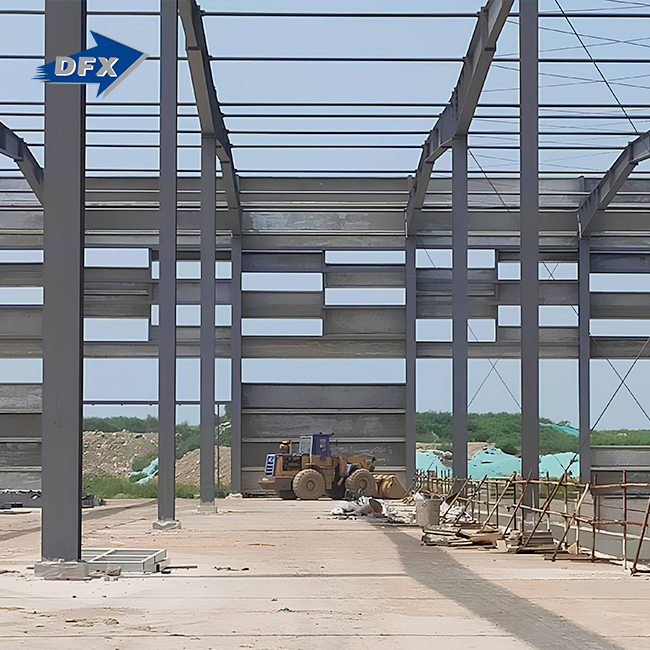
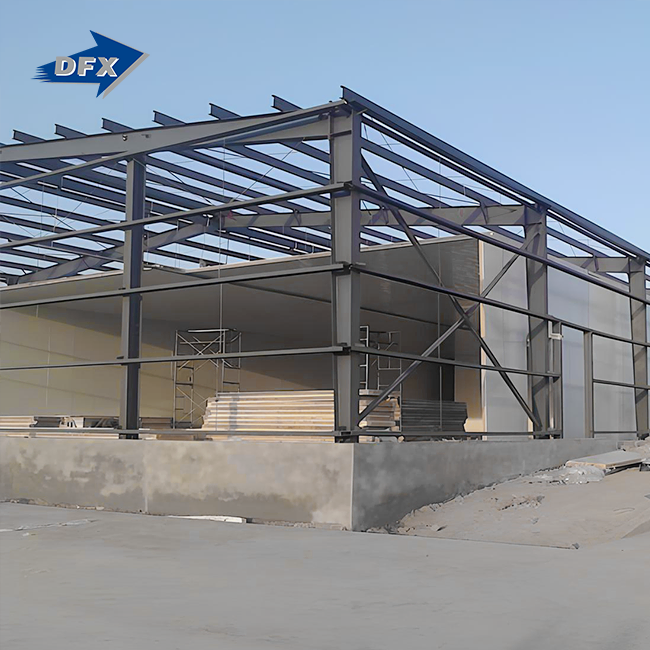
The company DFX, which stands for Qingdao Director Steel Structure Co., Ltd., has been making steel buildings since 2011. Our plant is 40,000 square meters and has six automatic lines for welding H-beams. Each year, these lines can make about 20,000 tons of welded H-beams and columns. More than 200 people work there. Our high-clearance, long-span steel building is made in China. The main frame is made of welded H-section steel, and the supports are stronger. Large industrial buildings, places to store heavy equipment, and aircraft paint hangar structures can all use it well. We can help with structural calculations, unique designs, manufacturing, and installation. We have ISO quality management and CE, COC, and PVOC certificates to back us up. The steel frame is what we focus on. Airflow, fire safety, and ventilation tools should only be installed by trained experts, and we check that the steel connections match their plans.
Conclusion
As long as you plan it well, building an aircraft paint hangar structure will have a good steel cage, controlled airflow, weather control, and many fire safety measures. The size of the plane, the finishing method, and the site conditions are the first things that are thought about when drawing. Steel, cloth, or flexible options can all be used to meet different work needs. Vapors and overspray are kept in check by make-up air, ventilation, and filtration. By controlling the temperature and humidity, the quality of the coating is kept high. In order to follow the rules set by NFPA, OSHA, the EPA, and individual states, it is best for all of these areas to work together as a single system. To keep the building safe and useful for a long time, it needs to be built with clear paperwork, put together carefully, and serviced regularly.
FAQ
Q1: What is the main ventilation goal in a paint hangar?
The goal is to get rid of solvent vapors and extra spray while keeping the airflow steady in the aircraft paint hangar structure. Other safety rules, like NFPA 33, try to keep the air in the spray area below 25 percent of the lower flammable limit. There is less chance of an explosion now.
Q2: Can a fabric structure serve as a paint hangar?
Sometimes. Fabric systems are simple to set up, but they need to be carefully checked for fire safety, gas control, insulation, and approval in the area before anyone agrees. A steel frame is usually the easier choice for long-term businesses that need a lot of fire and ventilation gear.
Q3: Does DFX supply ventilation and fire suppression equipment?
DFX is mostly concerned with the steel frame and can help with structural calculations, custom designs, fabrication, and fitting. Ventilation, filtration, and fire safety equipment should only be put in place by professionals, and we make sure that the steel connections meet their needs.
Request an Aircraft Paint Hangar Structure Assessment or Quote
DFX can make a rough steel layout for your aircraft paint hangar structure job based on the size of your plane, the site, and your schedule. From our factory in China, we make structures for these facilities. We offer long-span steel buildings with welded H-section frames, as well as structural calculations, special fabrication, and help with installation. To tell us about your idea, email jason@bigdirector.com. We'll let you know what to do next with your defense, MRO, airline, airport, or OEM project.
References
1. NFPA 409, Standard on Aircraft Hangars, 2022
2. NFPA 33, Standard for Spray Application Using Flammable or Combustible Materials, 2021
3. NFPA 70, National Electrical Code, 2023
4. International Code Council, International Fire Code, 2021
5. U.S. Environmental Protection Agency, National Emission Standards for Aerospace Manufacturing and Rework Facilities, 40 CFR Part 63 Subpart GG, 1995
6. ASCE/SEI 7, Minimum Design Loads and Associated Criteria for Buildings and Other Structures, 2022
Learn about our latest products and discounts through SMS or email