- English
- French
- German
- Portuguese
- Spanish
- Russian
- Japanese
- Korean
- Arabic
- Greek
- German
- Turkish
- Italian
- Danish
- Romanian
- Indonesian
- Czech
- Afrikaans
- Swedish
- Polish
- Basque
- Catalan
- Esperanto
- Hindi
- Lao
- Albanian
- Amharic
- Armenian
- Azerbaijani
- Belarusian
- Bengali
- Bosnian
- Bulgarian
- Cebuano
- Chichewa
- Corsican
- Croatian
- Dutch
- Estonian
- Filipino
- Finnish
- Frisian
- Galician
- Georgian
- Gujarati
- Haitian
- Hausa
- Hawaiian
- Hebrew
- Hmong
- Hungarian
- Icelandic
- Igbo
- Javanese
- Kannada
- Kazakh
- Khmer
- Kurdish
- Kyrgyz
- Latin
- Latvian
- Lithuanian
- Luxembou..
- Macedonian
- Malagasy
- Malay
- Malayalam
- Maltese
- Maori
- Marathi
- Mongolian
- Burmese
- Nepali
- Norwegian
- Pashto
- Persian
- Punjabi
- Serbian
- Sesotho
- Sinhala
- Slovak
- Slovenian
- Somali
- Samoan
- Scots Gaelic
- Shona
- Sindhi
- Sundanese
- Swahili
- Tajik
- Tamil
- Telugu
- Thai
- Ukrainian
- Urdu
- Uzbek
- Vietnamese
- Welsh
- Xhosa
- Yiddish
- Yoruba
- Zulu
What Makes a Steel Structure Office Suitable for Business Expansion?
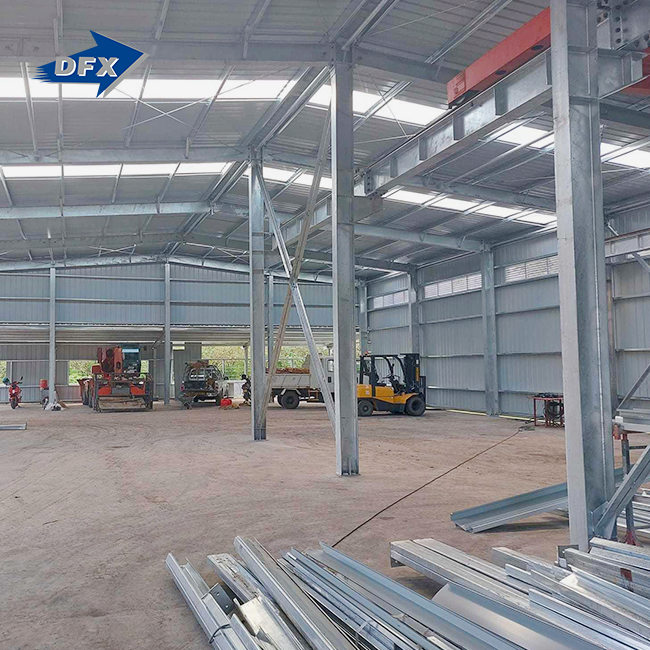
When a firm is ready to expand, the building it's in will either help it grow or hinder it. Straight away, the steel-structure office answers that. These commercial buildings are of prefabricated column-beam construction, with high-strength steel grades of Q235 or Q355. They provide the speed, flexibility, and structural stability that developing enterprises require. A prefab steel office structure enables you to adjust the size of your project without the delays and added expenditures of conventional concrete construction. It may be utilized for anything from a one-storey administrative hub to a multi-storey corporate center.

Understanding Steel Structure Offices and Their Business Value
Steel-framed industrial buildings have completely changed how companies plan their workspaces. Traditional reinforced concrete offices need a long time to cure and have heavy foundations. A steel column-beam structure, on the other hand, comes in prefabricated parts that can be put together quickly on-site.
What Sets Steel Apart from Concrete and Timber?
The theory behind the structure is simple. Steel is much stronger than concrete for its weight, which lowers the loads on the foundation and speeds up the work. Timber isn't fireproof or strong enough to span long distances like current business buildings need. A steel-framed office made of Q355 structural steel can span 12 to 24 meters without any internal columns. This makes the floor plates truly open and flexible, so they can accommodate growing teams without having to spend a lot of money on renovations.
Sustainability as a Business Asset
Corporate duty now affects how all kinds of businesses buy things. Steel can be recycled over and over again, and these buildings can meet LEED or BREEAM certification requirements when they are insulated with sandwich panels that are also energy-efficient. The World Steel Association says that steel construction creates a lot less waste on-site than traditional methods. This helps meet environmental goals and lowers operational costs right from the start.
Core Advantages of Steel Structure Offices Over Traditional Options
In the building, industry, and infrastructure, people who make decisions always compare the initial cost to the value it will bring in the long run. Both metrics show that steel business buildings do well, and the proof backs this up.
For the main reasons why prefab steel structure office buildings are a good choice, read on:
- Accelerated construction schedule: Speeded up construction schedule: Compared to concrete builds, steel structures cut project timelines by 30–50%. Parts are made off-site to sub-millimeter accuracy and then bolted together on-site. This cuts down on curing times and total work costs by a large amount.
- Lower total lifecycle cost: Lower total lifetime cost: Because less base is needed, there is less trash on-site, and the surface treatment method is easy to maintain, using epoxy zinc-rich primers or hot-dip galvanization, running costs stay the same over decades of use.
- Design flexibility for changing needs: Design that can adapt to changing needs: The building can meet the looks and needs of corporate headquarters, administrative centers, or business parks thanks to its composite floor systems, curtain wall facades, and metal panel cladding. As the organization changes, non-load-bearing walls can be moved around without affecting the structure.
- Seismic and wind resilience: Resilience to earthquakes and wind: Moment-resisting frames and steel bracing systems effectively handle lateral loads, making these buildings code-compliant in seismically active areas where concrete performance can vary.
These benefits address the main issues that project managers and procurement teams bring up when they look at different business building choices. Faster occupancy means more money coming in sooner, and structural longevity protects the initial investment over the full service life of the building.
How to Build and Expand Your Steel Structure Office Efficiently
Planning is what makes or breaks expansion projects. It's very important for the design plan, structural calculations, and site preparation of a prefabricated steel office building to all work together perfectly. When they do, the building process goes very quickly.
Modular Design Enables Scalable Growth
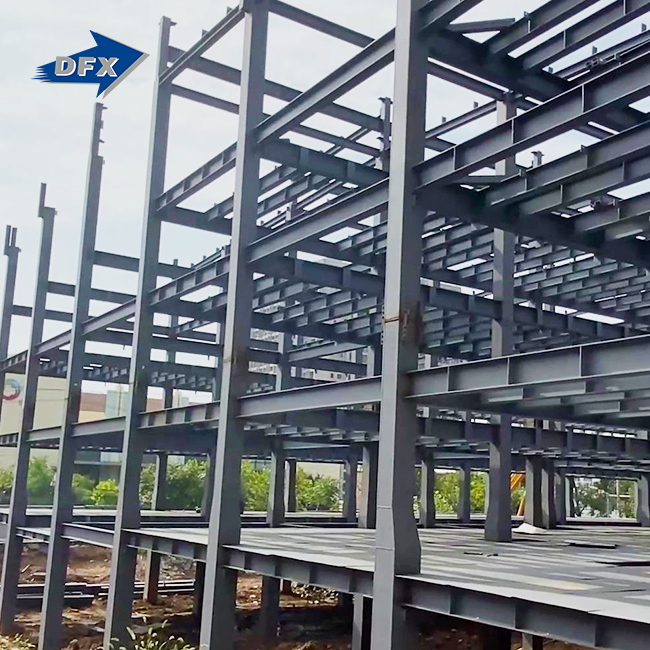
Steel-framed structures are modular, which means that it is theoretically feasible to add levels to the building or increase the space without having to pull down the present construction. For example, a corporation with a one-story office building might plan for future development at the outset of the design process by selecting column sections and base loads to support additional storeys. This strategy is forward-looking; it protects capital and avoids the challenges of transferring in times of great growth.
Choosing Certified Contractors Matters
The quality of the installation directly influences the performance of the construction. When you select contractors with validated qualifications and who follow standards like AISC 360, AWS D1.1, or EN 1090, you can be certain the welds are robust, the dimensions are exact, and the fire protection coating is the proper thickness. Critical joint connections are verified by non-destructive testing techniques such as ultrasonic testing and magnetic particle screening before entry.
The structure remains robust with periodic inspections and maintenance programs (including inspection of the anti-corrosion coatings and link gear), and the building lasts far longer than the average 50 years that well-maintained steel structures do.
Choosing the Right Steel Structure Office Supplier and Contractor
When purchasing, workers look at steel structure office building providers; they should focus on certifications, the ability to fabricate, the ability to engineer, and a portfolio of completed projects. A lot of the time, the difference between providers is whether they provide a complete service or just provide raw materials.
What Certifications Should You Verify?
Manufacturers with a good reputation have ISO 9001 quality management certification, CE marking to show that their products meet European standards, and project-specific certifications like COC or PVOC for markets that are regulated. When designing buildings, they must follow the local building codes of the country they are in. This is a must for projects in the US, Australia, and Southeast Asia.
Local vs. International Suppliers: A Practical Comparison
International providers, especially those that make things in China, have shown that they can compete by being good at precise construction, production capacity, and keeping costs low. Engineering depth is what sets them apart. A supplier that does architectural layout design, structural calculations, fabrication, and installation guidance throughout the whole project lifecycle gets much better results than a manufacturer that only sells parts. Check the guarantee terms, how quickly the seller responds to customer service requests after the sale, and their ability to make changes that go beyond standard catalog settings.
Future Trends & Strategic Advantages for Business Expansion
There’s an increasing enthusiasm in the corporate construction sector for smarter, greener ways to build, and steel-framed office choices are at the heart of this movement.
BIM and modular construction techniques are cutting down on design errors and further compressing project timelines. High-end corporate sites are beginning to use smart building technologies such as automated HVAC, IoT-based energy management, and prefabricated MEP (mechanical, electrical, and plumbing) systems. Steel buildings are more suited for these types of expansions as wires can be routed easily through the open wall and floor voids.
In the big markets, rules are becoming more and more accommodating to green development, including tax advantages and speedier permitting. As the regulations for environmental compliance tighten, the advantage will go to enterprises that employ certified materials that can be recycled.
Expandable steel company structures allow funds allocated for development to be strategically employed in modest increments over time. A corporation moving to a new market might immediately create a working executive office and then extend or reconfigure that structure as local activities increase. That is because they don’t have to pay for a permanent, solid concrete building.”
Conclusion
A steel structure office gives growing businesses what they need: speed, flexibility, structural reliability, and low long-term costs. Every part of the building, from the premade column-beam framework to the composite floor system and curtain wall face, is meant to help your team get to work faster and keep the building working as your business grows. Construction practice and material science both show that steel is better than concrete for businesses that need to be flexible with time, money, and the future.
FAQ
1. How does a steel office building handle fire safety?
Around 600°C is when steel starts to lose its structural strength. But intumescent coatings expand in heat and offer approved 2-, 3-, or 4-hour fire protection ratings. This is what most national building codes say should be done for commercial occupancy classifications.
2. Is corrosion a long-term maintenance concern?
Corrosion is not a big problem as long as the right coating method is used during manufacturing. When paired with high-performance epoxy topcoats, hot-dip galvanization that meets ISO 1461 standards protects for 50 years or more in most settings, even those that are humid or near the coast.
3. How does the overall cost compare to concrete construction?
Steel materials may cost about the same or a little more up front, but the overall return on investment (ROI) is usually higher. Financing costs, labor costs, and equipment rental costs go down by 30–50% when construction time is cut, and civil works costs go down when foundations are made lighter.
4. Can the building be expanded or reconfigured later?
Yes. Steel structures make it possible to add floors, move walls, and expand the size of a building with little structural damage. This is a big advantage over concrete, where changes need to be made by tearing it down and building it again.
Ready to Build a Steel Office That Grows With Your Business? Contact DFX Today
Since 2011, DFX (Qingdao Director Steel Structure Co., Ltd.) has sold approved prefab steel business buildings all over the world. We are a reliable steel structure office manufacturer with ISO 9001 and CE certifications, a 40,000 m² production plant, and the ability to do everything in-house, from planning to installation. We take care of the whole project. Get in touch with our team right away to get a structural proposal that is specifically made for your growth needs. Get in touch with us at jason@bigdirector.com.
References
1. World Steel Association. Steel's Contribution to a Low Carbon Future and Climate Resilient Societies. World Steel Association, 2022.
2. American Institute of Steel Construction (AISC). Steel Construction Manual, 16th Edition. AISC, 2023.
3. McGraw-Hill Construction. Prefabrication and Modularization: Increasing Productivity in the Construction Industry. McGraw-Hill, 2011.
4. U.S. Green Building Council. LEED v4 Reference Guide for Building Design and Construction. USGBC, 2019.
5. Steel Construction Institute (SCI). Design of Steel Framed Buildings for Service Life. SCI Publication P347, 2020.
6. International Code Council (ICC). International Building Code (IBC) 2021. ICC, 2020.
Learn about our latest products and discounts through SMS or email