- English
- French
- German
- Portuguese
- Spanish
- Russian
- Japanese
- Korean
- Arabic
- Greek
- German
- Turkish
- Italian
- Danish
- Romanian
- Indonesian
- Czech
- Afrikaans
- Swedish
- Polish
- Basque
- Catalan
- Esperanto
- Hindi
- Lao
- Albanian
- Amharic
- Armenian
- Azerbaijani
- Belarusian
- Bengali
- Bosnian
- Bulgarian
- Cebuano
- Chichewa
- Corsican
- Croatian
- Dutch
- Estonian
- Filipino
- Finnish
- Frisian
- Galician
- Georgian
- Gujarati
- Haitian
- Hausa
- Hawaiian
- Hebrew
- Hmong
- Hungarian
- Icelandic
- Igbo
- Javanese
- Kannada
- Kazakh
- Khmer
- Kurdish
- Kyrgyz
- Latin
- Latvian
- Lithuanian
- Luxembou..
- Macedonian
- Malagasy
- Malay
- Malayalam
- Maltese
- Maori
- Marathi
- Mongolian
- Burmese
- Nepali
- Norwegian
- Pashto
- Persian
- Punjabi
- Serbian
- Sesotho
- Sinhala
- Slovak
- Slovenian
- Somali
- Samoan
- Scots Gaelic
- Shona
- Sindhi
- Sundanese
- Swahili
- Tajik
- Tamil
- Telugu
- Thai
- Ukrainian
- Urdu
- Uzbek
- Vietnamese
- Welsh
- Xhosa
- Yiddish
- Yoruba
- Zulu
Steel Structure Exhibition Hall vs Concrete: Which Saves More?
When clients ask me which material saves more for an exhibition hall project, my answer is almost always the same: it depends on your priorities, but a steel structure exhibition hall consistently delivers stronger value across cost, speed, and flexibility. Steel-framed halls built with Q235/Q355 column-beam systems can reduce total project costs by 20–35% compared to conventional concrete, primarily through shorter construction timelines, lower labor demands, and reduced foundation loads. For procurement managers and project engineers evaluating large-span commercial buildings, understanding this comparison is a practical financial decision.

Understanding Exhibition Hall Construction Materials
Before you compare prices, it's helpful to know what each material does on the job site.
Steel Structure Halls: Modular and Scalable
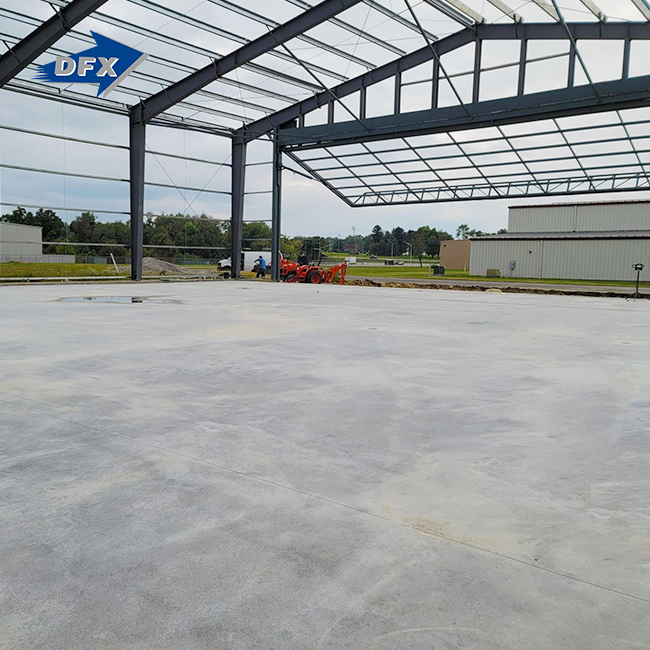
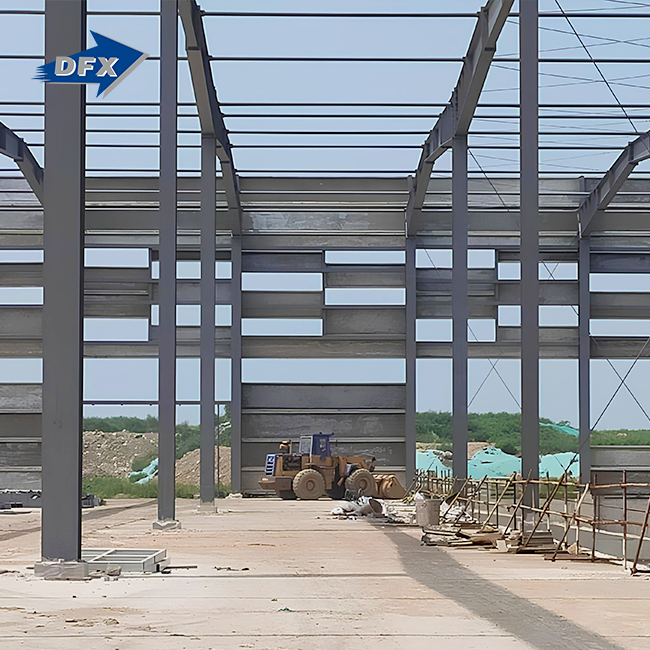
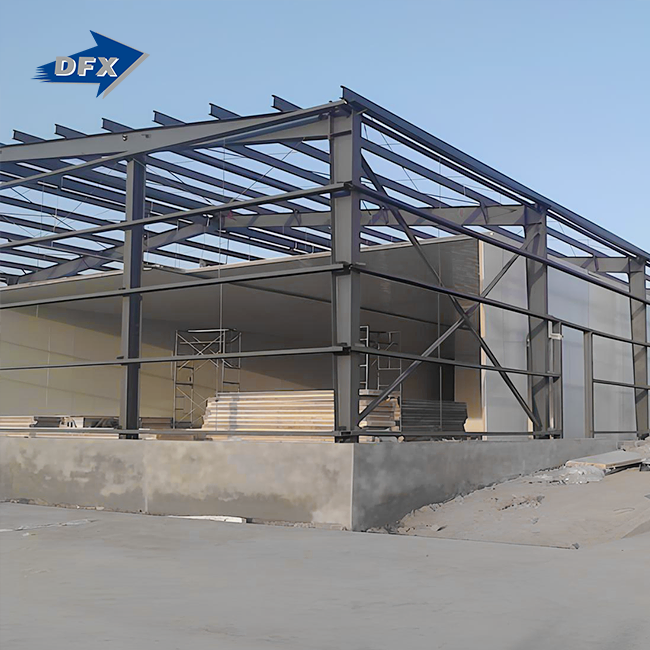
The main structure of a prefabricated Steel structure exhibition hall that supports weight is made up of H-beams, trusses, or space frames. Parts are made off-site to exact specifications and then put together on-site. This method cuts down on construction times by a huge amount and makes it possible to build with complex shapes that traditional masonry just can't do. The covered facade, whether it's a curtain wall or a metal panel, fits seamlessly with the structural frame. This gives the building a finished, business-like look without the need for extra trades that add weeks to the schedule.
Concrete Halls: Durable but Demanding
Cast-in-place or precast members are used in concrete construction. These parts need a lot of time to cure, as well as formwork and labor on-site. Concrete works well when it is compressed and is good for long-term, heavy use. But because the material is heavy, the foundations need to be stronger, and making changes to the plan in the middle of a job can cost a lot. When exhibition spaces need column-free spans longer than 40 meters, concrete is both structurally inefficient and expensive.
Cost Comparison: Steel Structure vs Concrete Exhibition Halls
The real talk starts with cost. I'm going to go over both the up-front and lifetime numbers with you so that you can make an honest choice.
Initial Construction Costs
Prefabricated steel parts come already cut, drilled, and coated, so they don't need a lot of work to be done on-site. According to the Steel Construction Institute (2022), 30–40% less work is needed to construct steel structure exhibition halls than reinforced concrete buildings. Foundation costs go down because steel buildings weigh about 60–70% less than similar concrete buildings. This means that less work is needed to prepare the ground, and piles are not needed.
Here are the main factors that affect the prices of these two products when they are being bought:
- Material and construction costs: Steel parts made under ISO-controlled conditions have consistent quality and prices. Q355 steel, which is often used in Director Steel's exhibition hall systems, has a high yield strength without using a lot of material, which keeps the cost of raw materials low.
- Labor and assembly time: Steel erection crews can put together structures 30–50% faster than it takes for concrete to pour and cure. This means weeks of saved project time and measurable daily site overhead savings for a 5,000 m² exhibition space.
- Foundation needs: Lighter steel frames lower the bearing load requirements, which directly lower civil engineering costs—a budget line that clients often don't account for enough when they compare quotes.
When you add up the money you'll make from earlier usage, these savings add up. A building that is ready to use two months ahead of schedule is more than just a construction accomplishment; it's also a measurable financial return.
Long-Term Maintenance and Lifecycle Costs
People often say that concrete is a low-maintenance material, but this idea needs to be looked at more closely. Carbonation, spalling, and rebar corrosion are all common ways that things break down and need to be fixed on a regular basis. According to a study from the American Concrete Institute in 2021, the cost of maintaining concrete infrastructure in the U.S. has always been higher than expected over a 25-year period.
When steel is covered with C3-level anti-corrosion treatments or hot-dip galvanization, it can keep its shape for more than 50 years as long as it is inspected regularly. Local building rules say that intumescent coatings raise fire resistance scores to 1–3 hours. This answers one of the main concerns buyers have. Over the course of 30 years, steel structures usually have lower total ownership costs.
Performance and Sustainability Benefits of Steel Structures
In 2024, procurement managers are responsible for more than just cutting costs. They are also responsible for meeting ESG pledges and structuring performance standards. Steel talks about both.
Structural Safety and Seismic Resilience
Because it is flexible, steel is perfect for areas that are prone to earthquakes. Concrete can crack when it's loaded from the side, but steel frames can take in energy and send it to other places. Buildings meant to withstand earthquakes up to Grade 8+ use steel bracing systems that can't be made out of concrete without costing a lot more. This performance gap is a deciding factor for projects in areas that are prone to earthquakes.
Environmental Credentials
Steel is the material that is recovered the most. According to the World Steel Association (2023), more than 85% of structural steel is recycled around the world. On the other hand, tearing down concrete buildings creates a lot of trash for landfills, and making cement is responsible for about 8% of the world's CO₂ emissions every year. A steel structure exhibition hall's ability to be recycled and lower embodied carbon makes it a clear choice for buyers working toward LEED certification or business sustainability goals.
Procurement Considerations for B2B Clients
Picking the right supplier is just as important as picking the right material. Before agreeing to a procurement plan, I think you should look at these things.
Certifications and Quality Standards
Make sure that your provider is certified by ISO 9001 or ISO 9004 and that structural parts have the CE mark. Director Steel, for example, uses ISO quality management systems and has CE-certified products, as well as COC and PVOC certifications. These credentials meet the needs of both U.S. projects and international compliance frameworks. All raw steel comes with Mill Test Certificates (MTCs), which prove its chemical makeup and yield strength and allow for full material tracking.
Customization and Installation Support
A good supplier of Steel structure exhibition halls should offer architectural layout design, structural calculations, fabrication, and installation advice, all in one package. With single-source buying, there are no communication gaps between the designer, the fabricator, and the installer, which is a common reason why projects with multiple vendors take longer and cost more than planned. Director Steel has an in-house detailing and engineering team that helps clients with every step of the process, from the idea stage to the final assembly. This is especially helpful for EPC contractors who have to work with tight project schedules.
Decision-Making Framework: Which Material Saves More for Your Project?
The honest answer is that steel saves more in most business showroom situations, but concrete still has some benefits in some situations. This framework will help you make a choice that fits the needs of the job.
Steel structure exhibition halls deliver superior value when:
- The project's schedule is limited, and getting people to move in early makes money.
- Heavy concrete supports are not an option because the spot can't hold as much weight.
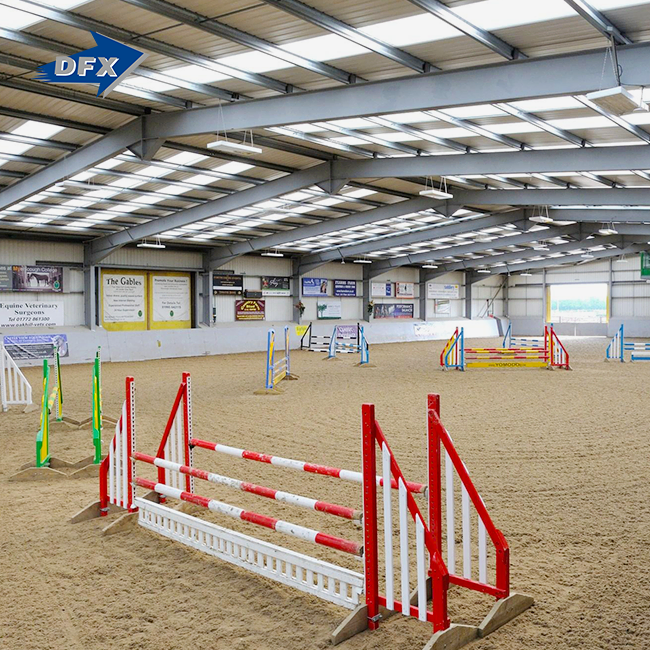
- The plan calls for long spans without columns that are longer than 40 meters.
- Reporting on sustainability or getting LEED approval is needed for the project.
- The client needs future adaptability, such as expansion or relocation.
Concrete might still be better when:
- The project is in a seaside or high-humidity area that doesn't have the money for high-end anti-corrosion equipment.
- Extreme compressive load needs are higher than what normal steel pieces can handle cost-effectively.
- Because of local job markets, pouring concrete is cheaper than putting up steel.
For most industrial warehouses, business buildings, corporate offices, and show centers, steel is clearly the better choice. This is especially true when buying from a manufacturer with a track record of making things.
Conclusion
For steel structure exhibition halls, trade fair centers, and big business buildings, steel structures always have lower total costs than concrete ones. Steel is the smart choice for procurement managers and project engineers who are working with real budget limits because it is easier to put together, has lower foundation costs, better lifetime economics, and measurable environmental benefits. The important thing is to find the right material and a certified, dependable manufacturer who can do the engineering, fabrication, and installation all at once. When those things come together, the savings aren't just an idea; they show up on the project budget.
FAQ
1. How much cheaper is a steel exhibition hall compared to a concrete?
Costs for the whole project usually go down by 20 to 35 percent because of shorter construction cycles, lighter foundations, and less work that needs to be done. Quantities depend on the size of the job, the conditions of the place, and the cost of materials in the area.
2. What is the lifespan of a steel-framed exhibition hall?
The design life of a steel-framed exhibition hall is more than 50 years with regular upkeep and normal C3-level anti-corrosion treatment. In harsh environments, hot-dip galvanization or epoxy zinc-rich priming improves the performance of coatings even more.
3. Does steel meet fire resistance requirements?
Yes, steel members can withstand fires for one to three hours with intumescent coatings or fireproof board cladding, which is in line with U.S. building codes and international standards.
4. Can steel exhibition halls be expanded or relocated?
Steel's flexible design makes it easy to add on in the future. You can add sections to a current building without tearing it down, and some configurations allow for full relocation.
5. Are Chinese steel structure manufacturers reliable for U.S. projects?
Manufacturers with good reputations and CE, ISO, COC, and PVOC certifications make parts that meet standards that are checked around the world. U.S. project managers need proof that the materials can be tracked through Mill Test Certificates.
Get a Custom Steel Structure Exhibition Hall Quote from Director Steel
Since 2011, Director Steel has been building and delivering certified steel structures to clients in the business, industrial, and farming sectors. You can trust our steel structure exhibition hall supplier because we have CE, ISO, COC, and PVOC certifications. We offer full-service, from architectural design and structural calculations to fabrication and fitting help. Get free procurement advice and a price for your project by emailing jason@bigdirector.com to our engineering team right now.
References
1. Steel Construction Institute. Steel-Framed Commercial Buildings: Cost and Performance Analysis. 2022.
2. World Steel Association. Steel Recycling and Sustainability Report. 2023.
3. American Concrete Institute. Infrastructure Maintenance Cost Trends in the United States. 2021.
4. American Institute of Steel Construction (AISC). Steel Construction Manual, 16th Edition. 2022.
5. U.S. Green Building Council. LEED v4.1 Reference Guide for Building Design and Construction. 2021.
6. Federal Highway Administration (FHWA). Life-Cycle Cost Analysis in Pavement and Structure Design.
Learn about our latest products and discounts through SMS or email