- English
- French
- German
- Portuguese
- Spanish
- Russian
- Japanese
- Korean
- Arabic
- Greek
- German
- Turkish
- Italian
- Danish
- Romanian
- Indonesian
- Czech
- Afrikaans
- Swedish
- Polish
- Basque
- Catalan
- Esperanto
- Hindi
- Lao
- Albanian
- Amharic
- Armenian
- Azerbaijani
- Belarusian
- Bengali
- Bosnian
- Bulgarian
- Cebuano
- Chichewa
- Corsican
- Croatian
- Dutch
- Estonian
- Filipino
- Finnish
- Frisian
- Galician
- Georgian
- Gujarati
- Haitian
- Hausa
- Hawaiian
- Hebrew
- Hmong
- Hungarian
- Icelandic
- Igbo
- Javanese
- Kannada
- Kazakh
- Khmer
- Kurdish
- Kyrgyz
- Latin
- Latvian
- Lithuanian
- Luxembou..
- Macedonian
- Malagasy
- Malay
- Malayalam
- Maltese
- Maori
- Marathi
- Mongolian
- Burmese
- Nepali
- Norwegian
- Pashto
- Persian
- Punjabi
- Serbian
- Sesotho
- Sinhala
- Slovak
- Slovenian
- Somali
- Samoan
- Scots Gaelic
- Shona
- Sindhi
- Sundanese
- Swahili
- Tajik
- Tamil
- Telugu
- Thai
- Ukrainian
- Urdu
- Uzbek
- Vietnamese
- Welsh
- Xhosa
- Yiddish
- Yoruba
- Zulu
How to Maintain an Industrial Fuel Storage Shed Safely
Maintaining an industrial fuel storage shed safely means following a consistent schedule of inspections, corrosion control, fire prevention, and regulatory compliance. Whether you store diesel for farm equipment or aviation fuel at a construction site, a poorly maintained fuel shed creates fire hazards, environmental liability, and costly downtime. This guide walks you through practical steps to keep your fuel storage structure safe, compliant, and operational—covering inspection routines, material-specific care, staff training, and program implementation.

Understanding the Importance of Safe Maintenance for Industrial Fuel Storage Sheds
Why Maintenance Failures Are Costly
The US Environmental Protection Agency (EPA) says that thousands of contamination events happen every year because of poorly maintained storage systems that leak oil. The costs to clean up each spot range from $10,000 to over $1 million. Rust, metal wear, and coating breakdown are some of the main reasons why structures fail. It is much cheaper to fix these problems before they get worse by doing regular checks.
Key Regulatory Standards You Must Know
The United States has rules about how to build structures that store fuel. These rules are OSHA 29 CFR 1910.106 for storing flammable liquids, EPA 40 CFR 264.175 for secondary containment, and NFPA 30 for building separation and air. ATEX guidelines for explosion-proof settings must also be followed by facilities that work in Europe. If you don't follow these rules, you could get fined, have your permit taken away, or have your facility shut down.
The Business Impact of Proper Maintenance
In addition to following the law, regular maintenance of your industrial fuel storage shed saves your insurance coverage and makes sure that maker warranties are still good. Auditors, clients, and partners can tell that operations are run with discipline if it is well taken care of. Companies that keep records of their upkeep plans also have an edge when they go up for bids, especially for government infrastructure and EPC contracts.
Core Maintenance Principles for Industrial Fuel Storage Sheds
Routine Inspection and Monitoring
Every week, do visual checks, and every three months, do full expert inspections. Look for rust on the surface, paint blistering, corroded fasteners, and a breakdown in the sump seal. More and more modern buildings are using low-cost IoT gas monitors to warn people when smoke builds up above the Lower Explosive Limit (LEL) before it gets dangerous. Always write down what you found in a maintenance record that has a date on it. This paperwork is very important for compliance checks.
Fire Prevention and Ventilation
NFPA 30 says that there must be enough airflow to keep flammable vapors from building up near Class I and Class II liquids. For diesel storage, open-sided steel sheds usually have enough passive ventilation because air flows through the side holes. For closed sheds to store gasoline or aviation fuel, the airflow needs to be at least 1 cubic foot per minute per square foot of floor space. Put dry-powder or CO₂ extinguishers within 10 feet of the entrance and service them once a year.
Cleaning, Coating, and Corrosion Control
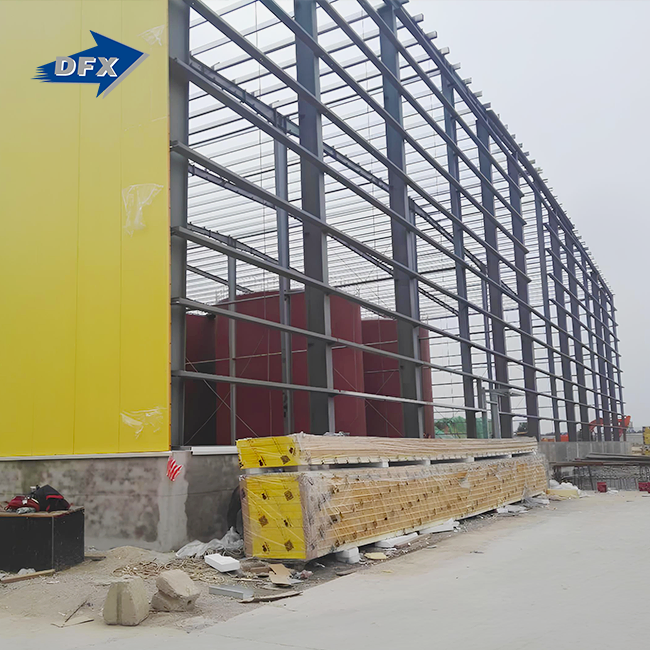
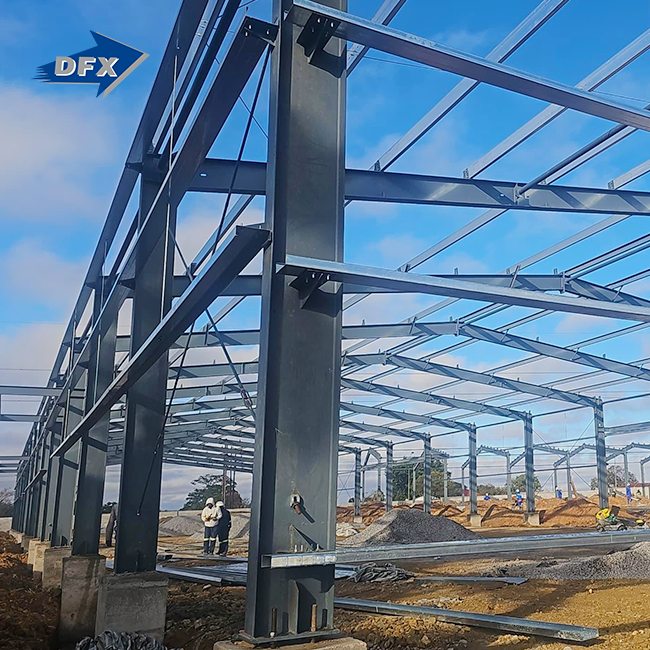
Steel sheds made with galvanized C/Z purlins and H-section beams, like those made by Director Steel, have good rust resistance. Still, every six months, paint any metal surfaces that are scratched or bare with anti-corrosion touch-up paint. As soon as there is a spill, containment sumps should be cleaned so that chemicals don't break down the epoxy lining. Every three months, pressure-wash the floor slab and make sure there are no clogs in the drains that could cause water to overflow during a spill.
Comparing Maintenance Needs by Industrial Fuel Storage Shed Type
Steel vs. Alternative Material Sheds
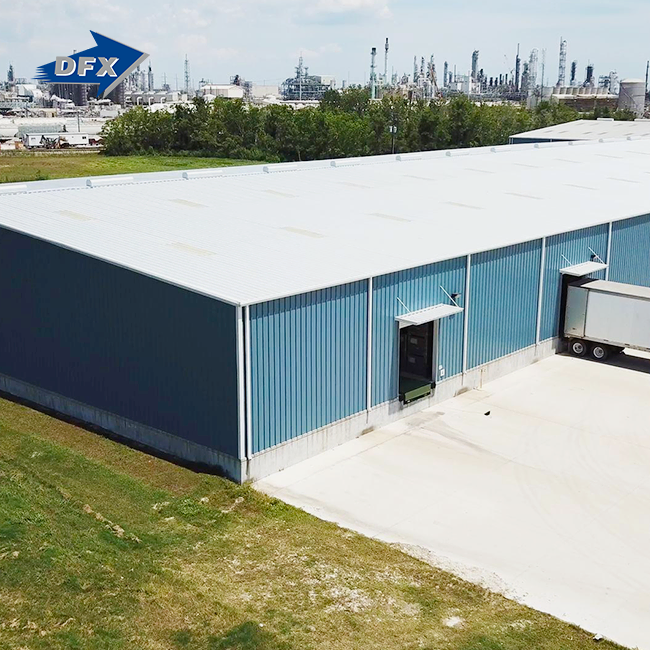
Steel fuel sheds with welded H-beam frames and galvanized purlins can hold a lot of weight and last a long time, but they need to be actively managed for corrosion, especially in coastal or high-humidity areas. Plastic or aluminum sheds don't need to be painted as often, but they are more likely to get damaged by UV light and impacts. Steel is still the best material for most industrial uses because it doesn't catch fire and its structure is easy to predict.
Open-Sided vs. Closed Sheds
Industrial fuel storage sheds with open sides and plenty of space on the sides let in natural airflow and make it easier to get to equipment, which makes them great for storing diesel on farms and in building sites. When storing lighter fuel grades with lower flash points, it's important to keep the sheds locked up, the temperature stable, and the weather out. Different types of sheds need different amounts of maintenance. Open sheds need structural checks more often to make sure they can handle the weather, while closed sheds need service for the ventilation system and door seal checks.
Portable vs. Permanent Installations
Anchor bolt foundations for permanent steel sheds need to be checked for integrity and base plate corrosion on a regular basis, especially after freeze-thaw cycles. The lifting points on portable or modular sheds with forklift pockets and crane lifting lugs need to be checked every time they are moved. As required by ASTM E165, the secondary containment sump must be checked for leaks at least once every three months using either a visual fill test or a dye penetrant method.
How to Implement a Maintenance Program That Meets Industry Best Practices?
Building Your Maintenance Schedule
A useful maintenance plan for a structure that stores fuel should include eye checks once a week, reviews of the fasteners and coatings every month, sump integrity tests every three months, and third-party compliance exams once a year. Put a named person in charge of each task and set a calendar alert to remind them. The plan should list the exact type of fuel that was kept, since NFPA 30 has different rules for Class I flammables and Class II combustibles, such as diesel.
Here are the most important parts of a good repair list:
- Weekly: Inspect for surface rust, leaks, vapor odor, and fire extinguisher accessibility. Check that ventilation openings are clear and unobstructed.
- Monthly: Review all fasteners, door hardware, and grounding cable connections. Check coating condition on the shed frame and sump interior.
- Quarterly: Conduct a full sump leak test, clean all drainage points, and verify sensor calibration. Review maintenance logs for recurring patterns.
- Annually: Engage a third-party inspector to verify compliance with OSHA 1910.106 and EPA secondary containment standards. Update training records.
When these steps are followed consistently, they lower the chance of unplanned failures and keep you from getting fined by the government.
Training Your Maintenance Personnel
The people who do upkeep on fuel sheds need to know about the dangers of the type of fuel being kept, how to use PPE properly (like chemical-resistant gloves and clothing that doesn't catch fire), and what to do in case of a spill or fire. Training should be kept track of and updated every year. The 29 CFR 1910.1200 Hazard Communication Standard from OSHA also says that Safety Data Sheets for all stored fuels must be available on-site.
Documentation and Compliance Auditing
Keep a written or electronic record of every time you check, fix, or clean the industrial fuel storage shed. Note the date, the name of the inspector, what they found, and what they did next. During an audit by the EPA or OSHA, this log is the main proof of doing the right thing. Cloud-based maintenance tools are now used by many EPC companies and manufacturing plant managers to keep records in one place across multiple sites. This makes it easier to send yearly reports to regulatory bodies.
Real-Life Cases: Successful Maintenance Strategies from Leading Industrial Fuel Storage Shed Brands
Leading makers of fuel sheds, such as Justrite and Denios, have built their names on building structures that are easy to maintain and meet strict safety standards. For example, Justrite's FM-approved steel safety cabinets have dual-vent bung fittings and epoxy powder coats that are applied at the factory and don't react with chemicals. This means that they only need to be painted every other year instead of every two years with normal paint systems. Denios specializes in modular bundled platforms with grating that can be taken off. This makes cleaning the sump faster and better.
When construction companies and farm owners buy buildings from foreign factories, these brands make one thing very clear: they should only buy sheds made of approved materials and pre-engineered containment systems. Director Steel's buildings are certified to ISO, CE, COC, and PVOC standards. They use H-section beams, welded frames, and galvanized C/Z purlins that meet these standards. The buildings also come with full construction plans to help with safe, code-compliant set-up.
The practical takeaway is easy to understand: pick a building that was made with fire-safe and corrosion-resistant materials, ask for all the paperwork when you buy it, and start following a maintenance plan right away.
Conclusion
Maintaining a fuel storage structure safely is not an option; it has a direct effect on your facility's safety record, regulatory standing, and bottom line. By using a structured inspection schedule, building an industrial fuel storage shed with steel that doesn't rust, properly training your staff, and keeping accurate records, you can greatly lower the chance of accidents. These rules are always good to follow, whether you're in charge of a farm, a factory, or a big EPC job. Having a well-built shed that doesn't need much upkeep from the start gives your team a solid base to work from.
FAQ
Q1: How often should I inspect a fuel storage shed?
Visual inspections should happen every week. A full technical inspection—covering the sump, coatings, fasteners, grounding, and ventilation—should occur every quarter. Annual third-party audits are advisable for facilities subject to EPA or OSHA oversight.
Q2: What are the most common causes of maintenance failures?
Corrosion of the steel frame and sump coating, blocked drainage outlets, degraded door seals, and missing or expired fire extinguishers account for the majority of compliance failures cited during industrial site inspections.
Q3: Will poor maintenance void my warranty or affect insurance?
Yes. Most manufacturers require documented maintenance records as a condition of warranty coverage. Insurance underwriters for industrial property also frequently require proof of scheduled maintenance programs. A lapse in documentation can result in denied claims after a fire or spill incident.
Q4: Can I relocate a permanent fuel shed?
Modular steel sheds with forklift pockets and crane lifting points can be relocated, but the shed must be completely emptied of fuel before any lift. Always verify structural integrity and anchor bolt condition after reinstallation.
Get a Safe, Certified Fuel Storage Shed from DFX
DFX (Qingdao Director Steel Structure Co., Ltd.) has been making steel structures for more than 12 years and has helped construction companies, farms, and factories all over the world find industrial fuel storage shed solutions. Our buildings are approved by ISO, CE, COC, and PVOC. They are made with H-section beams and steel purlins, and they come with full installation instructions and a quick production cycle. Get in touch with our team right away to get prices, help with planning, and upkeep instructions. Contact us at jason@bigdirector.com.
References
1. National Fire Protection Association. NFPA 30: Flammable and Combustible Liquids Code. 2021.
2. U.S. Environmental Protection Agency. EPA 40 CFR Part 264 — Standards for Owners and Operators of Hazardous Waste Treatment, Storage, and Disposal Facilities. 2022.
3. Occupational Safety and Health Administration. 29 CFR 1910.106 — Flammable Liquids. U.S. Department of Labor, 2020.
4. American Society for Testing and Materials. ASTM E165: Standard Practice for Liquid Penetrant Examination. 2018.
5. FM Global. Property Loss Prevention Data Sheet 7-29: Flammable Liquid Storage. 2019.
6. European Chemicals Agency. ATEX Directive 2014/34/EU — Equipment and Protective Systems Intended for Use in Potentially Explosive Atmospheres. 2014.
Learn about our latest products and discounts through SMS or email