- English
- French
- German
- Portuguese
- Spanish
- Russian
- Japanese
- Korean
- Arabic
- Greek
- German
- Turkish
- Italian
- Danish
- Romanian
- Indonesian
- Czech
- Afrikaans
- Swedish
- Polish
- Basque
- Catalan
- Esperanto
- Hindi
- Lao
- Albanian
- Amharic
- Armenian
- Azerbaijani
- Belarusian
- Bengali
- Bosnian
- Bulgarian
- Cebuano
- Chichewa
- Corsican
- Croatian
- Dutch
- Estonian
- Filipino
- Finnish
- Frisian
- Galician
- Georgian
- Gujarati
- Haitian
- Hausa
- Hawaiian
- Hebrew
- Hmong
- Hungarian
- Icelandic
- Igbo
- Javanese
- Kannada
- Kazakh
- Khmer
- Kurdish
- Kyrgyz
- Latin
- Latvian
- Lithuanian
- Luxembou..
- Macedonian
- Malagasy
- Malay
- Malayalam
- Maltese
- Maori
- Marathi
- Mongolian
- Burmese
- Nepali
- Norwegian
- Pashto
- Persian
- Punjabi
- Serbian
- Sesotho
- Sinhala
- Slovak
- Slovenian
- Somali
- Samoan
- Scots Gaelic
- Shona
- Sindhi
- Sundanese
- Swahili
- Tajik
- Tamil
- Telugu
- Thai
- Ukrainian
- Urdu
- Uzbek
- Vietnamese
- Welsh
- Xhosa
- Yiddish
- Yoruba
- Zulu
How to Choose a Private Jet Steel Hangar for Your Airport Project
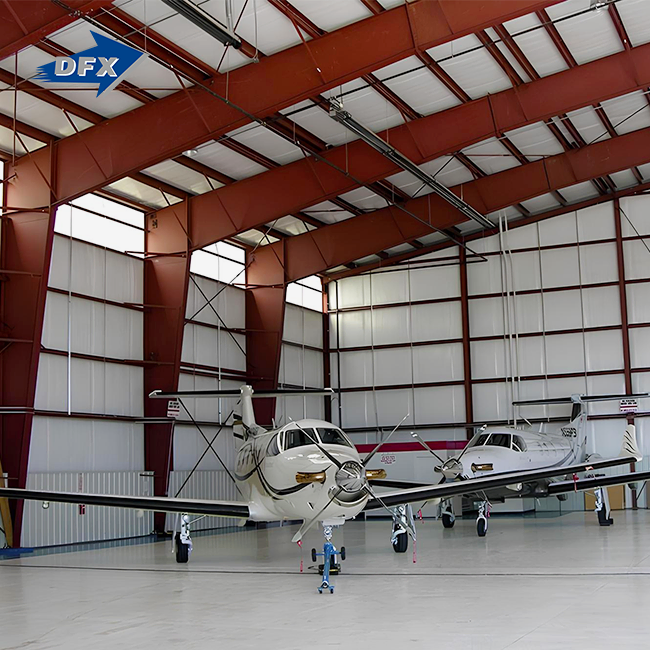
Choosing the right private jet steel hangar for your airport project comes down to four core factors: clear span width, structural load capacity, door system compatibility, and supplier certification. A well-designed aircraft hangar built with welded H-section steel provides the clearance, durability, and customization flexibility that aviation assets demand. Whether you are managing an FBO terminal, an MRO facility, or a government infrastructure project, matching your hangar specification to your jet fleet and site conditions is the most direct path to a sound investment.

Understanding the Requirements for Private Jet Steel Hangars
It's helpful to know what makes an aviation hangar different from a regular commercial steel building before you compare sources or ask for quotes. There is less room for mistake and the professional bar is higher.
Clear Span and Height Clearance
A private jet hangar needs to have clear space inside that isn't occupied by columns that hold weight. However, clear span widths can be anywhere from 60 to 300 feet, depending on the type of aircraft. For example, a Gulfstream G650 has wings that are about 99.5 feet long, so it needs a garage area that is well over 100 feet wide to be safe. Most large-cabin business planes have eaves heights between 28 and 50 feet.
Structural Load Requirements
The structures of aviation hangars have to meet local wind and snow load codes. They also have to be able to support the weight of fire suppression systems, overhead lighting, and any optional crane systems. Wind loads of up to 180 mph can be handled by primary frames made of high-tensile steel like Q345B or ASTM A572 Grade 50. This is a normal limit in engineering design that follows AISC and MBMA rules.
Insulation, Ventilation, and Energy Performance
For a private jet steel hangar, an airplane garage that stores sensitive electronics and composite fuselages needs to have temperature control inside. Insulated metal panels with R-values of R-19 to R-30+ stop heat from moving, which lowers HVAC costs and keeps gadgets from getting damaged by humidity. Proper ventilation design also helps get rid of fumes in MRO spaces where painting or fuel handling takes place.
Key Criteria for Evaluating Private Jet Steel Hangar Options
You need a clear way to compare your choices once you know what your technical needs are. Here are the main criteria that project engineers and procurement managers always use to judge proposals:
- Structural material grade: Verify that the supplier uses certified steel with Mill Test Certificates (MTC) confirming yield strength and chemical composition. Welds on primary columns and beams should be tested using Ultrasonic Testing (UT) or Radiographic Testing (RT) per AWS D1.1 standards.
- Certification and compliance: Suppliers holding ISO, CE, COC, or PVOC certificates demonstrate adherence to international manufacturing standards. These credentials matter when projects are subject to government audits or third-party inspections.
- Customization and design support: A supplier capable of in-house structural calculation, architectural detailing, and fabrication eliminates coordination gaps that often cause project delays.
- Door system engineering: The front-end wall requires a reinforced truss header or heavy-duty portal frame designed to carry the dead load of hydraulic bi-fold doors and resist wind uplift when the door is open. Dimensional tolerance on the door opening must stay within 5 mm to ensure proper door operation.
- Delivery and installation timeline: Customized fabrication lead times vary by supplier. Confirm production capacity, shipping schedules, and the availability of on-site installation guidance before signing contracts.
These criteria help procurement teams compare bids in a structured way, which lowers the risk of choosing a supplier based on price alone.
Comparing Steel Hangars with Traditional and Alternative Hangar Types
For flight purposes, steel buildings always work better than concrete, wood, aluminum, and fabric-membrane structures. Building with concrete takes a long time, can't be changed easily, and costs a lot to add new door systems or cranes after the fact. According to NFPA 409, which sets fire safety rules for airplane hangars in the United States, wood buildings don't meet the requirements for fire safety.
Steel vs. Aluminum
Aluminum hangars are lighter, but they cost more per square foot and can't hold as much weight for long buildings. Steel is the best material for hangars with clear spans longer than 80 feet because it is stronger and costs less.
Steel vs. Fabric Membrane Structures
Fabric structures are easy to put up quickly, but they don't insulate well, don't stand up well to wind, and don't last as long as steel structures. They can be used for short-term shelters but not for long-term flight equipment that needs to meet 50-year design life standards.
Total Cost of Ownership
For a private jet steel hangar, building an aircraft hangar out of steel that meets ISO and CE standards usually costs less to maintain over time than other options. After shot blasting to SA 2.5 grade, anti-corrosion treatments like hot-dip galvanizing or epoxy zinc-rich finish keep the structure strong for decades. When you add up the cost of construction, the money saved on operations, and the number of times it needs to be maintained, steel is more cost-effective in the long run.
How to Make the Final Decision: Matching Solutions with Your Airport Project Needs
Priorities are different for each type of buyer. Compliance paperwork and on-time delivery are important to the EPC contractor in charge of a government airport job. An FBO operator cares most about how the inside looks, controlling the temperature, and having lots of space to store multiple planes. A manager of an MRO facility looks for strengthened rafters that can hold 5- to 10-ton overhead bridge cranes and special ventilation for painting jobs.
Assessing Supplier Credentials
Before you negotiate a contract, ask for ISO certificates, CE statements, and sample Mill Test Certificates. A reliable steel structure maker gives pre-shipment sample assembly reports to make sure that the frame geometry and bolt holes are lined up correctly before the parts are sent to the job site.
Matching Specifications to Jet Fleet
Connect the size of your hangar to the size of the plane you want to store. The length of the body, the height of the tail, and the wingspan all affect the eave height, the clear span width, and the door opening measurements. Airport infrastructure planners often make things a little bigger than they need to be in case the fleet grows in the future.
Evaluating Turnkey Service Capability
A lot of B2B buyers want providers who can take care of the whole project, including structural planning, steel manufacturing, roofing and cladding, and fitting advice. This makes managing vendors easier and cuts down on the total project plan.
Case Studies and Industry Examples
In 2022, a North American FBO terminal project for a private jet steel hangar was finished. It had a 150-foot-long welded H-section steel hangar with R-25-insulated metal panels and hydraulic bi-fold doors that could fit four mid-size business jets. According to the project manager's report after the job was done, the premade building cut on-site construction time by about 40% compared to a cast-in-place concrete option.
European MRO Facility Application
An MRO company in Western Europe asked for a steel hangar with a clear span of 200 feet and crane hooks built into the main rigid frames. The supplier gave structural calculations that were certified under CE standards. These met the requirements of the national aviation authority's building approval process and did not need any extra engineering review by a third party.
Common Procurement Pitfalls
People who don't check the door frame tolerance often have problems with their hydraulic doors after installation. When the capacity of an overhead crane is specified after the fact instead of during the planning phase, expensive structure changes have to be made. It is better for the budget and plan if these things are taken care of during the engineering phase instead of after the fabrication phase.
Conclusion
Finding the right private jet steel hangar takes more than just comparing prices. To make a good procurement decision, you need to look at things like clear span, structural load compliance, door system engineering, supplier certification, and total lifecycle cost. Building steel buildings that meet AISC, MBMA, and NFPA standards gives aircraft infrastructure the safety margins and design freedom it needs. Working with a manufacturer that helps with design, manufacturing, and installation all in one step lowers the risk of the job and keeps you on schedule.
FAQ
Q1: How much does a private jet steel hangar cost per square foot?
The price is based on the clear span width, the type of door system, the wind and snow loads in the area, and the insulation requirements. When compared to sliding or moving doors, hydraulic bi-fold doors are much more expensive. The cost of materials per square foot goes up because wide-span hangars need heavier steel sections. The most accurate way to get a price is to ask for a detailed engineering quote based on data from your site and fleet.
Q2: How long does prefabricated hangar fabrication and delivery take?
Customized manufacturing lead times depend on how much the seller can produce and how complicated the order is. After the plan is approved, it usually takes 30 to 60 days to build a welded H-section steel hangar frame. Shipping and site assembly times depend on where the job is located and how available local contractors are.
Q3: What foundation does a steel aircraft hangar require?
Usually, these kinds of buildings need designed reinforced concrete piers with spread footings that are linked by grade beams. At column bases, the strong uplift and moment forces are more than what a normal floating slab can safely handle.
Q4: Can a steel hangar support overhead cranes for engine maintenance?
Yes, but the crane's capacity has to be known when it's being designed. To safely handle the dynamic load of the hoist system, the rigid frames need brackets that are stronger and webs that are thicker.
Get a Custom Aircraft Hangar Quote from Director Steel
Director Steel has been in business since 2011 and has made steel structures with CE and ISO certification for airport hangars, industrial plants, and big commercial buildings all over the world. We are a reliable private jet steel hangar manufacturer, and we offer in-house structural calculations, custom fabrication, and installation advice all from one source. Get in touch with our tech team right away at jason@bigdirector.com to get a plan that is tailored to your fleet, site, and budget.
References
1. American Institute of Steel Construction (AISC). Steel Construction Manual, 16th Edition. AISC, 2023.
2. Metal Building Manufacturers Association (MBMA). Metal Building Systems Manual. MBMA, 2022.
3. National Fire Protection Association. NFPA 409: Standard on Aircraft Hangars. NFPA, 2022.
4. American Welding Society. AWS D1.1/D1.1M: Structural Welding Code — Steel. AWS, 2020.
5. International Organization for Standardization. ISO 9001:2015 Quality Management Systems — Requirements. ISO, 2015.
6. Steel Construction Institute. Design of Steel Structures for Buildings: SCI Publication P363. SCI, 2013.
Learn about our latest products and discounts through SMS or email