- English
- French
- German
- Portuguese
- Spanish
- Russian
- Japanese
- Korean
- Arabic
- Greek
- German
- Turkish
- Italian
- Danish
- Romanian
- Indonesian
- Czech
- Afrikaans
- Swedish
- Polish
- Basque
- Catalan
- Esperanto
- Hindi
- Lao
- Albanian
- Amharic
- Armenian
- Azerbaijani
- Belarusian
- Bengali
- Bosnian
- Bulgarian
- Cebuano
- Chichewa
- Corsican
- Croatian
- Dutch
- Estonian
- Filipino
- Finnish
- Frisian
- Galician
- Georgian
- Gujarati
- Haitian
- Hausa
- Hawaiian
- Hebrew
- Hmong
- Hungarian
- Icelandic
- Igbo
- Javanese
- Kannada
- Kazakh
- Khmer
- Kurdish
- Kyrgyz
- Latin
- Latvian
- Lithuanian
- Luxembou..
- Macedonian
- Malagasy
- Malay
- Malayalam
- Maltese
- Maori
- Marathi
- Mongolian
- Burmese
- Nepali
- Norwegian
- Pashto
- Persian
- Punjabi
- Serbian
- Sesotho
- Sinhala
- Slovak
- Slovenian
- Somali
- Samoan
- Scots Gaelic
- Shona
- Sindhi
- Sundanese
- Swahili
- Tajik
- Tamil
- Telugu
- Thai
- Ukrainian
- Urdu
- Uzbek
- Vietnamese
- Welsh
- Xhosa
- Yiddish
- Yoruba
- Zulu
How to Choose Low Carbon Mall Steel Structure Suppliers for Projects
Choosing the right supplier for a low carbon mall steel structure project is one of the most consequential decisions a procurement manager or project engineer will make. As sustainability regulations tighten across the United States and globally, demand for eco-conscious commercial construction is accelerating. According to the World Steel Association, the steel industry accounts for roughly 7–9% of global CO₂ emissions, which is why low-carbon alternatives are gaining traction fast. This guide walks you through the key evaluation criteria, practical comparison strategies, and post-selection best practices so your next mall project starts on solid ground.

Why Low-Carbon Steel Structures Matter for Mall Projects
The Material Advantage in Commercial Construction
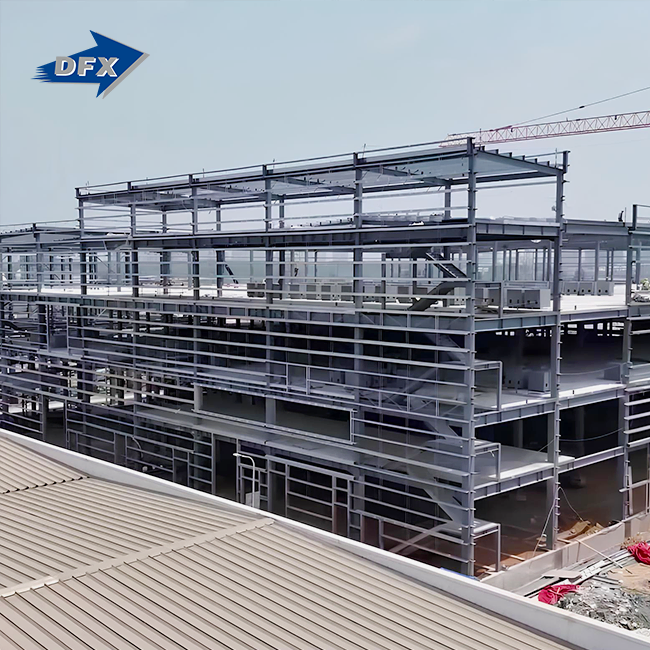
Low-carbon steel, commonly Q235 or Q355, is ideal for big commercial structures due to its high strength-to-weight ratio. Composite floor systems and steel column-beam frames provide 30–60-meter spans without internal columns. It creates open shop areas that anchor tenants and mall owners seek. Steel frame structures are 30% lighter than reinforced concrete, lowering foundation costs on ordinary soil locations.
Low-carbon mall steel construction is sturdy and satisfies environmental requirements in many local building codes. LEED points go to projects that reduce carbon in their materials. Over 90% of steel can be recycled, giving it a lifespan benefit. Businesses in California and New York are under increasing pressure to disclose carbon emissions. This makes material selection a compliance and engineering issue.
Procurement teams struggle to maintain material quality across deliveries and expand the supply chain as the project becomes more complex. Both issues suggest checking sources early and thoroughly.
Establishing Core Supplier Selection Criteria
Certifications and Quality Standards You Cannot Overlook
Certifications are a must when looking at any commercial steel structure supplier. At the very least, you should look for ISO 9001 or ISO 9003 certification for quality management, CE marking to make sure the structure meets European standards, and, if necessary, COC and PVOC certifications for project-specific legal needs. These credentials show that a manufacturer uses consistent, checked production methods instead of making things on the spot.
Testing the material is also very important. Good providers use Ultrasonic Testing (UT) and Magnetic Particle Inspection (MPI) to do Non-Destructive Testing (NDT) on full-penetration butt welds that follow the rules in AWS D1.1 structural welding codes. Dimensional errors should be kept to ±2 mm, which can be checked by laser scanning parts that have already been put together. For anti-corrosion coatings, make sure that readings of Dry Film Thickness (DFT) are recorded. This is especially important for low carbon mall steel structure projects in humid or seaside areas.
Understanding Total Cost of Ownership
The initial unit price doesn't always show how much it really costs to buy something. Think about engineering design help, wait times for manufacturing, logistics, installation instructions, and the need for long-term upkeep. A provider that offers "turnkey" services, such as architectural layout design, structural calculations, fabrication, and on-site help for assembly, will usually cut down on the cost and time it takes to coordinate the project. Life-cycle costing models consistently show that spending more up front on high-quality production leads to lower ongoing upkeep costs over the course of a building's 30–50-year lifespan.
Comparing Suppliers: What to Evaluate Beyond the Basics
Reputation, Case Studies, and Technical Innovation
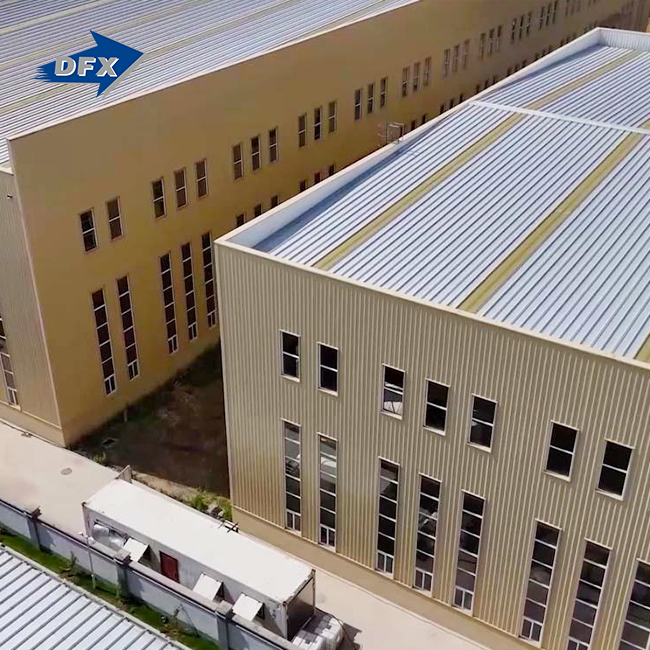
Project history that can be checked is how a supplier builds their reputation. Ask for finished mall project case studies, preferably for business buildings with more than one floor or a big span between floors. A reliable manufacturer will be happy to show you examples of projects that have curtain wall or metal panel facades, composite floor systems, and steel bracing configurations that are similar to what you need for a low-carbon mall steel structure.
Suppliers are either strong or average based on their technical skills. Vertical integration, which includes having automated welded H-beam production lines, sandwich panel manufacturing, and C/Z section steel lines in-house, is a key sign of a reliable delivery service. If a manufacturer can make more than 20,000 tons of welded H-beams every year and keep their production facilities enclosed, they can support the building of big, complex malls without having to outsource important manufacturing steps.
Many buyers don't think about the support they get after they buy something. Retail buildings made of structural steel need to have their bolt tensioning, covering stability, and connection nodes checked on a regular basis. A provider that offers structured help after installation will protect your investment and make sure the structure works the way it was meant to for many years to come.
Matching Supplier Solutions to Project Requirements
Aligning Technical Scope with Budget Realities
The projects for malls range from small neighborhood shopping centers to large mixed-use buildings with many floors. A single-story shopping center needs a different kind of structure than an urban mall with office towers on top. Instead of just picking the lowest bidder, procurement managers need to make sure that the capabilities of the suppliers fit the real scope of the low carbon mall steel structure.
Before you agree to a seller, here are the main alignment factors you should look at:
- Design customization depth: Can the supplier make architectural layout designs and structural calculations that are in line with your building codes? In the U.S., projects have to follow the rules set by the local government. If a seller does the planning and detailing themselves, they don't have to pay for a third party to coordinate their engineers, which can be expensive.
- Fabrication lead time and delivery schedule: Depending on the amount of work, project-based fabrication for a mall building usually takes 8–16 weeks. Before finalizing the purchase, find out how much the seller can currently produce and how often they ship.
- Material grade compliance: Check that the steel meets the required grades, such as Q355B or a similar grade of ASTM A572 Grade 50, and that the mill certificates can be linked to the steel's heat.
These things have a direct effect on how long it takes to build something and how much it costs. When procurement teams carefully review them, the chance of expensive delays and material non-conformances on-site is lower.
Best Practices After Choosing Your Supplier
Contract Structure and Ongoing Quality Oversight
Not the end of your work; choosing a provider is the start of a working relationship. Specifications for materials, manufacturing limits, inspection hold points, delivery goals, and penalties for not following the contract should all be made clear in the contract. Contracts that aren't clear are the main cause of disputes in foreign steel buying.
Set up a way for project managers to talk to each other from the start. Reviewing milestones, getting approvals for shop drawings, and setting up pre-shipment inspections on a regular basis keep fabrication in line with what the design intended. For low carbon mall steel structures, make sure the supplier's production process meets the anti-corrosion and fireproofing standards agreed upon during the contract stage. For example, commercial buildings that are occupied usually have intumescent coatings with 2–4 hour fire ratings.
Planning for preventative repair is the last part of your buying strategy. Every five years, you should check the structure, make sure the bolts are pre-tensioned in moment connections, and keep an eye on the coating condition in high-exposure areas. As long as they get regular maintenance, steel structures usually last 50 years or more with little initial cost.
Conclusion
When picking a provider for a low carbon mall steel structure project, you need to carefully look at their licenses, ability to build, ability to help with design, and overall cost over the project's lifetime. Low-carbon steel types like Q235 and Q355 are better for structures, better for the environment, and easier to get than concrete on a large scale. By following these guidelines, such as the quality processes for NDT and the monitoring that happens after the contract is signed, procurement teams can lower the risk of a project and produce commercial buildings that meet modern engineering and environmental standards. By carefully checking out suppliers today, you can avoid having to make expensive changes during construction tomorrow.
FAQ
1. What is the lifespan of a low carbon mall steel structure?
A steel building mall that is well built and well taken care of usually lasts longer than 50 years. To meet that goal, it is important to check the welds, anti-corrosion coatings, and high-strength pin joints on a regular basis for a low-carbon mall steel structure.
2. How do I verify a supplier's sustainability claims?
Ask for mill certificates for all structural steel, look over third-party audit reports for ISO and CE certifications, and ask for proof that anti-corrosion coating DFT measurements have been taken. In business-to-business procurement, proof is defined as documents that can be checked by someone else.
3. Is low carbon steel structurally adequate for multi-storey malls?
Yes, grades similar to Q355B have yield values higher than 345 MPa, which is strong enough for industrial loads that span multiple floors. Composite floor decks improve load distribution and soundproofing even more in retail spaces with a lot of foot traffic.
4. Can internal layouts be reconfigured after construction?
Because steel can span large areas, it reduces the need for internal load-bearing walls. This means that tenants and operators can change floor plans without having to change the structure, which is a big benefit over concrete buildings in retail settings.
Partner with Director Steel for Your Next Commercial Steel Project
Director Steel, doing business as DFX, has been providing certified steel structure solutions since 2011. They have more than 12 years of experience making things for shopping malls, factories, and other commercial buildings. DFX is a reliable low carbon mall steel structure maker with ISO, CE, COC, and PVOC approvals. They have 40,000 square meters of production space that can hold 20,000 tons of welded H-beams per year. Our in-house design team helps with all parts of a project, from figuring out the structure to giving advice on how to put it. Email us at jason@bigdirector.com to talk about the details of your project and get a competitive quote.
References
1. World Steel Association. Steel's Contribution to a Low Carbon Future and Climate Resilient Societies. 2023.
2. American Institute of Steel Construction (AISC). Specification for Structural Steel Buildings (AISC 360-22). 2022.
3. U.S. Green Building Council. LEED v4.1 Building Design and Construction Reference Guide. 2021.
4. British Standards Institution. Eurocode 3: Design of Steel Structures (BS EN 1993-1-1). 2022.
5. Construction Industry Institute. Prefabricated Steel Construction and Lifecycle Cost Analysis in Commercial Projects. 2020.
6. McKinsey & Company. Decarbonizing Construction: Pathways to Net-Zero Embodied Carbon. 2022.
Learn about our latest products and discounts through SMS or email