- English
- French
- German
- Portuguese
- Spanish
- Russian
- Japanese
- Korean
- Arabic
- Greek
- German
- Turkish
- Italian
- Danish
- Romanian
- Indonesian
- Czech
- Afrikaans
- Swedish
- Polish
- Basque
- Catalan
- Esperanto
- Hindi
- Lao
- Albanian
- Amharic
- Armenian
- Azerbaijani
- Belarusian
- Bengali
- Bosnian
- Bulgarian
- Cebuano
- Chichewa
- Corsican
- Croatian
- Dutch
- Estonian
- Filipino
- Finnish
- Frisian
- Galician
- Georgian
- Gujarati
- Haitian
- Hausa
- Hawaiian
- Hebrew
- Hmong
- Hungarian
- Icelandic
- Igbo
- Javanese
- Kannada
- Kazakh
- Khmer
- Kurdish
- Kyrgyz
- Latin
- Latvian
- Lithuanian
- Luxembou..
- Macedonian
- Malagasy
- Malay
- Malayalam
- Maltese
- Maori
- Marathi
- Mongolian
- Burmese
- Nepali
- Norwegian
- Pashto
- Persian
- Punjabi
- Serbian
- Sesotho
- Sinhala
- Slovak
- Slovenian
- Somali
- Samoan
- Scots Gaelic
- Shona
- Sindhi
- Sundanese
- Swahili
- Tajik
- Tamil
- Telugu
- Thai
- Ukrainian
- Urdu
- Uzbek
- Vietnamese
- Welsh
- Xhosa
- Yiddish
- Yoruba
- Zulu
Fast Assembly Steel Logistics Warehouse: A Buyer’s Guide
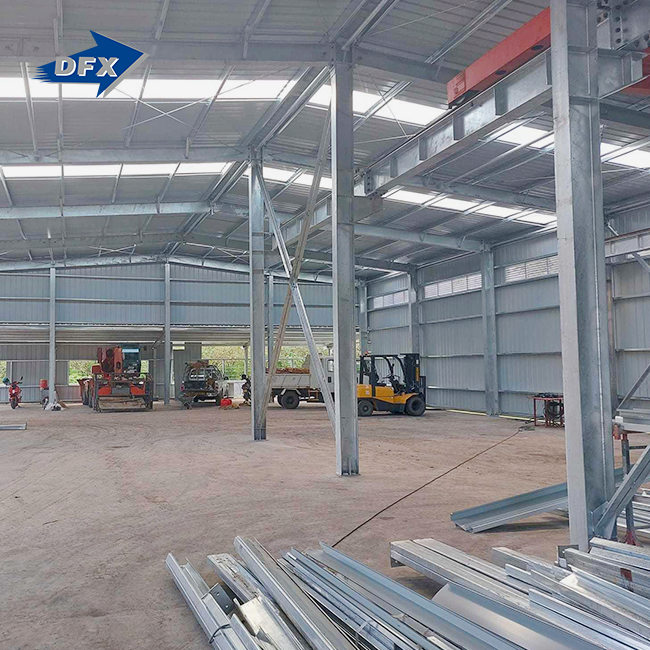
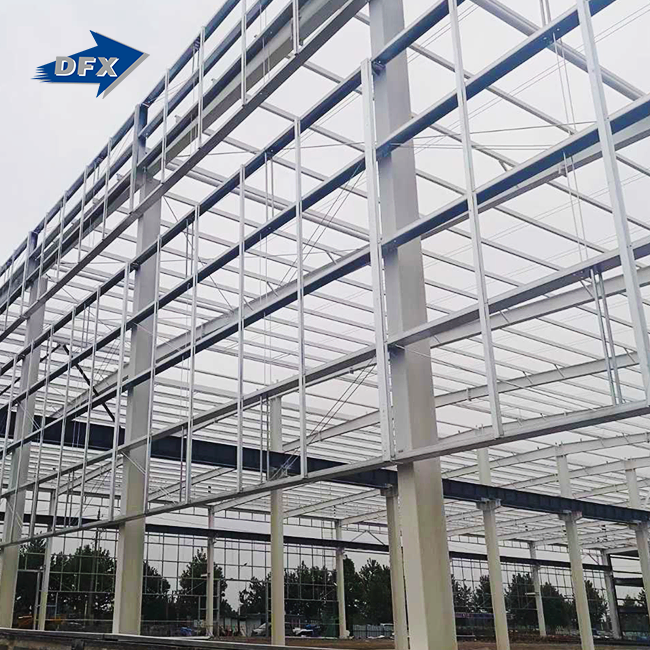
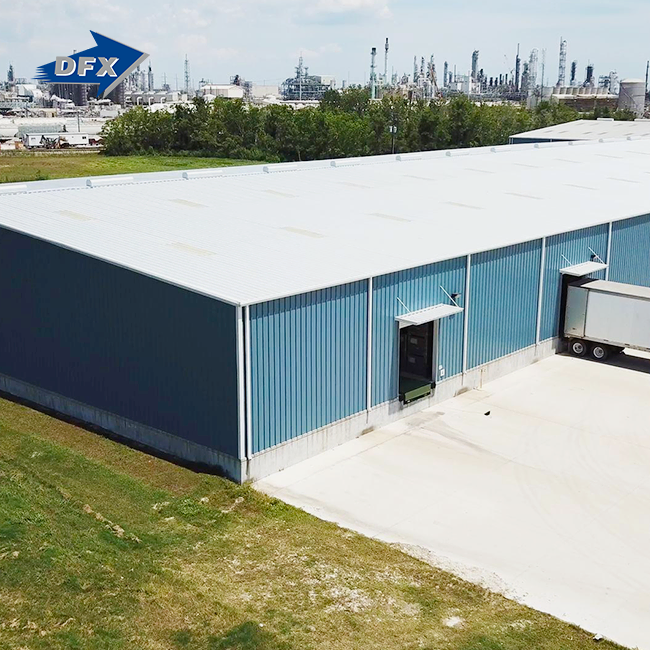
A fast assembly steel logistics warehouse is a modular, prefabricated storage structure built primarily from high-strength steel components designed for rapid on-site erection. These buildings reduce construction timelines by 30–50% compared to conventional concrete alternatives, making them the preferred choice for contractors, manufacturers, and distributors who need operational space quickly. With an H-beam primary frame, galvanized C/Z purlins, and a complete bracing system, this warehouse type delivers structural reliability alongside speed—an increasingly critical combination in today's competitive logistics environment.

Understanding Fast Assembly Steel Logistics Warehouses
What Makes These Structures Different
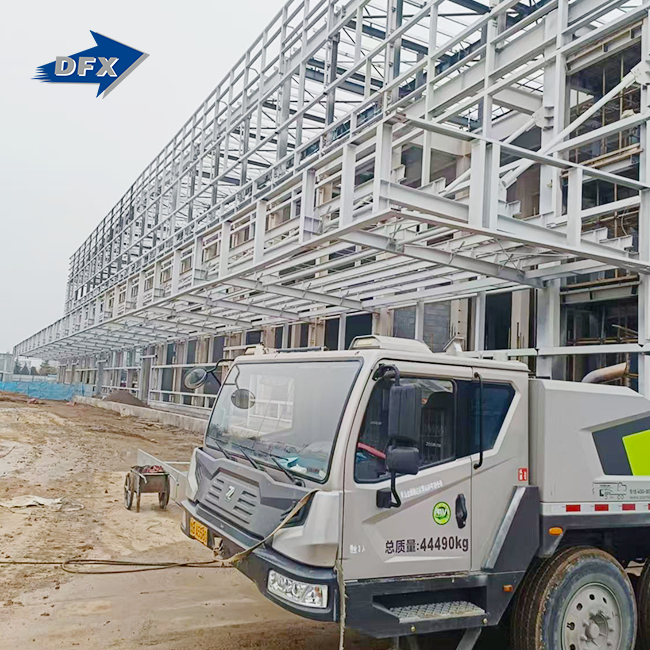
It takes 12 to 18 months to build a traditional concrete warehouse. A prefabricated fast assembly steel logistics warehouse, on the other hand, can be put up in 8–16 weeks, based on how big it is. That difference directly leads to earlier operating income. Factory-controlled fabrication is the key. Before shipping, every H-beam column, purlin, and bracket is carefully cut and pre-drilled, so the work that needs to be done on-site is more like putting things together than building them.
High-tensile steel at Grade Q355B or ASTM A572 Gr. 50, with a yield strength of 345 MPa or higher, is usually used for the supporting core. In humid and coastal areas, galvanized C/Z purlins with a zinc coating of 275 g/m² or more don't rust. These requirements are in line with ISO9001 quality management standards. Top sellers also have CE approval and, if desired, EN1090 compliance, which are important standards to look for when buying things for projects in North America or Europe.
Another element that sets it apart is its clear-span design. Spans of 24 to 50 meters without internal columns make the most of the floor space that can be used and support automated storage systems, forklift circulation routes, and high-bay shelving. For a shipping hub or an e-commerce delivery center, having an open interior is not a nice-to-have; it's a must.
Key Factors to Consider When Buying a Steel Logistics Warehouse
Structural Specifications and Site Requirements
Buyers need to be clear about the load requirements, floor area, clear height, and local weather conditions before they ask for a quote on a fast assembly steel logistics warehouse. The wind load rates are usually between 120 and 150 km/h, and in areas prone to earthquakes, the seismic protection should be at least Grade 8. Different northern and southern U.S. states have very different snow load limits, so base design needs to take these differences into account.
Steel grade, connection details, and bracing layout all have an impact on both safety and the speed of assembly. Full engineering calculations should be given by a knowledgeable supplier right away, not as an afterthought. Buyers should also make sure that the spacing between columns is right for their rack layout. Column spans of 24 to 36 meters are recommended as they can increase storage density by 15 to 20 percent compared to grids with fewer columns.
Comparing Steel Against Other Building Methods
Steel is better than concrete and wood-framed options in a number of important ways for buying managers. Here are the main efficiency trade-offs that buyers always think about:
- Construction speed: Pre-engineered steel buildings can be put together 30–50% faster than cast-in-place concrete buildings. This cuts down on project financing costs and speeds up the return on investment.
- Scalability: Modular end-wall frames that are made to be expandable structures make it possible to add bays without tearing down the current covering, which is something that concrete buildings can't do.
- Maintenance cost: If you use an epoxy zinc-rich paint method correctly and make sure the dry film thickness is between 80 and 120 microns, steel frames usually last 50 years or more with only regular checks and no major structural changes.
- Sustainability: Steel can be recycled over and over again, and pre-engineered buildings make a lot less waste on-site than regular buildings.
These benefits make steel logistics buildings the best choice for warehouses that support production, international freight hubs, and distribution centers where long-term operating efficiency is more important than initial cost.
Cost Analysis and Procurement Options
Breaking Down the Total Investment
A modular fast assembly steel logistics warehouse price includes structural parts that have already been made, exterior systems (roof and wall cladding), windows, doors, and other materials. Depending on the location and area labor rates, installation fees (which include crane work, bolt-up labor, and finishing) are usually 15–25% more than the cost of the materials.
The building has relatively low operating costs over its lifetime. Cleaning the gutters, inspecting the covering, and checking the fasteners are the main parts of annual upkeep. Insulated sandwich panels, like PIR or Rockwool, use a lot less energy than other types. This is important for climate-controlled storage or cold chain logistics.
Total cost is also affected by how the goods are bought. People who want to keep the site for a long time and keep the project's scope stable should buy it outright. Companies that are going through more than one part of growth can save money and keep the structure strong by using phased procurement that is aligned with modular expansion. When looking at different vendors, buyers should give more weight to those that offer engineering calculations, fabrication, logistics coordination, and help with setting up all in one package.
Practical Application and Case Studies Where These Buildings Perform Best
A fast assembly steel logistics warehouse is used in a lot of different types of businesses. Large clear gaps allow for multi-level mezzanine picking floors and the integration of conveyor systems in e-commerce distribution centers. In cold chain hubs, 100–200 mm thick polyurethane sandwich panels keep the temperature between -25°C and +5°C, and the steel frame is treated to stop corrosion caused by condensation. Cross-docking facilities use wide-span portal frames with 5–10-meter roof overhangs to keep loading bays that get a lot of use safe.
A manufacturing investor who was building a new factory in Southeast Asia recently finished a 6,000 m² steel workshop using a pre-engineered system in less than 14 weeks, which is about half the time it would have taken to build the same structure out of concrete. The modular design also made it possible to add a 30% capacity increase two years later without stopping production. This pattern—fast initial build, low-disruption expansion—shows why purchasing managers in transport and production keep coming back to steel. In terms of sustainability, steel can be recycled in its entirety, and factory fabrication produces less trash on-site.
Installation Guide and Technical Insights
From Foundation to Final Assembly
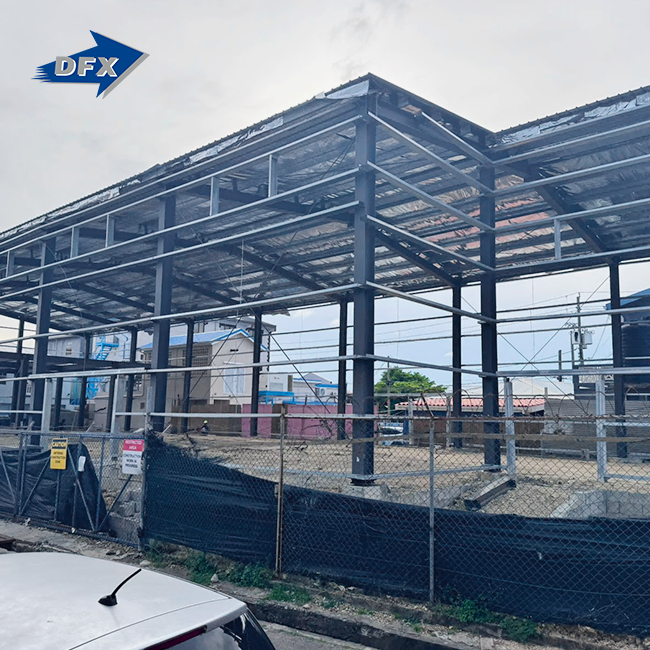
A pre-engineered fast assembly steel logistics warehouse is put together in a certain order: the site is prepared, and the foundation is cast; anchor bolts are then placed; the primary frame is put together using columns and rafters; the secondary frame is put together using purlins and girts; and finally, the envelope is applied using roof and wall panels, followed by windows and doors.
Validation of load capacity should happen during design, not after the structure is built. Live loads on the roof, wind uplift, loads on suspended conveyors, and solar panels on the roof (which add about 15 to 20 kg/m² of weight) all need technical approval. Intumescent coatings are put on structural steel to make it fire-resistant, and non-combustible Rockwool sandwich panels are used for wall and roof parts. These meet fire standards up to REI 120 when needed.
With modular architecture, it's easy to make upgrades in the future. If you build end walls as load-bearing expandable frames instead of non-structural infill panels, you can add more bays by taking off the cladding and stretching the structure out in a straight line. The clear-span frame can work with warehouse automation systems like AS/RS and hanging conveyor networks as long as the structural engineer takes dynamic loads into account when designing the structure in the first place.
Conclusion
It takes more than comparing prices per square meter to find the best fast assembly steel logistics warehouse option. The real worth of the investment depends on the structural requirements, the speed of assembly, the ability to grow in the future, and the vendor's skills. When buyers need a long-lasting, expandable building delivered quickly, pre-engineered steel logistics buildings always do better than concrete and hybrid options. When you work with a manufacturer that does planning, manufacturing, and erection help all in-house, you avoid costly communication gaps and make sure that projects stay on track from the start.
FAQ
1. How long does it take to assemble a prefabricated steel warehouse?
Assembly times depend on the size of the building and the conditions of the site. It usually takes 6–10 weeks for a 3,000–5,000 m² fast-assembly steel logistics warehouse to be fully put together after the parts arrive on site. Fabrication in the factory happens at the same time as base work, which makes the overall project timeline even tighter.
2. What maintenance does a steel logistics building require?
It is common to check the gutters, fasteners, coating condition, and sealant joints once a year. Touch-ups to the coating stop any rust risk before it gets worse. If you keep up with maintenance, the main steel body will stay strong for at least 50 years.
3. Can the warehouse be customized for cold storage or heavy automation?
Yes. Sandwich plates made of polyurethane or PIR that are 100–200 mm thick can be used for cold chain purposes. When designing automated systems, the structural engineer takes into account the loads on the suspended conveyors and the dynamic forces of the AS/RS. These needs are then built into the mainframe specifications.
4. Are these buildings compliant with U.S. building codes?
Pre-engineered steel buildings can be designed to meet fire code standards, IBC requirements, and the wind and earthquake zones in the area. Suppliers with ISO9001 and CE certifications offer a quality standard that can be checked, and support permit applications in most places.
Ready to Build? Connect With DFX for Your Next Warehouse Project
Since 2011, DFX (Qingdao Director Steel Structure Co., Ltd.) has been providing pre-engineered fast assembly steel logistics warehouse solutions. They have six automatic H-beam production lines, over 200 skilled fabricators, and 40,000 m² of production space. They are certified by ISO9001 and CE. If you need a facility for a distribution hub, a manufacturing facility, or a storage center, our team can help with engineering calculations, fabrication, logistics coordination, and erection. Get in touch with our project team at jason@bigdirector.com to get a personalized cost quote and plan for deploying your site.
References
1. Metal Building Manufacturers Association (MBMA). Metal Building Systems Manual. 2023.
2. American Institute of Steel Construction (AISC). Steel Construction Manual, 16th Edition. 2023.
3. International Building Code (IBC). International Building Code. International Code Council, 2021.
4. Gorgolewski, M. Resource Efficiency in the Construction of Steel Buildings. Journal of Constructional Steel Research, 2017.
5. Steel Construction Institute (SCI). Design of Steel Structures for Buildings in Fire. SCI Publication P313, 2020.
6. McKinsey & Company. The Next Normal in Construction: How Disruption Is Reshaping the World's Largest Ecosystem. 2020.
Learn about our latest products and discounts through SMS or email