- English
- French
- German
- Portuguese
- Spanish
- Russian
- Japanese
- Korean
- Arabic
- Greek
- German
- Turkish
- Italian
- Danish
- Romanian
- Indonesian
- Czech
- Afrikaans
- Swedish
- Polish
- Basque
- Catalan
- Esperanto
- Hindi
- Lao
- Albanian
- Amharic
- Armenian
- Azerbaijani
- Belarusian
- Bengali
- Bosnian
- Bulgarian
- Cebuano
- Chichewa
- Corsican
- Croatian
- Dutch
- Estonian
- Filipino
- Finnish
- Frisian
- Galician
- Georgian
- Gujarati
- Haitian
- Hausa
- Hawaiian
- Hebrew
- Hmong
- Hungarian
- Icelandic
- Igbo
- Javanese
- Kannada
- Kazakh
- Khmer
- Kurdish
- Kyrgyz
- Latin
- Latvian
- Lithuanian
- Luxembou..
- Macedonian
- Malagasy
- Malay
- Malayalam
- Maltese
- Maori
- Marathi
- Mongolian
- Burmese
- Nepali
- Norwegian
- Pashto
- Persian
- Punjabi
- Serbian
- Sesotho
- Sinhala
- Slovak
- Slovenian
- Somali
- Samoan
- Scots Gaelic
- Shona
- Sindhi
- Sundanese
- Swahili
- Tajik
- Tamil
- Telugu
- Thai
- Ukrainian
- Urdu
- Uzbek
- Vietnamese
- Welsh
- Xhosa
- Yiddish
- Yoruba
- Zulu
Dangerous Goods Warehousing: How to Handle Items Safely
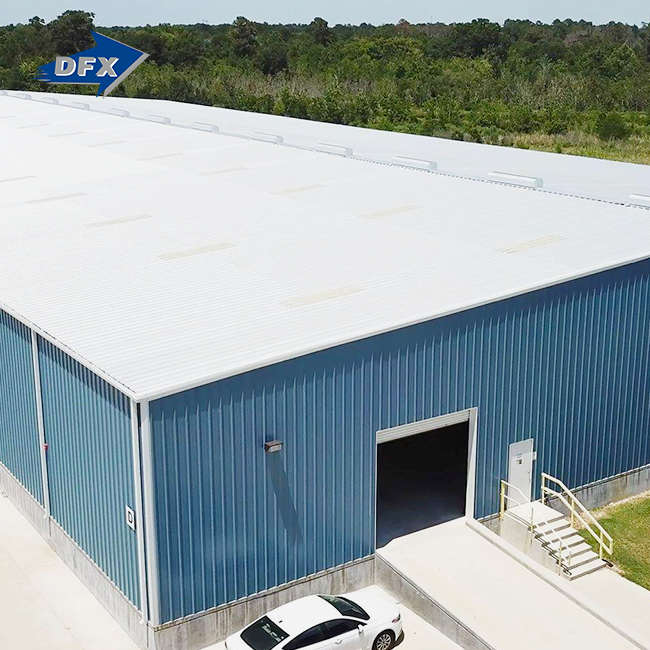
A properly built Dangerous Goods Warehouse is your first line of defence against disasters when you store dangerous materials. To safely hold flammables, toxics, and corrosives, these special steel buildings are made with blast-resistant framing, separate sections, and fire-rated cladding. It's not a choice to follow OSHA, NFPA, and international safety codes; they're necessary for keeping operations running and keeping workers safe in high-risk storage areas.
Understanding Dangerous Goods Warehouses and Their Risks
Hazardous material storage demands far more than concrete floors and metal walls. The risks associated with improper warehousing include chemical fires, toxic vapor release, explosive reactions, and environmental contamination that can shut down operations overnight.
What Makes Hazardous Material Storage Different
A building specifically designed for dangerous goods is very different from a regular warehouse. Standard storage buildings don't have the containment systems, air controls, or fire suppression technologies that volatile chemicals need. The structural steel in these warehouses is usually Q355B-grade and has heavy-duty anti-corrosive coatings like hot-dip galvanisation or industrial-grade epoxy to protect it from acidic and alkaline vapours over decades of use. Buildings that handle Class 3 flammables or Class 1 explosives have explosion-relief venting that lets pressure escape during deflagration events, keeping the structure from collapsing completely. Secondary containment systems with bunded floors that don't leak can hold 110% of the biggest storage vessel's volume. This keeps spills from getting into the ground or soil.
Regulatory Frameworks Governing Storage Operations
Every design choice in building a dangerous storage area is based on global standards. OSHA rules say that materials that don't work well together must be kept at certain distances from each other. ADR and IMDG codes set rules for transporting and temporarily storing goods. The International Fire Code says that chemical storage areas must have automatic fire suppression systems that are rated for the chemicals that are being kept. If this isn't done, project managers and procurement heads could be held legally responsible. Fines from regulators can reach hundreds of thousands of dollars, and a single incident could mean closing down a facility, paying to clean up the environment, and hurting the company's image in a way that makes it harder to get contracts in the future. ISO9001 certification and CE marking are basic ways to make sure that manufacturers follow quality control systems when they are making and putting up products.
Classification Systems and Risk Assessment
Knowing how to classify materials helps buying teams choose the right storage options. For example, Class 2 gases need special ventilation and pressure release valves, Class 6.1 toxics need closed spaces with mechanical air exchange systems, and Class 8 corrosives need coatings that are resistant to chemicals and drainage systems. There are different engineering standards for each classification that affect how the structure is designed, what materials are used, and how the safety systems are integrated. The first step in assessing risk is to figure out the worst possible event that your building must be able to handle. This study looks at how reactive chemicals are, how much they are stored, the weather, and how close they are to populated areas. This helps with Explosion-proof choices about blast walls, fire ratings, and emergency access routes.
Best Practices for Safe Handling and Storage of Dangerous Goods
Operational safety extends beyond structural design into daily warehouse management practices. Segregation protocols, inventory controls, and staff training form an integrated safety ecosystem that protects personnel and assets.
Segregation and Compatibility Management
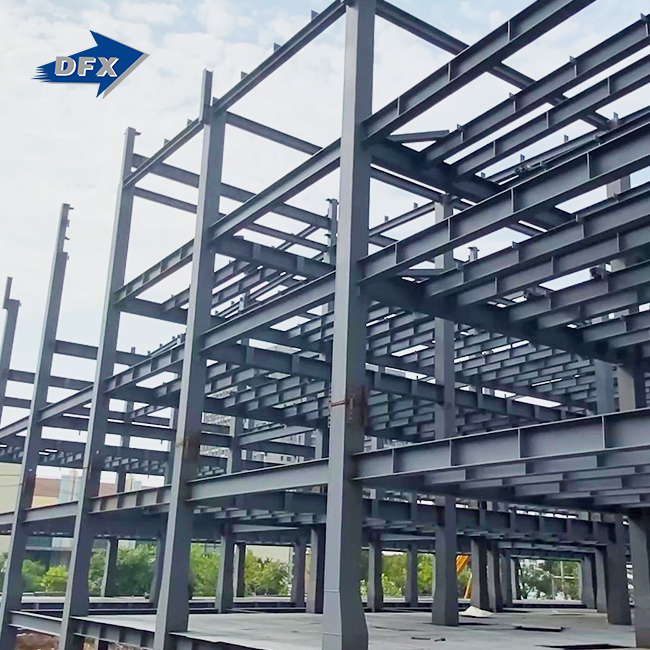
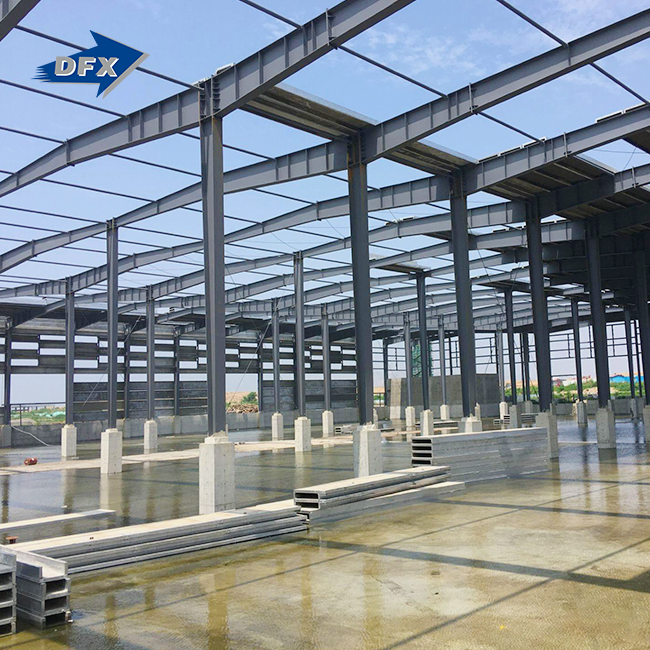
There are charts that show how to physically separate things that might behave badly if they were mixed. Fire-safety items should be kept away from oxidisers, acids should be kept away from bases, and things that react with water should be kept in places where the humidity is low. Inside larger buildings, fire-rated steel walls divide different areas so that different kinds of things can be stored together while still having enough space between them. Modular prefabricated steel storage buildings can be divided in a variety of ways. The main steel frame is made up of H-beams, which hold up the walls inside without making the construction weaker. Secondary containment systems and air ducts are held up by galvanised C/Z purlins. It's helpful to be able to change this when storage needs change or when government rules change.
Ventilation and Environmental Controls
When there is enough air flow, dangerous fumes and volatile vapours don't build up. For materials that don't change much, inactive systems with louvred vents work. But for the most dangerous items, active mechanical extraction is needed. Fans that are approved to ATEX or IECEx standards make sure that electrical parts don't start fires in places where they could do so. Different types of materials need different amounts of air changes. For example, Class 3 flammables need 6 to 12 ACH, while high-volatility liquids may need 15 to 20 ACH. For materials that are very unstable and break down or react above certain temperatures, controlling the temperature is very important. Sandwich panels with mineral wool cores keep the temperature stable and keep fire ratings up to REI 240.
Labeling, Inventory Tracking, and Inspection Protocols
Meticulous documentation supports regulatory compliance and emergency response effectiveness. Every container requires labeling that identifies contents, hazard class, handling precautions, and emergency contact information. Digital inventory management systems track material movement, expiration dates, and storage locations in real time, reducing bottlenecks during safety audits. Routine inspections catch problems before they escalate. Daily walkthroughs verify that containers remain sealed and properly positioned; weekly checks assess ventilation system performance and fire suppression readiness; monthly audits review structural integrity and coating condition. Non-destructive testing methods—ultrasonic inspection for weld integrity, coating thickness gauges for corrosion protection—provide objective data about facility condition without disrupting operations.
Choosing the Right Dangerous Goods Warehouse Provider
Selecting a manufacturing partner for hazardous storage infrastructure requires evaluating technical capabilities, compliance documentation, and service scope beyond basic fabrication.
Certification and Safety Track Records
ISO9001 certification demonstrates that a manufacturer maintains quality Explosion-proof management systems throughout engineering, fabrication, and logistics coordination. CE marking confirms conformity with European safety standards—critical for contractors working on international projects or serving multinational clients. Optional EN1107 certification provides additional assurance for structural steel components subject to extreme loading conditions. Safety records reveal operational maturity. Request case studies showing how the manufacturer addressed project-specific challenges—corrosive coastal environments, seismic zones, remote installation sites with limited infrastructure. Experienced fabricators provide engineering calculations that account for wind loads, snow accumulation, thermal expansion, and blast pressure, ensuring structures perform reliably under worst-case conditions.
Manufacturing Capacity and Technical Capabilities
The project's timeline is based on its production ability. Facilities with automatic welded H-beam lines, C/Z section steel production tools, and sandwich panel manufacturing systems can quickly deliver full building packages. Director Steel has an enclosed production room of 40,000 square meters in Qingdao, where they make about 20,000 tonnes of welded H-beams every year, as well as integrated cladding and roofing systems. Having architectural planning and detailing services in-house makes it easier to carry out projects. Instead of having different engineering firms, fabricators, and installation contractors work together, integrated providers take care of the whole process, from coming up with the idea to helping with the setup on-site. This method cuts down on coordination mistakes, speeds up decisions, and makes it clear who is responsible when changes need to be made.
Value-Added Services and Geographic Considerations
In addition to fabrication, top suppliers also handle logistics planning, which includes loading containers, shipping goods by sea, handling customs paperwork, and moving goods to project sites on land. This "turnkey" method works especially well for EPC contractors who are in charge of several jobs at the same time in different regions. The total cost of a project is affected by where the manufacturing takes place. Facilities near major ports lower the cost of moving goods within a country and make the process of shipping goods between countries easier. China-based makers have access to established steel supply chains and specialised fabrication equipment that lets them offer cost-effective solutions without sacrificing quality, as long as the right procedures for oversight and certification are followed.
Solutions to Optimize Dangerous Goods Warehousing Efficiency
Technology integration and process automation enhance safety outcomes while improving operational efficiency in hazardous storage facilities.
Digital Inventory Management and Real-Time Tracking
Advanced warehouse management systems provide visibility into stock levels, material age, and storage conditions across multiple compartments. RFID tagging and barcode scanning enable rapid inventory audits that previously required manual counting and documentation. These systems integrate with compliance modules that automatically flag regulatory violations—expired materials, incompatible storage arrangements, overfilled compartments—before they create hazards. Real-time environmental monitoring tracks temperature, humidity, and vapor concentrations throughout the facility. Automated alerts notify supervisors when parameters approach dangerous thresholds, enabling proactive intervention. This data also supports regulatory reporting requirements, generating documentation that demonstrates continuous compliance during agency inspections.
Structural Design Optimization for Operational Flexibility
Modular construction methodologies allow phased expansion as storage requirements grow. Initial builds establish core infrastructure—foundation systems, primary structural frame, fire suppression mains—designed to accommodate future additions without major retrofitting. Standardized bay dimensions and connection details enable cost-effective expansion that maintains structural and safety system integrity. Prefabricated steel components reduce on-site construction Safety storage time by 40-60% compared to conventional methods. Factory fabrication ensures precision welding, coating application, and quality inspection under controlled conditions. Numbered components with clear assembly sequences simplify erection, minimizing skilled labor requirements and weather-related delays that increase project costs.
Case Study Evidence from Manufacturing and EPC Sectors
A Philippine manufacturing investor recently required a 5,000-square-meter facility for storing industrial solvents and paint raw materials. The project demanded rapid construction to avoid production delays, structural stability for typhoon-prone regions, and compliance with local fire codes. Utilizing a prefabricated H-beam system with fire-rated sandwich panels, the facility achieved a REI 120 fire rating and full operational readiness within four months from order placement. An Australian agricultural enterprise needed specialized storage for pesticides and fertilizers—Class 6.1 toxics requiring mechanical ventilation and spill containment. The modular design incorporated segregated compartments with independent ventilation zones, allowing simultaneous storage of incompatible agrochemicals while maintaining regulatory compliance. Installation guidance from the manufacturer's technical team ensured proper system integration despite the remote location.
Emergency Preparedness and Continuous Improvement
Proactive emergency planning and ongoing staff development create resilient operations capable of managing incidents effectively when they occur.
Comprehensive Risk Assessments and Response Planning
An effective emergency reaction starts with thinking of what could go wrong with the things that are stored. Different methods are needed to put out flammable liquid fires, Class 1 explosive events, and toxic gas releases. Response plans include ways to get people out of the building, talk to each other, keep the problem under control, and work together with local fire services and hazmat teams. Drills are a great way to make sure that your plan works and find any holes in it before the real emergency happens. Tabletop exercises help employees learn how to make decisions, and full-scale models make sure that equipment works and responds quickly. After an exercise, reviews write down what was learned and pushes for continuous change in training and procedures.
Fire Prevention and Suppression Technologies
Automated sprinkler systems are the first line of defence against fire, but dangerous materials often need special chemicals to put out the fire. Foam systems put out flammable liquid fires by blocking out vapour; gas-based systems using clean agents put out fires without leaving behind residue that could damage sensitive materials; and deluge systems flood whole compartments when early warning sensors go off. Deflagration relief panels, which are made up of light parts that are meant to fail before structural elements, let off controlled amounts of explosive pressure. These "sacrificial" parts protect the main structural members and the compartments next to them, limiting damage while keeping the building's general integrity. Regular checks and maintenance make sure that fusible links, pressure sensors, and release devices still work properly after being inactive for months or even years.
Fostering a Proactive Safety Culture
Continuous training gives employees the skills they need to spot risks early and help with efforts to lower risks. In addition to the initial training, ongoing education includes changes to regulations, new materials being stored, and lessons learned from accidents in the business. Promoting psychological safety by asking workers to report near-misses and suggest improvements helps people talk openly about operational risks. Safety-related accomplishments are reinforced by programs that give rewards. When employees see that their efforts to improve safety result in real changes and praise, they are much more likely to follow the rules. This cultural foundation works better for safety storage than compliance steps by itself to keep safety performance high over time.
Conclusion
To safely handle dangerous materials, you need infrastructure that was designed with structural engineering, legal compliance, and best practices for operations all in mind. Specialised steel buildings with the right fire safety, containment systems, and air controls protect people, property, and the environment from the risks that come with storing dangerous goods. When you choose manufacturing partners with proven certifications, full service capabilities, and technical knowledge, you can be sure that the facilities will meet both the short-term needs of the project and the long-term needs of the business. Putting money into good infrastructure, following strict safety rules, and keeping up with processes for continuous improvement make operations strong enough to handle complicated supply lines and keep up with changing government rules.
FAQ
1. What documentation is required when leasing or building a hazardous storage facility?
Regulatory approvals typically include site plans showing separation distances from property lines and occupied buildings, engineering calculations demonstrating structural adequacy for stored materials, fire protection system designs certified by qualified engineers, environmental impact assessments addressing groundwater protection, and operational plans detailing emergency response procedures. Local fire marshals and environmental agencies review these documents before issuing permits.
2. Can standard warehouses be converted to dangerous goods facilities?
Conversion feasibility depends on existing structural capacity, foundation design, and available utilities. Most standard warehouses lack adequate fire ratings, ventilation systems, and secondary containment infrastructure. Retrofitting these systems often costs 60-80% of new construction while compromising operational efficiency due to layout constraints. Purpose-built facilities typically deliver better long-term value for hazardous material storage applications.
3. How often must safety systems be inspected?
Fire suppression systems require quarterly inspections by certified technicians, with annual hydrostatic testing of critical components. Ventilation systems need monthly filter checks and semi-annual performance verification. Structural inspections occur annually, with more frequent assessments in corrosive environments. Regulatory agencies conduct periodic audits—typically every 1-3 years, depending on jurisdiction—to verify ongoing compliance.
Partner with DFX for Your Hazardous Storage Infrastructure Needs
Building a compliant dangerous goods warehouse demands expertise that spans structural engineering, safety system integration, and international regulatory frameworks. DFX, through our manufacturing partner Director Steel Structure, delivers turnkey solutions combining robust H-beam steel frames, fire-rated cladding systems, and comprehensive erection guidance tailored to your specific hazardous materials. Our ISO9001 and CE certified manufacturing processes ensure every component meets stringent quality standards from engineering calculation through final installation. Whether you're an EPC contractor managing petrochemical Dangerous Goods Warehouse projects or a manufacturing operations manager expanding production capacity, our team provides the technical support and reliable fabrication that complex projects demand. Connect with our dangerous goods warehouse specialists at jason@bigdirector.com to discuss your project requirements, review compliance strategies, and receive detailed proposals backed by over twelve years of structural steel expertise serving construction, industrial, and infrastructure sectors globally.
References
1. National Fire Protection Association. (2021). NFPA 30: Flammable and Combustible Liquids Code. NFPA Publications.
2. Occupational Safety and Health Administration. (2020). Hazardous Materials Storage and Handling Requirements. U.S. Department of Labor.
3. International Maritime Organization. (2018). International Maritime Dangerous Goods Code (IMDG Code). IMO Publishing.
4. European Agreement Concerning the International Carriage of Dangerous Goods by Road. (2019). ADR 2019 Edition. United Nations Economic Commission for Europe.
5. American Institute of Steel Construction. (2020). Steel Construction Manual: Design Guidelines for Industrial Structures. AISC Publications.
6. International Organization for Standardization. (2019). ISO 9001:2015 Quality Management Systems Requirements for Steel Fabrication. ISO Standards Catalogue.
Learn about our latest products and discounts through SMS or email