- English
- French
- German
- Portuguese
- Spanish
- Russian
- Japanese
- Korean
- Arabic
- Greek
- German
- Turkish
- Italian
- Danish
- Romanian
- Indonesian
- Czech
- Afrikaans
- Swedish
- Polish
- Basque
- Catalan
- Esperanto
- Hindi
- Lao
- Albanian
- Amharic
- Armenian
- Azerbaijani
- Belarusian
- Bengali
- Bosnian
- Bulgarian
- Cebuano
- Chichewa
- Corsican
- Croatian
- Dutch
- Estonian
- Filipino
- Finnish
- Frisian
- Galician
- Georgian
- Gujarati
- Haitian
- Hausa
- Hawaiian
- Hebrew
- Hmong
- Hungarian
- Icelandic
- Igbo
- Javanese
- Kannada
- Kazakh
- Khmer
- Kurdish
- Kyrgyz
- Latin
- Latvian
- Lithuanian
- Luxembou..
- Macedonian
- Malagasy
- Malay
- Malayalam
- Maltese
- Maori
- Marathi
- Mongolian
- Burmese
- Nepali
- Norwegian
- Pashto
- Persian
- Punjabi
- Serbian
- Sesotho
- Sinhala
- Slovak
- Slovenian
- Somali
- Samoan
- Scots Gaelic
- Shona
- Sindhi
- Sundanese
- Swahili
- Tajik
- Tamil
- Telugu
- Thai
- Ukrainian
- Urdu
- Uzbek
- Vietnamese
- Welsh
- Xhosa
- Yiddish
- Yoruba
- Zulu
Chemical warehousing: Safe storage for hazardous materials
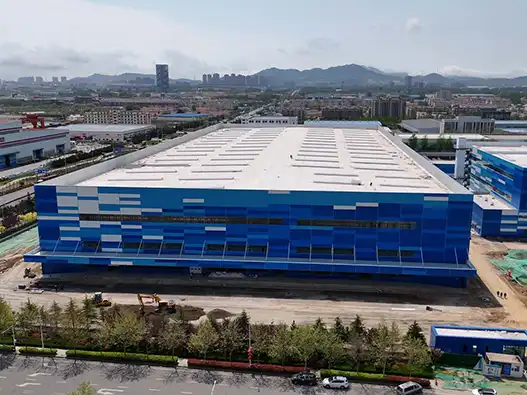
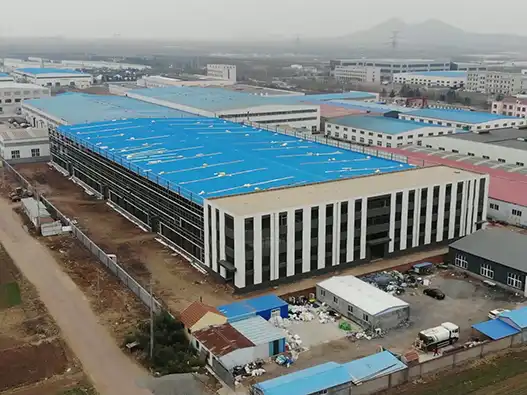
The risks are very high in industrial centers that work with Chemical Storage Warehouse volatile compounds, corrosive liquids, or flammable substances. Chemical storage needs special infrastructure that is built to keep hazards inside, stop contamination, and protect workers and the towns around the storage area. A chemical storage warehouse is more than just a building; it's a complete safety system made up of rigid steel frameworks, built-in containment routines, and a design that is based on following the rules. These facilities deal with important risks, such as acidic vapours destroying structures, not following fire separation rules, and chemical leaks causing damage to the environment. In contrast to regular storage buildings, these ones have blast-resistant reinforcements, spill containment sumps, and atmosphere controls built into modular manufactured steel structures that meet OSHA, EPA, and international safety standards.
Understanding Chemical Storage Warehouses: Fundamentals and Safety Guidelines
What Makes Chemical Storage Different
Engineered safety layers are what set a facility built for dangerous materials apart from a regular warehouse. For chemical storage to work, the environment must be carefully controlled, materials must not rust, and there must be separate areas where substances that don't mix can't come together. Each design choice is based on material safety data sheets (MSDS) and hazard classifications, which tell us how far apart things should be, how fast they should breathe, and how strong the structure needs to be. Modern facilities that serve petrochemical refineries, agrochemical distributors, and pharmaceutical manufacturers use pre-engineered building systems that include safety features when they are being made, rather than adding them later. This method lowers the risks of building on-site and ensures that all parts of the structure are the same.
Regulatory Framework Governing Hazardous Material Storage
To run a compliant building, you have to deal with a lot of different regulations. The Process Safety Management guidelines (29 CFR 1910.119) set rules for businesses that handle certain amounts of dangerous chemicals. The EPA implements rules under the Risk Management Program (40 CFR Part 68), which are mainly about stopping accidental releases. Chapter 4 of the International Building Code (IBC) lists specific occupancy requirements based on types of hazards. These rules are not just suggestions; they are real design requirements. Fire separation distances between chemical classes that don't react well with each other, explosion venting formulas, emergency exhaust system capacities, and secondary containment volumes are all required by law. When purchasing managers look at storage options, they should make sure that the designs being considered are in line with the relevant codes and have engineering figures and third-party certifications to back them up.
Essential Safety Protocols for Daily Operations
Systematic risk management is also important for operating safety, in addition to structural design. Temperature monitoring tools keep heat-sensitive compounds from going through reactions that get out of control. Automated ventilation changes the rate of airflow based on sensors that measure the percentage of vapours. This keeps the atmosphere below the lower explosive limits. Fire suppression systems designed for specific chemical types—like foam-based systems for hydrocarbon fires or dry chemical agents for metal fires—are very important for quick response. Regular maintenance checks make sure that protective coatings stay in place, containment sumps stay clear of debris, and emergency equipment works properly. Continuous tracking with automatic shutdown is used in places where hazardous material storage handles highly reactive materials. There are protocols that are set off when sensors notice sudden changes in temperature, pressure, or vapour leaks.
Designing a Chemical Storage Warehouse for Optimal Safety and Efficiency
Spatial Planning and Zone Segregation
Hazard classification planning is the first step in good layout design. Oxidisers and flammable liquids are kept in different fire sections. Acids and bases need to be physically separated so that they don't react badly if the bottle breaks. This separation goes up and down: heavier containers holding corrosive liquids stay on the ground to reduce impact forces during earthquakes, while lighter containers holding flammable materials may move to higher storage levels with better air flow. Traffic flow planning makes sure that forklifts transporting chemical containers follow designated routes with enough space between them. Emergency exits are always clear, and lighted exit signs can be seen even when the power goes out. Separating incoming packages from outgoing products at the loading dock lowers the risk of cross-contamination during handling operations. The layout of the space also takes future growth into account. As chemical stocks grow, modular steel construction lets facilities add separate storage bays without affecting the integrity of current containment zones or needing major structural changes.
Structural Materials and Corrosion Resistance
Choice of material is the key to long-lasting chemical storage. Steels with a high strength-to-weight ratio, like Q355B or ASTM A572 Grade 50, can hold weight and survive thermal stress. Primary H-beam frames made from these alloys support long-span roof systems without intermediate columns, which makes the most storage room for IBC totes and drum arrays. Corrosion protection is more than just treating the surface. When steel is exposed to acidic or alkaline environments, hot-dip galvanisation puts on zinc coats (minimum 600g/m²) that rust instead of the steel underneath. This safety goes all the way through the secondary structural framework to the galvanised C/Z purlins and bracing systems. Heavy-duty epoxy phenolic barrier coatings give extra chemical resistance, especially in places where vapour streams are concentrated. Roofing and wall cladding systems use sandwich panels with polyurethane or polyisocyanurate cores that keep the structure strong and insulate against heat. The metal facings on the outside don't get damaged by weather or UV light, and the facings on the inside have vapour barriers that stop wetness from getting in and affecting the insulation or leading to corrosion.
Ventilation Systems and Atmospheric Control
Keeping chemicals in certain temperature and humidity ranges is often necessary to keep them stable. In warehouses that store dangerous materials, ventilation systems do two things: they get rid of dangerous vapours before they build up to dangerous levels, and they keep the temperature inside the warehouse stable so that stored compounds don't break down too quickly. High-velocity exhaust systems with motors that can't explode create negative-pressure environments that pull contaminated air upward through ridge vents. Makeup air units with filter systems bring in conditioned fresh air at floor level. They do this by creating vertical airflow patterns that move vapours away from areas where people are working. Automated controls change the rate of airflow based on real-time monitoring of volatile organic compound (VOC) levels. Temperature control systems may include insulated wall assemblies, reflective roof coatings, and HVAC equipment that is the right size for the building's heat load. When warehouses store temperature-sensitive chemicals or pharmaceuticals, they use zoned climate control to keep different temperature ranges in different storage compartments without changing the temperatures in other zones.
Selecting the Right Chemical Storage Solutions
Comparing Warehouse Types and Configurations
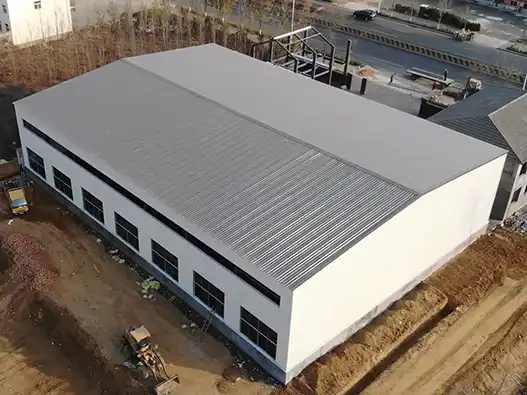
When people are looking at storage options, they can choose from pre-engineered Hazardous material storage building systems, custom-engineered facilities, storage for hazardous materials, and flexible containerised storage units. Custom designs are the most adaptable to different site conditions or specific chemical handling needs, but they take longer to make and cost more to build. Pre-engineered systems offer standard solutions that balance safety needs with cost-effectiveness by using tried-and-true designs that have been approved in multiple installations. Modular prefabricated steel storage buildings are becoming a more common middle ground. When these systems are shipped from factories, the main structural parts are already made. These include welded H-beam frames, galvanised purlins, and bracing sections. On-site assembly follows organised steps aided by engineering plans and installation instructions, shortening the time needed for construction in the field compared to traditional methods. The choice of building configurations is based on several factors. Traditional foundation-mounted buildings work well for places that need long-term storage and the ability to grow. Operations that are planning to move or have short-term project needs may prefer systems that are easy to take apart and put back together again. These things should be looked at by procurement teams along with the conditions of the place, any local permit requirements, and the available budget.
Cost Analysis: Construction vs. Purchase vs. Rental
When planning the budget for chemical storage infrastructure, it's important to look at the total costs of ownership instead of just the initial capital spending. Customised solutions are possible with a purpose-built building, but it costs a lot up front for engineering, permits, and longer construction times. Buying pre-engineered systems cuts down on lead times and takes advantage of economies of scale from making standardised parts, which means more stable prices and faster project deployment. Rental or lease agreements work well for businesses with set project timelines or changing storage needs. With this method, capital costs are turned into operational costs, and the facility provider takes over upkeep duties. Long-term rental costs may be higher than purchase prices for permanent operations, and there aren't as many ways to customise rented facilities as there are owned ones. Aside from direct costs, decision-makers should also think about insurance premiums, which are based on fire protection systems and structural ratings, as well as ongoing maintenance costs for protective coatings and mechanical systems, and possible retrofit costs if regulations change during the facility's service life. Getting suppliers involved early in the planning process helps find solutions that meet both operational needs and budgetary limits at a low cost.
Ensuring Compliance and Enhancing Security in Chemical Warehousing
Navigating Certification Requirements
Chemical storage facilities face rigorous inspection and certification processes before receiving operating permits. ISO 9001 certification demonstrates that fabricators maintain quality management systems, ensuring consistent production standards. CE marking indicates conformity with European health, safety, and environmental protection standards, essential for companies operating internationally or exporting to EU markets. The EN 1090 certification specifically addresses structural steel fabrication quality. Beyond product certifications, facilities themselves require approval from fire marshals, environmental agencies, and occupational safety authorities. This involves submitting engineering documentation proving compliance with load calculations, fire resistance ratings, and containment capacities. Third-party inspections verify that constructed facilities match approved designs and that all safety systems function as intended. Procurement managers should request complete certification packages from potential suppliers, including mill test certificates for steel materials, coating thickness reports for corrosion protection systems, and structural calculations stamped by licensed engineers. These documents provide assurance that proposed solutions meet regulatory requirements and support permit approval processes.
Advanced Security and Emergency Response Integration
Physical security measures prevent unauthorized access to hazardous materials while facilitating rapid emergency response when incidents occur. Controlled access systems using keycards or biometric authentication create audit trails documenting personnel entry. Surveillance cameras with remote monitoring capabilities allow security teams to observe facility conditions and respond to alarms without physical presence in hazardous zones. Fire prevention technologies extend beyond traditional sprinkler systems. Flame detection arrays using infrared sensors identify ignition sources within seconds, triggering suppression systems before fires spread. Explosion-relief panels designed into wall and roof assemblies vent deflagration pressures outward, protecting primary structural frames from catastrophic failure. These panels release at predetermined pressure thresholds, directing explosive forces away from occupied areas. Emergency response planning includes clearly marked assembly points, decontamination stations with eyewash fountains and safety showers, and spill response equipment stored in accessible locations. Facilities handling extremely hazardous substances may incorporate blast-resistant control rooms where personnel shelter during emergency situations, equipped with independent ventilation systems and communication, Chemical resistant coating equipment for coordinating response activities.
Procurement Guide: Choosing Your Chemical Storage Partner
Defining Your Specific Storage Requirements
Successful procurement starts with a comprehensive needs assessment. Chemical inventories dictate storage volume requirements, but equally important are container types, stacking heights, and aisle widths for material handling equipment. Weight loadings from drum pallets or IBC totes determine floor slab thickness and structural frame capacities. Material compatibility issues may require separate storage compartments with independent ventilation systems. Environmental conditions at the installation site influence design parameters. Seismic zones require enhanced bracing and foundation anchoring. Coastal locations demand upgraded corrosion protection due to salt spray exposure. Cold climates necessitate insulated assemblies preventing freeze damage to stored liquids, while hot climates require thermal barriers and climate control systems maintaining temperature-sensitive compounds within specification ranges. Operational workflows also shape facility design. High-volume distribution centers benefit from drive-through configurations with loading docks on opposite ends. Manufacturing operations may integrate storage buildings directly with process areas, incorporating pass-through openings for material transfer. Understanding these operational requirements upfront prevents costly modifications after construction completion.
Evaluating Suppliers and Manufacturers
Choosing the right manufacturing partner is just as important to the success of a project as choosing the right design. Manufacturers with a lot of experience can help with engineering and turn initial ideas into workable, legal solutions. Their past work on similar projects shows that they can handle legal requirements and get installations done on time so that they can pass inspections. When time is short, production ability is important. Large projects can be made quickly and well in places that have a lot of automatic H-beam welding lines, sandwich panel production equipment, and C/Z purlin roll-forming systems. To get a good idea of how long it will take to deliver, ask possible suppliers how much they make each month and how many orders they have waiting to be filled. Support after the sale is what sets good sellers apart from great partners. Full service packages include engineering calculations that are specific to the site, thorough fabrication drawings that show every connection, logistics coordination to handle foreign shipping, and erection guidance to help building teams on-site. Some manufacturers offer complete packages that include planning, fabrication, delivery, and installation supervision. This makes project management easier and increases accountability. Qingdao Director Steel Structure Co., Ltd. is an example of this unified approach. Their 40,000-square-meter production facility has six automated H-beam lines that make 20,000 tonnes of steel every year, as well as specialised sandwich panel and purlin manufacturing systems. They have been experts in industrial steel structures for more than 12 years. Their dedication to international quality standards is shown by the fact that their operations are ISO 9001 certified and their products are CE-marked. There are strict quality control measures in place for the more than 200 trained workers who work on projects, and in-house building design teams help clients from the first idea to the final installation.
Contract Negotiations and Service Level Agreements
Technical specifications, delivery dates, quality standards, and assistance after installation should all be made clear in procurement agreements. Specification of materials in great detail stops people from making changes that hurt performance; be clear about steel types, coating systems, and panel insulation values. Delivery terms should include lead times for manufacturing, shipping, and storage needs on-site before the structure is put up. Quality assurance rules set up how to inspect different steps of a project. Before they are shipped, the factory makes sure that the parts they make match the accepted drawings. Testing of welds, coats, and materials by a third party gives independent confirmation. On-site quality checks during installation make sure that the parts are put together correctly according to the engineering standards. Warranties that cover structural stability, coating performance, and panel systems keep things from breaking down too soon. Make it clear under what conditions guarantees don't apply and what proof is needed to make a claim. Longer service contracts might include regular checks, touch-ups for coatings, and upkeep for mechanical systems. Chemical-resistant coating, which would keep the building working well for as long as it's supposed to.
Conclusion
Chemical warehousing represents a specialized engineering discipline where structural integrity, material compatibility, and regulatory compliance converge to create safe havens for hazardous materials. The transition from concept to operational facility demands careful attention to spatial planning, material selection, atmospheric control, and security integration. Pre-engineered modular steel systems offer compelling advantages—predictable costs, accelerated timelines, and proven compliance—making them particularly attractive for procurement managers balancing safety requirements with budget constraints. Successful projects result from partnerships between knowledgeable clients who clearly articulate their operational needs and experienced fabricators who translate those requirements into compliant, durable structures. The investment in properly engineered chemical storage infrastructure pays dividends through reduced insurance premiums, regulatory approval without delays, and operational continuity protected by robust safety systems.
FAQ
1. How do steel structures resist chemical vapor corrosion?
Corrosion resistance comes from multi-layer protection systems. Hot-dip galvanization applies sacrificial zinc coatings that corrode preferentially, protecting underlying steel. Heavy-duty epoxy phenolic topcoats provide additional barriers against specific chemicals. The duplex coating system—metallic layer plus organic barrier—withstands aggressive environments that would rapidly degrade untreated steel. Regular inspections and coating maintenance extend protection throughout the facility's service life.
2. What fire ratings can chemical storage buildings achieve?
Fire resistance depends on applied protection systems and structural design. Intumescent coatings expand when exposed to heat, insulating steel members and maintaining structural integrity during fires. These systems achieve ratings from R60 (one hour) to R180 (three hours), giving personnel evacuation time and supporting firefighting operations. Compartmentalized designs with fire-rated walls further contain incidents, preventing spread between storage zones containing incompatible chemicals.
3. Can prefabricated systems accommodate site-specific requirements?
Modular pre-engineered buildings offer substantial customization within standardized frameworks. Column spacing adjusts to accommodate specific equipment layouts or clear-span requirements. Wall and roof insulation levels scale based on climate conditions and temperature control needs. Explosion-relief panel locations, ventilation system capacities, and containment sump dimensions all modify according to stored chemical classifications and regulatory requirements. Engineering teams adapt standard designs to site conditions, foundation types, and local code requirements.
4. What lead times should we expect for chemical storage projects?
Project timelines vary based on scope and complexity. Engineering and design phases typically require 2-4 weeks, producing detailed drawings and material specifications. Fabrication of standard pre-engineered systems takes 6-10 weeks, depending on production queue and component quantities. International shipping adds 3-6 weeks based on destination. On-site erection duration ranges from 4 to 8 weeks for medium-scale facilities. Planning 4-6 months from contract signing to facility completion provides realistic expectations for most projects.
Partner With DFX for Your Chemical Storage Infrastructure
Building a compliant Chemical Storage Warehouserequires more than purchasing steel components—it demands a fabrication partner who understands hazardous material regulations, corrosion protection methodologies, and safety-centric design principles. DFX brings proven expertise in pre-engineered steel structures specifically configured for chemical handling environments. Our modular systems integrate H-beam primary frames, galvanized secondary components, and protective coating systems engineered for corrosive atmospheres. From engineering calculations through fabrication, logistics coordination, and erection guidance, we support your project comprehensively. Connect with our technical team at jason@bigdirector.com to discuss your specific requirements and receive detailed proposals from a trusted Chemical Storage Warehouse supplier.
References
1. National Fire Protection Association. (2021). NFPA 400: Hazardous Materials Code. Quincy, MA: NFPA Publications.
2. Occupational Safety and Health Administration. (2020). Process Safety Management of Highly Hazardous Chemicals (29 CFR 1910.119). Washington, DC: U.S. Department of Labor.
3. American Institute of Steel Construction. (2022). Steel Construction Manual, 15th Edition. Chicago, IL: AISC Publications.
4. Environmental Protection Agency. (2019). Risk Management Program Guidance for Chemical Accident Prevention Regulations (40 CFR Part 68). Washington, DC: EPA Office of Emergency Management.
5. International Code Council. (2021). International Building Code Chapter 4: Special Detailed Requirements Based on Use and Occupancy. Country Club Hills, IL: ICC Publishing.
6. Steel Construction Institute. (2020). Design of Steel Structures for Hazardous Substance Storage. Berkshire, UK: SCI Technical Publications.
Learn about our latest products and discounts through SMS or email