- English
- French
- German
- Portuguese
- Spanish
- Russian
- Japanese
- Korean
- Arabic
- Greek
- German
- Turkish
- Italian
- Danish
- Romanian
- Indonesian
- Czech
- Afrikaans
- Swedish
- Polish
- Basque
- Catalan
- Esperanto
- Hindi
- Lao
- Albanian
- Amharic
- Armenian
- Azerbaijani
- Belarusian
- Bengali
- Bosnian
- Bulgarian
- Cebuano
- Chichewa
- Corsican
- Croatian
- Dutch
- Estonian
- Filipino
- Finnish
- Frisian
- Galician
- Georgian
- Gujarati
- Haitian
- Hausa
- Hawaiian
- Hebrew
- Hmong
- Hungarian
- Icelandic
- Igbo
- Javanese
- Kannada
- Kazakh
- Khmer
- Kurdish
- Kyrgyz
- Latin
- Latvian
- Lithuanian
- Luxembou..
- Macedonian
- Malagasy
- Malay
- Malayalam
- Maltese
- Maori
- Marathi
- Mongolian
- Burmese
- Nepali
- Norwegian
- Pashto
- Persian
- Punjabi
- Serbian
- Sesotho
- Sinhala
- Slovak
- Slovenian
- Somali
- Samoan
- Scots Gaelic
- Shona
- Sindhi
- Sundanese
- Swahili
- Tajik
- Tamil
- Telugu
- Thai
- Ukrainian
- Urdu
- Uzbek
- Vietnamese
- Welsh
- Xhosa
- Yiddish
- Yoruba
- Zulu
Commercial Modular Steel Building Design for Faster Smarter Building
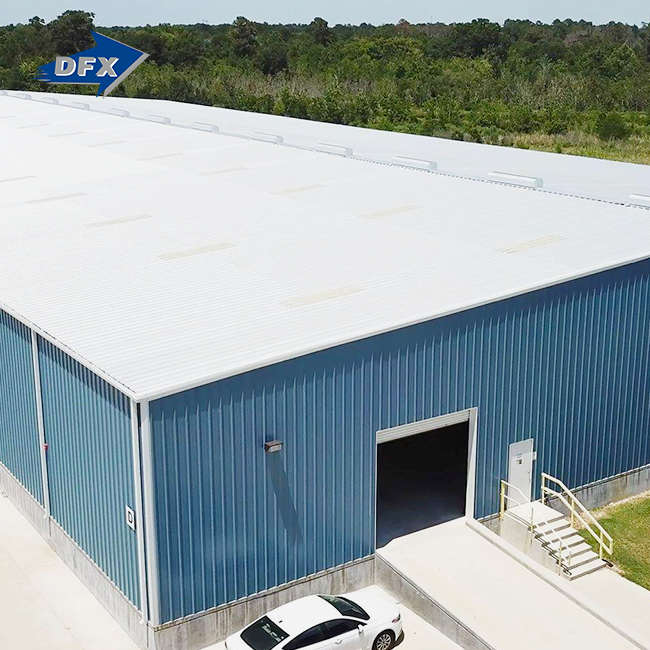
When your project timeline demands results and your budget requires precision, a commercial modular steel building offers the perfect intersection of speed, quality, and adaptability. These prefabricated structures are transforming how businesses approach construction—from logistics centers to manufacturing plants—by delivering fully engineered systems that reduce onsite labor, minimize weather delays, and accelerate occupancy.

Introduction
Commercial modular steel buildings have changed the construction industry in big ways, especially for B2B buying workers who want solutions that are quick, easy to use, and scalable. Purchasing managers, project engineers, and EPC contractors now depend on commercial modular steel buildings that are already built to meet tight deadlines without affecting the structure. This detailed guide looks at how commercial modular steel buildings improve productivity, adaptability, and competitiveness in business and industry settings. Knowing the benefits of commercial modular steel buildings can help you make better choices about what to buy and how to complete a project, whether you're in charge of expanding a warehouse, planning a manufacturing facility, or handling infrastructure projects.
Understanding Commercial Modular Steel Buildings
What Makes Modular Steel Buildings Different
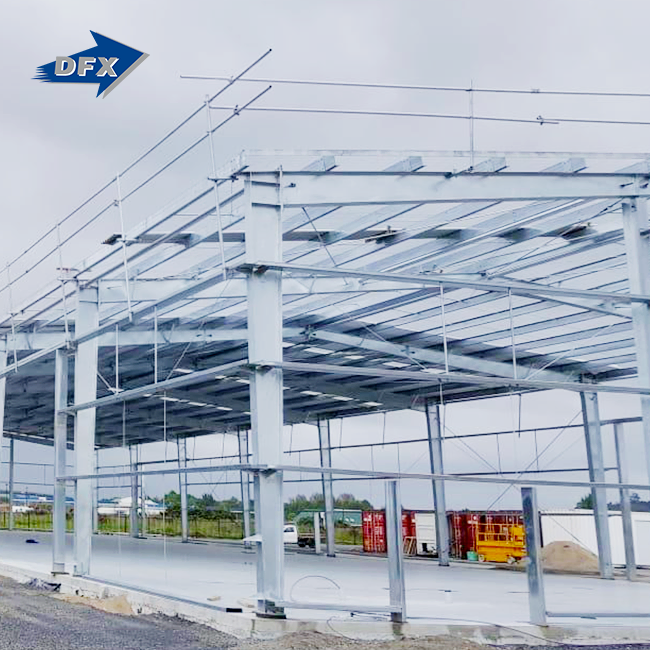
Commercial modular steel buildings for businesses are a big change from the usual way of building things. These buildings are planned and built in a controlled factory setting before being shipped to the project site and quickly put together. Commercial modular steel buildings are different from traditional stick-built methods or basic prefab kits because they use advanced H-beam primary frames, galvanized C and Z purlins, and precision-engineered bracing systems to make sure the structure is stable and lasts a long time.
This is because it can be scaled up or down and the form can be changed easily. Large workshop areas without inner columns are good for manufacturing plants, and transportation workers like being able to add more storage space in modules as needed. EPC companies like that they can plan their budgets more accurately and work on shorter deadlines when site preparation and module fabrication can happen at the same time. This cuts total project schedules by 30 to 50 percent compared to traditional methods.
Key Applications Across Industries
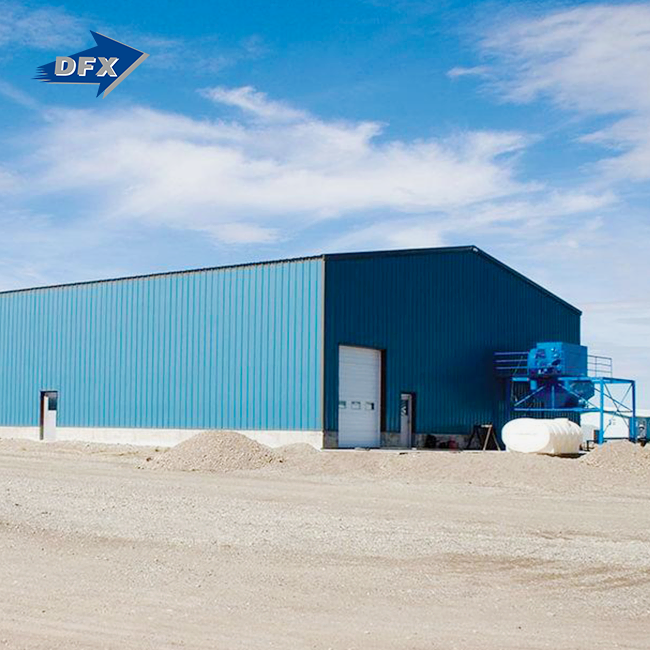
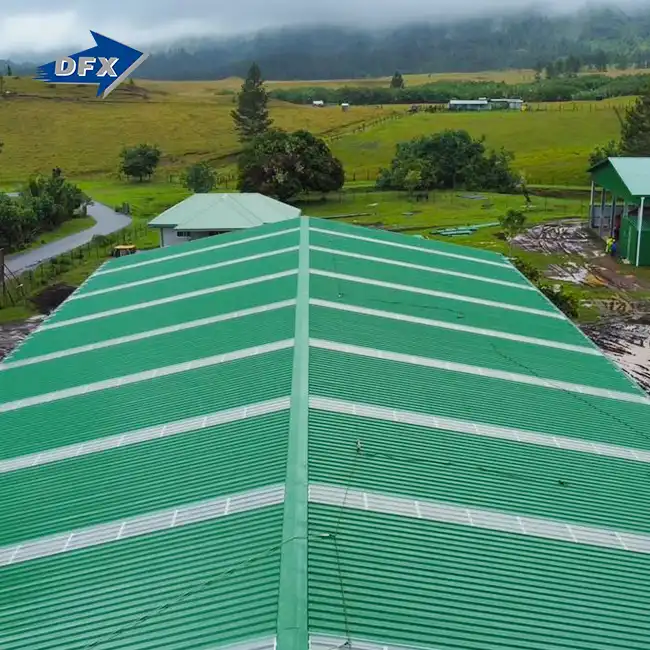
These designs are flexible and can be used for a variety of business reasons. The open-span design is used in logistics warehouses and distribution hubs to make the most of storage space and speed up the movement of goods. Agricultural businesses use commercial modular steel buildings for chicken coops and other facilities for animals when longevity, cost-effectiveness, and the ability to incorporate air are all very important. Engineering solutions that can be changed to fit specific load needs and design requirements are helpful for infrastructure projects like aeroplane hangars and public buildings.
Custom modular layouts are beneficial from a business point of view because they allow for customised operational workflows and allow for future growth without major structural changes. This flexibility is especially useful for companies that are growing and need to build facilities in stages based on how much they make.
Comparing Commercial Modular Steel Buildings with Traditional Alternatives
Construction Speed and Site Disruption
Traditional concrete construction usually needs a lot of work to be done on-site, curing times that depend on the weather, and building phases that happen in a certain order, all of which add time to the project. Many of these problems can be avoided with commercial modular steel buildings because they are made off-site while the site is being prepared. Assembling teams quickly put up main frames and secondary parts, so structural work is often done in weeks instead of months.
Wood frame premade buildings are faster, but they don't last as long or be as resistant to fire as steel buildings. At first glance, metal building kits may seem like a good deal, but they often need a lot of customisation and extra engineering, which takes away from their price advantage. ISO9001 and CE standards are used to make commercial modular steel buildings, which ensure consistent quality and factory precision that cuts down on rework and change orders on-site.
Cost Efficiency and Long-Term Value
When looking at investments in commercial modular steel buildings, competitive cost per square foot is just the beginning. Less time spent on-site on building means less money spent on labour, which means lower borrowing costs and more money coming in sooner for businesses. Properly insulated sandwich panel systems, whether they are made of EPS, fibreglass or premium PU panels, save energy and lower operating costs over the life of the building.
When it comes to maintenance, steel buildings are a big plus. Instead of breaking down over time due to pests and moisture or cracks and spalls in concrete, properly protected steel frames with galvanised parts keep their structural integrity for decades with little maintenance. Companies that put total cost of ownership over initial capital spending are affected by procurement strategies that take life into account.
Environmental Footprint and Adaptability
Less damage to the environment is caused by several things, including less building trash because of accurate manufacturing in factories, shorter machine operation hours on job sites, and the fact that steel can be recycled naturally at the end of its useful life. Changing operational needs can be easily met by expanding or reconfiguring commercial modular steel buildings. This avoids the waste that comes with tearing down rigid traditional structures.
What makes commercial modular steel buildings different from other options is that it can adapt to changing business needs. Companies that make things can add more production bays, building owners can make storage areas bigger, and farms can add more animal quarters without having to stop what they're doing or start from scratch.
The Commercial Modular Steel Building Design and Construction Process
Design Customization and Engineering
The journey starts with group design meetings where structural engineering and building needs are discussed. Fabricators with a lot of experience, like Qingdao Director Steel Structure Co., Ltd., give integrated design services that turn operational needs into detailed engineering figures. This step figures out the main frame requirements, the best column spacing for workflow, and the loading needs for tools, storage systems, or other specific operating needs.
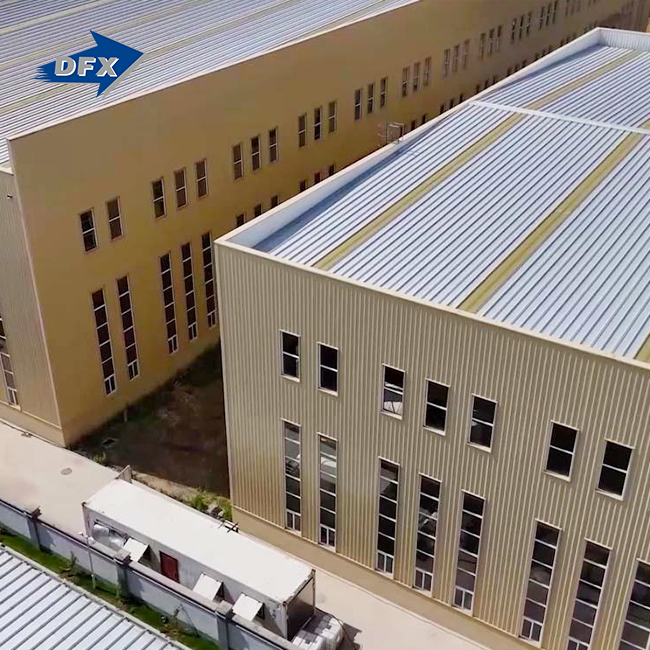
When it comes to looks, design flexibility also applies. Modern offices are made possible by glass curtain walls inside steel buildings. Different window and door arrangements improve both usefulness and appearance. Customisable facade systems that balance natural lighting with thermal performance work especially well in gyms and other sports facilities.
Module Manufacturing and Quality Control
Fabrication in a factory takes place in controlled settings with high-tech tools that guarantee accuracy and regularity. There are six automatic welded H-beam production lines that make precise primary structural members. C and Z section steel lines make secondary framing components. Insulated wall and roof systems are made on sandwich panel production lines that keep an eye on quality all the time.
With ISO9001 certification, quality control is standardised throughout the whole production process. When something gets CE certification, it means it meets European standards. This gives international clients confidence in the safety of the structure and the specifications of the materials used. This process is controlled in the workplace, so there are no changes in quality or factors that can happen in the field, where weather, site conditions, and worker skill levels can make things unpredictable.
Logistics Coordination and Onsite Assembly
Advanced logistics planning makes sure that module deliveries happen at the right time to match the site's readiness and the order of assembly. Fabricators offer full shipping assistance, taking care of container packing, customs paperwork, and delivery schedules to cut down on storage needs and assembly delays.
Erection advice services help make on-site assembly go smoothly, whether companies use their own teams or work with recommended installation partners. Technical support, detailed assembly drawings, and connection specifications make sure that structural parts fit together correctly. The 200-square-meter minimum order size shows how commercial modular steel buildings can save time and money on large projects while still being easy to use for smaller ones.
Critical Cost Factors and Budget Forecasting
The choice of materials has a big effect on project costs. For long-span structures like stadiums and arenas, Q355B standard steel is stronger, while Q235B standard steel is more cost-effective for office buildings and other light-duty structures. There are different types of insulation, from cheap EPS panels that work well in mild climates to high-end PU sandwich panels that do a better job of keeping heat in for harsh settings or processes that depend on temperature.
Commercial modular steel buildings save time and money by combining different parts of a project into one. Less time spent working on-site means lower direct labour costs and shorter periods of time spent renting expensive tools and supervising workers on-site. The costs of installation are predictable because the steps are easy to follow and there is a lot of information to help you put it together. This keeps you from having to pay for unnecessary delays or extra work.
When procurement professionals understand these cost factors, they can more accurately predict budgets and evaluate supplier proposals. When asking for competitive bids, it's easier to make fair comparisons when pricing planning, manufacturing, materials, transportation, and erection support separately.
Selecting the Right Supplier for Your Commercial Modular Steel Building
Essential Evaluation Criteria
Certifications for suppliers are the basis for quality security. ISO9001 shows that quality management is done in a planned way, and CE approval shows that the building meets international building standards. Optional EN1105 certification adds to the proof that the factory can make things that are up to the task.
The ability to manufacture has a direct effect on the reliability of delivery and the ability to customise. Check the providers' enclosed production area, the level of sophistication of their equipment, and their annual capacity to make sure they can handle the size of your project without going overboard. The 40,000 square meters of production space and 200 well-trained workers at Director Steel provide the necessary equipment for uniform quality and on-time delivery. A large amount of work can be done each year: 20,000 tonnes of welded H-beams and columns, 8,000 tonnes of C and Z section steel, and 50,000 square meters of sandwich panels.
Geographic Presence and Customer Feedback
Companies that have been in business for more than ten years know how to handle international project requirements, shipping logistics, and technical support across borders. Fabricators has been in business since 2011 and has completed hundreds of projects that have helped them improve their engineering methods, relationships with suppliers, and customer service procedures.
It's not just marketing claims that show how reliable a supplier is; customer feedback does. Customers who keep coming back show that they are happy with the quality, the speed of delivery, and the customer service after the sale. Referencing projects in your industry can help you find relevant performance standards and figure out if sellers understand your specific business needs and regulatory environment.
Kit-Based Solutions Versus Turnkey Offerings
Kit sellers give buyers structural parts and basic assembly instructions, but buyers are responsible for coordinating engineering, getting accessories, and managing the construction process. This method works best for workers with a lot of experience, a network of reliable subcontractors, and their own project management skills.
From the idea stage to the finished product, turnkey services include engineering calculations, fabrication, logistics coordination, and guidance on how to set up the structure. This integrated method helps buyers who want a single point of responsibility and easier project completion. Turnkey solutions usually cost more, but they make coordination easier and give more performance risk to suppliers.
The choice of procurement path relies on internal resources, project scale, and risk tolerance. Large EPC companies usually like kit methods that work with their current processes. On the other hand, manufacturing investors and agriculture businesses usually like turnkey solutions that are easy to use and don't require as much coordination.
Future Trends and Optimizing Your Commercial Modular Steel Building Investment
Digital Design Tools and BIM Integration
Building Information Modelling changes how commercial modular steel building projects are planned, designed, and built. Digital design tools let clients see how buildings will look when they're finished, test how they will work, and find space problems before they are built. Integration of BIM makes it easier for structural systems, mechanical equipment, and operational needs to work together, which cuts down on the need for expensive changes in the field.
By shortening design cycles and making accuracy better, these technological advances speed up the development of smarter buildings. It's easier for procurement professionals to see what the project will look like, get more accurate cost figures, and compare different design options during the planning stages, when changes are still cheap.
Sustainable Materials and Circular Economy Principles
Environmental responsibility plays a bigger role in buying decisions. Because steel can be recycled, commercial modular steel buildings work well in circular economies, where materials keep their value over many stages of their existence. Responsible makers get their steel from factories that have environmental certifications and make sure that the manufacturing processes are optimised to use as little energy and waste as possible.
High-performance insulation materials lower the amount of energy a building needs to run over its entire life. Even though they cost more up front, premium PU sandwich panels have better thermal performance that lowers heating and cooling costs for decades. This long-term operational efficiency helps companies meet their carbon reduction goals and boosts their bottom line.
Flexibility for Dynamic Operational Growth
The flexibility of commercial modular steel buildings is unmatched when it comes to meeting changing business needs. Adding workshop bays helps manufacturing companies make more things. To keep up with rising storage needs, logistics companies slowly add more warehouse space. Agricultural businesses build facilities in stages so that they can keep up with the growth of their animal populations or food production.
This gives businesses the freedom to get the most out of their investments by preventing them from overbuilding in the beginning and keeping growth paths open as their businesses grow. Future-proofing investments in infrastructure is especially useful in global markets that are very competitive and where business success depends on being able to change quickly and using capital efficiently.
Conclusion
Commercial modular steel buildings are more than just a way to build something. They are also a way to invest in infrastructure in a way that prioritises speed, quality, and operational flexibility. When procurement experts know about comparative advantages, selection factors, and new trends, they set their companies up to be successful in the market. These flexible buildings can be used for a wide range of things, from storage facilities for goods to factories and farms. They offer clear budgeting, regular schedules, and long-term value that is hard to find in traditional construction.
Frequently Asked Questions
1. What construction timelines can I expect for a commercial modular steel building?
Depending on the size and complexity of the building, most projects have the structure finished within 8 to 12 weeks from the start of making to the time of assembly on-site. This schedule is based on the idea that site preparation happens at the same time as factory fabrication. This window may be longer for structures bigger than 5,000 square meters or with very specific designs. Standardised designs for buildings smaller than 1,000 square meters usually finish faster. Since most of the work is done indoors, weather effects are kept to a minimum.
2. How do the prices per square foot compare to traditional construction?
Depending on the specs, level of finish, and amount of insulation needed, commercial modular steel buildings can cost anywhere from $45 to $85 per square foot when they are built. For similar industrial uses, traditional construction costs more than $90 to $130 per square foot. When you factor in lower financing costs due to shorter construction periods and earlier operational revenue generation, the total cost advantages get even bigger. For correct comparisons, specific project quotes should include information about the grades of materials, panel types, and needs for accessories.
3. Can these buildings accommodate specialized industrial requirements?
Customisation options cover a wide range of practical needs, such as overhead crane systems, specific ventilation for animal facilities, clear-span standards for industrial processes, and architectural features for office settings. During the design phase, engineering teams look at things like structural requirements, environmental controls, and how to best optimise workflow to make sure that the finished structures can meet the needs of specific operations.
Partner with DFX for Your Next Commercial Modular Steel Building Project
Qingdao Director Steel Structure Co., Ltd. has been making commercial modular steel buildings for clients all over the world for more than 12 years. Our factories are ISO9001 and CE certified, and they build precision-engineered buildings for infrastructure projects, industrial plants, transportation centers, and farms. We can produce more than 20,000 tonnes of main structural steel every year and offer full turnkey services, which include everything from planning estimates to erection advice. This means that we can help you with your project from the beginning to the end. Get in touch with jason@bigdirector.com right away to talk about your needs with our technical team and get a full quote from a reputable company that guarantees quality, dependability, and on-time delivery of commercial modular steel buildings.
References
1. Smith, J. & Williams, R. (2021). "Prefabricated Steel Construction: Efficiency Gains in Commercial Building Projects." Journal of Construction Engineering and Management, Vol. 147, No. 8.
2. Thompson, K. (2022). "Modular Building Systems: A Comparative Analysis of Cost and Timeline Performance." International Journal of Industrial Construction, Vol. 15, No. 3, pp. 112-128.
3. Henderson, M. (2020). "Sustainable Steel Structures: Environmental Benefits of Modular Construction Methods." Green Building Research Quarterly, Vol. 9, No. 2, pp. 45-62.
4. Roberts, P. & Chang, L. (2023). "BIM Integration in Prefabricated Steel Building Design: Case Studies from Manufacturing Facilities." Construction Technology Review, Vol. 28, No. 1, pp. 89-105.
5. Anderson, T. (2021). "Procurement Strategies for Commercial Steel Buildings: Quality Assurance and Supplier Selection Criteria." B2B Construction Management Journal, Vol. 19, No. 4, pp. 156-173.
6. Mitchell, S. (2022). "Long-Span Steel Structures: Engineering Solutions for Warehouses and Industrial Applications." Structural Engineering International, Vol. 32, No. 6, pp. 234-249.
Learn about our latest products and discounts through SMS or email