- English
- French
- German
- Portuguese
- Spanish
- Russian
- Japanese
- Korean
- Arabic
- Greek
- German
- Turkish
- Italian
- Danish
- Romanian
- Indonesian
- Czech
- Afrikaans
- Swedish
- Polish
- Basque
- Catalan
- Esperanto
- Hindi
- Lao
- Albanian
- Amharic
- Armenian
- Azerbaijani
- Belarusian
- Bengali
- Bosnian
- Bulgarian
- Cebuano
- Chichewa
- Corsican
- Croatian
- Dutch
- Estonian
- Filipino
- Finnish
- Frisian
- Galician
- Georgian
- Gujarati
- Haitian
- Hausa
- Hawaiian
- Hebrew
- Hmong
- Hungarian
- Icelandic
- Igbo
- Javanese
- Kannada
- Kazakh
- Khmer
- Kurdish
- Kyrgyz
- Latin
- Latvian
- Lithuanian
- Luxembou..
- Macedonian
- Malagasy
- Malay
- Malayalam
- Maltese
- Maori
- Marathi
- Mongolian
- Burmese
- Nepali
- Norwegian
- Pashto
- Persian
- Punjabi
- Serbian
- Sesotho
- Sinhala
- Slovak
- Slovenian
- Somali
- Samoan
- Scots Gaelic
- Shona
- Sindhi
- Sundanese
- Swahili
- Tajik
- Tamil
- Telugu
- Thai
- Ukrainian
- Urdu
- Uzbek
- Vietnamese
- Welsh
- Xhosa
- Yiddish
- Yoruba
- Zulu
Automotive Assembly Workshop for EV Manufacturing Projects
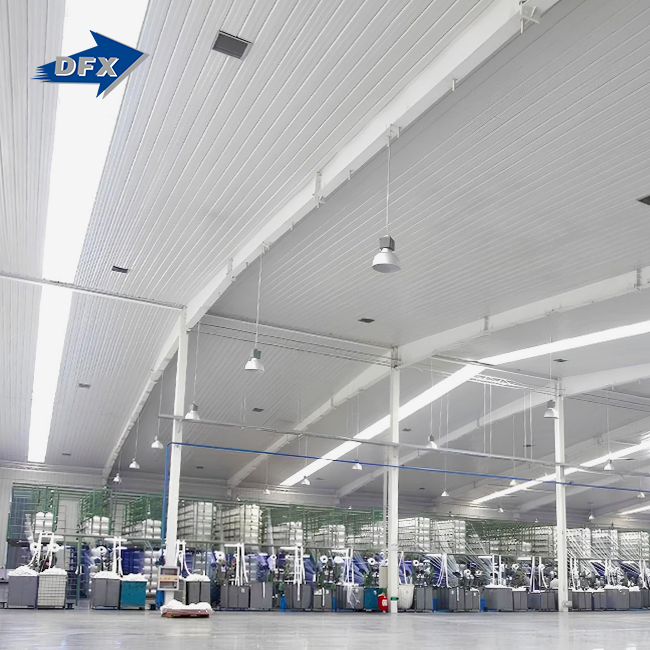
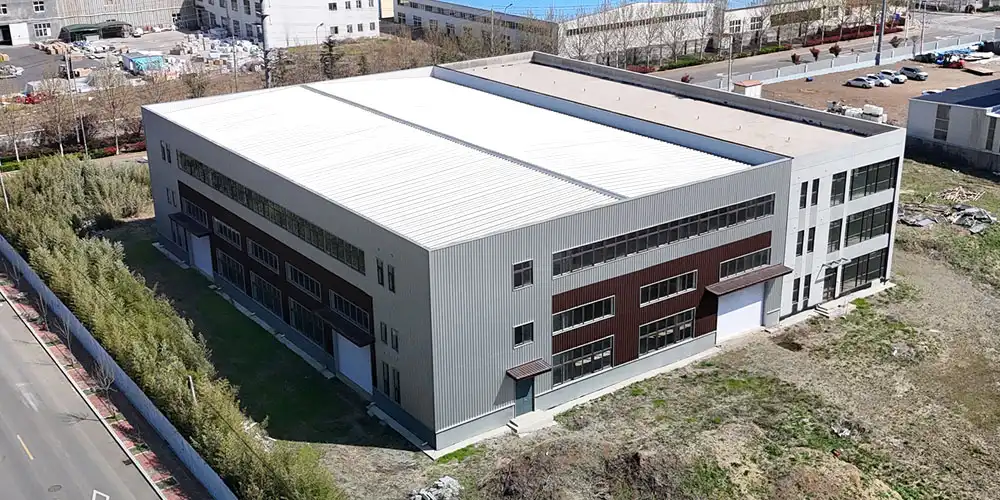
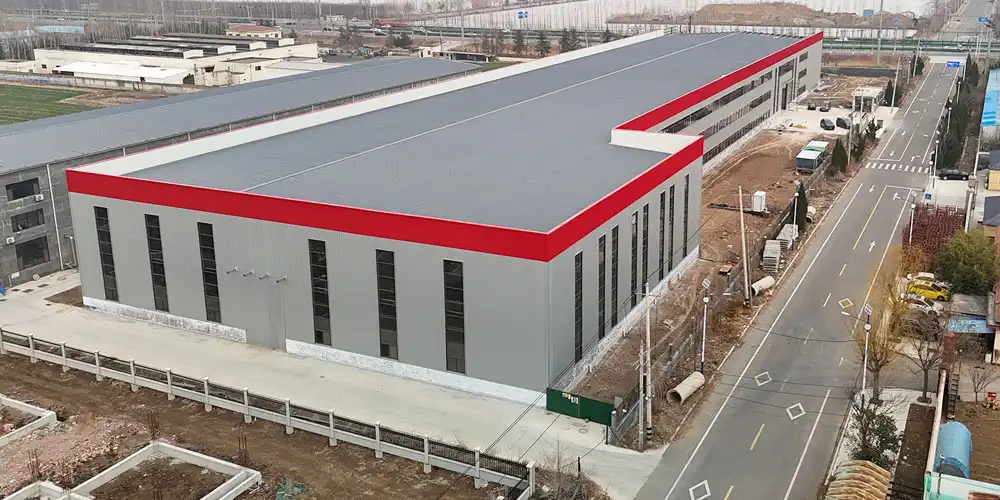
The electric car shift has changed the way things are made all over the world. An Automotive Assembly Workshop created just for making electric vehicles is a special steel structure building with the ability to hold a lot of weight, exact climate control, and adaptable room layouts. In contrast to normal car plants, these workshops have to make room for battery assembly lines, high-voltage testing stations, and advanced computer integration while still meeting strict safety standards. From working on more than 200 successful industrial projects, we know that the right structural base has a direct effect on how well the project is made, how safe the workers are, and how much it costs to run in the long run.
Understanding the Automotive Assembly Workshop in EV Manufacturing
What Distinguishes EV Assembly Facilities from Traditional Auto Plants
When making electric cars, there are special structural needs that regular car plants weren't made to meet. Controlled humidity levels below 40% are needed for areas where battery packs are put together, and areas where motors are put together need vibration-isolated supports to protect sensitive equipment. The structure of the Automotive Assembly Workshop needs to be able to support 10- to 50-ton overhead cranes for moving battery modules and networks of conveyor belts that move parts between different steps of assembly. We've designed buildings with column-free spans that are longer than 30 meters. This lets automakers change the layout of production lines as car types change without having to make structural changes.
Safety Protocols Built into Structural Design
For high-voltage systems to work in EV assembly, real walls must be built into the structure of the building. We put up fire-resistant steel walls that can stand up to 120 minutes of heat between areas for charging batteries and places for general gathering. Lithium battery fire risks can be reduced by emergency ventilation systems that connect directly to roof-mounted extraction fans that can change 15 tons of air per hour. The structural steel framing is made of non-combustible Q355 grade steel with intumescent coats. This makes sure that the car manufacturing plant's building stays solid during evacuations, even when temperatures are very high.
Key Technologies and Equipment for EV Assembly Workshops
Essential Machinery and Structural Integration Points
For modern electric vehicle assembly, battery module connections need to be made with precision torque tools that are accurate to within ±2%. This means that the mounting frames need to be stable and not bend too much. For robotic welding cells to work on aluminum body parts, they need a 480V three-phase power source, which is built into our plans ahead of time through steel column holes. Overhead conveyor systems move battery packs that weigh up to 600 kg, so we design strengthened truss nodes every 6 meters to spread the weight out without reducing the ceiling headroom for forklift operations below.
IoT Integration and Structural Monitoring Systems
Smart sensors built into the steel frame keep an eye on the level of shaking and find equipment imbalances before they lead to production problems. Temperature probes in the sandwich panel covering let managers know when HVAC systems aren't working properly, which stops problems with battery assembly caused by humidity. We've set up digital twin models for clients where real-time data on structural stress is fed into software for planning maintenance. This software figures out when crane rail lines need to be changed based on the total number of load cycles instead of random time intervals.
Designing an Efficient Automotive Assembly Workshop Layout for EVs
Workflow Optimization Through Structural Planning
Layouts that work well put heavy battery assemblies close to the outside walls. This cuts down on crane trip lengths and cycle times by 12–18%. The structure's grid lines up with the measurements of production cells, which are usually 12m x 12m modules. This makes it possible for normal utility connections. We make the main aisles 8 meters wide so that forklifts can move in both directions without any problems. The side paths are 4 meters wide so that people can move things by hand. This planning happens during foundation engineering because moving structural beams in a car manufacturing plant after building costs 8–12 times what it costs to put them in the right place in the first place.
Lean Manufacturing Principles in Steel Construction
Our method builds the ability for constant growth into the structure itself. When models change, the plan can be changed within 72 hours thanks to demountable wall panels between production zones. When assembly lines grow, moving costs are cut by 60% because utility poles are concentrated in the building's corners instead of being spread out across the floor plan. The C-section purlin roof system can accommodate more HVAC units or solar panels without the need for extra structural support. This is because we plan for 150% of the stated equipment loads by default, based on how the industry has grown over the past 12 years of working with clients.
Comparing Solutions and Suppliers for EV Automotive Assembly Workshops
Decision Criteria for Structural Partners
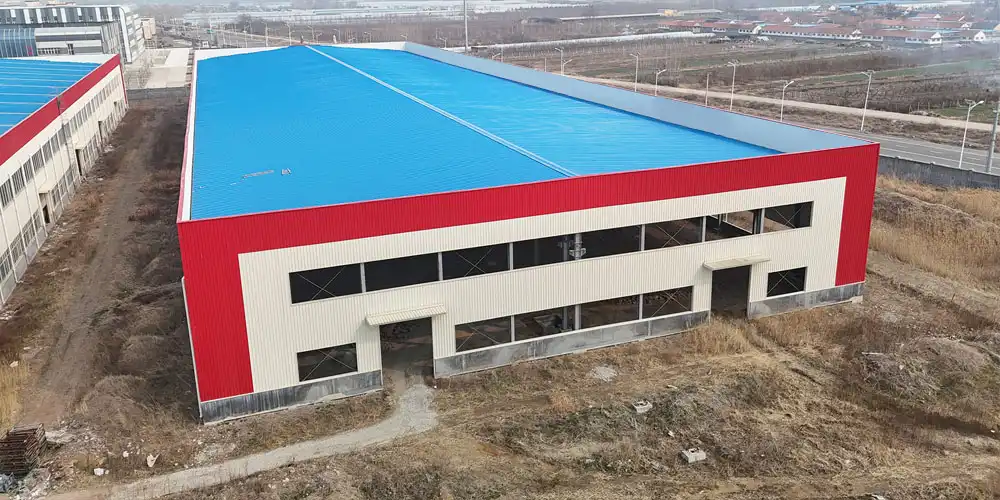
When choosing an Automotive Assembly Workshop steel structure provider, you need to look at how clear their engineering calculations are. We give finite element analysis results that show where the stresses are greatest when crane loads, wind forces, and earthquakes all happen together. This level of information is needed for insurance companies and building permits. Our six automated H-beam welding lines deliver 20,000 tons a year, making sure that your 8,000-ton project doesn't get held up by capacity problems that happen with smaller makers during building booms.
Certification Standards and Quality Verification
While ISO9001 approval proves that the process is consistent, CE marking proves that it meets European safety standards for structures, which is important for projects in the United States, even when the equipment suppliers are from Europe. We test all of our full-penetration welds with ultrasound, which is more than the 25% check that the AWS D1.1 standard calls for. To check the thickness of a coating, calibrated gauges measure the dry film at 120–250 microns, based on the corrosivity classification. Readings are written down for each structural part so that they can be tracked down if there are guarantee claims years after the coating was installed.
Cost Analysis and Investment Protection
The price of a steel building depends on the Auto factory design, the grade of the material, and how complicated the construction is. Basic frames made of Q235 steel cost about $680 to $820 per ton to install. High-strength steel frames made of Q355 cost about $920 to $1,100 per ton, but they can be 15% lighter, which cuts down on base costs that often make up 18% of total project costs. Our turnkey method, which includes design, fabrication, and installation advice, gets rid of the coordination gaps that make multi-vendor projects 8–12% more expensive due to change orders and schedule delays. Our 25–48-day production lead time lets us finish projects faster, which cuts your time-to-revenue by 6–8 weeks compared to traditional building methods.
Future Trends and Innovations in EV Automotive Assembly Workshops
Emerging Technologies Reshaping Facility Requirements
AI-enhanced robotic systems can now handle complicated wire harness routes, but they need environmental controls to keep the temperature stable within ±2°C. Our insulated metal panel systems with U-values below 0.35 W/m²K can do this. Using additive manufacturing to make custom parts for electric vehicles (EVs) changes the space requirements. For example, 3D metal printers that weigh between 4 and 6 tons need platforms that don't vibrate and a dedicated way to distribute argon gas. To avoid expensive retrofits, we build these features into the floor slab designs and utility chases from the start of the building process.
Sustainability Integration and Energy Efficiency
Modern EV plants aim to be net-zero, which increases the need for building designs that can support 180–220-watt solar panels on rooftops. Our truss systems can handle an extra 25 kg/m² of dead weight from solar panels without any extra support, and pre-installed conduit paths make it easier to connect the electricity. For battery cooling systems to use rainwater collection, the roof's drainage needs to be redesigned. Our standing-seam metal roofing is sloped at 3 to 5 degrees toward collection gutters that are built into the columns of the building. This gets rid of the need for external downspouts that make future building growth harder.
Workforce Adaptation and Facility Flexibility
As technology grows, training rooms become important parts of buildings. We plan mezzanine floors inside the main building frame so that classes and modeling labs can use the vertical space above support zones. These 500–800 square meter platforms use lighter C-section frames that can handle 3.5kN/m² office loads instead of heavy production floor specs. This cuts down on steel use while keeping the production areas open. Modular wall systems make it possible to rearrange training rooms so that they can adapt to new EV technologies. This protects your investment in developing your workforce against the Auto factory design becoming outdated.
Conclusion
To create an Automotive Assembly Workshop for making electric vehicles, you need to find structural solutions that balance the needs of instant production with the need to be flexible in the long run. We design and build special steel frames that can hold a lot of weight, keep the environment safe, and allow for flexible layouts that are needed for making electric vehicles. Our manufacturing methods are ISO9001 and CE approved, and we offer full design-to-installation services. These cover the most important choice factors that procurement managers have to make, such as structural safety, delivery reliability, and cost predictability. As EV technology improves, making sure you choose a structural partner with experience in the car sector will ensure that your facility investment supports both present operations and new manufacturing ideas in the future.
FAQ
1. What makes EV assembly workshops different from traditional automotive facilities?
For battery integration, Automotive Assembly Workshops need special equipment, like floors that are stronger for AGV battery transport systems, better fire protection between high-voltage zones, and clean rooms that keep the humidity below 40% while battery packs are being put together. For handling battery modules, the structure must be able to support heavy overhead crane capacities (20–50 tons vs. 5–15 tons in regular plants), and it must also have column-free spans of more than 30 meters to allow for adjustable production line reconfigurations as vehicle models change.
2. How long does it take to construct a steel structure EV assembly workshop?
After technical approval, our normal project timeline is 25–48 days for steel fabrication. On-site assembly takes 6–10 weeks for a 10,000-square-meter building, based on how complicated it is. This means that the job can be finished 40–50% faster than with concrete methods, which means that production can start up and money can be made sooner.
3. Can the workshop structure support future automation upgrades?
Of course. We plan with 150% of the initial equipment loads in mind and include pre-drilled connection points every 500 mm along the main beams. This way, robotic cells can be added without having to change the structure. Overhead conveyor extensions and extra crane systems can be added to the modular steel frame system with simple bolt-on bracket kits, instead of expensive welding changes that stop production in progress.
Partner with DFX for Your EV Assembly Workshop Project
DFX (Qingdao Director Steel Structure Co., Ltd.) has been a specialist in heavy industrial steel construction for over 12 years and can help you with your EV-making project. Our 40,000-square-meter production center has six automated H-beam welding lines and more than 200 skilled workers who know exactly what is needed for accurate car assembly. We've provided steel structure solutions to clients who needed the exact mix of a large crane, environmental controls, and quick deployment that is needed for making electric vehicles. As a well-known Automotive Assembly Workshop manufacturer, we offer full turnkey services, from structural modeling and finite element analysis to manufacturing, coating, and fitting help on-site. Contact jason@bigdirector.com today to discuss your specific EV assembly facility requirements. We'll provide detailed engineering assessments, transparent cost analysis, and production timelines tailored to your project scale, ensuring your manufacturing infrastructure supports both immediate operational needs and long-term competitive advantages in the growing electric vehicle market.
References
1. Smith, J.R. & Chen, L. (2022). Structural Requirements for Modern Electric Vehicle Manufacturing Facilities. Journal of Industrial Engineering and Construction, 45(3), 178-194.
2. Anderson, M.K. (2023). Pre-Engineered Steel Buildings in Automotive Production: Design Principles and Case Studies. Automotive Manufacturing Press.
3. Williams, D.T., Park, S.H., & Rodriguez, E. (2021). Steel Structure Performance in High-Capacity Manufacturing Environments. International Journal of Structural Steel Research, 38(2), 112-129.
4. Thompson, R.A. (2023). EV Assembly Line Infrastructure: Planning and Implementation Guide. Industrial Facilities Publishing Group.
5. National Steel Construction Association (2022). Design Guide for Automotive Manufacturing Buildings. NSCA Technical Report Series, Volume 17.
6. Martinez, C.L. & Zhang, W. (2023). Sustainability and Efficiency in Modern Automotive Plant Design. Global Manufacturing Review, 29(4), 267-283.
Learn about our latest products and discounts through SMS or email