- English
- French
- German
- Portuguese
- Spanish
- Russian
- Japanese
- Korean
- Arabic
- Greek
- German
- Turkish
- Italian
- Danish
- Romanian
- Indonesian
- Czech
- Afrikaans
- Swedish
- Polish
- Basque
- Catalan
- Esperanto
- Hindi
- Lao
- Albanian
- Amharic
- Armenian
- Azerbaijani
- Belarusian
- Bengali
- Bosnian
- Bulgarian
- Cebuano
- Chichewa
- Corsican
- Croatian
- Dutch
- Estonian
- Filipino
- Finnish
- Frisian
- Galician
- Georgian
- Gujarati
- Haitian
- Hausa
- Hawaiian
- Hebrew
- Hmong
- Hungarian
- Icelandic
- Igbo
- Javanese
- Kannada
- Kazakh
- Khmer
- Kurdish
- Kyrgyz
- Latin
- Latvian
- Lithuanian
- Luxembou..
- Macedonian
- Malagasy
- Malay
- Malayalam
- Maltese
- Maori
- Marathi
- Mongolian
- Burmese
- Nepali
- Norwegian
- Pashto
- Persian
- Punjabi
- Serbian
- Sesotho
- Sinhala
- Slovak
- Slovenian
- Somali
- Samoan
- Scots Gaelic
- Shona
- Sindhi
- Sundanese
- Swahili
- Tajik
- Tamil
- Telugu
- Thai
- Ukrainian
- Urdu
- Uzbek
- Vietnamese
- Welsh
- Xhosa
- Yiddish
- Yoruba
- Zulu
Cold Storage Steel Building vs. Concrete: Which Saves More Long Term?
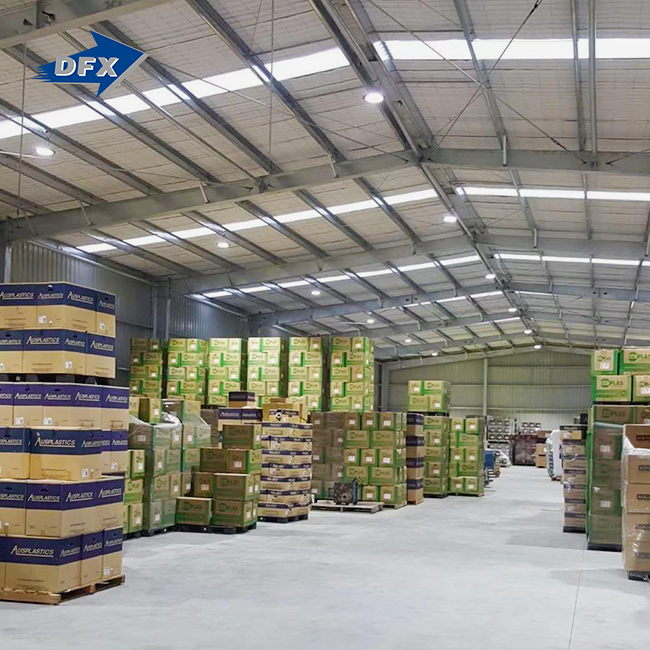
When comparing a cold storage steel building to a concrete alternative, steel consistently delivers stronger long-term value for most B2B applications. Prefabricated steel structures reduce construction timelines by 30–50%, lower labor costs, and offer modular expandability that concrete simply cannot match. While concrete carries higher thermal mass, steel paired with PIR/PUR sandwich panels achieves equivalent or superior insulation performance at a fraction of the lifecycle cost. For procurement managers, EPC contractors, and logistics operators making infrastructure decisions, understanding the full cost picture across construction, energy, maintenance, and sustainability is essential.

Understanding Cold Storage Buildings: Steel vs. Concrete
Choosing cold chain equipment is not a simple matter. Every cost of running the business for the next 25–50 years will depend on the building material you pick.
What Makes Steel and Concrete Fundamentally Different
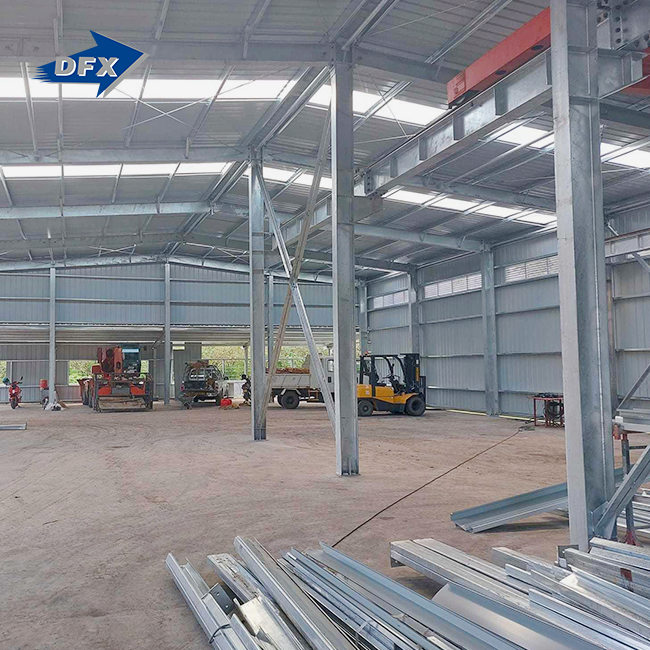
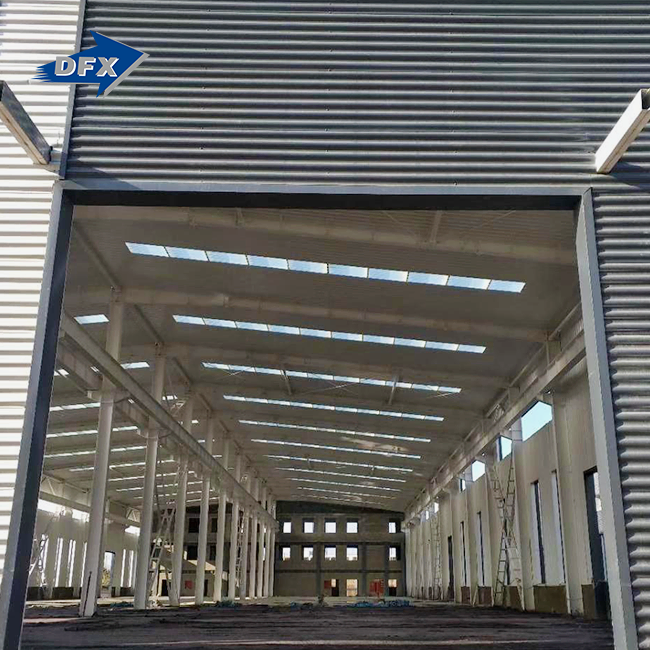
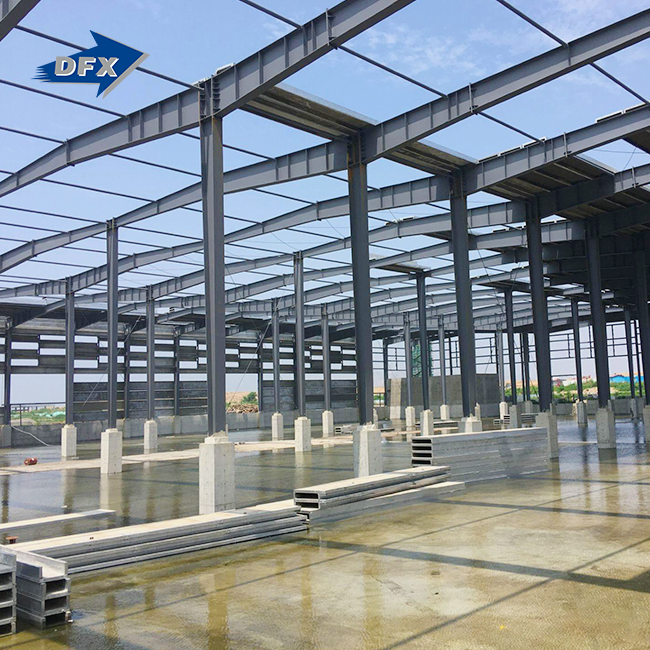
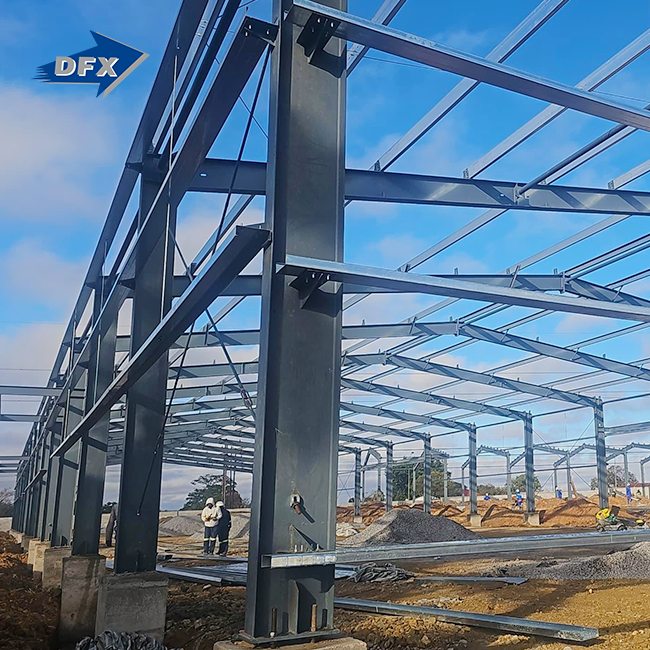
Steel is easy to work with, doesn't weigh much, and can be created off-site. A modular cold storage steel building comes to your site ready to be put together quickly because each part has been made to exact specifications. The main frame is usually made up of welded H-beam columns and rafters, which are held up by galvanized C/Z purlins and a cross-bracing system. This design allows for wide clear spans without any internal columns, which makes the floor area for racking and forklift movement the most useful.
Concrete, on the other hand, uses high-mass cast-in-place or precast methods. Its density quietly reduces temperature changes, which is good for people who work in chemical and medicine storage and want to make sure the temperature stays stable at all times. This benefit does come with a big delay in construction, though, and there isn't much room for change once the structure is poured.
Industry Preferences Reflect Operational Priorities
Companies that work with food, logistics, warehousing, and making things always choose steel because it is fast and flexible. In very specific situations, pharmaceutical and government-regulated facilities sometimes choose concrete because it is easier to work with. The choice is based on your throughput needs, budget, and plans for growth, not on how well-known the product is.
Long-Term Cost Comparison of Steel and Concrete Cold Storage Buildings
We can see the truth in the numbers. This is where the two materials differ the most over the span of a cold storage building.
Initial Construction Costs
Most of the time, steel construction costs 15–25% less up front than similar concrete cold storage facilities. This is because fabrication in the factory cuts down on weather delays and on-site labor hours. If you use premade steel parts, you can finish a job in 6 to 9 months instead of 12 to 18 months if you use concrete. For buying managers who are rushing to finish projects on time, this means that they can start making money earlier.
Concrete needs a lot of formwork, time to cure, and skilled workers on-site, all of which raise the original cost of capital. This difference in prices gets even bigger in places like the US, where cold storage steel building workers are expensive.
Energy Efficiency and Operational Expenses
The efficiency of the insulation affects the cost of refrigeration energy, which usually makes up 40 to 60 percent of all cold storage running costs. Modern cold storage buildings made of steel use PIR sandwich panels that have a thermal conductivity of as little as 0.024 W/(m·K). This means that they have R-values that are the same as or higher than insulated concrete systems. Thermal break technology at connection nodes stops frost and condensation from building up at the steel frame interface. This is an important engineering detail that stops the energy loss that happens in structures that aren't well designed.
The thermal mass of concrete can smooth out changes in temperature, but it can't make up for bad envelope design. When it comes to energy ratings, a well-designed steel building with high-performance cladding usually does better than a normal concrete building.
Maintenance and Repair Cycles
Hot-dip galvanized coatings (minimum 275 g/m²) on steel buildings keep them from rusting in cold storage areas where the temperature changes often. It is designed so that structural steel frames will last longer than 50 years. PIR/PUR sandwich panel cladding usually lasts for 25–30 years before it needs to be replaced. The modular cladding system lets you change individual panels without having to mess up the main frame.
When concrete needs to be fixed, it takes specialized contractors, long downtimes, and a lot of money. Spalling, cracks from thermal contraction, and water getting into cold storage buildings are all problems that keep happening and cost a lot over time.
Performance and Design Considerations for Long-Term Savings
Aside from the cost of the materials, design intelligence is what sets apart facilities that work well from those that become operational problems.
Steel's Advantage: Flexibility and Scalability
By their very nature, steel buildings are adaptable. If your transportation traffic increases, the structure can be stretched out either horizontally or vertically with little effect on how things are run. The clear-span portal frame design works with automatic storage and retrieval systems (AS/RS) and racking heights of up to 30 meters, so it can be used with current warehouse automation without affecting the structure.
The following are the main performance benefits of steel that make it the best material for cold chain workers' building needs:
- Thermal contraction management: Slotted connection holes and designed expansion joints make it possible for the structure to move safely at deep-freeze temperatures between -25°C and -40°C. This eliminates the risk of stress cracks in the frame.
- Hygienic surface compatibility: The smooth, non-porous surfaces of steel panels meet HACCP and GMP standards, which means they can be used for pharmaceutical and food-grade purposes.
- Rapid reconfiguration: Layouts inside can be changed without tearing down structures, which cuts down on downtime during updates.
These performance traits directly lead to lower insurance costs and lower management risk over the life of the cold storage steel building.
Concrete's Limitations Under Expansion Pressure
Structures made of concrete are hard to change. Adding a bay, moving a wall, or installing new refrigeration equipment in a cast concrete building requires demolition work that slows down operations and drives up project costs. This uniformity is a real problem for businesses that are still growing.
Environmental Impact and Sustainability Benefits
Sustainability factors are now built into the ways that all U.S. industries buy things. Choosing the right materials has effects on the environment that last long after the building is done.
The World Steel Association says that more than 85% of steel used in industry is recycled every year, making it one of the most recycled products in the world. A prefabricated cold storage steel building can be mostly taken apart and recycled when it's time to go, which helps with the goals of the circular economy. The modular fabrication method also creates a lot less waste on-site during construction than cast concrete.
Concrete has a higher amount of carbon built into it. As of 2023, the IEA reported that about 8% of all CO2 emissions came from making cement. Although concrete lasts a long time, which partially balances out this effect, the fact that it is hard to recycle and takes a lot of energy to get rid of creates environmental trade-offs that procurement teams can't ignore when reporting against ESG targets.
Energy-efficient building systems, like solar panel roof attachments, high-efficiency LED lighting, and smart refrigeration controls, work better with steel cold storage facilities because the structural system can handle these additions without any changes.
Selecting the Right Solution for Your Business Needs
When making this kind of purchase decision, you need more than just a material comparison. They need a partner with enough technical knowledge to give them a full answer on time and on budget.
In the U.S. cold chain industry, companies ranging from regional food distributors to pharmaceutical logistics providers have switched to prefabricated steel systems because they offer more value overall. Both financial and operational goals can be met with faster building, cheaper lifetime costs, more design options, and strong sustainability credentials.
Supplier capability is the most important factor in procurement. A cold storage steel building manufacturer that handles engineering calculations, fabrication, logistics coordination, and erection guidance all in one package takes away a lot of project risk from the client. With a turnkey delivery plan, procurement managers can focus on getting things ready for use instead of managing the building process.
Conclusion
Steel is better than concrete for cold storage processes in almost all long-term cost and performance measures. Cold storage steel buildings are the best choice for most industrial and logistics uses because they are strong, can be expanded in modules, are less expensive to build, and are better at saving energy thanks to new insulation systems. Concrete is still useful in limited, tightly controlled situations where perfect heating mass is a must. Most procurement managers, EPC contractors, and industrial owners looking at cold storage infrastructure today agree that a prefabricated cold storage steel building gives them a much better return on investment over the entire lifecycle of the facility.
FAQ
1. What foundation system does a cold storage steel building require?
For cold storage steel buildings, the floor slab needs to be sealed, and an electric or glycol-based underfloor heating system needs to be put in place below it. This stops frost heave, which happens when temperatures below zero freeze the ground below the base and cause it to expand, which can crack the slab and damage the building.
2. How long does a prefabricated steel cold storage facility last?
When made with hot-dip galvanized coatings that meet ISO 12944 standards, the main steel frame is meant to last more than 50 years. Insulated sandwich panel cladding usually works well for 25 to 30 years before it needs to be replaced at the panel level.
3. Can a steel cold storage building support heavy refrigeration equipment?
Yes. Structural engineers figure out the dead loads from evaporators, condensers, and pipe networks during the engineering phase. Rafters and purlins are strengthened so that they can hold suspended refrigeration equipment without getting bent or worn out.
4. Is a steel cold storage structure suitable for deep freeze environments?
When it's below zero, steel gets smaller. Structures that are properly designed have expansion joints and slotted connection holes that allow for thermal movement. This stops stress cracks and panel bowing at temperatures as low as -40°C.
Ready to Build Smarter? Contact Director Steel for Your Cold Storage Project
Director Steel (DFX), which was started in 2011, has been providing engineered steel building solutions to clients in six countries for more than twelve years. We are a reliable supplier of cold storage steel buildings, and our 40,000 m² factory in Qingdao, China, makes prefabricated steel buildings that are ISO9001 and CE-certified. Our in-house team does the engineering calculations, fabrication, and erection guidance, so there is less risk for you at every stage of the procurement process. Email me at jason@bigdirector.com to talk about the details of your project.
References
1. World Steel Association. Steel's Contribution to a Low Carbon Future and Climate Resilient Societies. 2022.
2. International Energy Agency (IEA). Cement and Concrete Technology Roadmap. 2023.
3. American Society of Heating, Refrigerating and Air-Conditioning Engineers (ASHRAE). Refrigeration Handbook. 2022.
4. Global Cold Chain Alliance (GCCA). Cold Storage Industry Benchmarking Report. 2022.
5. Metal Building Manufacturers Association (MBMA). Metal Building Systems Manual. 2023.
6. U.S. Department of Energy. Energy Efficiency in Commercial Refrigerated Warehouses. 2021.
Learn about our latest products and discounts through SMS or email