- English
- French
- German
- Portuguese
- Spanish
- Russian
- Japanese
- Korean
- Arabic
- Greek
- German
- Turkish
- Italian
- Danish
- Romanian
- Indonesian
- Czech
- Afrikaans
- Swedish
- Polish
- Basque
- Catalan
- Esperanto
- Hindi
- Lao
- Albanian
- Amharic
- Armenian
- Azerbaijani
- Belarusian
- Bengali
- Bosnian
- Bulgarian
- Cebuano
- Chichewa
- Corsican
- Croatian
- Dutch
- Estonian
- Filipino
- Finnish
- Frisian
- Galician
- Georgian
- Gujarati
- Haitian
- Hausa
- Hawaiian
- Hebrew
- Hmong
- Hungarian
- Icelandic
- Igbo
- Javanese
- Kannada
- Kazakh
- Khmer
- Kurdish
- Kyrgyz
- Latin
- Latvian
- Lithuanian
- Luxembou..
- Macedonian
- Malagasy
- Malay
- Malayalam
- Maltese
- Maori
- Marathi
- Mongolian
- Burmese
- Nepali
- Norwegian
- Pashto
- Persian
- Punjabi
- Serbian
- Sesotho
- Sinhala
- Slovak
- Slovenian
- Somali
- Samoan
- Scots Gaelic
- Shona
- Sindhi
- Sundanese
- Swahili
- Tajik
- Tamil
- Telugu
- Thai
- Ukrainian
- Urdu
- Uzbek
- Vietnamese
- Welsh
- Xhosa
- Yiddish
- Yoruba
- Zulu
Steel Structure Supermarket, 6 Key Advantages
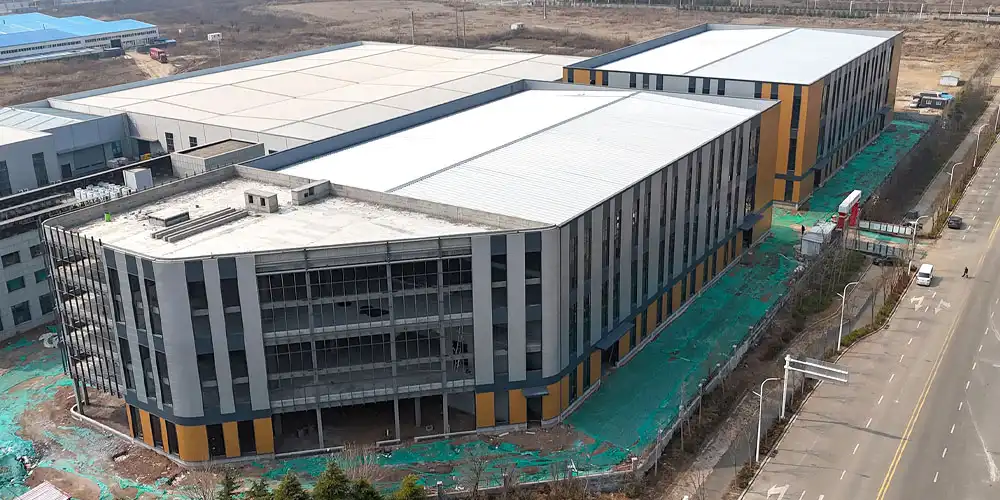
Which building method you choose for an American shopping center, shopping mall, or business park can make or break your project's schedule and budget. A steel-structure supermarket is a modern shopping center built with high-strength steel framing that creates clear-span rooms without any middle beams, making the most of the floor space available. This method fixes problems that have been around for a long time, like long construction periods, high on-site work costs, and the fact that standard concrete buildings are not flexible. Since 2011, our company, Qingdao Director Steel Structure Co., Ltd., has helped with a huge number of retail projects. We've seen firsthand how this way of building changes the way project managers, operations directors, and farming business owners make purchases.

Lightweight Yet Durable Construction
The amazing strength-to-weight ratio of steel-framed business buildings sets them apart from standard concrete or stone buildings. Most of the time, Q355B or ASTM A572 Gr50 high-grade H-section steels are used for the main structure. These steels have a yield strength of at least 345 MPa and a tensile strength between 470 and 630 MPa. This means that your store building has better structure stability while using less material.
Reduced Foundation Requirements
Because a steel frame is so light, it reduces base loads by a lot compared to concrete options. Demand for civil engineering drops a lot, which saves money right away in the beginning stages of a project. A big chunk of building funds goes to foundation work. Cutting back on these tasks speeds up the project plan and lowers the initial investment.
Superior Longevity and Protection
Durability lasts for a long time after the first fitting. Rust, pest damage, and fire are less likely to happen in steel buildings than in stone or wood buildings. A zinc-covered mass of at least 275 g/m² or epoxy paints that are high in zinc are the best ways to protect against humidity and HVAC condensation. It will last more than 50 years if you take care of your store and treat the surface right. That's about the same as concrete, but it's worth more as scrap.
Because ammonia and water make the environment hard, these features are especially important for farming clients who run chicken coops or other buildings for animals. The ways we treat structures for safety make sure that they stay strong even when things get tough.
Cost Efficiency and Investment Value
Prefabrication, modular design, and reduced labor requirements create compelling financial advantages throughout your project lifecycle. Manufacturing companies expanding their operations and EPC contractors handling infrastructure projects consistently choose steel framing because it lowers upfront investment without compromising quality standards.
Our production facility operates six automatic welded H-beam production lines with annual capacity reaching approximately 20,000 tons of welded H-beams and columns. This manufacturing scale enables competitive pricing that traditional construction methods struggle to match. The controlled factory environment ensures consistent quality while eliminating weather-related delays that plague conventional building sites.
Long-Term Operational Savings
Beyond initial construction costs, steel structures (steel structure supermarkets) support ongoing financial benefits through improved energy efficiency and minimized maintenance needs. Thermal performance controlled via envelope systems—using 50mm-100mm PU/PIR sandwich panels with fire ratings of B1/ A levels—reduces heating and cooling demands substantially. Lower utility costs accumulate year after year, enhancing your return on investment.
The accelerated construction process means faster store openings and earlier revenue flow. Project managers responsible for industrial warehouses or logistics facilities appreciate how quickly their buildings become operational assets rather than ongoing expenses.
Design Flexibility and Customization
Clear-span interiors ranging from 20m to 60m without intermediate columns create unparalleled architectural versatility. This open-space design proves optimal for diverse shelving layouts, streamlined logistics operations, and heavy foot traffic patterns essential to retail success.
Adaptable Interior Configurations
Manufacturing plant owners and agricultural project managers benefit from interior spaces that adapt to evolving operational demands. Large-span steel workshops accommodate production equipment, storage systems, and workflow patterns without structural obstacles. The flexibility extends to vertical space utilization, where composite floor deck systems support live loads of 3.5-5.0 KN/m² while maintaining slimmer structural profiles than concrete beams.
Integration of Modern Building Systems
Energy-efficient insulation, advanced lighting, and HVAC systems integrate seamlessly into steel frameworks. Fresh food markets and cold chain facilities particularly benefit from thermal break technology and polyurethane sandwich panels that create controlled temperature zones within the main shell. Freezers and coolers operate efficiently while the steel framework resists high-humidity corrosive environments through specialized galvanized or stainless steel components.
Our in-house architectural design and detailing service supports customers throughout the entire project lifecycle—from concept and engineering to fabrication and on-site erection. This comprehensive approach facilitates adaptation to seismic zones and local regulatory requirements across the United States, ensuring your retail center meets all compliance standards.
Speed of Construction and Scalability
Prefabricated steel systems dramatically reduce on-site construction time, often cutting project timelines by 30-50% compared to traditional builds. This acceleration benefits construction contractors targeting rapid market entry and manufacturing investors seeking quick facility commissioning.
Parallel Processing Advantages
Prefabrication occurs simultaneously with foundation work rather than sequentially. While your site team prepares the ground, our facility manufactures structural components to exact specifications. This parallel processing eliminates idle time that traditional construction schedules accept as inevitable.
Components arrive at your site ready for assembly, with laser-measurement checks ensuring bolt-hole alignment within ±2mm tolerance. This precision enables seamless on-site erection, reducing labor hours and associated costs. Our 200 well-trained workers and advanced facilities maintain strict compliance with ISO quality management systems, and our products carry CE certification confirming conformity with international and European standards.
Expansion and Multi-Site Rollout Capability
The modular nature of steel framing allows easy future expansion. Removing end-wall cladding and bolting on new bays extends your facility without major disruption to ongoing operations—a flexibility impossible with rigid concrete structures. Retail chains' steel-structure supermarkets rolling out multiple locations benefit from standardized designs that replicate proven layouts while accommodating site-specific variations.
Large-scale hypermarkets and membership warehouse models like Costco or Sam's Club utilize these clear-span advantages to accommodate high-rack storage systems and forklifts alongside customer aisles. The roof structure supports heavy loads for extensive HVAC and fire suppression piping without requiring intermediate support columns that would constrain floor layouts.
Enhanced Energy Efficiency and Environmental Benefits
Advanced insulation materials and thermal performance solutions substantially reduce heating and cooling energy demands. This contributes to lower utility costs while supporting corporate sustainability goals increasingly important to procurement managers and engineering directors.
Steel's recyclability and precise prefabrication techniques minimize construction waste, aligning with environmentally responsible building practices. Material waste on traditional construction sites often reaches 10-15% of total volume, whereas factory-controlled steel fabrication reduces waste to approximately 2-3%. This efficiency resonates with agricultural enterprises and manufacturing companies seeking to demonstrate environmental stewardship.
Certification and Compliance
Our projects consistently meet or exceed rigorous energy efficiency certifications required throughout North America. ISO9001, CE, COC, and PVOC certifications reassure B2B clients of regulatory compliance and long-term operational savings. These credentials matter when securing project approvals and navigating complex permitting processes.
Selecting steel framing advances both ecological stewardship and economic efficiency, satisfying the growing demand for green building solutions in retail infrastructure. The combination of reduced energy consumption, recyclable materials, and minimal construction waste creates compelling advantages for organizations committed to sustainability reporting and carbon footprint reduction.
Robust Safety and Seismic Resistance
Steel structures inherently provide superior seismic resistance through their flexibility and ductility. This performance outpaces traditional masonry in earthquake-prone regions, a critical consideration for infrastructure contractors and government project managers responsible for public buildings.
Fire Safety and Insurance Benefits
Fire safety receives enhancement through steel's non-combustible properties. Intumescent fireproof coatings expand under heat to insulate steel for 2-4 hours, fully complying with local fire codes. These protective measures positively impact insurance rates and regulatory approval processes, reducing financial risk for investors.
Non-destructive testing, including ultrasonic testing for full-penetration butt welds and magnetic particle testing for fillet welds, ensures no internal cracks or porosity compromises structural integrity. Mill test certificates confirm the chemical composition and mechanical properties of steel components, providing documentation that engineering directors require for project validation.
Quality Assurance and Warranties
Our rigorous quality assurance programs include comprehensive testing at multiple production stages. Deflection checks on roof trusses under simulated loads verify structural analysis calculations before components leave our facility. Dry film thickness testing ensures painted surfaces maintain 75-125 microns or specific micron thickness for galvanization, guaranteeing the service life of your steel structure supermarket retail building.
Load testing confirms structures withstand wind loads exceeding 0.60 KN/m², regional snow loads, and seismic resistance up to Grade 8 intensities. These validated performance characteristics combined with robust warranty offerings ensure clients benefit from durable, safe, and risk-mitigated investments in supermarket infrastructure.
Conclusion
The six advantages of steel structure supermarkets—lightweight durability, cost efficiency, design flexibility, construction speed, energy performance, and safety features—address the specific concerns that project managers, operations directors, and procurement managers face daily. Whether you're developing industrial plants, logistics warehouses, poultry houses, or commercial plazas, steel framing delivers measurable benefits throughout project lifecycles. Our 12 years of experience and 40,000 square meters of production space position us to support your retail infrastructure needs with confidence and expertise.
FAQ
1. What distinguishes steel structure supermarkets from traditional concrete retail buildings?
Steel framing creates column-free interiors up to 60m wide, whereas concrete buildings require support columns that constrain layouts. The prefabricated approach reduces construction time by 30-50%, and the modular design allows future expansion by simply adding new bays—a flexibility concrete structures cannot match.
2. How does steel framing perform in high-humidity environments like fresh food markets?
High humidity can accelerate corrosion, but specialized treatments address this challenge effectively. Hot-dip galvanization provides superior protection compared to standard painting, and stainless steel fasteners prevent rust in critical connections. Thermal break technology isolates temperature zones, protecting structural components from condensation.
3. Can steel structures accommodate heavy roof equipment for HVAC and fire suppression systems?
The high load-bearing capacity of steel roof trusses specifically supports extensive mechanical systems. Engineering calculations verify performance under combined loads, and load testing confirms structures meet design specifications before installation. This capability proves essential for large-format retail requiring sophisticated climate control.
Partner with a Trusted Steel Structure Supermarket Manufacturer
Director Steel brings over 12 years of specialized experience to your retail construction project. Our ISO9001 and CE certified manufacturing processes ensure every component meets exacting international standards. From initial structural design through fabrication and coordination with MEP and façade systems, we provide integrated solutions that address the complete scope of your commercial building needs. Project managers appreciate our transparent communication and reliable delivery schedules, while procurement managers value our competitive pricing and comprehensive technical support. Contact jason@bigdirector.com to discuss how our steel structure supermarket solutions can accelerate your next retail center, shopping complex, or commercial plaza project.
References
1. American Institute of Steel Construction. (2016). "Steel Construction Manual, 15th Edition." AISC Committee on Manuals and Textbooks.
2. Lawson, R.M., & Ogden, R.G. (2008). "Application of Modular Construction in High-Rise Buildings." Journal of Architectural Engineering, Volume 14, Issue 2.
3. Nethercot, D.A. (2001). "Limit States Design of Structural Steelwork, Third Edition." Spon Press, London and New York.
4. European Convention for Constructional Steelwork. (2010). "Design of Steel Structures: General Rules and Rules for Buildings." EN 1993-1-1 Eurocode 3.
5. Tata Steel Construction. (2014). "Sustainable Steel Construction: The Benefits of Steel in Commercial Building Applications." Technical Report Series.
6. Faella, C., Piluso, V., & Rizzano, G. (2000). "Structural Steel Semirigid Connections: Theory, Design and Software." CRC Press, Boca Raton, Florida.
Learn about our latest products and discounts through SMS or email