- English
- French
- German
- Portuguese
- Spanish
- Russian
- Japanese
- Korean
- Arabic
- Greek
- German
- Turkish
- Italian
- Danish
- Romanian
- Indonesian
- Czech
- Afrikaans
- Swedish
- Polish
- Basque
- Catalan
- Esperanto
- Hindi
- Lao
- Albanian
- Amharic
- Armenian
- Azerbaijani
- Belarusian
- Bengali
- Bosnian
- Bulgarian
- Cebuano
- Chichewa
- Corsican
- Croatian
- Dutch
- Estonian
- Filipino
- Finnish
- Frisian
- Galician
- Georgian
- Gujarati
- Haitian
- Hausa
- Hawaiian
- Hebrew
- Hmong
- Hungarian
- Icelandic
- Igbo
- Javanese
- Kannada
- Kazakh
- Khmer
- Kurdish
- Kyrgyz
- Latin
- Latvian
- Lithuanian
- Luxembou..
- Macedonian
- Malagasy
- Malay
- Malayalam
- Maltese
- Maori
- Marathi
- Mongolian
- Burmese
- Nepali
- Norwegian
- Pashto
- Persian
- Punjabi
- Serbian
- Sesotho
- Sinhala
- Slovak
- Slovenian
- Somali
- Samoan
- Scots Gaelic
- Shona
- Sindhi
- Sundanese
- Swahili
- Tajik
- Tamil
- Telugu
- Thai
- Ukrainian
- Urdu
- Uzbek
- Vietnamese
- Welsh
- Xhosa
- Yiddish
- Yoruba
- Zulu
How to Reduce Downtime With an Aircraft Paint Hangar Structure
The fastest way to reduce downtime in aircraft painting operations is to invest in a properly engineered aircraft paint hangar structure. A well-designed painting hangar controls airflow velocity, maintains stable temperature and humidity, and provides clear-span interior space that keeps crews and equipment moving without obstruction. When structural design, ventilation systems, and safety compliance work together inside one building, coating cycles run faster, rework drops, and Aircraft on Ground (AOG) time shrinks significantly.

Understanding Downtime Challenges in Aircraft Painting
Before choosing a structure, it's helpful to know where on the shop floor people waste time.
Environmental Instability
During a coating cycle, temperature changes of more than ±5°F can stop the film from forming properly, which means that full strip-and-redo processes have to be done. When the relative humidity is above 85%, solvent-borne topcoats blush and fail to stick. Without a controlled building environment, these things happen every day and make every painting job take hours longer than planned.
Poor Spatial Layout
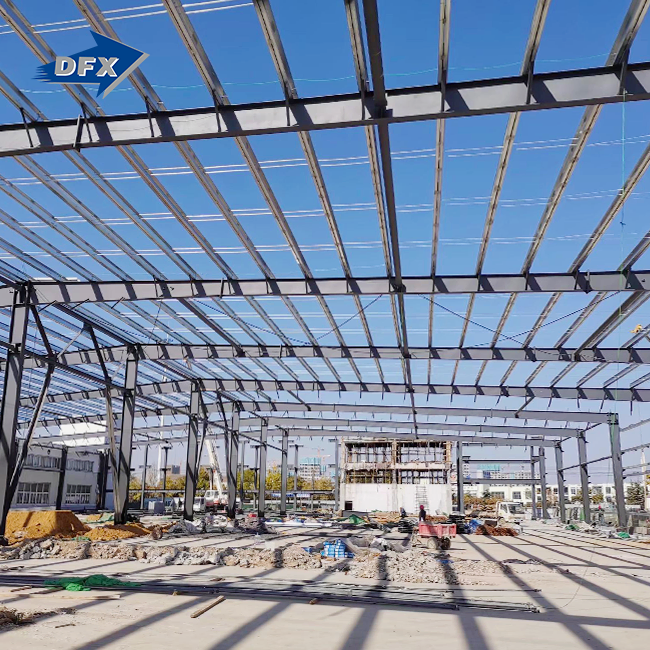
When a hangar doesn't have enough width or tail clearance, crews have to move the scaffolding more than once for each plane. It takes 30 to 90 minutes for each moving event. A clear-span steel building with high interior clearance doesn't have any interior columns, which means that workers can get to all parts of the body without having to move any support equipment.
Compliance and Maintenance Delays
For aircraft paint hangar structure, facilities that aren't well taken care of often have unplanned shutdowns because of failed filter inspections, expired fire suppression certifications, or VOC exceedance notices. Both OSHA 29 CFR 1910.94 and NFPA 33 give people the power to shut down. These inspections are routine and don't cause any problems because of proactive maintenance of structures and systems.
Core Features of a Paint Hangar Structure That Reduce Downtime
The right building does more than just give you a place to live. Here are the parts of the structure and mechanics that cut cycle time right away.
Optimized Airflow Design
As suggested by ACGIH, laminar airflow systems that work between 60 and 100 FPM (feet per minute) can pull overspray down and away from the plane's surface. By sending dirty air to vent plenums below the floor, downdraft systems stop redeposition on newly coated panels. Consistent airflow speeds up solvent flash-off, which cuts down on the time between coats.
Explosion-Proof Electrical and Lighting
Class I, Division 1 explosion-proof lights with a Color Rendering Index above 90 let inspectors find color differences, runs, and sags in the real world of work. Finding mistakes during the work instead of after the final check cuts down on the number of times that work needs to be redone. One of the cheapest ways to cut down on downtime is to invest in accurate, bright lighting.
Fire Suppression and Safety Systems
Foam or water deluge systems that are built in and meet NFPA 409 Group I standards protect people and aircraft without any help from a person. Automated filtering cuts down on shutdowns caused by incidents and lowers the risk of insurance claims for both EPC companies and MRO operators.
Choosing the Right Aircraft Paint Hangar Structure for Your Facility
How quickly a building is fully operational depends on both the materials used and the way they were built.
Steel Versus Aluminum Construction
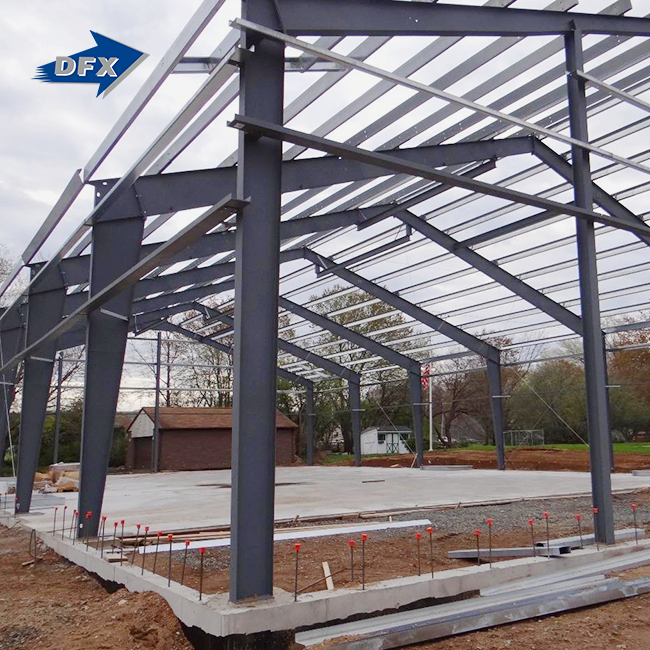
Steel buildings, especially those with riveted H-section main frames and stronger bracing systems, can hold a lot of weight, last a long time, and help keep the temperature inside stable by adding mass. Steel is best for fixed MRO centers and painting at the end of an OEM's line of work. Aluminum is good for temporary or movable paint booths because it is lighter and doesn't rust in seaside or high-humidity areas.
Prefabricated Versus Custom-Built
When compared to field-fabricated structures, prefabricated steel buildings take a lot less time to put together because their parts have already been drilled and cut. Custom-built facilities, on the other hand, can fit airplanes with unusual dimensions, uneven site areas, or needs for gradual growth. For many procurement teams, the best mix of speed and fit is a prefabricated main frame with custom MEP integration.
Modular Scalability
With aircraft paint hangar structure modular steel construction, a building can start out as a paint hangar with only one bay and add more bays as demand rises. This method keeps cash safe during the first few years of business and stops too much building. A flexible layout also lets one bay stay open while work is done on the bay next to it. This keeps production going during planned downtimes.
Maintenance and Operational Best Practices to Minimize Downtime
A building that was made well still needs regular maintenance to work the way it was meant to year after year.
Scheduled Ventilation System Maintenance
For multistage filtration systems that handle both input and exhaust, the differential pressure needs to be checked on a regular basis to make sure that the filter media hasn't become clogged with overspray particles. When filters are full, airflow speeds drop below 60 FPM, which lowers the quality of the paint and raises compliance concerns. Changing filter banks at regular times, instead of waiting until airflow is obviously slowed down, keeps it steady.
IoT-Enabled Predictive Maintenance
A building management system gets performance data in real time from sensor networks that are attached to fans, heating coils, and exhaust motors. Maintenance crews are warned before equipment breaks down when motor amperage goes up or airflow velocity drops below a certain level. A 2017 study from the McKinsey Global Institute says that predictive maintenance programs in manufacturing sites cut unexpected downtime by 30–50%. The same idea immediately applies to work that is done in the painting hangar.
Staff Training and Protocol Compliance
A lot of avoidable downtime is caused by operational mistakes, like leaving hangar doors open during busy spray rounds or forgetting to record when filters need to be changed. Regular training on the requirements of OSHA 29 CFR 1910.94 for spray finishing, as well as standard operating procedures specific to the building, helps keep teams on track with both safety rules and throughput goals.
Real-World Applications: How Structural Design Improves Efficiency
Real project data backs up what engineering theory says about how well buildings will work.
OEM End-of-Line Painting Facility
An aircraft manufacturing plant got a modular welded H-section steel aircraft paint hangar structure, which cut the average paint cycle time by 18% in its first year of use. The improvement came from getting rid of column barriers that meant moving the scaffolding and installing a downdraft air system that cut down on the time it took for the primer and topcoat to flash off.
MRO Facility Retrofit Using a Hangar Insert
Using a self-supporting interior steel insert, a general-purpose maintenance hangar that was already there was turned into a coating facility. The insert had its own breathing and filtering devices that were separate from the shell. This method saved money because it didn't require any new base work. It also met Class I, Division 1 electrical standards and provided laminar airflow performance while staying within a tight capital budget.
Military Depot Application
To cure Chemical Agent Resistant Coating (CARC) correctly, a defense maintenance depot needed precise humidity control with a range of ±1% relative humidity difference. A fully sealed, welded steel structure with strengthened bracing and a specialized HVAC system kept those conditions even when the temperature changed with the seasons. This got rid of the curing failures that had to be fixed over and over again in the old open-bay setup.
Conclusion
In aircraft paint hangar structure, cutting down on painting delays is mostly a problem of structure and systems engineering. The main reasons for covering delays at the facility level can be fixed with a clear-span steel building that has controlled airflow, explosion-proof electricity, and built-in fire suppression. Those gains build over time when you combine the right structure with regular maintenance and training for staff. You can only make your operations as efficient as the structural choices you make during purchase, no matter if you're building a new OEM facility, an MRO retrofit, or a military base.
FAQ
Q1: What size hangar do I need for wide-body aircraft?
Wide-body planes like the Boeing 777 need an interior width of at least 230 feet and a tail clearance of at least 65 feet. The usual way to do this is with a clear-span steel frame that doesn't have any columns inside.
Q2: How does ventilation affect paint drying time?
The rate of liquid release is directly related to the speed of the airflow. Keeping the laminar flow at 60–100 FPM in a controlled paint setting cuts down on the time needed for flash-off between coats and helps the film grow consistently, which lowers the chance of having to redo the job.
Q3: What certifications should a hangar supplier hold?
Check for ISO 9001 quality management certification, CE structure certification, and COC or PVOC certification to make sure the product is ready to be exported. These certificates show that the methods used for production meet standards for structural stability that are known all over the world.
Q4: Can an existing building be converted into a painting facility?
Yes. If the existing base can handle extra weight, a steel insert structure can be built inside an existing shell to provide the needed airflow, filtering, and explosion-proof electrical systems without tearing down the host building in its entirety.
Get a Quote From DFX — Trusted Aircraft Paint Hangar Structure Manufacturer
For aircraft paint hangar structure projects, since 2011, DFX (Qingdao Director Steel Structure Co., Ltd.) has sold long-span steel buildings all over the world. They have 40,000 m² of production space and are certified by ISO 9001, CE, COC, and PVOC. As a qualified provider of these structures, we offer structural calculations, unique designs, manufacturing, and help with installation. Talk to our team about your project right away.
References
1. American Conference of Governmental Industrial Hygienists (ACGIH). Industrial Ventilation: A Manual of Recommended Practice for Design. 29th ed., 2016.
2. National Fire Protection Association. NFPA 33: Standard for Spray Application Using Flammable or Combustible Materials. 2021.
3. National Fire Protection Association. NFPA 409: Standard on Aircraft Hangars. 2022.
4. McKinsey Global Institute. A Future That Works: Automation, Employment, and Productivity. 2017.
5. Occupational Safety and Health Administration (OSHA). 29 CFR 1910.94: Ventilation — Spray-Finishing Operations. U.S. Department of Labor, 2018.
6. U.S. Environmental Protection Agency. National Emission Standards for Hazardous Air Pollutants: Aerospace Manufacturing and Rework Facilities (40 CFR Part 63, Subpart GG). 2008.
Learn about our latest products and discounts through SMS or email