- English
- French
- German
- Portuguese
- Spanish
- Russian
- Japanese
- Korean
- Arabic
- Greek
- German
- Turkish
- Italian
- Danish
- Romanian
- Indonesian
- Czech
- Afrikaans
- Swedish
- Polish
- Basque
- Catalan
- Esperanto
- Hindi
- Lao
- Albanian
- Amharic
- Armenian
- Azerbaijani
- Belarusian
- Bengali
- Bosnian
- Bulgarian
- Cebuano
- Chichewa
- Corsican
- Croatian
- Dutch
- Estonian
- Filipino
- Finnish
- Frisian
- Galician
- Georgian
- Gujarati
- Haitian
- Hausa
- Hawaiian
- Hebrew
- Hmong
- Hungarian
- Icelandic
- Igbo
- Javanese
- Kannada
- Kazakh
- Khmer
- Kurdish
- Kyrgyz
- Latin
- Latvian
- Lithuanian
- Luxembou..
- Macedonian
- Malagasy
- Malay
- Malayalam
- Maltese
- Maori
- Marathi
- Mongolian
- Burmese
- Nepali
- Norwegian
- Pashto
- Persian
- Punjabi
- Serbian
- Sesotho
- Sinhala
- Slovak
- Slovenian
- Somali
- Samoan
- Scots Gaelic
- Shona
- Sindhi
- Sundanese
- Swahili
- Tajik
- Tamil
- Telugu
- Thai
- Ukrainian
- Urdu
- Uzbek
- Vietnamese
- Welsh
- Xhosa
- Yiddish
- Yoruba
- Zulu
Best Grain Storage Steel Warehouse Solutions for Humid Areas
If you manage bulk grain storage in a high-humidity region, you already know that keeping grain dry, safe, and viable is not simple. A properly engineered grain storage steel warehouse addresses the exact pressures that humid climates place on both the stored product and the building itself. From managing lateral grain loads and internal condensation to blocking pests and supporting aeration systems, the right steel structure makes every part of the storage process more dependable. This article walks through the challenges, design principles, procurement factors, and maintenance practices you need to know before making a purchasing decision.

Understanding the Challenges of Grain Storage in Humid Areas
A lot of problems can happen in humid places that can damage both grain quality and building integrity faster than most operators think.
Moisture-Driven Spoilage
Grain respiration speeds up when the relative humidity goes above 70%. This raises the temperature inside, helps mold grow, and makes it possible for aflatoxin to get inside. The FAO says that post-harvest losses can reach 20–30% in poor countries, with wetness being the main cause. Stopping that loop starts with the building itself.
Structural Corrosion Risks
Steel and wood that aren't protected break down quickly in damp places. If you live near the coast and the air is salty or it rains all the time, an untreated building will only last about ten years. When comparing the costs of building something from the start to the costs of replacing it over time, procurement managers need to take this into account.
Pest and Rodent Entry Points
Moisture makes seals less strong, door frames bend, and panel joins open up. When bugs or mice get into a grain store, the germs quickly spread. The first line of biological defense is a structure that is well-jointed and tightly sealed.
Why Steel Grain Storage Warehouses Are Ideal for Humid Environments
For a number of practical reasons, steel is better than wood and unreinforced concrete for storing things that are damp.
Superior Corrosion Resistance
In fairly humid places, hot-dip galvanized steel with a zinc covering of 275 g/m² or more is a reliable way to keep things from rusting. For areas near the coast or with a lot of salt, the specifications can go up to 450–600 g/m². When combined with epoxy primer coats, this can make the structure last 30–50 years with proper maintenance.
Integration with Climate Control Systems
Ridge ventilators, eave vents, insulated sandwich panels, and active aeration fans can all be installed on grain storage steel warehouse frames without having to change the structure. This flexibility is important for procurement teams that want to add wires for tracking temperatures or air ducts under the floor after the building is finished. Buildings made of concrete don't usually give you as much freedom without a lot of major civil work.
Lower Lifecycle Cost vs. Concrete
It usually costs 15–25% less to build a steel structure than a concrete one of the same size, and it takes a lot less time to put together. Less downtime and lower work costs on-site are two benefits of modular bolt-assembly designs. These benefits are good for farm investors and EPC contractors who have to stick to tight project schedules.
Because of these practical benefits, steel has become the material of choice for bulk grain facilities in Southeast Asia, West Africa, and the coastal areas of South America.
Design Principles of Steel Grain Storage Warehouses for Humid Areas
It's not enough to choose the right steel grade for a good design. To keep wetness out, you need to look at the whole system and make sure that all of its parts work together.
Material Selection and Protective Coatings
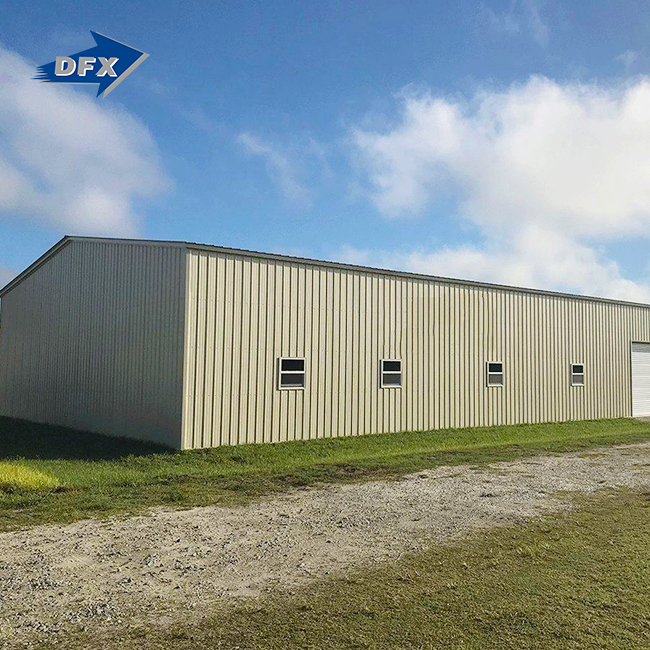
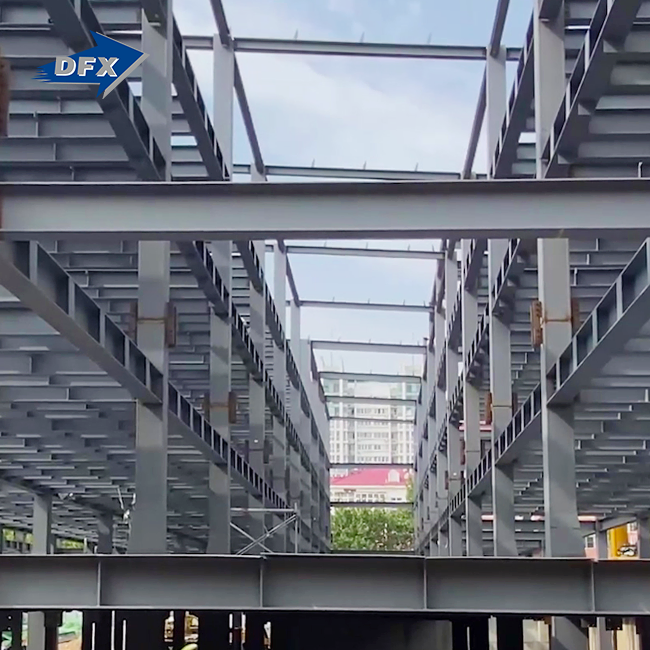
High-tensile Q355B or S355JR steel is used for load-bearing purposes in the main structural sections. The structure is held together by galvanized C/Z purlins and H-beam frames. EPDM sealing strips are placed at all sheet gaps and wall-roof joints to keep water out. Polyurethane or PIR insulated sandwich panels keep the inside from changing too much, which stops condensation from forming on cold surfaces in the most humid places.
Structural Layout for Drainage and Ventilation
Clear-span portal frames that are 20 to 60 meters long get rid of the need for internal beams. This lets loaders and tipping trailers get in and out without any problems. In places that get a lot of rain, roof pitches should be at least 5° to make sure that water runs off quickly. Ridge ventilators and louvered eave openings provide passive airflow that lowers the humidity inside without using any mechanical energy.
Modular and Scalable Capacity Planning
One useful thing about a premade steel building is that it can expand in stages. A building can start at 5,000 m² and grow to 20,000 m² by adding bays without tearing down the old building. This is very helpful for farming businesses and EPC workers who need to make sure that storage space matches the amount of crop or the schedule for a project phase.
Well-designed grain storage facilities in wet areas show that the choices engineers make during the design phase directly affect how much they have to spend on building upkeep and loss prevention over the building's lifetime.
Procurement Guide: Selecting and Purchasing Steel Grain Storage Warehouses
There's more to choosing the right grain storage steel warehouse supplier than just looking at prices per square meter.
Evaluating Supplier Credentials
To find good providers, look for those who have both ISO 9001 quality management certification and CE structure certification. These certificates show that the methods used for making things and the tests done on the materials meet standards that are known around the world. Testing for aggregate resistance according to EN1097 is another sign of high technical quality. When suppliers do their own engineering calculations, mistakes in the design that only show up during construction are less likely to happen.
Key Cost vs. Value Factors
Long-term performance is affected by the type of raw material used, the zinc coating, the value of the insulation in the panels, and the quality of the door seals. If you skimp on zinc paint or purlin gauge to get a lower price up front, it will cost you more to fix things in five to seven years. Ask suppliers about their warranty policies, how often they expect maintenance to be done, and whether they offer help with setting up the equipment.
Lead Times and Logistics Coordination
Depending on the size of the project, project-based production usually takes 30 to 60 days from the time the order is confirmed until it is shipped from the factory. If a supplier handles transportation in-house, they can combine shipments of structural steel, roofing panels, and tools into one. This saves money on port handling fees. To avoid delays, make sure that the loading plans for containers and the order of assembly on-site are clear during the pre-order phase.
Maintaining Steel Grain Storage Warehouses in Humid Environments
If you keep up with your steel grain plant, it will last decades longer than one that doesn't.
Routine Inspection Schedule
Every six months, check all of the door seals, eave flashings, and roof panel gaps. If you see paint film breaking or white rust on galvanized surfaces, that means the zinc is starting to run out. If you catch corrosion early, it doesn't cost nearly as much to fix the structure or replace the panels.
Ventilation and Cleaning Protocols
Every three months, clean the floor vents and aeration ducts to get rid of the grain dust that builds up and keeps water in, which feeds mold. Ridge ventilator blades should be able to move freely. One of the most common reasons why buildings get too humid is that ventilation is blocked.
Monitoring Technology for Early Risk Detection
Temperature and humidity monitors built into grain masses let you know early on when bacterial activity is creating hot spots. Data-logging systems help storage managers find trouble spots before food goes bad everywhere. This technology can be used with normal steel warehouse buildings and doesn't need many changes to the buildings themselves to be installed.
Conclusion
When it's humid, both the buildings that hold grain and the grain itself are put under real, measured stress. Steel can handle these stresses because it has materials that don't rust, designs that can be changed, and a long service life—as long as the specifications, construction, and maintenance are all done correctly. What you decide at the procurement stage affects the end result for decades, no matter if you are an EPC contractor planning a logistics warehouse, an agricultural business owner building a grain storage steel warehouse, or a manufacturing investor adding storage space. Pick a provider whose qualifications have been checked, who offers clear engineering help, and who has worked on projects in humid climates before.
Frequently Asked Questions
1. How does a steel grain warehouse prevent condensation in humid climates?
Insulated sandwich panels reduce the temperature difference between the interior wall surface and ambient air, keeping surface temperatures above the dew point. Ridge ventilators and eave openings maintain continuous passive airflow. For high-humidity regions, active dehumidification fans controlled by humidity sensors provide an additional layer of control.
2. What is the expected lifespan of a galvanized steel grain facility?
With a zinc coating of Z275 or higher and routine maintenance, the structural life typically exceeds 30–50 years in inland rural environments. Coastal facilities require higher coating grades or epoxy top coats to achieve equivalent longevity.
3. Can flat-floor steel grain buildings be made gas-tight for fumigation?
Standard steel warehouses are not gas-tight by default. Fumigation-rated facilities require specialized sealants at all eave joints, panel overlaps, and door perimeters, along with pressure-rated door seals. This must be specified at the design stage, not added retroactively.
4. What foundation design works best for bulk grain loads?
A reinforced concrete slab with a thickened perimeter ring beam handles lateral grain pressure transferred through retaining walls. Foundation calculations should reference the specific grain's bulk density and angle of repose per ISO 11697 or equivalent local standards.
Partner with DFX for Your Next Grain Storage Steel Warehouse Project
Since 2011, DFX (Qingdao Director Steel Structure Co., Ltd.) has produced certified steel buildings all over the world. Each project has ISO 9001 and CE certification to back it up. Our capabilities as a grain storage steel warehouse supplier include engineering calculations, making H-beams, making galvanized purlins, coordinating logistics, and giving advice on how to set up the warehouse. Contact us at jason@bigdirector.com to set up a project meeting if you are looking for a grain storage steel warehouse for sale that works well in wet climates.
References
1. Food and Agriculture Organization of the United Nations (FAO). Prevention of Post-Harvest Food Losses: Fruits, Vegetables and Root Crops. FAO, 2019.
2. European Committee for Standardization. Eurocode 1: Actions on Structures — Part 4: Silos and Tanks. EN 1991-4, 2006.
3. International Organization for Standardization. ISO 11697: Bases for Design of Structures — Loads Due to Bulk Materials. ISO, 1995.
4. American Society of Agricultural and Biological Engineers. ASABE EP433: Loads Exerted by Free-Flowing Grain on Bins. ASABE Standards, 2011.
5. Metal Building Manufacturers Association (MBMA). Metal Building Systems Manual. MBMA, 2021.
6. International Zinc Association. Zinc Coating Performance in Corrosive Environments. IZA Technical Report, 2020.
Learn about our latest products and discounts through SMS or email