- English
- French
- German
- Portuguese
- Spanish
- Russian
- Japanese
- Korean
- Arabic
- Greek
- German
- Turkish
- Italian
- Danish
- Romanian
- Indonesian
- Czech
- Afrikaans
- Swedish
- Polish
- Basque
- Catalan
- Esperanto
- Hindi
- Lao
- Albanian
- Amharic
- Armenian
- Azerbaijani
- Belarusian
- Bengali
- Bosnian
- Bulgarian
- Cebuano
- Chichewa
- Corsican
- Croatian
- Dutch
- Estonian
- Filipino
- Finnish
- Frisian
- Galician
- Georgian
- Gujarati
- Haitian
- Hausa
- Hawaiian
- Hebrew
- Hmong
- Hungarian
- Icelandic
- Igbo
- Javanese
- Kannada
- Kazakh
- Khmer
- Kurdish
- Kyrgyz
- Latin
- Latvian
- Lithuanian
- Luxembou..
- Macedonian
- Malagasy
- Malay
- Malayalam
- Maltese
- Maori
- Marathi
- Mongolian
- Burmese
- Nepali
- Norwegian
- Pashto
- Persian
- Punjabi
- Serbian
- Sesotho
- Sinhala
- Slovak
- Slovenian
- Somali
- Samoan
- Scots Gaelic
- Shona
- Sindhi
- Sundanese
- Swahili
- Tajik
- Tamil
- Telugu
- Thai
- Ukrainian
- Urdu
- Uzbek
- Vietnamese
- Welsh
- Xhosa
- Yiddish
- Yoruba
- Zulu
Aircraft Paint Hangar Ventilation: Safety and Performance Guide
Good ventilation in an aircraft paint hangar does three jobs. It keeps flammable vapors below dangerous levels, it carries overspray and VOCs away from workers, and it holds air conditions steady so coatings cure evenly. The right design starts with aircraft size, coating chemistry, and local codes. Airflow, makeup air, filtration, and controls are then sized to match. I wrote this guide to help project managers, EPC contractors, and procurement teams understand the safety rules, compare design options, and prepare a clear specification before they request quotes.

How Aircraft Paint Hangar Ventilation Works
Core Components and Airflow Patterns
An airflow system moves air in a planned path through the intake, exhaust, and work area. Some of the most common pieces of equipment are return and supply fans, pipes, filters, dampers, sensors, and control screens. Designers can choose from push-pull, downdraft, cross-flow, and semi-downdraft layouts. Downdraft sends extra spray away from the fuselage and toward the floor, but it cannot do this without holes or ditches in the slab. A floor that is already there costs less for cross-flow, but if airflow isn't well managed, it can take overspray all the way along the line. Think about how much money you have, how bad the floor is, and what you want the finish to look like.
Airflow Requirements Engineers Calculate
Big fans aren't the only thing that makes a system good. When engineers try to figure out airflow, they look at things like the hangar's size and shape, the plane's chemistry and how it was applied, the number of workers, and how dangerous the area is said to be. For narrow-body and wide-body planes, the clearances, exhaust locations, and diffuser layouts need to be different. There shouldn't be any rough spots, dead spots, or places where fumes can build up as the air moves across the plane. Plans are often based on the Industrial Ventilation guidebook from the ACGIH, and many teams set goals for air speed in feet per minute. Anemometers placed around the plane are checked to make sure that those goals have been met during launching. Once the team has readings that show weak spots, they move diffusers, dampers, or exhaust locations before they start painting.
Makeup Air, Temperature, and Humidity
Making up air is just as important as exhaust air because every cubic foot of air that is lost needs to be replaced. A steady supply stops dust from coming in through the doors, keeps the pressure in the building steady, and stops drafts that mess up the spray pattern. Humidity and temperature can also change how paint flows, levels, and cures. Coating manufacturers list the ranges of humidity and temperature they work with. The weather changes the amount of work that heating and cooling devices have to do. This means that an aircraft paint hangar in Arizona needs a different plan for making up air than one in Minnesota. Building conditions in the summer and winter should be planned for ahead of time rather than adding equipment after the fact, which costs more.
Safety and Regulatory Requirements for Ventilation
Hazardous Areas and Electrical Equipment
Spray painting gives off flammable vapors and overspray that can catch fire, so the project needs to quickly find areas that are dangerous. Article 516 of the National Electrical Code (NFPA 70) talks about where to lay down spray paint. The classification tells you what fans, motors, lights, sensors, and switchgear can be used in the work zone. NFPA 33 says that there needs to be enough airflow to keep the smoke level below 25% of the lower explosive limit. Forgetting to rate equipment and putting it in a restricted place is one of the worst things that can happen in a plan. Have your electrical engineer mark each restricted area on the drawings. This will make sure that all of your suppliers offer the same prices.
Fire Protection and Code Coordination
Fire safety rules are in NFPA 409, which covers hangars for airplanes. NFPA 33 talks about spraying things that can catch fire or are flammable. Airflow and spray finishing at work are discussed in 29 CFR 1910.94 and 1910.107 of the Occupational Safety and Health Act. There could be more rules if there are fire and building codes in the area or rules from the airport or MRO authority. Controls for ventilation should be linked to systems that find fires, put them out, and shut down the building in an emergency. In this way, if there is a fire, an alarm will turn off the spray equipment and make sure the dampers are set correctly. For chemicals to stay safe and trash to be taken away, they need their own airflow and separation. You shouldn't have to pay a lot of money to fix things after the fact, so I think you should talk to the local fire department when you're planning.
Overspray Filtration and VOC Control
Particulate screens get rid of overspray, but they do not get rid of gaseous VOCs. Thermal oxidizers or carbon and zeolite concentrators are some of the ways that these need to be treated. The right one is chosen based on the coating chemistry, the amount of exhaust, and the emission limits. For facilities that make or fix airplanes, the EPA's NESHAP rules must be followed. These rules can be found at 40 CFR Part 63 Subpart GG. Air districts in different states or cities could make stricter rules. Filter loading also raises the pressure drop, which stops the flow of air. Pressure gauges and a plan for when to change the filters are important parts of a good design. People often make the mistake of thinking that a filter bank is full pollution control, which can lead to complaints.
Designing and Comparing Aircraft Paint Hangar Solutions
The Design Process Step by Step
Good design is based on data such as the kinds of aircraft and their largest sizes, the coating process, the production schedule, the number of workers, the weather conditions, and the method work is performed. The following stage is to spread out cleaning, prepping, painting, curing, inspecting, storing chemicals, and getting rid of trash where there is space. Engineers then analyze several airflow patterns and choose optimum patterns for control, exhaust, makeup air, filtration, and VOC treatment. They monitor pressure, temperature, humidity, airflow, and the state of the filter. The team tunes the system to run effectively, teaches the personnel, and then takes acceptance results before starting production. Commissioning was always in the project plan, and if you don’t do that, the phases typically entail extra work to be done.
Permanent, Mobile, Inflatable, and Booth Options
There are many decent alternatives. Steel hangars are made to endure; they are robust, keep the weather out, and have space to develop. Use movable or short-term buildings for seasonal purposes or for working from home. Inflatable hangars are simple to install but still require an expert to install airflow, fire safety, and temperature control. Paint booths are good for parts and small airplanes; hangars are good for huge airplanes and mixed workflows. In comparison, you should think about aspects like compliance, time to install, energy usage, maintenance, cost over life, and capacity to alter in the future. For anybody wanting to work on huge aircraft paint hangar for years on end, permanent clear-span steel structures generally offer the most stable working conditions.
Improving Performance and Energy Efficiency
Filters become filled, holes are in the incorrect position, makeup air is missing, and fans operate at the same speed. Performance drops. Variable-frequency motors and sensors control airflow depending on painting activity, door position, and filter condition. They accomplish this while preserving the safety standards at the proper level. Things that may help you conserve energy include good air treatment, doors that don’t open or shut, and insulated frames. Many designs spray with outside air, then cure with interior air when the spray vapors are gone. But the expert has to make sure that each setting is secure. Stability requires constant inspection and repair of fans, pipelines, dampers, sensors, and fire interfaces. One technique to see how to make things better is monitoring energy use, maintenance, and downtime.
Planning the Steel Structure and Procurement for an Aircraft Paint Hangar
Why the Steel Shell Shapes Ventilation Performance
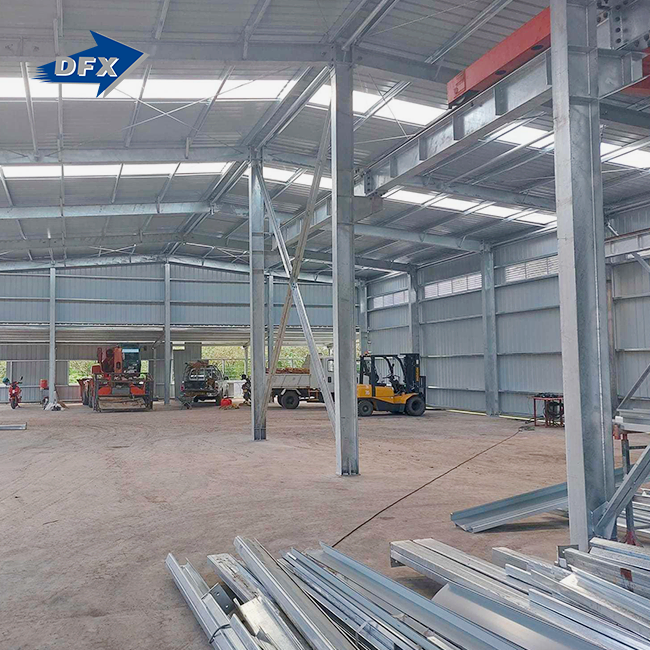
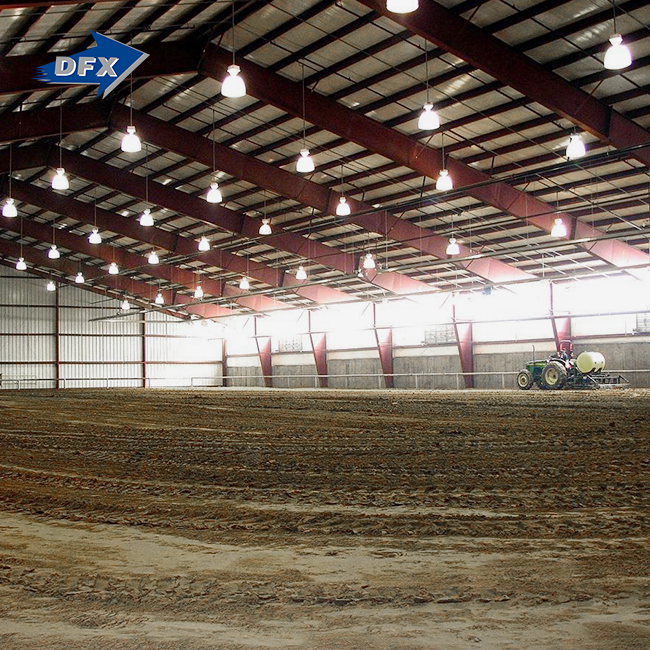
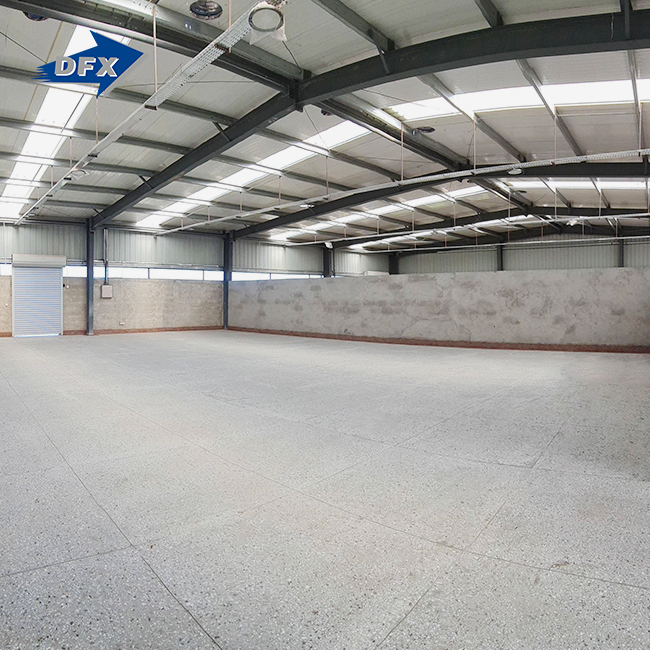
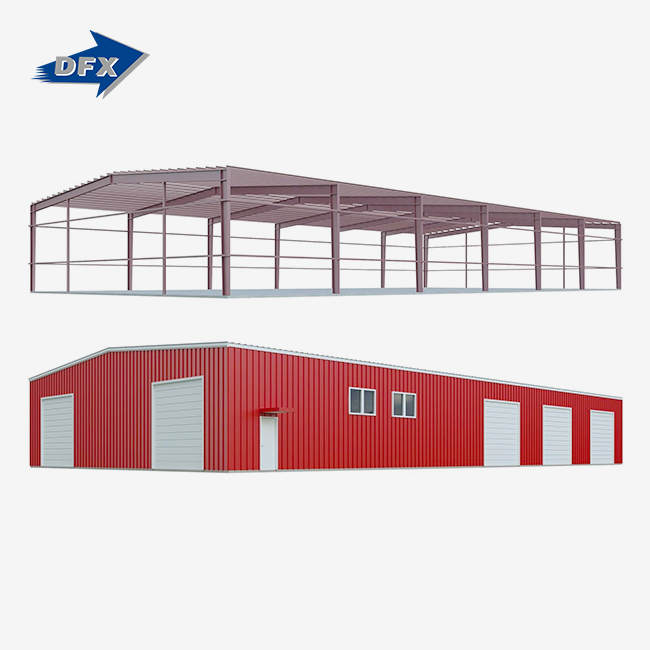
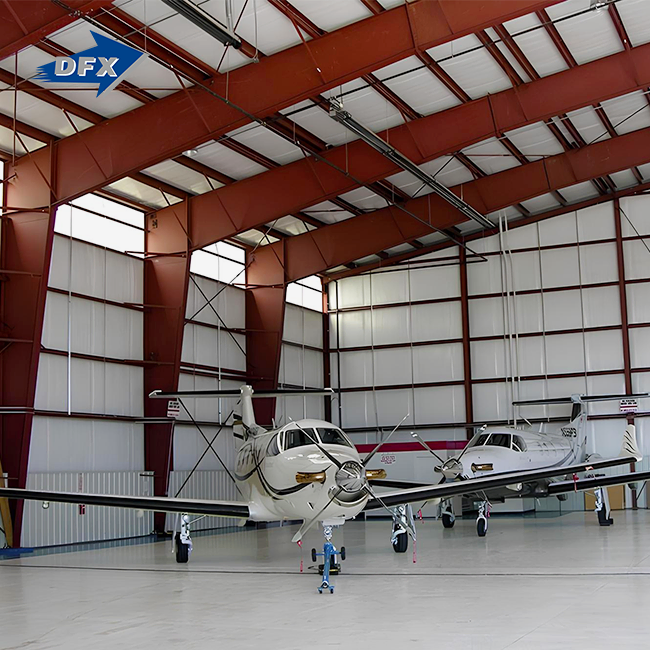
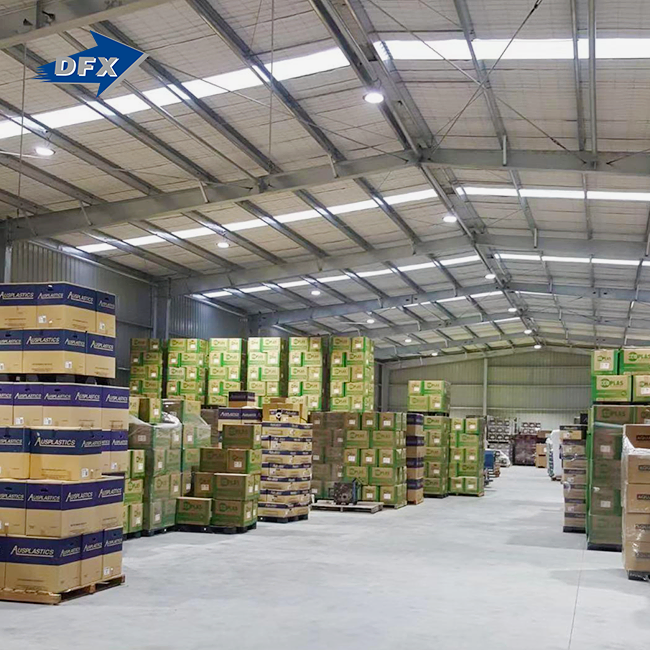
The construction affects the flow of the air. Large-span steel constructions with great spacing between them result in a column-free interior. This allows air to move easily around the fuselage, wings, and tail. When there is a lot of area, there is also room for lights, pipes, diffusers, and platforms above the biggest planes. Fans, vents, and makeup air units add more weight to the walls and roof that must be accounted for in the structural design. Insulated sandwich panels for the roof and walls, which are tight panels, assist in keeping air out and the temperature consistent. Huge equipment shelters and huge machine storage spaces may employ the same clear span design.
What DFX Offers for Aircraft Hangar Projects
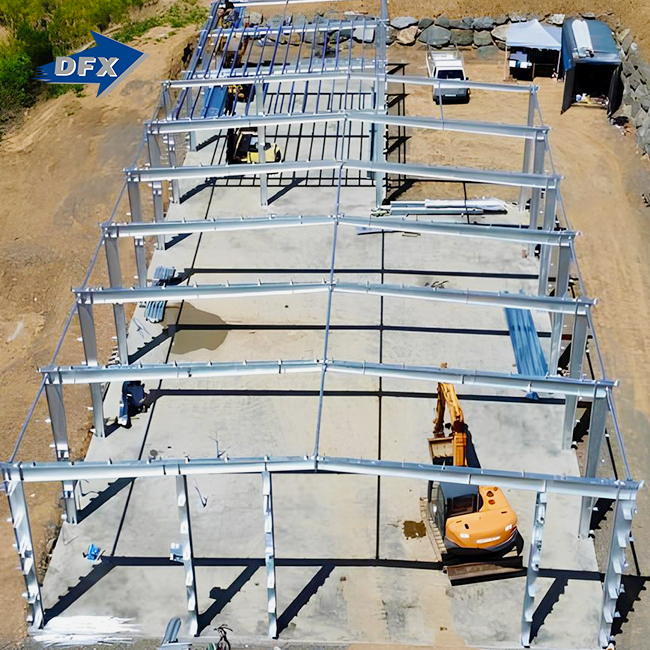
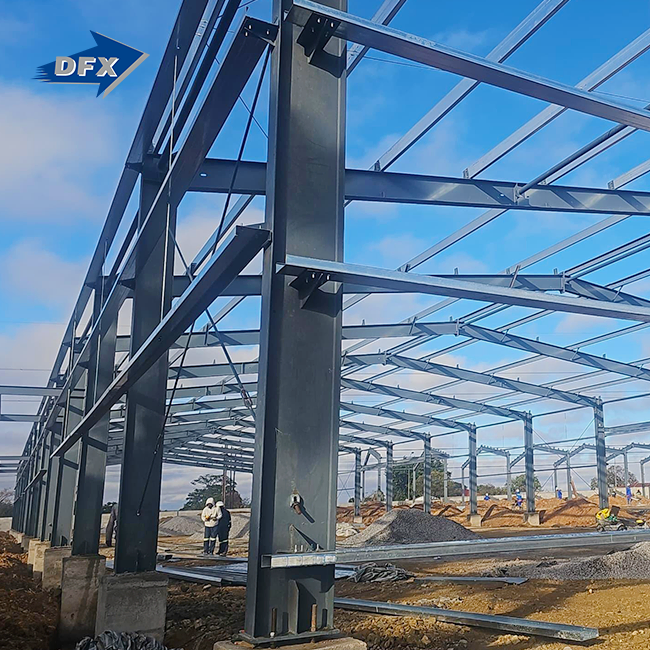
In Qingdao, the steel construction manufacturer is called DFX. This firm has been in operation since 2011 and has been fabricating structural steel for over 12 years. We have six automated welded H-beam lines, more than 200 skilled staff, and a 40,000-square-meter covered production space. We can produce roughly 20,000 tons of welded H-beams and columns per year. The primary structure of our aircraft paint hangars is constructed from welded H-section steel and features a stronger bracing system. Made in China. Each task has its own distinct role. We do structures, we do unique designs, we do building, and we aid with installation. Our products are CE, COC, and PVOC authorized and manufactured under ISO quality management systems. We receive ventilation, VOC, and fire systems from specific locations and confirm that their holes and loads comply with the steel design.
Writing a Specification and Comparing Quotes
It speaks volumes about the size of the aircraft, the size of the hangar, the temperature, the coating materials, the arrangement of the airflow, the filters, the management of VOCs, the power supply, the fire lines, the work schedule, and any applicable laws. You should ask each supplier to divide the job down into many categories such as construction, ventilation, filters, controls, installation, training, and extras that are not necessary. Then you may compare the span line by line. Also, don’t just look at the price; look at how much it will cost over its long life, including things like maintenance, electricity, and filters. Know the performance guarantees before you sign: who is liable for what, delivery conditions, warranty, and replacement parts. For example, individuals typically pick fans before knowing what the process and aircraft are, do not utilize makeup air, and do not leave any areas for maintenance measurement and access. These factors may be written down in a list so you can compare vendors consistently.
Conclusion
Good ventilation is critical in aviation paint hangars to protect workers, reduce hazardous fumes and VOCs, and provide consistent coating conditions. As you can see, the proportions of the airflow architecture, makeup air, and temperature control have to take into consideration more than fan capacity. They must also take into consideration the form of the aircraft paint hangar, the chemistry of the coating, and international construction rules. NFPA 33, NFPA 409, and OSHA state that safety depends on the hazard of the region, the equipment utilized, and the effectiveness of the fire department. EPA standards also state it is contingent upon how the overspray and VOCs in the air are handled. You may undertake several sorts of work when you pick a permanent, transportable, inflatable, or booth. Variable speed fans, sealed envelopes, and regular maintenance may all go a long way to making things work more smoothly. These systems are supported by a clear span steel frame that was planned and manufactured appropriately. A detailed standard with implementation criteria reduces design gaps.
FAQ
1. What is the difference between an aircraft paint hangar and a paint booth?
A paint booth and an aircraft paint hangar are not the same thing. A booth is a smaller building that can hold small planes or parts. You can work on bigger planes and do more MRO tasks in a hangar because it gives you more space. Their power needs to be kept secret, filtered, and safe from fire.
2. When do I need explosion-proof equipment?
When things like fans, motors, and lights are in a place that NFPA 70 and NFPA 33 say is dangerous, you need it. The classification has been confirmed by both your engineer and the fire department in your area.
3. Which airflow layout suits wide-body aircraft?
However, the floor needs to have holes in it so that the cleaner doesn't overspray. Cross-flow is easier to put together because it uses parts that are already there. Which one to choose depends on the plane's size, your budget, and the finish you want. To make sure you make the right choice, talk to skilled professionals and the company that makes your coating.
Request an Aircraft Paint Hangar Steel Structure Quote from DFX
Are you going to build an aircraft paint hangar? The steel structures that DFX builds are long and have a lot of space between them. They are made with strong bracing and welded H-section frames. We offer structural calculations, unique designs, manufacturing, and fitting help for aircraft paint hangars because we sell structural steel for them. Please email jason@bigdirector.com with the size of your plane, where the site is, and what your project is about.
References
1. NFPA 33, Standard for Spray Application Using Flammable or Combustible Materials, 2021
2. NFPA 409, Standard on Aircraft Hangars, 2022
3. NFPA 70, National Electrical Code, 2023
4. ACGIH, Industrial Ventilation: A Manual of Recommended Practice for Design, 2019
5. U.S. Environmental Protection Agency, National Emission Standards for Aerospace Manufacturing and Rework Facilities (40 CFR Part 63, Subpart G), 1995
6. ASHRAE Handbook: HVAC Applications, 2023
Learn about our latest products and discounts through SMS or email