- English
- French
- German
- Portuguese
- Spanish
- Russian
- Japanese
- Korean
- Arabic
- Greek
- German
- Turkish
- Italian
- Danish
- Romanian
- Indonesian
- Czech
- Afrikaans
- Swedish
- Polish
- Basque
- Catalan
- Esperanto
- Hindi
- Lao
- Albanian
- Amharic
- Armenian
- Azerbaijani
- Belarusian
- Bengali
- Bosnian
- Bulgarian
- Cebuano
- Chichewa
- Corsican
- Croatian
- Dutch
- Estonian
- Filipino
- Finnish
- Frisian
- Galician
- Georgian
- Gujarati
- Haitian
- Hausa
- Hawaiian
- Hebrew
- Hmong
- Hungarian
- Icelandic
- Igbo
- Javanese
- Kannada
- Kazakh
- Khmer
- Kurdish
- Kyrgyz
- Latin
- Latvian
- Lithuanian
- Luxembou..
- Macedonian
- Malagasy
- Malay
- Malayalam
- Maltese
- Maori
- Marathi
- Mongolian
- Burmese
- Nepali
- Norwegian
- Pashto
- Persian
- Punjabi
- Serbian
- Sesotho
- Sinhala
- Slovak
- Slovenian
- Somali
- Samoan
- Scots Gaelic
- Shona
- Sindhi
- Sundanese
- Swahili
- Tajik
- Tamil
- Telugu
- Thai
- Ukrainian
- Urdu
- Uzbek
- Vietnamese
- Welsh
- Xhosa
- Yiddish
- Yoruba
- Zulu
Office Building Steel Structure vs Concrete: Which Wins?
In order to plan a business building project, project managers and buying teams have to make a big decision: should they build the office building out of steel or regular concrete? I have looked at dozens of projects in the building, infrastructure, and industry fields, and the answer is clear. Building with an office building steel structure is 30–40% faster than building with concrete, and you have more control over how it is made and how much it costs. These days, steel is best for office jobs that need to be finished quickly, can be changed easily, and last a long time. Of course, this doesn't mean that concrete isn't important. But learning how each one works will help you pick the right one for the job.

Understanding the Core Differences Between Steel and Concrete
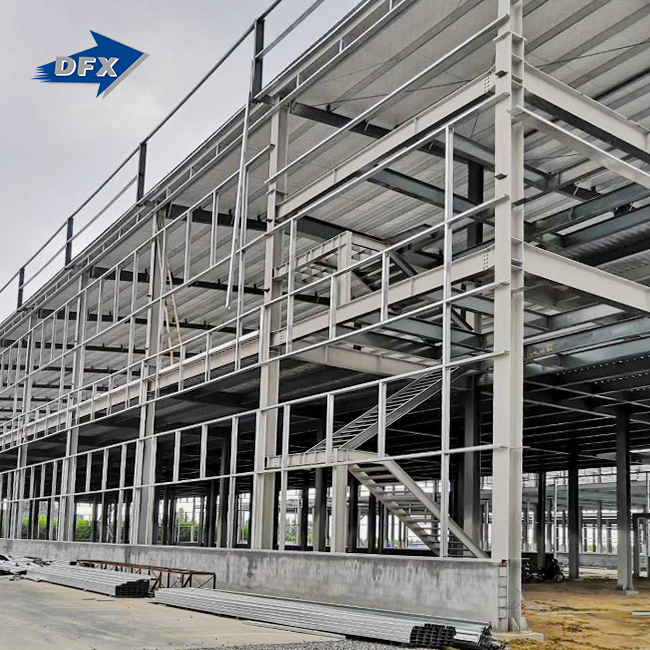
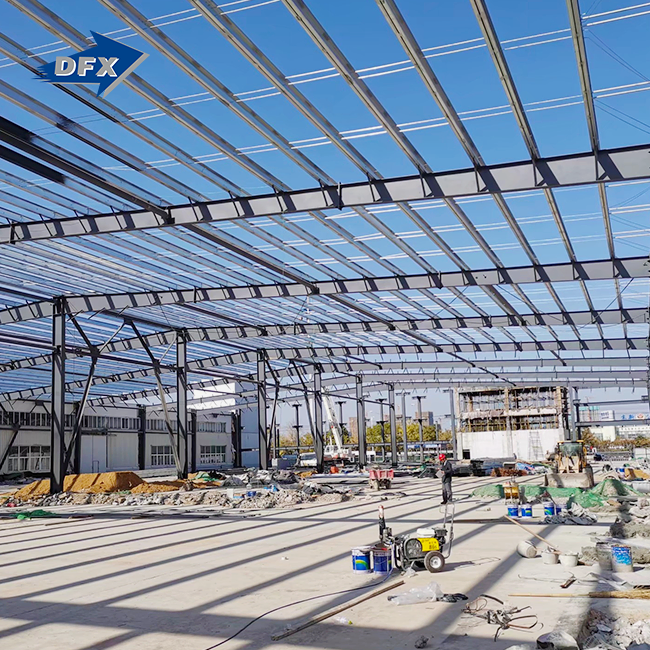
The main difference between these two building methods goes beyond the types of materials used. Engineered poles and beams that come ready-made from factories are what steel frame systems depend on. Pouring, drying, and putting up formwork that takes a lot of work are all done on-site during concrete building.
These methods are different in three main ways:
- Different ways of building: steel is made of pre-made pieces that are put together on-site, but concrete has to be filled and left to dry first.
- When building, steel beams are more efficient because they can hold more weight per unit of length. This means that they can be used for longer lengths without further support.
- The weather has a big effect on how fast concrete sets, but not much on how steel is put together. Schedule flexibility is important for projects.
As per the rules of structural engineering, steel has a tensile strength of about 400 MPa (Q355 grade), while concrete has a compression strength of around 30 to 40 MPa. Because these materials have different basic qualities, they don't work as well when designing for earthquakes or making big buildings.
If you need to finish a multi-storey office building quickly, steel structures offer clear benefits in terms of construction speed and plan certainty.
Construction Speed: Where Does Steel Take a Commanding Lead?
In business building, time is money, and this fact greatly benefits steel structures. Real project data from EPC companies is very strong proof.
The framework for a 5,000-square-metre office building made of steel usually takes 8 to 12 weeks to finish. It takes 16 to 22 weeks to finish the same job with concrete. This 40–50% time savings is due to several things:
- Steel parts that have already been made are ready to be installed right away.
- Several parts of the building can move forward at the same time.
- A few delays were caused by bad weather during the steel building
- There is no need for drying time between building stages.
- Faster envelope covering lets interior work start earlier
Similar effects have been seen in manufacturing sites that added office buildings. A production business in the Philippines used steel construction to finish their three-storey office building in 14 weeks, while the original estimate for concrete was 24 weeks.
The shortened timeline has benefits that build on top of each other. Getting people to move into a building earlier means making money faster. Less time spent on building means lower costs for financing and running the place. Shorter amounts of time with fewer jobs mean that workers are more efficient.
Steel structures are the fastest way to build buildings that can be used right away, whether you need to meet project targets or grow your industrial operations.
Cost Analysis: Breaking Down the Real Numbers
Price competitiveness remains a primary concern for procurement managers evaluating construction materials, including office building steel structures. The cost equation proves more complex than simple material price comparisons.
Initial construction costs typically show:
- Steel structure material costs: $180-280 per square metre
- Concrete structure material costs: $150-220 per square meter
- Steel installation labour: $40-60 per square metre
- Concrete installation labour: $60-90 per square metre
These figures reveal that while steel material costs run 15-20% higher, installation labour costs favour steel by approximately 25-30%. The total installed cost gap narrows to just 5-15% depending on project specifics.
- Total cost of ownership analysis shifts the equation further. Steel structures offer:
- 60% lighter foundation requirements, reducing excavation and concrete volume
- Minimal construction waste (less than 5% compared to 15-20% for concrete)
- Faster project completion, reducing financing costs
- Lower long-term maintenance requirements
- Superior adaptability for future renovations or expansions
A Nigerian construction contractor documented complete project costs for an industrial warehouse office complex. The steel option showed 8% higher material costs but delivered 12% lower total project costs when factoring in foundation savings, reduced construction time, and lower site overhead.
If you need cost-effective solutions with predictable budgets and minimal cost overruns, steel structures provide superior value despite slightly higher material costs.

Design Flexibility and Space Utilisation
Architectural design freedom significantly impacts building functionality and future adaptability. Steel's structural properties enable design possibilities that concrete cannot economically match.
Column-free spans represent a critical advantage. Steel beams routinely achieve 30-40 metre spans without intermediate supports. Concrete systems typically max out at 8-12 metres before requiring additional columns or expensive post-tensioning systems.
This span capability transforms office space planning. Open floor layouts accommodate diverse tenant requirements. Manufacturing companies building administrative centres gain flexible spaces that adapt as operations evolve. Future renovations proceed without structural limitations.
Load-bearing structure calculations reveal another advantage. Steel columns occupy 60-70% less floor area than equivalent concrete columns. A typical steel column might measure 400mm x 400mm, while a concrete column requires 600mm x 600mm or larger. This difference adds 3-5% to usable floor area across an entire building.
Modular construction approaches further enhance flexibility. Steel systems accommodate vertical expansions, horizontal additions, and internal reconfigurations that would prove prohibitively expensive with concrete structures.
If you need adaptable buildings that accommodate changing business requirements and maximise rentable space, steel frame systems deliver unmatched design flexibility.
Structural Performance in Critical Conditions
Building codes and safety requirements demand rigorous performance under extreme conditions. Both materials meet these standards, but their performance characteristics differ substantially.
Seismic design considerations:
Testing data from earthquake-prone regions demonstrates steel's superior ductility. Steel structures absorb and dissipate seismic energy through controlled flexing. Concrete structures rely on mass and reinforcement but exhibit brittle failure modes under extreme loading.
Projects in the Philippines, Indonesia, and other seismically active regions increasingly specify office building steel structures. The material's inherent flexibility provides life-safety advantages during seismic events.
Fire resistance comparisons:
Concrete holds a natural advantage in fire resistance, maintaining structural integrity longer without additional protection. Steel requires fireproofing applications—typically intumescent coatings or spray-applied materials—to achieve equivalent fire ratings.
Modern fireproofing steel technologies effectively address this consideration. Two-hour fire ratings are routinely achieved, meeting requirements for most office building applications. The additional fireproofing cost adds $8-15 per square metre to steel projects.
Corrosion protection requirements:
Steel structures need protective coatings in most environments. Galvanising, painting, or combined systems protect against atmospheric corrosion. Concrete structures face reinforcement corrosion in chloride-exposed environments, requiring careful concrete mix design and adequate cover.
Properly protected steel structures demonstrate 50+ year service lives. Corrosion protection adds approximately 5-7% to initial steel costs but proves essential for long-term durability.
If you need buildings in seismically active regions or require maximum adaptability for future modifications, steel structures offer performance advantages worth considering.
Sustainability and Environmental Impact
Sustainable building practices increasingly influence material selection decisions. Both construction materials present environmental considerations, but steel offers specific advantages.
Steel remains the world's most recycled construction material. Approximately 90% of structural steel gets recovered and recycled at building's end-of-life. This recycled content reduces embodied energy and environmental impact.
Concrete production generates substantial CO₂ emissions—roughly 0.9 tonnes of CO₂ per tonne of cement. Steel production also creates emissions, but recycling capabilities and improving production technologies steadily reduce this impact.
Construction waste generation differs dramatically. Steel fabrication produces minimal on-site waste—typically under 5% of material volume. Concrete construction generates 15-20% waste from formwork, excess pour quantities, and damaged materials.
Building deconstruction and materials recovery favour steel structures. Components can be unbolted, removed, and reused or recycled. Concrete demolition produces rubble requiring disposal or energy-intensive crushing for aggregate recovery.
If you need environmentally responsible construction meeting green building certifications, steel structures provide measurable sustainability advantages.
Why Director Steel's Office Building Solutions Stand Apart?
Qingdao Director Steel Structure Co., Ltd. brings 12+ years of specialised experience to commercial office projects. Our integrated approach addresses every concern procurement managers and project engineers face:
- Engineering excellence – In-house architectural design and structural analysis teams ensure optimised solutions meeting local building codes across global markets
- Manufacturing capacity – 40,000 square metres of production space with six automatic welded H-beam lines producing 20,000 tonnes annually, ensuring a reliable supply
- Quality assurance – ISO9001-certified production processes and CE-certified products guarantee international standard compliance
- Complete project support – Turnkey capabilities from concept through installation guidance, eliminate coordination headaches between multiple suppliers
- Technical capability – Advanced welding techniques and precise steel fabrication deliver components that fit perfectly during site erection.
- Global project experience – Successful office building deliveries across Nigeria, the Philippines, Australia, and dozens of markets demonstrate adaptability to diverse requirements
- Responsive partnership – Technical teams support customers throughout project lifecycles, addressing design questions, installation challenges, and future modification needs.
- Certified reliability – COC, PVOC, and regional certifications streamline import processes and ensure regulatory compliance.
Our manufacturing capabilities include office building steel structures and complete building envelope systems—not just steel frames. Sandwich panel production (50,000 square metres annually), C/Z section steel lines (8,000 tonnes capacity), and corrugated sheet manufacturing provide integrated solutions from a single trusted source.
Over 200 trained workers and advanced production equipment ensure consistent quality and on-time delivery. Project-based fabrication approaches accommodate specific requirements without forcing customers into standardised solutions that don't quite fit their needs.
Making the Right Choice for Your Project
The steel versus concrete decision depends on specific project parameters. No single answer fits every situation, but clear patterns emerge:
Steel structures excel when projects require the following:
- Accelerated construction schedules with firm completion deadlines
- Long-span, column-free interior spaces
- Future expansion or modification flexibility
- Locations with challenging soil conditions benefit from lighter structural loads
- Seismically active regions requiring ductile structural systems
- Predictable costs and minimal weather-related schedule risks
Concrete structures may suit projects featuring:
- Abundant local concrete production capacity with limited steel fabrication access
- Architectural designs emphasising thermal mass for climate control
- Extreme fire exposure scenarios requiring maximum passive fire resistance
- Projects where extended construction timelines create no operational concerns
Most modern office building projects—whether corporate headquarters, administrative centres, or multi-tenant commercial buildings—find that steel structures deliver superior overall value. The combination of construction speed, design flexibility, cost predictability, and long-term adaptability addresses the core concerns EPC contractors, manufacturing companies, and construction project managers consistently prioritise.
Real-world project outcomes validate this assessment. Contractors report higher client satisfaction with steel projects due to on-time completions and fewer change-order complications. Building owners appreciate operational flexibility as business needs evolve. Procurement managers value budget predictability and reduced financial risk.
The question isn't whether steel or concrete represents a "better" material in absolute terms. Rather, which construction approach aligns with your specific project goals, timeline requirements, budget parameters, and long-term building use expectations?
For the majority of commercial office applications evaluated against these practical criteria, office building steel structures emerge as the winning solution.
Conclusion
Office building construction decisions carry long-term consequences extending decades beyond initial completion. Steel structures deliver compelling advantages in construction speed, design flexibility, cost predictability, and future adaptability. While concrete remains viable for specific applications, most modern commercial office projects benefit from steel's superior performance characteristics. The 30-40% faster construction timelines, enhanced space utilisation, and excellent seismic performance make steel the preferred choice for contractors, manufacturing companies, and infrastructure developers worldwide. By partnering with experienced steel fabrication specialists who provide complete design-through-installation support, you gain the confidence that your project will meet quality, schedule, and budget expectations.
Partner With a Trusted Office Building Steel Structure Manufacturer
Selecting the right construction approach represents just the beginning. Partnering with experienced steel structure suppliers ensures your project achieves its full potential. Director Steel provides comprehensive support from initial concept through final completion and beyond.
Our engineering teams collaborate with your architects and engineers, optimising designs for manufacturability, cost-efficiency, and structural performance. Production facilities deliver precisely fabricated components that arrive ready for rapid installation. Installation guidance helps your construction teams avoid common pitfalls and maintain schedule momentum.
Project managers and procurement professionals value our transparent communication and responsive problem-solving for office building steel structures. When questions arise during design or construction phases, experienced technical staff provide timely answers that keep projects moving forward.
Ready to explore how steel structures can benefit your next office building project? Contact our team at jason@bigdirector.com for project-specific consultations, preliminary design concepts, or detailed quotations. We'll help you evaluate options and develop solutions perfectly matched to your requirements.
References
1. American Institute of Steel Construction. (2017). Steel Construction Manual, 15th Edition. Chicago: AISC.
2. Nethercot, D.A. (2019). Structural Steel Design to Eurocode 3 and AISC Specifications. London: CRC Press.
3. Chen, W.F. & Lui, E.M. (2018). Handbook of Structural Engineering, 2nd Edition. Boca Raton: CRC Press.
4. Trahair, N.S., Bradford, M.A., Nethercot, D.A. & Gardner, L. (2020). The Behaviour and Design of Steel Structures to EC3, 5th Edition. London: Taylor & Francis.
5. Bjorhovde, R. (2016). Development and Use of High Performance Steel: Journal of Constructional Steel Research, Volume 114, Pages 323-329.
6. Lawson, R.M. & Ogden, R.G. (2019). Sustainable Steel Construction: Energy Efficient Building Design. Steel Construction Institute Technical Report.
Learn about our latest products and discounts through SMS or email