- English
- French
- German
- Portuguese
- Spanish
- Russian
- Japanese
- Korean
- Arabic
- Greek
- German
- Turkish
- Italian
- Danish
- Romanian
- Indonesian
- Czech
- Afrikaans
- Swedish
- Polish
- Basque
- Catalan
- Esperanto
- Hindi
- Lao
- Albanian
- Amharic
- Armenian
- Azerbaijani
- Belarusian
- Bengali
- Bosnian
- Bulgarian
- Cebuano
- Chichewa
- Corsican
- Croatian
- Dutch
- Estonian
- Filipino
- Finnish
- Frisian
- Galician
- Georgian
- Gujarati
- Haitian
- Hausa
- Hawaiian
- Hebrew
- Hmong
- Hungarian
- Icelandic
- Igbo
- Javanese
- Kannada
- Kazakh
- Khmer
- Kurdish
- Kyrgyz
- Latin
- Latvian
- Lithuanian
- Luxembou..
- Macedonian
- Malagasy
- Malay
- Malayalam
- Maltese
- Maori
- Marathi
- Mongolian
- Burmese
- Nepali
- Norwegian
- Pashto
- Persian
- Punjabi
- Serbian
- Sesotho
- Sinhala
- Slovak
- Slovenian
- Somali
- Samoan
- Scots Gaelic
- Shona
- Sindhi
- Sundanese
- Swahili
- Tajik
- Tamil
- Telugu
- Thai
- Ukrainian
- Urdu
- Uzbek
- Vietnamese
- Welsh
- Xhosa
- Yiddish
- Yoruba
- Zulu
Goat Steel Shed: A Comprehensive Guide
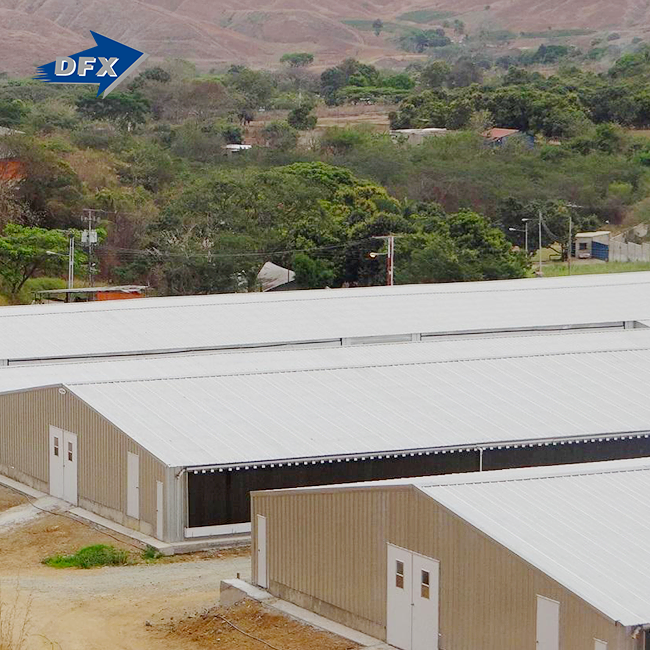
When farmers want to build strong infrastructure for their animals, a goat steel shed is a modern option that is long-lasting, biosafe, and affordable. These specially made premade buildings use pre-engineered steel parts made just for keeping cats. They solve problems like air problems, structural rust, and the ability to expand intensive farming. Steel goat shelters last a long time and don't need much upkeep, unlike traditional wooden barns that break down quickly in harsh farming conditions. This makes them the best choice for commercial farms, EPC contractors managing agricultural projects, and manufacturing investors branching out into agritech ventures.

Why Are Modern Farms Switching to Steel Goat Housing?
In today's difficult farming environment, traditional cattle barns have a lot of problems. Goat waste creates ammonia-rich environments that quickly destroy wooden structures. These environments speed up rot and harbour bugs. This has a direct effect on the death rate and the costs of running a farm.
With steel-frame sheds, this equation changes completely. Hot-dip galvanized steel supports and beams don't rust for decades, even in hot areas with a lot of humidity or places where temperatures change a lot. The material doesn't bend or break, and it doesn't give bugs and mites a place to live or grow—all of which are important safety factors for dairy goat farms or professional meat production operations.
Agricultural project managers like how these buildings work well with automatic feeding systems, raised wooden floors, and belts that remove dung. This change makes it possible for medium-sized to large farms to grow while also lowering the amount of work that needs to be done and raising standards for animal care.
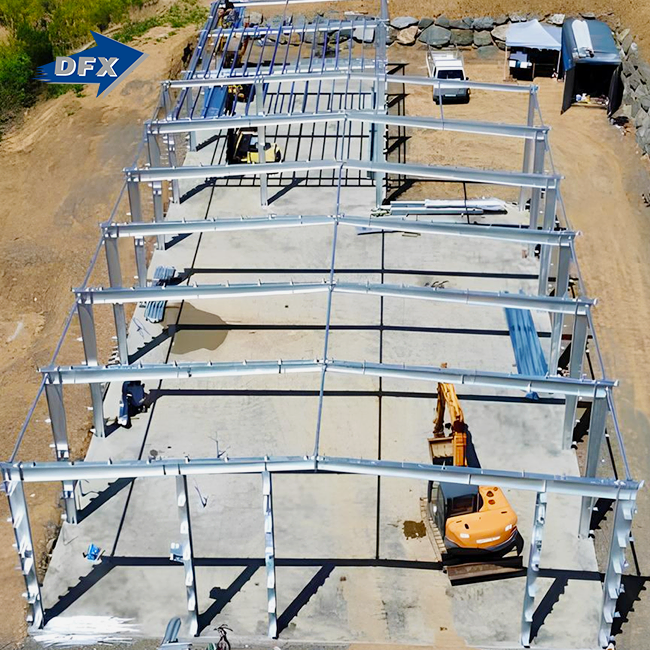
Construction companies that work on infrastructure projects in rural areas know that speed is another benefit. Prefabricated parts come with precisely cut bolt holes and protected coats that were applied at the plant. This makes it easy to put them together quickly, even in remote areas. A well-designed metal animal shed can be up and running in just a few weeks, while a traditional building could take months. This reduces the risks that procurement managers face when it comes to project timelines.
Engineering Specifications That Matter for Livestock Protection
Knowing the technical basics of building a good goat barn helps people make good decisions about which sources to hire. The choice of materials is the first step in making sure the structure is strong. Premium setups use Q345B or Q235B H-section steel that meets ASTM A572 or GB/T 1591 standards.
Pay close attention to the galvanization process. To protect animals properly, the zinc covering must be at least 600g/m² thick, which is about 85 microns. This can be checked using magnetic induction scales according to ASTM E376. This standard tells you right away if your investment will last twenty years of ammonia exposure or if it needs to be replaced too soon.
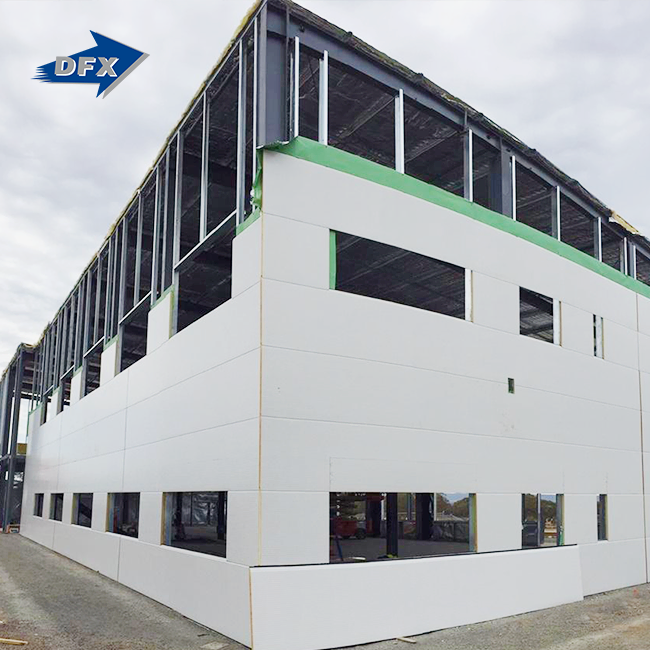
The choice of cladding has a big effect on how the container controls the air. Single-skin corrugated steel sheets (0.5 to 0.6 mm thick) work best for open-sided buildings in warm areas because they let in the most natural air flow. Controlled settings like baby barns or pedigree breeding centres need sandwich panels with a core of either polyurethane or rock wool to provide the thermal insulation values needed to keep the temperature stable.
The facts of operations should be taken into account in dimensional planning. Clear lengths of 12 to 30 metres let the tractor and feed mixer get to the area without any beams blocking the way. Available heights between 4 and 6 metres raise the air volume, which helps the stack effect. Warm, dirty air rises and escapes through ridge ventilators, while fresh air comes in at floor level. This passive ventilation system can change 60 to 100 tonnes of air every hour during high heat times, keeping animals from getting too hot in pens with a lot of animals.
Load-bearing capacity estimates need to take into account things like raised flooring systems, food lines that are hanging, and snow or wind loads in the area. When engineering leaders look over structure plans, they should check the weld quality paperwork through ultrasound testing reports and make sure that the assembly standards are met in terms of size limits, which are usually within 2mm for bolt hole alignment.
Strategic Applications Across Agricultural Business Models
Different farming operations demand tailored approaches to durable goat housing design. Recognizing these variations helps project engineers specify appropriate solutions.
Intensive dairy goat operations prioritize climate control and hygiene. These facilities often incorporate fully enclosed designs with insulated sandwich panels, integrated milking parlour zones, and sophisticated ventilation controls, such as Goat Steel Shed. The goal centres on maintaining narrow temperature bands that maximize milk yield while protecting high-value pedigree genetics. Operations in Nigeria or the Philippines might combat extreme heat, while Australian highland facilities address cold stress during lambing seasons.
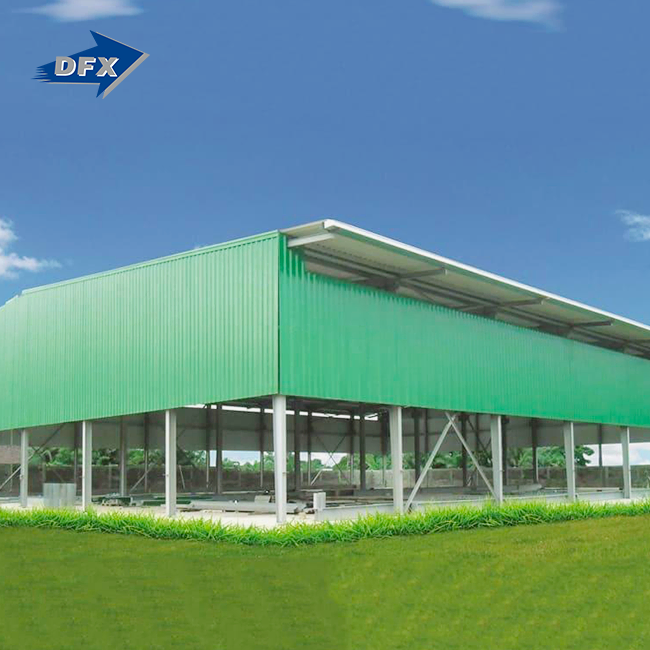
Commercial meat goat feedlots emphasize throughput and cost efficiency. Large-scale weatherproof sheds with adjustable sidewall curtains balance protection from precipitation with maximum natural airflow. The open design reduces construction costs, while the curtain system provides flexibility—operators can adjust openings based on seasonal conditions, maintaining animal comfort without mechanical ventilation expenses. This model appeals to agricultural enterprises focused on rapid weight gain before the market.
Nucleus breeding centres in high-humidity regions face unique biosecurity challenges. Parasites thrive when animals contact accumulated manure, driving mortality rates upward. Advanced installations incorporate elevated slatted flooring raised 1.5 metres above grade, with manure collection systems underneath. The steel structure must support both static loads from the flooring platform and dynamic loads from livestock movement. This separation between animals and waste drastically reduces parasite transmission cycles for coccidiosis and intestinal worms, protecting genetic investments that underpin breeding programmes.
Multi-purpose agricultural storage facilities demonstrate another application. Farms can design rust-resistant sheds that house goats seasonally while providing equipment storage or hay protection during other periods. This flexibility maximizes infrastructure return on investment for operations with diverse revenue streams.
Cost Factors and Value Engineering Considerations
Procurement managers evaluating suppliers should understand how design choices influence total project economics beyond initial material costs.
Structural efficiency significantly impacts pricing. Experienced manufacturers optimize beam spacing and member sizing to meet load requirements without over-engineering, reducing steel tonnage and shipping weights. A well-designed portable goat shelter might use 20% less material than an inefficient layout while delivering identical performance.
Delivery logistics represent substantial cost components for international projects. Container optimization matters—precise fabrication allows efficient packing, potentially reducing shipment quantities. Project managers in remote regions must factor in inland transportation from ports, making modular designs that fit standard truck dimensions advantageous.
Installation complexity directly affects labour budgets. Systems with comprehensive erection guidance, pre-assembled subcomponents, and clearly marked connection points reduce on-site time and skilled labour requirements. This benefit particularly appeals to EPC contractors managing multiple concurrent projects with stretched technical supervision resources.
Lifecycle analysis reveals where initial savings become long-term expenses. Inadequate galvanization might reduce upfront costs by 8-12% but necessitate recoating within five years—a process requiring livestock relocation, production interruption, and scaffolding expenses that dwarf the initial savings. Operations managers should demand material certifications and coating thickness verification before accepting delivery.
Customization needs vary by application. Standardized designs minimize engineering costs and lead times, suiting straightforward requirements. Complex projects involving integrated equipment, unusual site conditions, or specific regulatory compliance may justify custom engineering investments. Understanding this spectrum helps agricultural project managers balance budget constraints against operational requirements.
Quality Assurance Protocols for Agricultural Infrastructure
Rigorous inspection procedures protect buyers from structural failures and premature deterioration in corrosive farm environments.
Galvanization verification should occur before shipment. Independent third-party testing using magnetic induction gauges confirms zinc coating thickness across all primary members. Documentation should reference specific international standards, not vague quality claims. This single checkpoint prevents the most common cause of early structural failure in livestock facilities.
Weld integrity directly impacts safety under load. Professional suppliers conduct ultrasonic testing or magnetic particle inspection on primary load-bearing connections, documenting results for customer review. These non-destructive tests identify internal defects invisible during visual inspection but critical for wind uplift resistance and snow load performance.
Dimensional accuracy determines assembly success on remote farm sites lacking precision fabrication equipment. Pre-delivery measurements should confirm column heights, beam lengths, and bolt hole positions fall within specified tolerances. Discrepancies discovered during installation cause expensive delays and field modifications that compromise structural performance.
Material certification packages for Goat Steel Shed should include steel mill certificates confirming grade specifications, coating thickness reports, and panel thermal performance data. This documentation enables engineering directors to verify compliance with project specifications and provides warranty protection should defects emerge.
Packaging quality affects the condition upon arrival. Adequate bracing prevents shipping damage to protective coatings, while moisture barriers protect panels during ocean freight. Inspection upon delivery should document any transportation damage before the shipping company releases liability.
Ventilation Design: The Critical Success Factor
Respiratory health directly determines productivity and mortality rates in goat farming operations, making airflow engineering perhaps the most consequential design element.
Natural ventilation systems leverage thermal buoyancy—the stack effect—where animal body heat warms air, reducing its density. This lighter air rises toward the roof ridge openings while cooler, fresh air enters through the adjustable sidewall inlets. The temperature differential creates continuous circulation without mechanical energy costs.
Effective designs position ridge ventilators along the entire roof length, typically 300-500 mm wide, with weather guards preventing precipitation entry. Sidewall curtain systems allow seasonal adjustment, closing during cold periods to retain warmth while opening fully during summer to maximize cross-ventilation. The ratio between inlet and outlet areas requires careful calculation—inadequate inlet area creates negative pressure that restricts airflow despite generous ridge openings.
Mechanical ventilation becomes necessary in fully enclosed facilities or extreme climates. Large-diameter circulation fans (36-54 inches) mounted at strategic locations create air movement even on still days, preventing ammonia stratification at floor level, where animals breathe. Tunnel ventilation systems, where exhaust fans on one endwall draw air through the entire building length, excel in hot climates by creating wind-chill cooling effects.
Hybrid approaches combine natural and mechanical systems. Automated curtain controls respond to temperature sensors, while fans activate only when natural ventilation proves insufficient. This strategy minimizes energy costs while guaranteeing adequate air quality during challenging conditions.
Building orientation significantly influences natural ventilation effectiveness. Structures aligned with prevailing breezes capture natural wind patterns, reducing mechanical assistance needs. Site analysis should precede final design, particularly for large installations where reorientation remains feasible.
Maintenance Requirements and Operational Longevity
One compelling advantage of galvanized steel construction involves minimal upkeep compared to traditional materials, though some attention ensures maximum service life.
Annual visual inspections should check for coating damage from vehicle impacts, fallen branches, or equipment contact. Galvanized surfaces self-heal minor scratches through zinc oxidation, but deep abrasions exposing bare steel require touch-up with zinc-rich paint to prevent corrosion initiation.
Bolt tightness verification prevents connection loosening from vibration or thermal cycling. A systematic walk-through checking structural connections and cladding fasteners takes minimal time but prevents minor issues from escalating. This task suits farm maintenance staff without specialized training.
The drainage system's function deserves attention after heavy rainfall. Gutters and downspouts should flow freely without blockages from debris. Standing water around foundation areas can undermine supports or create muddy conditions detrimental to hoof health.
Panel condition monitoring catches problems early. Foam-core insulated panels occasionally suffer edge seal failures, allowing moisture infiltration that degrades insulation performance. Early detection enables targeted repairs rather than complete panel replacement.
Documentation practices benefit operations planning. Maintaining records of inspections, repairs, and any modifications creates accountability and helps identify recurring issues warranting systemic solutions.
Most well-constructed outdoor goat shelters, such as Goat Steel Shed, deliver 40-50 years of productive service with this straightforward maintenance regimen—lifecycle economics that traditional wooden barns cannot approach.
Conclusion
Steel goat housing represents a fundamental advancement in agricultural infrastructure, addressing the environmental control, durability, and biosecurity challenges that limit productivity in traditional construction. From commercial meat production feedlots requiring maximum ventilation to climate-controlled dairy facilities protecting genetic investments, these engineered structures deliver measurable operational advantages. Project managers and farm owners who carefully evaluate structural specifications, galvanization quality, and supplier capabilities position their operations for decades of reliable performance. The initial investment in properly designed steel farm animal shelters consistently proves worthwhile through reduced maintenance, lower mortality rates, and the operational flexibility that modern agricultural enterprises demand in increasingly competitive markets.
Partner with DFX for Your Goat Steel Shed Project
Director Steel Structure Co., Ltd. brings 12 years of specialized experience manufacturing agricultural steel buildings that meet the rigorous demands of modern livestock operations. Our 40,000 square meter production facility operates six automatic welded H-beam lines and employs over 200 skilled workers committed to ISO9002 and CE-certified quality standards. Whether you're an EPC contractor managing a commercial goat farm development in Nigeria, an agricultural project manager expanding dairy operations in Australia, or a manufacturing investor diversifying into livestock infrastructure, our engineering team provides complete turnkey solutions—from structural design through fabrication to on-site erection guidance. As a trusted goat steel shed supplier, we understand that delivery reliability and technical support determine project success. Contact our team at jason@bigdirector.com to discuss how our corrosion-resistant, precisely engineered structures can support your agricultural investment.
References
1. American Society of Agricultural and Biological Engineers. Design of Ventilation Systems for Agricultural Structures. ASAE Standards, 2019.
2. Davies, J.M. Light Gauge Steel Cassette Wall Construction - Theory and Practice. The Steel Construction Institute, 2017.
3. Henderson, D.R. and Perry, R.L. Agricultural Buildings and Structures. American Society of Agricultural Engineers Technical Publications, 2018.
4. Samuelson, P.K. Livestock Housing: Modern Management and Environment Control. Agricultural Engineering Press, 2020.
5. Thompson, R.B. and Phillips, C.J. Structural Steel Design to Eurocode 3 and AISC Specifications. CRC Press, 2021.
6. United Nations Food and Agriculture Organization. Intensive Smallholder Livestock Development: A Manual for Extension Workers and Farm Advisors. FAO Animal Production and Health Division, 2016.
Learn about our latest products and discounts through SMS or email