- English
- French
- German
- Portuguese
- Spanish
- Russian
- Japanese
- Korean
- Arabic
- Greek
- German
- Turkish
- Italian
- Danish
- Romanian
- Indonesian
- Czech
- Afrikaans
- Swedish
- Polish
- Basque
- Catalan
- Esperanto
- Hindi
- Lao
- Albanian
- Amharic
- Armenian
- Azerbaijani
- Belarusian
- Bengali
- Bosnian
- Bulgarian
- Cebuano
- Chichewa
- Corsican
- Croatian
- Dutch
- Estonian
- Filipino
- Finnish
- Frisian
- Galician
- Georgian
- Gujarati
- Haitian
- Hausa
- Hawaiian
- Hebrew
- Hmong
- Hungarian
- Icelandic
- Igbo
- Javanese
- Kannada
- Kazakh
- Khmer
- Kurdish
- Kyrgyz
- Latin
- Latvian
- Lithuanian
- Luxembou..
- Macedonian
- Malagasy
- Malay
- Malayalam
- Maltese
- Maori
- Marathi
- Mongolian
- Burmese
- Nepali
- Norwegian
- Pashto
- Persian
- Punjabi
- Serbian
- Sesotho
- Sinhala
- Slovak
- Slovenian
- Somali
- Samoan
- Scots Gaelic
- Shona
- Sindhi
- Sundanese
- Swahili
- Tajik
- Tamil
- Telugu
- Thai
- Ukrainian
- Urdu
- Uzbek
- Vietnamese
- Welsh
- Xhosa
- Yiddish
- Yoruba
- Zulu
What Features Improve Logistics Loading Shed Efficiency?
Efficient logistics operations hinge on infrastructure that can withstand demanding workflows while protecting cargo and personnel from environmental challenges. A Logistics Loading Shed delivers precisely this advantage—it creates a weather-resistant bridge between transport vehicles and warehouse facilities, minimizing cargo damage, eliminating weather-related downtime, and maintaining uninterrupted operations around the clock. The right combination of structural design, material quality, and functional features transforms these sheds from simple shelters into strategic assets that directly impact operational throughput, cost control, and supply chain reliability.

Understanding the Core Features That Enhance Logistics Loading Shed Efficiency
Working with construction companies, manufacturing companies, and distribution center managers for years has taught us that the efficiency of logistics loading sheds isn't a fluke; it's built into every part. These special structures are very important for keeping cargo moving smoothly because they protect it and make it easier to handle in warehouses and distribution centers around the world.
Weather Protection as a Foundation for Continuous Operations
The main efficiency gain comes from not having to deal with interruptions caused by bad weather. Extreme weather like rain, snow, and ice can damage cargo, make working conditions unsafe, and stop loading operations. A well-built logistics loading shed keeps the area dry and at a comfortable temperature so that forklifts and other material handling equipment can work safely no matter what the weather is like outside. This directly leads to measured increases in productivity—facilities report up to 30% less downtime due to bad weather after adding good logistics loading sheds.
Space Optimization Through Strategic Layout Design
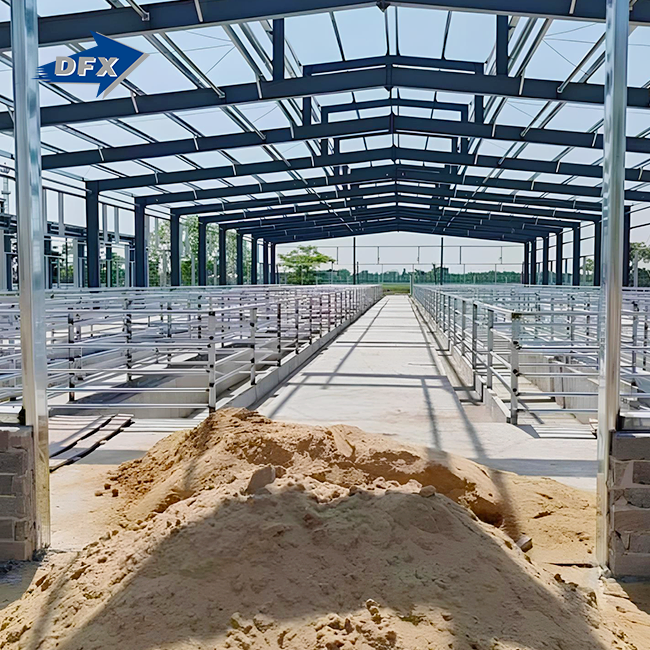
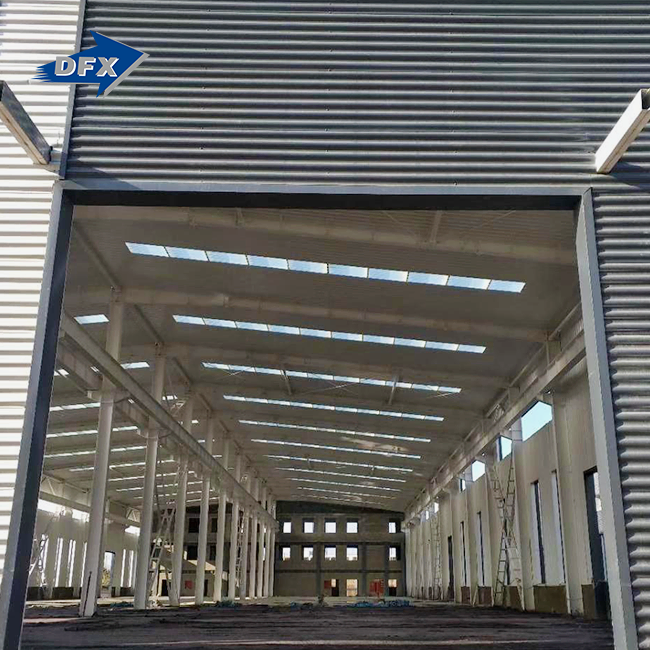
Logistics Loading Sheds that work well can hold a variety of vehicles at once without getting crowded. Clear-span designs don't have any interior columns, so trucks can move freely across the whole covered area. When there are no structural barriers, loading cycle times are shorter, and the chance of equipment accidents is lower. Smart layout planning also includes areas for trucks to wait, holding areas for sorted goods, and designated paths for staff. This creates flow patterns that naturally get rid of bottlenecks.
Structural Integrity Supporting Heavy-Duty Operations
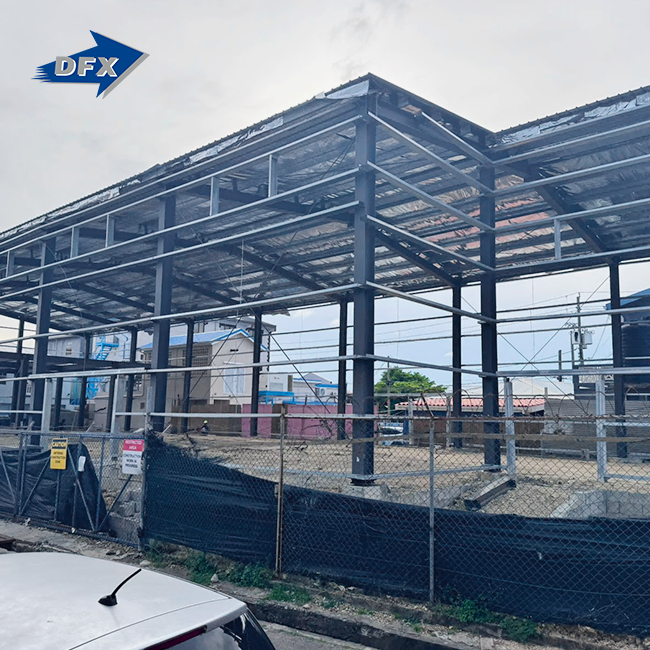
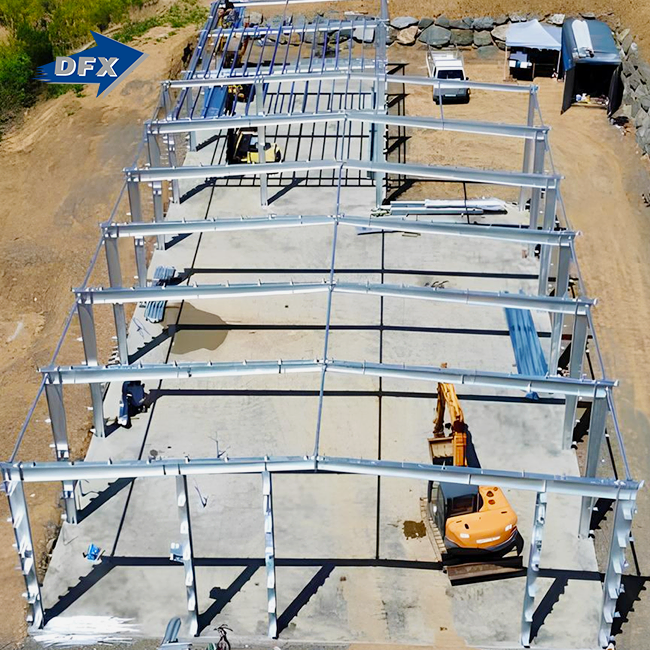
When loading, there is a lot of mechanical stress on the building because forklifts are always moving through it, cargo is being hit, and trucks are idling, which all require strong construction. High-performance logistics loading sheds use H-section beams and posts that are designed to handle these changing loads while keeping the structure stable. The framework has to be able to handle not only operating stresses but also natural forces like wind speeds of up to 120 km/h and heavy snowfall in northern climates.
Critical Design Elements That Improve Logistics Loading Shed Efficiency
Design factors have a big effect on how well a logistics loading shed works. The right logistics loading shed dimensions and layout planning keep traffic moving smoothly and avoid bottlenecks. Choice of material affects how long something lasts, how much maintenance it needs, and how well it insulates.
Material Selection Balancing Durability and Cost-Effectiveness
Due to their amazing strength-to-weight ratio and longevity, steel buildings made in China have become the best option for logistics loading sheds. Steel parts that have been hot-dip galvanized are very resistant to corrosion, so structures built with them stay strong even in harsh coastal or industrial environments. The galvanization layer's thickness—which is usually more than 80 microns—keeps rust away for decades without needing to be maintained often.
The secondary structure is made up of zinc purlins in the C and Z sections. These spread the weight of the roof evenly while keeping material costs low. These cold-formed steel parts are consistently high-quality and the right size, which speeds up the fitting process. When you combine galvanized purlin systems with H-section primary framing, you can make structures that are both cost-effective and can span 10 to 40 meters without any middle supports.
Flexible Design Options: Enclosed Versus Open-Sided Configurations
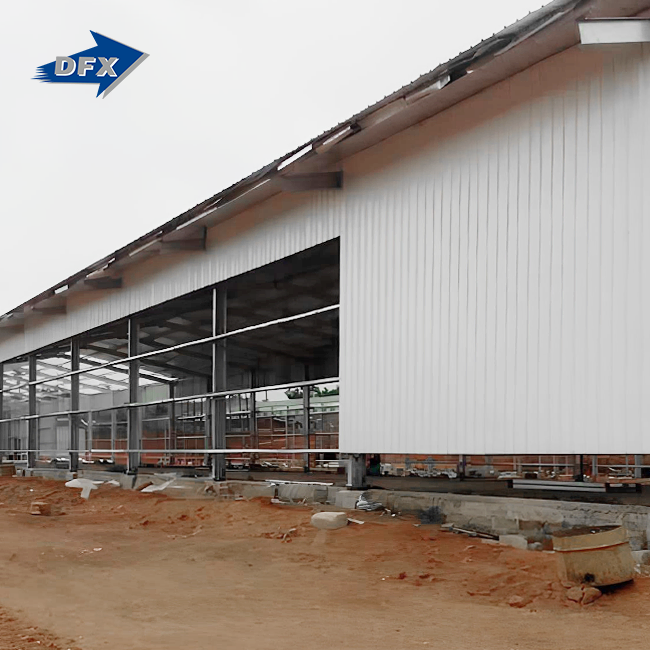
Different businesses have very different operational needs, so designs need to be able to adapt to those needs. Logistics loading sheds with full wall covering offer the best protection from the weather and safety, making them perfect for pharmaceutical logistics that need to keep an eye on the environment. Open-sided designs give up some weather protection but make it easier for vehicles to get in and out, which makes them better for moving large amounts of material or storing agricultural products like hay.
Modern steel structures are very flexible, so builders can ask for a variety of layouts. For example, they could ask for three strong walls and one open side facing the loading docks in the warehouse. This method strikes a balance between safety and ease of entry, and it also lowers the cost of building compared to fully enclosed buildings. Because these designs are flexible, companies can add or take away cladding pieces as their needs change.
Roof Design Considerations for Drainage and Snow Management
The pitch of the roof has a direct effect on how well water drains and how well snow is managed. Steeper pitches, usually 15 to 20 degrees, help snow melt quickly and keep water from pooling, which are very important in places that get a lot of rain. Poor drainage causes problems with upkeep and can lead to dangerous ice buildup around logistics loading shed areas.
Corrugated steel sheets are used in modern roofing systems because they are very resistant to weather and keep the structure light. The corrugation pattern makes the structure much stiffer without adding too much weight, which lets the spans between supporting purlins be longer. When roofs are put correctly, they have gutters and downspouts built in. These keep water away from work areas and make loading areas safe and easy to get to.
Innovations and Technologies Driving Performance Improvements
Modern logistics loading sheds incorporate cutting-edge innovations like modular building and prefabrication, allowing for quick deployment and scalability. All of these technology advances make things more efficient and lower the risk of problems.
Prefabricated Construction Accelerating Project Timelines
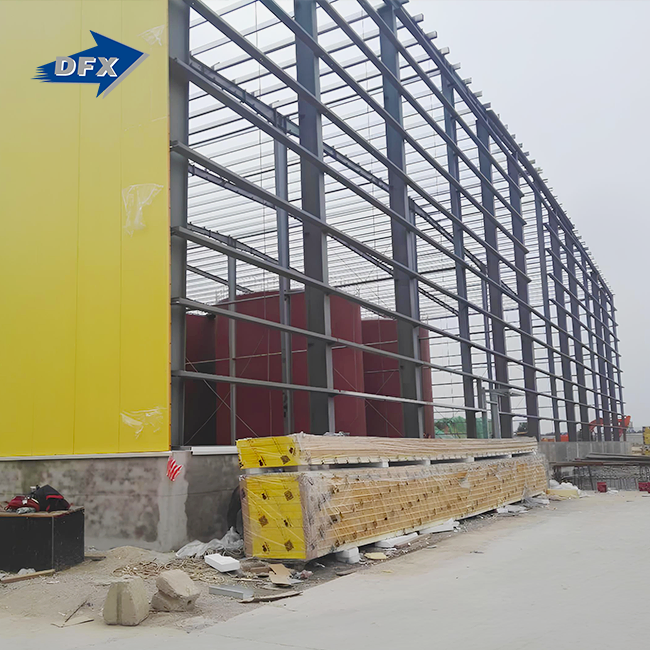
By moving most manufacturing processes into controlled workplace settings, prefabrication changes the plans for building projects. This method is used by Qingdao Director Steel Structure Co., Ltd., which has a sealed production room of 40,000 square meters where parts are carefully cut, welded, and finished before being shipped. About 20,000 tons of automatic welded H-beams are made every year, and the tight tolerances on the sizes make sure they fit perfectly on-site.
Compared to traditional building methods, this way of making things cuts down on the time needed for construction on-site by 50 to 70%. Now, projects that used to take three to four months can be finished in six to eight weeks. The shorter timeline gives an instant return on investment (ROI) by getting facilities up and running faster. This is especially helpful for makers who need to increase capacity to meet rising demand or seasonal peaks.
Modular Components Supporting Scalability and Adaptation
The modular design philosophy goes beyond just building the building itself and includes managing the building over time. By adding standard bay sections, businesses can make their logistics loading sheds bigger without stopping their current operations. This ability to grow is very helpful for businesses that are expanding and need to gradually add more space for transportation instead of making big, disruptive changes.
Standardizing parts also makes upkeep and repair work easier. Damaged cladding panels, purlins, or even primary beams can be swapped out for brand-new parts that are exactly the same as the originals. This parts' interchangeability cuts down on the need for inventory and speeds up the repair process, which means that when maintenance is needed, there is less downtime.
Quality Control Systems Ensuring Structural Reliability
ISO 9001 approval and CE compliance are more than just legal requirements; they show that quality management is being used throughout the whole manufacturing process. At different steps of production, strict checking routines check the quality of the welding, the thickness of the coating, and the specs of the materials. Testing by a third party verifies the accuracy of structural calculations and makes sure that finished products meet safety standards that are known around the world.
Structures that work successfully in the real world are the result of these quality assurance steps. When purchasing managers work with certified makers, they can be sure that the buildings they buy will meet the design requirements and won't need any expensive changes in the field or break down before they're supposed to. The approval paperwork also makes getting permits easier and meets the insurance needs of foreign markets.
Comparing Logistics Loading Shed Options: Making the Right Choice for Your Business
When choosing the right logistics loading shed, you need to think about things like the type of building (prefabricated vs. custom-built) and the material (steel vs. other materials). Each choice has its own benefits when it comes to cost, durability, and effect on the earth.
Prefabricated Steel Versus Custom-Built Solutions
Prefabricated steel logistics loading Sheds offer unbeatable speed and cost certainty. Standard designs take advantage of economies of scale to offer tried-and-true building solutions at low costs. With separate production lines for beams, purlins, and cladding, companies like Director Steel are able to keep costs low while still meeting quality standards. Standard designs also use well-known engineering calculations and performance data, which lowers the risk of the project.
Custom-built solutions are needed when sites have unusual restrictions, like odd sizes, the need to work with existing buildings, or specific operating needs. Custom building adds to the initial costs and takes longer, but it makes sure that the finished structure meets the specific needs of the business in the best way possible. The main question that guides the choice is usually whether the practical benefits are greater than the premium costs.
Open Versus Enclosed Shed Designs for Different Applications
Open-sided logistics loading sheds are great for situations where you need a lot of airflow and easy entry. Agricultural businesses that store hay or tools can benefit from natural airflow, which keeps moisture from building up and causing mold to grow. Open designs make it easier to move big pieces of equipment and keep routine service chores dry in rainy or snowy weather. This is also true for vehicle parking and repair sheds.
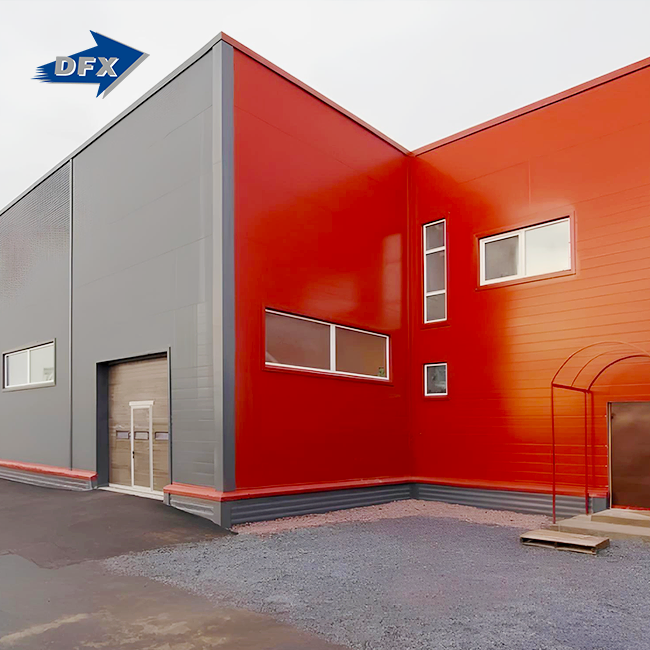
When goods need to be protected from the environment or kept safe, enclosed buildings are a must. For cold chain operations, pharmaceutical distribution, and handling of high-value technology, fully sealed, climate-controlled spaces are needed. The extra costs of materials and construction are balanced out by not having to pay for cargo damage claims and keeping the integrity of the product while it is being handled.
Evaluating Total Ownership Costs Beyond Initial Investment
The purchase price is only one part of the total costs of ownership. The amount of energy used, the length of time an action lasts, and the need for maintenance all have a big impact on long-term costs. Structures made of galvanized steel don't need much upkeep—regular inspections and painting of the fasteners should be enough to last for decades. Compared to other materials that need to be treated or replaced on a regular basis.
Operating costs are also affected by how energy efficient a business is. Insulated sandwich panel walls and roof systems help climate-controlled buildings save money on heating and cooling costs. The extra cost of insulating a building usually pays for itself in three to five years through lower utility bills. This makes it a good choice for businesses that need to control temperature.
Conclusion
The effectiveness of a logistics loading shed comes from carefully planning the structure, choosing the right materials, and adding features that make it work in a way that meets the needs of the business. Steel structures made to international quality standards last a long time, can be changed easily, and are cost-effective, all of which are things that procurement professionals look for. When you put together clear-span designs, weatherproof materials, and quick prefabricated construction, you get infrastructure assets that boost productivity and keep valuable cargo and equipment safe. Logistics loading sheds that are properly set up are strategic investments that pay off in measured ways, such as more operating uptime, less damage to cargo, and better workflow efficiency. They can be used for cold chain logistics, manufacturing operations, or farm storage.
FAQ
1. What shed dimensions work best for different operational scales?
Small delivery businesses that deal with 5–10 cars every day usually need logistics loading sheds that are 15–20 meters long and 8–10 meters deep. Medium-sized facilities that handle 20 to 30 trucks a day benefit from 25- to 30-meter spans that can accommodate more than one loading position at the same time. Large transport hubs that handle more than 50 trucks need 35–40-meter clear spans and 15–20-meter depths so that they can do more than just load and unload.
2. Do insulated designs significantly improve efficiency compared to non-insulated sheds?
When working in harsh climates or with temperature-sensitive goods, insulated buildings make things a lot more efficient. In medicine and food transport, temperature stability cuts cargo damage claims by 40 to 60%. 30–50% drops in energy costs will cover the cost of insulation within 3–5 years. For normal-temperature cargo in mild climates where weather protection rather than temperature control is more important, non-insulated designs are fine.
3. Are prefabricated sheds suitable for international logistics hub applications?
Prefabricated steel structures work great for international deployments because they are easy to install and can be shipped in containers, which saves time and money. Compliance with international standards and CE certification makes regulatory approvals easier in a wide range of markets. Optimized packing for containers saves the most money on shipping, and thorough installation plans let local contractors build structures without any special training. Hundreds of successfully completed foreign projects show that this method works for transportation needs all over the world.
Partner With DFX for Your Logistics Loading Shed Solution
DFX knows how hard it is for shipping operations to meet today's complex needs. Our engineering team has more than 12 years of experience developing and building steel structures for loading operations, car storage, and making sure equipment is safe. In our 40,000-square-meter production facility, we make all of the parts and keep quality under tight control from the time we choose the raw materials to the time they are shipped. Our logistics loading sheds are made with H-section beams and columns and C/Z steel purlins. Depending on your needs, you can choose from fully covered or open-sided designs. Every job comes with standard design, full fabrication, the best way to pack containers, and detailed assembly plans that make building easier. Email our team at jason@bigdirector.com to talk about your needs. As a qualified logistics loading shed maker, we can give you expert advice and cheap quotes that are made to fit the needs of your project.
References
1. Smith, J. & Anderson, K. (2021). Steel Structures in Modern Logistics Infrastructure: Design and Performance Analysis. Industrial Construction Press.
2. Thompson, R. (2020). "Optimizing Loading Dock Operations Through Structural Design," Journal of Supply Chain Management, Vol. 45(3), pp. 187-203.
3. Chen, L. & Martinez, P. (2022). Prefabricated Steel Buildings: Economic and Operational Benefits in Commercial Applications. International Construction Research Institute.
4. Williams, D. (2019). "Weather Protection Systems and Their Impact on Logistics Efficiency," Warehouse Operations Quarterly, Vol. 12(2), pp. 56-71.
5. European Committee for Standardization (2021). Structural Steel Design Standards for Industrial Applications. CEN Technical Report 2021-08.
6. Global Logistics Research Council (2022). Infrastructure Investment ROI Analysis: Loading Facilities and Material Handling Systems. GLRC Annual Industry Report.
Learn about our latest products and discounts through SMS or email