- English
- French
- German
- Portuguese
- Spanish
- Russian
- Japanese
- Korean
- Arabic
- Greek
- German
- Turkish
- Italian
- Danish
- Romanian
- Indonesian
- Czech
- Afrikaans
- Swedish
- Polish
- Basque
- Catalan
- Esperanto
- Hindi
- Lao
- Albanian
- Amharic
- Armenian
- Azerbaijani
- Belarusian
- Bengali
- Bosnian
- Bulgarian
- Cebuano
- Chichewa
- Corsican
- Croatian
- Dutch
- Estonian
- Filipino
- Finnish
- Frisian
- Galician
- Georgian
- Gujarati
- Haitian
- Hausa
- Hawaiian
- Hebrew
- Hmong
- Hungarian
- Icelandic
- Igbo
- Javanese
- Kannada
- Kazakh
- Khmer
- Kurdish
- Kyrgyz
- Latin
- Latvian
- Lithuanian
- Luxembou..
- Macedonian
- Malagasy
- Malay
- Malayalam
- Maltese
- Maori
- Marathi
- Mongolian
- Burmese
- Nepali
- Norwegian
- Pashto
- Persian
- Punjabi
- Serbian
- Sesotho
- Sinhala
- Slovak
- Slovenian
- Somali
- Samoan
- Scots Gaelic
- Shona
- Sindhi
- Sundanese
- Swahili
- Tajik
- Tamil
- Telugu
- Thai
- Ukrainian
- Urdu
- Uzbek
- Vietnamese
- Welsh
- Xhosa
- Yiddish
- Yoruba
- Zulu
Why Industrial Warehouse Steel Structure Is Popular in Industry?
The industrial warehouse steel structure steel construction of industrial warehouses is now an important part of modern production and transportation. This building solution is the most flexible I've ever seen. It combines quick construction times with high structural stability. Unlike traditional options made of concrete or wood, steel frames offer clear-span designs that make the most of useful space while holding heavy equipment and automatic storage systems that are mounted above. The modular-built method cuts down on on-site work by up to 50%, which lets project managers meet tight deadlines for delivery without lowering safety standards. As global supply lines require faster facility rollout and more operating freedom, steel buildings become the clear choice for businesses that want to get long-term value and the ability to grow their warehouse investments.

Understanding Industrial Warehouse Steel Structures
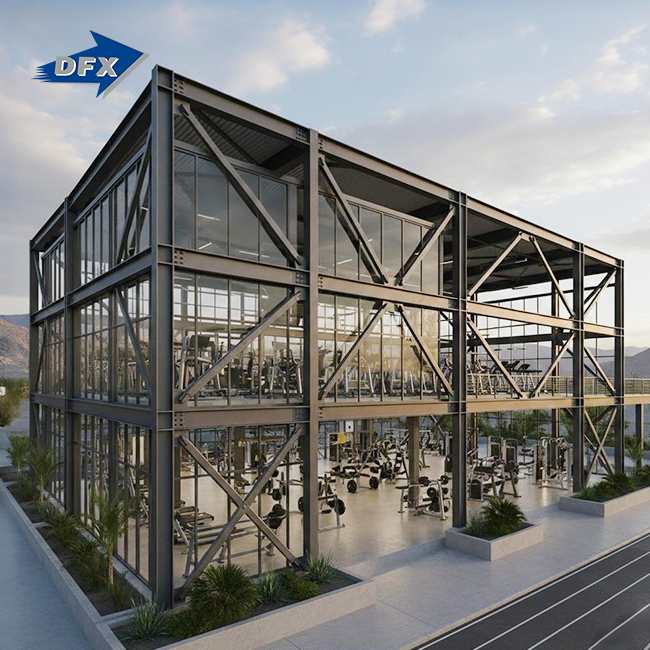
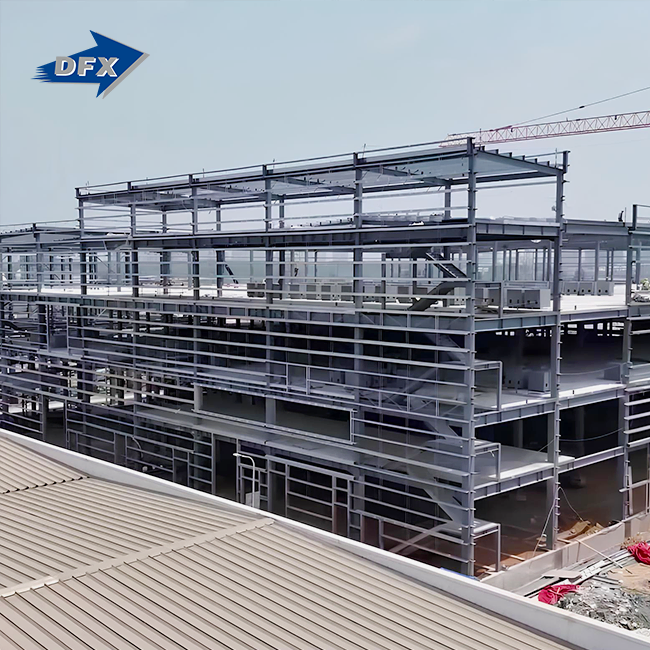
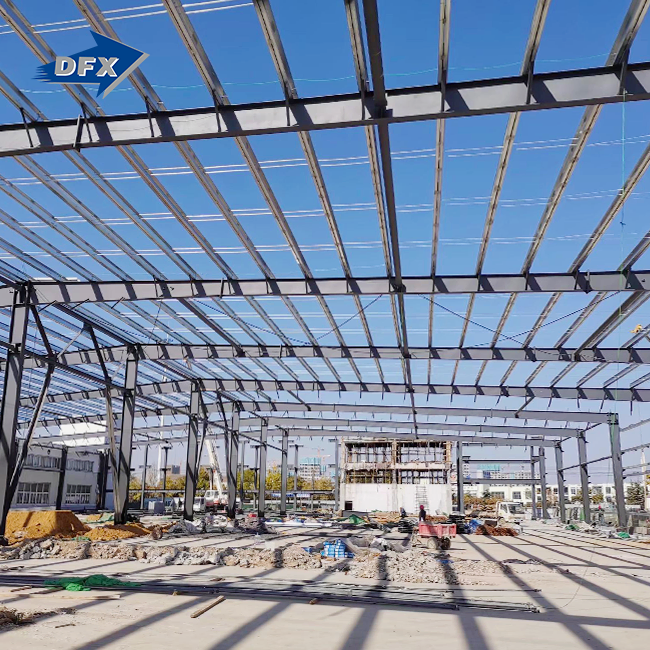
Modern warehouses are built around steel frames that are made up of precision-engineered parts that fit together perfectly when put together. The main frames of these buildings are made of Q345B or ASTM A572 Grade 50 steel H-beams, and the roof and wall loads are evenly distributed by galvanizing C/Z purlins. The flexible design lets the business grow without making major structure changes, which meets the changing needs of shipping operations.
Key Components and System Architecture
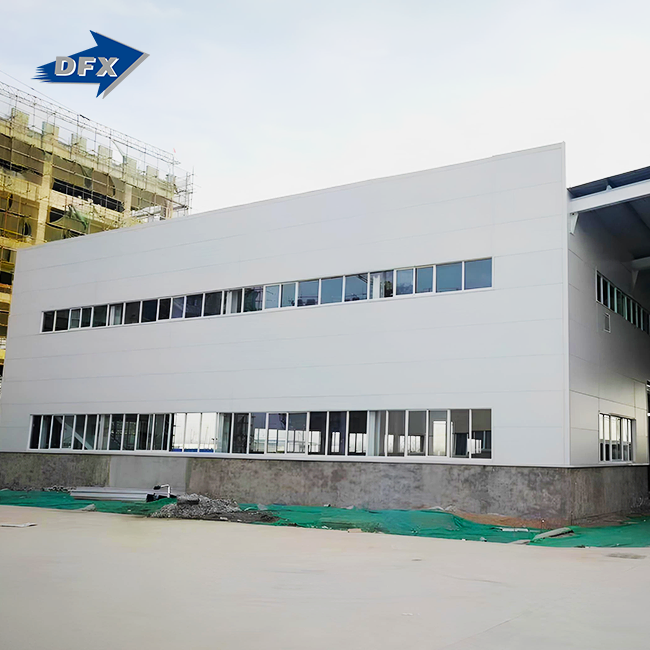
The main beams, stiff frames, and lateral braces make up the structural system. These all work together to protect the building from wind speeds over 280 km/h and snow loads of up to 3.0 kN/m². Cold-formed purlins with G90 galvanization are used as secondary parts. These provide rust protection in harsh industrial settings. Depending on the need for climate control, you can cover the walls and top with anything from corrugated steel sheets to insulated sandwich panels. This stacked method makes a shell that keeps out the weather while keeping the design open to changes in the future.
Strength and Durability Advantages
Steel doesn't need as much of a base as concrete does because steel is stronger. This cuts the cost of drilling by 20–30%. Because the material is bendable, it can absorb energy during earthquakes. This is very important for buildings in places where earthquakes happen often. If you cover things with epoxy zinc-rich paints or hot-dip galvanizing, they will last more than 50 years with little attention. Steel is very useful for places that work near the coast or with chemicals, and rust is a constant threat because of these reasons.
Sustainability and Environmental Benefits
Reusing steel over and over again doesn't hurt its quality, which fits with businesses' goals to be more environmentally friendly. Prefabrication cuts down on building trash by 60% compared to cast-in-place ways. Also, faster build times mean less damage to the site. It costs less to heat and cool a house when energy-efficient insulation systems are built into sandwich panels. Those sellers who have ISO 14001 environmental certifications are now given more weight by many buyers. They do this because they know that using green building methods saves money and boosts the image of their brand.
Why Are Steel Structures Preferred Over Traditional Warehouse Materials?
When a project starts and ends have a direct effect on its budget and working readiness. Thanks to factory-controlled manufacturing and bolt-connected assembly, steel warehouses can build protected enclosures 30–50% faster than concrete ones. This speed edge is very important for companies that are growing their production or for transportation companies that are trying to keep up with regular demand spikes.
Cost Efficiency and Total Ownership Value
For basic plans, the cost of steel materials ranges from $45 to $75 per square meter, which is about the same as concrete when you consider lower base costs and faster entry. Weather delays that happen when concrete is poured on-site are avoided with prefabrication, which keeps costs from going over budget. Inspections and touch-up coats every 7–10 years are all that's needed for maintenance. Concrete buildings, on the other hand, need to be fixed for cracks and water getting in. Over the course of 30 years, steel has lower total ownership costs by 15 to 25 percent when operating freedom and energy efficiency are taken into account.
Fire Resistance and Safety Performance
Intumescent coatings are used on modern industrial warehouse steel structure buildings. These coatings grow when they come in contact with heat, keeping the structure strong for 90 to 120 minutes during fires. This performance meets strict international standards and makes it safe for people to leave. Wooden buildings fall apart pretty quickly, and even though concrete is fireproof, it isn't flexible enough to handle dynamic loads from heavy machinery or earthquakes. When building places to store valuable items or automatic machinery, engineering firms choose steel because failures with other materials have too bad an effect.
Prefabrication Quality Control Benefits
Factory output allows for exact margins of less than 2 mm, which is not possible when using field-welded or cast concrete methods. Full-penetration welds that are made by automated welding lines are checked with ultrasound testing to make sure that every link meets AWS D1.1 standards. This level of quality control lowers the chance of callbacks and guarantee claims, which protects both workers and facility owners. More and more, purchasing managers want third-party inspection reports and mill licenses, which are easy for prefabrication providers to provide as standard.
How are industrial steel warehouses designed and built?
For warehouse projects to be successful, they need thorough planning that matches the practical needs of the client with the limitations of the place and the client's budget. Design teams look at how logistics move things and figure out the best column spacing—usually between 6 and 9 meters across and between 7.5 and 12 meters along—so that forklifts and shelving systems can work. Roof slopes of 1:10 to 1:10 help water drain and make it possible to put solar panels in the future.
Architectural Configurations and Design Variables
A single-slope roof is best for buildings that are less than 30 meters wide because it saves money on the frame and makes draining easy. Double-slope roof designs have bigger lengths and spread snow loads evenly while letting air flow naturally through the top. Depending on the storage tools, clearance heights can be anywhere from 8 to 15 meters. For automated recovery systems, clearance heights of 20 meters or more may be needed. Different temperature zones have different insulation requirements. For example, cold storage facilities need 150–200 mm polyurethane sandwich panels with U-values below 0.25 W/m²K, while temperate stores can get by with 50–75 mm panels.
Construction Workflow and Quality Assurance
After ground studies prove the building's bearing capacity, foundation work can begin. Steel's lighter dead loads usually require deeper footings. Anchor bolts that are buried in concrete piers link to base plates, and leveling shims make sure that the structure is vertically straight within a 1:500 range. Every three to five days, crane teams put up the main frames of 5,000-square-meter buildings. Next, the purlins are put in place, and the covering is attached. Inspecting officers check the torque values of bolts (Grade 8.8 bolts need 70–80% proof load) and the quality of the welds by testing them with magnetic particles. This methodical technique keeps the plan stable and keeps track of compliance with EN 1090 performance standards.
Maintenance Protocols for Long-Term Performance
Every year, checks focus on the stability of the layer, looking for rust bloom or mechanical damage in areas that get a lot of use. Facilities near the coast should be checked every six months because salt spray speeds up rusting. Every year, maintenance funds should set aside $0.50 to $1.20 per square meter for small fixes like replacing broken bolts, closing holes, and covering over small flaws. Maintenance on the drainage system keeps water from pooling, which damages the joints between the covering. These small steps help keep the building's value and keep it from needing expensive repairs that come from not taking care of it.
Cost Considerations and Procurement Guidance for Industrial Steel Warehouses
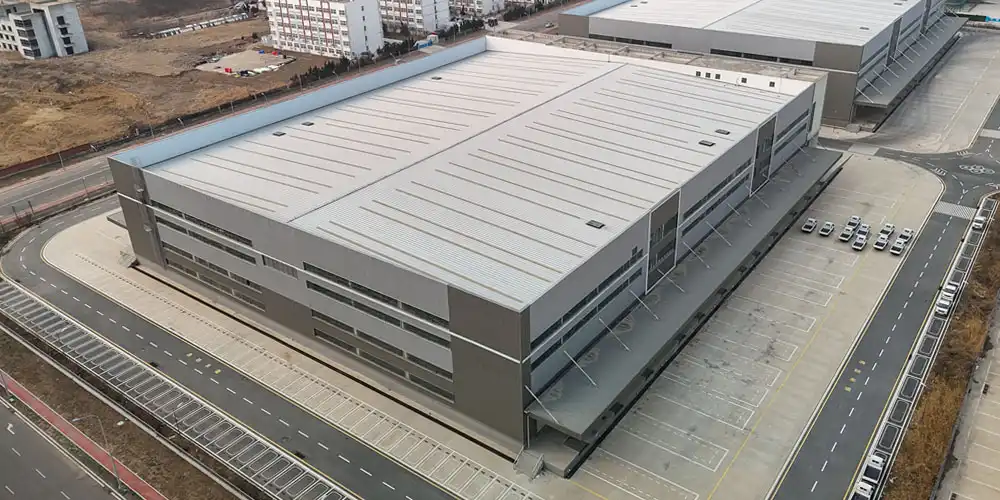
Transparent budget planning requires understanding both direct material costs and ancillary expenses that emerge during project execution. Steel frame packages account for 35-45% of total project costs, with foundation work (15-20%), cladding and insulation (20-25%), and mechanical systems (10-15%) comprising the balance. Companies often underestimate permit fees, utility connections, and site preparation—collectively adding 8-12% to baseline estimates.
Hidden Costs and Financial Planning
For industrial warehouse steel structures, foundation designs must address soil conditions revealed through boring tests; poor bearing capacity necessitates deeper pilings or ground improvement, potentially adding $8-$15 per square meter. Fire suppression systems, mandated by local codes for warehouses exceeding certain sizes, introduce $12-$20 per square meter in sprinkler installation costs. Procurement managers benefit from requesting itemized quotations that separate fabrication, delivery, and erection scopes, enabling accurate comparison between suppliers. Financing options—whether capital purchase, sale-leaseback arrangements, or build-to-suit leases—depend on corporate balance sheet strategies and tax optimization considerations.
Supplier Evaluation and Selection Criteria
Credible steel structure manufacturers maintain ISO 9001 certification and provide CE marking documentation demonstrating conformity with European product standards. Review past project portfolios matching your scale and complexity; a supplier experienced in 3,000-square-meter poultry barns may lack capabilities for 20,000-square-meter distribution centers with 15-ton crane systems. Request client references and conduct site visits to completed projects, observing fit-and-finish quality and operational performance. Payment terms typically follow milestone schedules: 30% deposit, 40% upon fabrication completion, 25% after delivery, and 5% retention released post-erection acceptance.
Preparing Effective Requests for Quotation
Detailed RFQs accelerate accurate pricing and reduce misunderstandings during execution. Specify design loads (wind, snow, and seismic); clearance heights; door quantities and sizes; insulation requirements; and any special features like crane runways or mezzanine platforms. Include site drawings showing property boundaries, utility locations, and access routes for delivery trucks. Clarify whether quotations should encompass full turnkey delivery, including foundation design and erection supervision, or fabrication-only supply. Well-prepared RFQs yield comparable proposals that facilitate objective supplier evaluation rather than lowest-price selection that often leads to disputes.
Top Steel Structure Warehouse Suppliers and Brand Insights
The global steel building industry features specialized manufacturers serving distinct market segments. Leading suppliers differentiate through engineering capabilities, production capacity, quality systems, and post-delivery support. Director Steel, established in 2011, operates 40,000 square meters of production facilities with annual capacity reaching 20,000 tons of welded sections and 50,000 square meters of sandwich panels. Their ISO 9001 certification and CE compliance demonstrate commitment to international standards.
Verifying Manufacturer Credentials
Third-party certifications provide objective proof of manufacturing competence and quality consistency. ISO 9001 ensures documented procedures govern production processes, while EN 1090 certification specifically addresses structural steelwork execution. Review welding procedure specifications (WPS) and welder qualification records—reputable fabricators employ certified welders meeting AWS or EN standards. Factory audits conducted by independent inspection agencies offer additional assurance, particularly for large-value projects where structural failure carries significant liability risks.
Service Differentiation and Value-Added Capabilities
Comprehensive suppliers offer in-house engineering teams capable of analyzing client operational requirements and translating them into optimized structural designs. This integrated approach eliminates coordination gaps between architects, engineers, and fabricators. Director Steel provides calculation services, fabrication, logistics coordination, and erection guidance—a turnkey scope that simplifies project management for clients lacking internal construction expertise. Such capabilities prove especially valuable for international projects where language barriers and unfamiliar regulatory environments complicate execution.
Evaluating Post-Delivery Support
Warranty terms reveal supplier confidence in industrial warehouse steel structure product quality. Standard structural warranties cover 10-15 years for main frames and 5-7 years for cladding and coatings, assuming proper maintenance. Clarify warranty coverage—does it include labor costs for defect correction, or only replacement materials? Responsive technical support during erection resolves field questions quickly, preventing installation errors that compromise performance. Suppliers maintaining regional service networks or partnerships with local contractors demonstrate commitment to customer success beyond initial delivery.
Conclusion
Steel structures dominate industrial warehousing because they solve critical business challenges: compressed construction schedules, budget predictability, operational flexibility, and long-term durability. The combination of modular prefabrication, superior strength-to-weight ratios, and minimal maintenance requirements delivers compelling lifecycle value. As logistics networks grow more complex and manufacturing demands evolve rapidly, the ability to expand or reconfigure facilities without major reconstruction becomes a competitive necessity. Procurement professionals who understand steel's technical advantages, evaluate suppliers rigorously, and prepare comprehensive project specifications position their organizations for successful infrastructure investments that support growth for decades.
FAQ
1. What timeline should I expect for steel warehouse construction?
Projects typically require 4-6 months from design approval to occupancy for facilities between 3,000-8,000 square meters. This includes 6-8 weeks for engineering and fabrication, 2-3 weeks for delivery and erection, and 4-6 weeks for cladding, utilities, and finishes. Prefabrication eliminates weather delays that extend concrete construction by months, making schedules highly predictable.
2. How much maintenance do steel warehouses require annually?
Annual maintenance involves visual inspections of coatings, fasteners, and drainage systems, costing approximately $0.80-$1.50 per square meter yearly. Touch-up painting addresses minor abrasions, while gutter cleaning prevents water damage. Properly maintained facilities require major refurbishment only after 15-20 years, primarily involving coating renewal rather than structural repairs.
3. Can steel warehouses be customized for specific operational needs?
Steel's modular nature accommodates extensive customization—crane runway beams rated for 5-100-ton capacities, mezzanine floors for office space, specialized ventilation for temperature-sensitive products, and explosion-venting panels for hazardous materials storage. Engineers optimize column spacing and clearance heights to match your material handling equipment and storage systems, ensuring operational efficiency from day one.
Partner with Experienced Industrial Warehouse Steel Structure Suppliers
Director Steel brings over 12 years of specialization in industrial warehouse steel structure manufacturing to your project. Our 40,000 square meter production facility, equipped with six automatic H-beam lines and advanced sandwich panel production, delivers 20,000 tons of annual capacity with ISO 9001 and CE certifications. We provide complete turnkey solutions—from engineering calculation through fabrication, logistics coordination, and erection guidance—serving logistics warehouses, storage centers, and distribution hubs worldwide. Our modular prefabricated systems feature H-beam primary frames and galvanized C/Z purlins, engineered for rapid deployment and decades of reliable service. Contact our team at jason@bigdirector.com to discuss your warehouse requirements and receive a detailed quotation from a trusted steel structure manufacturer committed to your project success.
References
1. American Institute of Steel Construction (AISC). Steel Design Guide Series 7: Industrial Buildings - Roofs to Anchor Rods. AISC Publications, 2018.
2. Chen, W.F., and Lui, E.M. Handbook of Structural Engineering, Second Edition. CRC Press, 2005.
3. Eurocode 3. Design of Steel Structures - Part 1-1: General Rules and Rules for Buildings. European Committee for Standardization, 2005.
4. Newman, Alexander. Metal Building Systems: Design and Specifications, Third Edition. McGraw-Hill Professional, 2016.
5. Salmon, Charles G., Johnson, John E., and Malhas, Faris A. Steel Structures: Design and Behavior, Fifth Edition. Pearson, 2008.
6. Trahair, N.S., Bradford, M.A., Nethercot, D.A., and Gardner, L. The Behaviour and Design of Steel Structures to EC3, Fourth Edition. Taylor & Francis, 2008.
Learn about our latest products and discounts through SMS or email