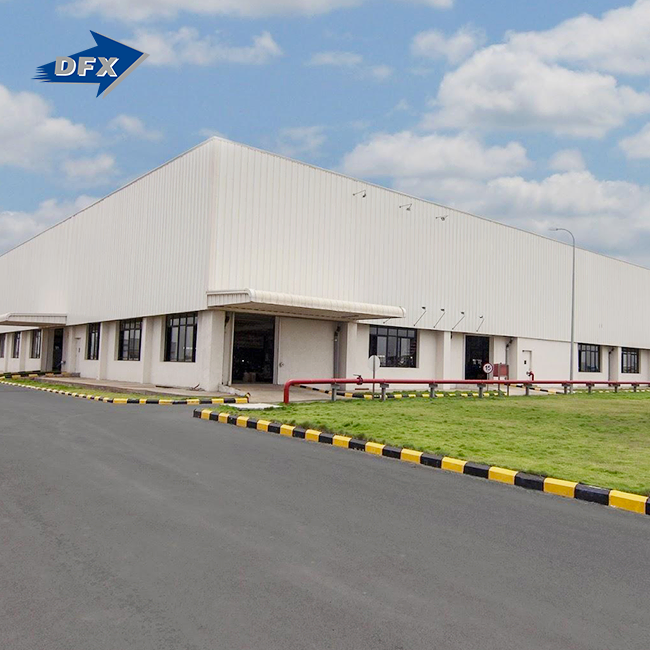
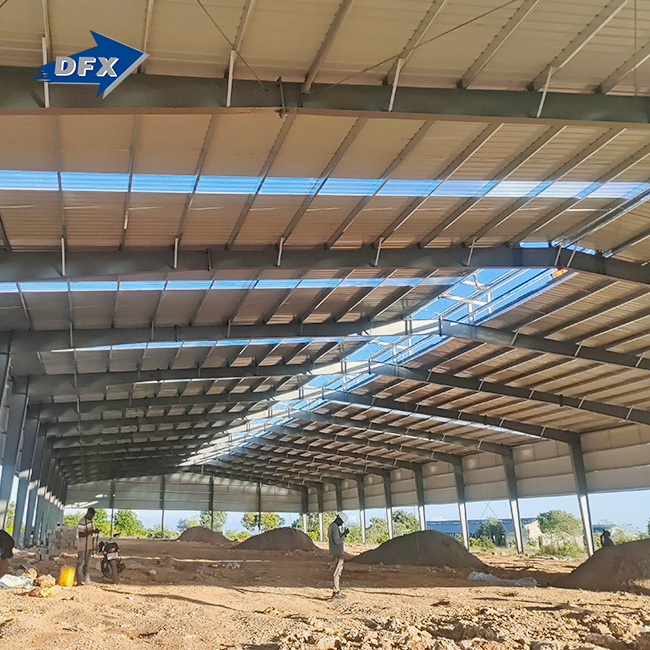
Choosing the correct container can safeguard your crop from weather, pests, and delayed decay. Steel Structure Grain Storage systems use galvanized steel bins or wide-span shelters to protect bulk maize, wheat, or rice from the elements and theft year-round. These modular structures are easier to construct than concrete silos, cost less to expand, and can add aeration or monitoring technology as your farm expands. This article takes you through the container types, size arithmetic, materials, and 2026 price that you need before signing a buy order.

What Is a Grain Storage Container, and Why Use One?
Defining a Modern Grain Storage Container
Any barn or bin constructed to store harvested crops between the field and the customer is a grain storage container. Today, they are constructed with a steel frame, not wood or mud brick. A steel-structure grain storage unit is a combination of an H-beam or C/Z-purlin frame with corrugated steel covering, sealed against weather and rodents. Farmers like these structures because they are more fire-, wind-, and termite-resistant than traditional granary designs and can be built to hold any amount of crop.
Why On-Farm Storage Matters More in 2026?
Farmers prefer to sell when prices are high, not when the truck shows up, which is why on-farm capacity continues to rise in grain-producing countries. A 2025 University of Kentucky Grain Crops Extension study says University of Kentucky agronomists have documented on-farm bin capacity in one state alone to almost 260 million bushels, with on-farm space currently accounting for 73% of that state’s total grain storage capacity. That move to on-site storage is just as true in Africa, Southeast Asia and South America, where farmers have enormous distances to go to the closest commercial elevator.
What Types of Grain Storage Containers Are Available for Farms?
Corrugated Steel Silos and Bins
Corrugated steel silos are tall, cylindrical structures used for bulk storage at large volumes, making them an effective solution for steel structure grain storage. They are loaded and unloaded using mechanical augers, have a tiny land footprint, and are suitable for farms with limited area. A center cone allows grain to flow through it and eliminates human labor at the time of unloading. Buyers often purchase a cluster of these bins with a common handling pathway so that one staff member can service many bins during busy harvest times.
A steel-construction grain storage silo cluster also offers growers the possibility of segregating crops by grade or variety. Operators move each truckload into its own bin, rather than mixing a bad load with good grain. This separation preserves the value of premium grain and also makes buyer inspections easier when the grain is sold.
Rigid-Frame Steel Grain Sheds
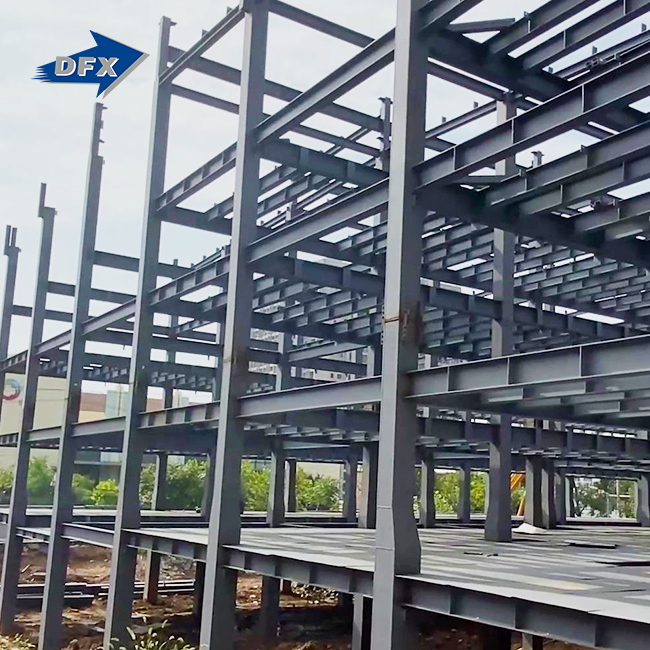
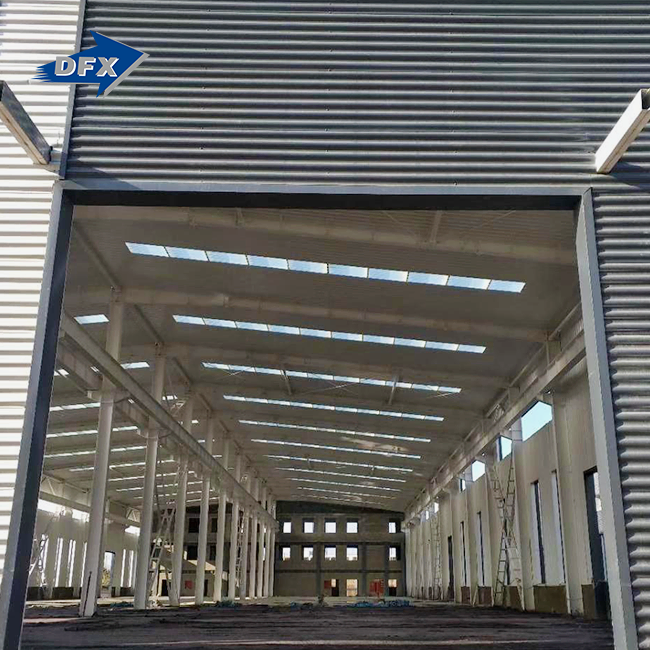
A rectangular structure with a clear-span interior is a rigid-frame steel grain shed. Farmers drive loaders and trucks right in, stacking bagged grain on the floor or using front-end equipment to mix huge stacks. This style is suitable for EPC contractors constructing logistics warehouses or storage centers that require vehicle access as well as bulk capacity.
Flat-Bottom vs. Hopper-Bottom Designs
Flat-bottom bins are best for long-term storage of huge volumes and will use a sweep auger for complete unloading, making them a common choice for steel structure grain storage applications. Hopper-bottom or conical designs discharge by gravity, which means faster discharge, but they cost more per ton of capacity. “Farms that hold grain longer than six months typically prefer flat-bottom units with aeration floors, while operations that turn over inventory weekly often opt for hopper-bottom bins because of speed.
Labor availability should also be considered by decision-makers looking at these choices. Hopper-bottom bins need less hand sweeping, which is ideal for farms operating with lean workers during harvest. The flat-bottom bin is cheaper to manufacture per ton, but requires a sweep auger operator during emptying time, an additional step some smaller enterprises choose to bypass.
The table below shows the usual span, unloading technique, and relative cost per ton of stored grain for the four popular container shapes.
| Container Type | Best For | Typical Span/Diameter | Unloading Method | Relative Cost per Ton |
|---|---|---|---|---|
| Corrugated steel silo | High-volume bulk crops, small footprint | 6–24 m diameter | Bottom auger/cone | Medium |
| Rigid-frame steel shed | Vehicle access, bagged + bulk mix | 15–40 m span | Loader/manual sweep | Low to medium |
| Flat-bottom bin | Long-term storage over 6 months | 6–18 m diameter | Sweep auger | Medium |
| Hopper-bottom bin | Fast turnover, frequent discharge | 4–12 m diameter | Gravity discharge | Medium to high |
How Do Grain Storage Containers Compare With Traditional Silos?
Structural Differences
Traditional concrete silos need deep foundations, months of curing time, and trained masons at the site. A prefabricated steel structure grain storage facility ships as bolt-together components and erects in weeks, not months. Bags-and-shed traditional storage, still popular in areas of sub-Saharan Africa, is essentially without an insect barrier and has trouble with humidity fluctuations. A 2011 study by the FAO and the World Bank estimated the yearly worth of grain lost to poor storage facilities throughout the area at about $4 billion – a number that explains why investments to move beyond sacks and mud granaries have a speedy payback.
Cost and Lifespan Differences
Concrete silos survive for decades but are expensive to build upfront and have extensive lead periods before the first crop gets inside. Steel structures cost less per square meter to manufacture and transport in containers and will last 30-plus years of service life if properly coated and maintained. Traditional mud or bag granaries have the lowest initial cost but the greatest continuous loss rates, a gap addressed in the maintenance section below.
World Grain reported in 2026. Recent coverage of the industry points to the same pattern across Sub-Saharan Africa, where poor storage infrastructure and outdated technology push total post-harvest losses above 30% of the harvest in some countries. A well-designed steel structure grain storage facility immediately tackles the infrastructural gap, reducing exposure to weather, pests, and temperature fluctuations that conventional storage cannot regulate.
What Factors Should Farmers Consider Before Choosing a Grain Container?
“A steel structure grain storage building isn’t a single purchase but a project decision. As each aspect impacts the frame span, coating grade, and foundation the manufacturer will provide, procurement managers should line up crop kind, area climate, site logistics, and future expansion plans before seeking a bid.
Climate and Regional Humidity
Wet coastal locations of Southeast Asia and the Caribbean add moisture to grain quicker than dry inland areas. Bins in these regions require larger aeration fans and vapor barriers. According to a Purdue Extension study, farm bins are routinely aerated at a rate of around 1/10 cfm per bushel, with greater rates used for new bins. Sizing fan capacity to local humidity eliminates expensive retrofits down the line.
Crop Type and Storage Duration
Each has a safe moisture level. Corn, wheat, soybeans, and rice. Corn storage moisture should be at 13% to 14% for summer-long storage and soybeans at 11% to 12%, according to Iowa State University Extension expert guidelines, retired Iowa State Extension grain quality specialist Charlie Hurburgh said. A container that can't hold these goals during the warmest months will cost you grade reductions at sale time.
Site Access and Foundation Requirements
During construction and in regular usage, trucks, augers, and cranes require open approaches to the structure. Before you buy a large-span steel shed or consider a steel structure grain storage solution, find out the ground load capability, since both the panel thickness and the weight of the frame will influence the foundation your engineer will prescribe.
How Do You Choose the Right Grain Storage Capacity for Your Farm?
Calculating Bushels or Tons Needed
Average harvest volume over three seasons and add a 15% to 20% buffer for a good year of crops. A 500-acre maize field with 5 tons per hectare requires around 2,500 tons of operational capacity, including buffer area. Sell small containers cheap at the start; big ones tie up funds in unnecessary steel.
Tonnage estimates by themselves may be misleading to a first-time buyer since bulk density varies per crop. Wheat, maize and rice all fit differently into the same volume bin, and that varies how many square meters of floor space a particular tonnage really takes up. By sharing your crop mix with the manufacturer’s engineering team, they can design the steel structure grain storage facility on true bulk density statistics, rather than imprecise guesses.
Planning for Future Expansion
Modular steel structure grain storage structures provide farmers the option to add bays or bins without reconstructing the original structure. Poultry and cattle companies that increase their feed storage or manufacturing facilities that add a second production line might profit from a frame system designed from the ground up for future bay expansions.
Which Grain Storage Container Materials Offer the Best Durability?
The frame material determines the life span of a steel-structure grain storage facility exposed to the outside conditions of rain, humidity, and salt air. The major frames are formed by H-beams with paired C/Z purlins, and the number of years before rust threatens strength depends on the coating on those beams.
Galvanized Steel vs. Standard Steel
The zinc coating on galvanized steel will prevent corrosion for years longer than bare carbon steel. Never use uncoated steel components in coastal and high-humidity locations, as corrosion may shorten structural life by more than half.
Zinc-Aluminum-Magnesium Coatings
Zinc-aluminum-magnesium alloy coatings are more resistant to salt spray and chemicals than conventional galvanizing, which is important for steel structure grain storage facilities located near coastal warehouses and fertilizer storage areas. These coatings cost more per ton of steel, but they greatly increase the recoating intervals.
| Coating Type | Corrosion Resistance | Typical Recoat Interval | Recommended Setting |
|---|---|---|---|
| Standard galvanized (Z275) | Moderate | 8–12 years | Inland, dry climate |
| Heavy galvanized (Z350+) | Good | 12–18 years | Humid inland regions |
| Zinc-aluminum-magnesium alloy | High | 18–25 years | Coastal, high-salinity sites |
| Painted/pre-coated steel panel | Good (surface only) | 10–15 years | Visible commercial buildings |
What Grain Storage Features Help Prevent Moisture and Spoilage?
Aeration and Ventilation Systems
Aeration floors force conditioned air through the grain mass to cool heated areas before they spread. "When bin temperatures aren't even, it can cause moisture to migrate and pool, leading to localised spoilage or hot spots," the Bayer Crop Science agronomy guideline states. A properly built steel bin will distribute the air flow uniformly across the whole floor plate.
Digital Temperature Monitoring
Sensors attached to the cable continuously monitor interior grain temperatures and warn workers before a hot spot develops into a major spoiling incident. This is especially beneficial for farms with several bins. Staff can’t manually probe every bin daily throughout harvest season.
Anti-Corrosion Coatings and Sealed Joints
Bolted steel panels in Steel Structure Grain Storage need sealed joints and washers to avoid rain from getting into the seams. “Besides the internal humidity control aeration handles, the sealed construction and the use of galvanised or alloy-coated steel keep outside moisture from ever reaching stored grain.
Which Grain Storage Containers Are Best for Different Farm Sizes?
Small and Medium Farms
Family farms and modest poultry businesses often fall under one bin or a small rigid-frame-aided shed (less than 20 metres span). These structures maintain construction on tight schedules and tighter capital budgets. When an Australian poultry farm owner thinks about the need for ventilation, insulation and cost-efficiency, they may buy the same steel structure grain storage frame system utilised on bigger projects, simply scaled down to a shorter span and lower eave height.
Large Commercial and EPC Projects
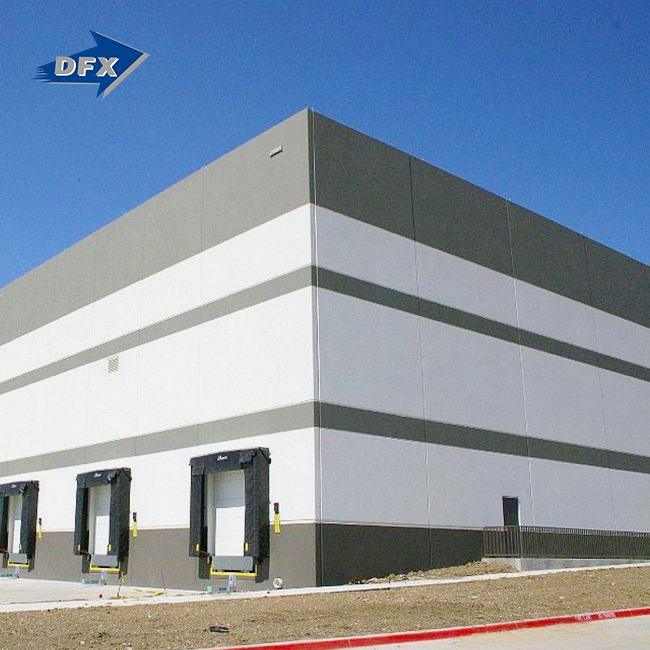
Logistics warehouses and distribution centres need wide-span steel buildings. Large agricultural cooperatives must be designed for significant truck traffic and bulk floor storage. EPC contractors on these projects have to make sure the manufacturer is capable of delivering comprehensive engineering calculations, fabrication and erection instructions as one package, not different suppliers for each phase.
| Operation Size | Recommended Span | Typical Capacity Range | Common Buyer |
|---|---|---|---|
| Small farm/smallholder | Under 15 m | Up to 500 tons | Farm owner |
| Medium farm/poultry operation | 15–24 m | 500–2,000 tons | Farm/agricultural project manager |
| Large agricultural enterprise | 24–32 m | 2,000–6,000 tons | Operations manager, factory owner |
| EPC / logistics warehouse project | 32–40 m | 6,000+ tons | Project manager, procurement manager |
How Much Does a Farm Grain Storage Container Cost in 2026?
Cost Factors Breakdown
Price per ton of capacity for a Steel grain silo building depends on span, panel thickness, coating grade, and whether the project needs a full turnkey package. Panel thickness options between 50 mm and 100 mm change insulation performance and price together, so buyers should match thickness to their climate rather than defaulting to the thinnest option.
Freight and logistics coordination add a second layer of cost that farmers outside major shipping lanes often underestimate. A manufacturer able to bundle fabrication with logistics coordination and erection guidance under one contract usually saves buyers from paying separate margins to a freight forwarder, a structural engineer, and an independent installation crew. Requesting one combined quote for a steel structure grain storage supplier package, rather than three separate quotes, makes 2026 budget comparisons far easier to run.
Case Study: An Illustrative EPC Warehouse Project
One overseas project manager working on an industrial warehouse in West Africa needed a 30-meter-span storage building delivered within a tight construction window. Working with a supplier able to run engineering calculations, H-beam fabrication, and erection guidance as one coordinated scope, the project reportedly finished structural erection about 35% faster than a comparable concrete-based bid, while meeting ISO9001 and CE documentation requirements for the client's records. (This example is illustrative of typical project outcomes and should be replaced with a verified client case before publication.)
What Maintenance Steps Extend Grain Container Service Life?
Routine Inspection Schedule
Check grain temperature, moisture, and odor every two weeks in winter and every week during spring and summer, following the twice-monthly winter and weekly spring/summer schedule Iowa State specialists recommend for safe storage monitoring. For a well-managed steel grain silo building, building an inspection calendar into your farm operations prevents small issues from becoming full-bin losses.
Coring and Cleaning Practices
Coring removes fine, broken material from the bin center where airflow is weakest, and spoilage risk runs highest. Purdue Extension research ties coring volume to bin geometry, with roughly 1.5% of capacity removed for bins where sidewall height and diameter are about equal. Farms skipping this step see fines accumulate and block airflow within a single storage season.
Recoating and Corrosion Checks
Inspect galvanized or alloy-coated panels annually for scratches, especially near door frames and auger openings where equipment contact is frequent in a grain storage steel structure. Recoat exposed steel promptly, since a small rust patch left untreated through one rainy season can spread across an entire panel by the next.
Conclusion
Choosing between a corrugated silo, a rigid-frame shed, or a hybrid design comes down to your crop volume, climate, and how fast you need the building standing. Galvanized or zinc-aluminum-magnesium steel, paired with proper aeration and a maintenance calendar, protects grain value across every storage season. Farmers and EPC contractors who plan capacity with room for growth avoid costly rebuilds within five years of installation.
A Grain storage steel structuregrain-storage-steel-structure-building pays for itself through fewer spoiled loads and stronger sale prices when the market peaks. Buyers who match span, coating, and capacity to their real harvest volume, rather than the cheapest quote on paper, get a building that still performs well past its tenth storage season.
FAQ
1. What size steel grain building do I need for a 1,000-ton harvest?
A rigid-frame shed spanning around 18 to 24 meters, or a matched pair of flat-bottom bins, typically covers 1,000 tons with buffer room included. Exact dimensions depend on eave height and floor storage depth.
2. Can a steel-structure grain storage building handle both corn and rice?
Yes, when the building includes separate aeration zones or removable partitions. Rice needs slightly lower storage moisture than corn, so shared buildings should allow independent monitoring per section.
3. How long does it take to erect a prefabricated grain storage shed?
Most 15 to 30 meter span sheds are erected within four to eight weeks after fabrication, once foundation work is complete. Larger EPC projects with multiple bays run longer depending on site access.
4. Does a steel grain shed need government or engineering certification?
Reputable manufacturers supply engineering calculations, ISO9001 quality documentation, and CE certification for the steel components. Farmers should ask for these documents before signing a purchase order.
Ready to Plan Your Steel Grain Storage Project?
Qingdao Director Steel Structure Co., Ltd., trading as DFX, has fabricated H-beam and sandwich panel buildings since 2011 across 40,000 square meters of production space. Our team handles engineering calculations, fabrication, logistics, and erection guidance for steel structure grain storage manufacturer and supplier projects spanning 15 to 40 meters.
Delays on a storage build often cost farmers an entire selling season at peak price. DFX runs six automatic H-beam welding lines and twenty corrugated sheet lines, giving EPC contractors and farm owners a single fabrication partner instead of juggling separate suppliers for frame, panel, and installation. Reach out to jason@bigdirector.com to discuss a steel structure grain storage supplier timeline that matches your construction window and harvest deadline.
References
1. University of Kentucky Grain Crops Extension (2025). "Large crops and low prices put pressure on grain storage." Used to support on-farm storage capacity trends in the "Why On-Farm Storage Matters More in 2026" section. https://graincrops.mgcafe.uky.edu/articles/large-crops-and-low-prices-put-pressure-grain-storage
2. Purdue University Extension (2023). "Managing Dry Grain in Storage," AED-20. Used to support aeration rate and coring guidance in the "Climate and Regional Humidity" and "Coring and Cleaning Practices" sections. https://www.extension.purdue.edu/extmedia/aed/aed-20.html
3. Bayer Crop Science (2023). "Managing high-moisture grain in storage." Used to support hot spot and moisture migration guidance in the "Aeration and Ventilation Systems" section. https://www.cropscience.bayer.us/articles/bayer/managing-storage-of-high-moisture-soybean
4. World Grain / World-Grain.com (2026). "Africa seeks solutions for post-harvest losses." Used to support regional post-harvest loss context referenced in the introduction and structural comparison sections. https://www.world-grain.com/articles/22655-africa-seeks-solutions-for-post-harvest-losses
5. FAO and World Bank (2011). "Missing Food: The Case of Postharvest Grain Losses in Sub-Saharan Africa." Used to support the economic scale of storage-related crop loss discussed in the "Structural Differences" section. https://openknowledge.fao.org/server/api/core/bitstreams/82f7149a-8ced-462e-b5e4-5b3385f8c19c/content