- English
- French
- German
- Portuguese
- Spanish
- Russian
- Japanese
- Korean
- Arabic
- Greek
- German
- Turkish
- Italian
- Danish
- Romanian
- Indonesian
- Czech
- Afrikaans
- Swedish
- Polish
- Basque
- Catalan
- Esperanto
- Hindi
- Lao
- Albanian
- Amharic
- Armenian
- Azerbaijani
- Belarusian
- Bengali
- Bosnian
- Bulgarian
- Cebuano
- Chichewa
- Corsican
- Croatian
- Dutch
- Estonian
- Filipino
- Finnish
- Frisian
- Galician
- Georgian
- Gujarati
- Haitian
- Hausa
- Hawaiian
- Hebrew
- Hmong
- Hungarian
- Icelandic
- Igbo
- Javanese
- Kannada
- Kazakh
- Khmer
- Kurdish
- Kyrgyz
- Latin
- Latvian
- Lithuanian
- Luxembou..
- Macedonian
- Malagasy
- Malay
- Malayalam
- Maltese
- Maori
- Marathi
- Mongolian
- Burmese
- Nepali
- Norwegian
- Pashto
- Persian
- Punjabi
- Serbian
- Sesotho
- Sinhala
- Slovak
- Slovenian
- Somali
- Samoan
- Scots Gaelic
- Shona
- Sindhi
- Sundanese
- Swahili
- Tajik
- Tamil
- Telugu
- Thai
- Ukrainian
- Urdu
- Uzbek
- Vietnamese
- Welsh
- Xhosa
- Yiddish
- Yoruba
- Zulu
Earthquake resistance of steel frame school buildings in Asia
In parts of Asia that are prone to earthquakes, the safety of Steel Structure School Building schools is still a major worry. When shocks happen, traditional buildings made of stone and concrete often fall apart in terrible ways, putting students' lives at risk and stopping them from learning for years. Steel Structure School Building solutions have become a popular choice because they are very resistant to earthquakes and are designed to be flexible and bendable. As a result, these buildings effectively receive and release seismic energy, limiting damage and allowing for quick repair. To get school buildings that can withstand earthquakes, you need to know a lot about how materials work, local building rules, and the value of things over their whole life. This is important information for construction contractors, facility managers, and government project partners.

Understanding Earthquake Resistance in Steel Frame School Buildings
Structural Components and Design PhilosophyThe
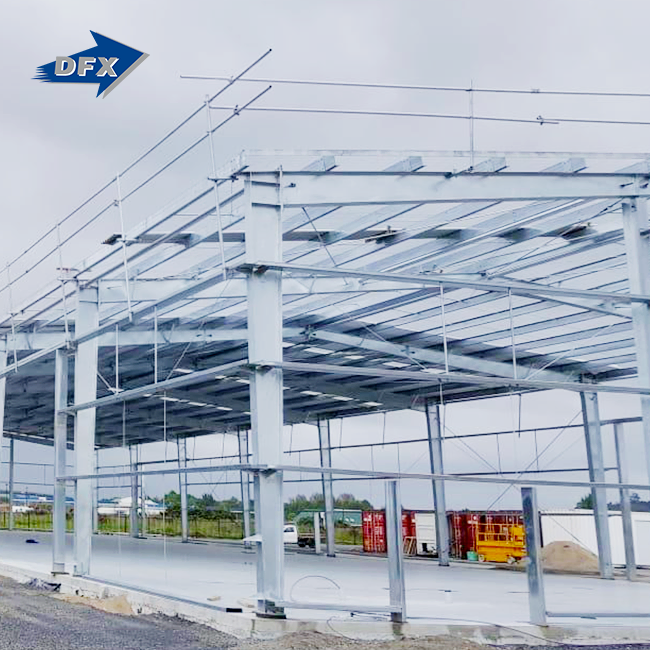
Steel Structure School Building has a load-bearing structure made up of H-beams, box columns, and C/Z purlins, which are very different from standard reinforced concrete structures. Steel column-beam frames (Q235/Q355 grade steel), composite floor systems, and strategic steel support to improve horizontal stability are all part of the structural system. Unlike hard concrete, steel is more flexible than concrete, so it can bend and change during earthquakes without breaking. This feature lets the building take in energy when the ground moves, which lowers the risk of it falling down suddenly. Working on seismic projects in the Philippines and Indonesia for years has shown me that this kind of flexibility makes shocks safer in a way that can be measured.
Regional Seismic Codes and Compliance Standards
Asian countries have strict earthquake building rules that are based on the geological risks in the area. The Building Standard Law in Japan, the GB 50011 seismic code in China, and SNI 1726 in Indonesia all have detailed rules about drift limits, base shear formulas, and component detailing. Following the rules for ISO 9001 quality control systems and getting CE certification makes sure that steel parts meet foreign standards. Mill Test Certificates (MTC) that list the chemical composition and mechanical qualities of a product are used by procurement workers to make sure that providers follow these standards. In high-risk areas, projects often need reports from a third party that use nonlinear time-history analysis or reaction spectrum methods to ensure that the structure is strong enough.
Advantages of Steel Frame Structures for School Buildings in Seismic Zones
Superior Seismic Resilience Compared to Traditional Materials
When you look at the damage patterns Educational facility after an earthquake, steel clearly performs better than other materials. Often, brittle failure modes in concrete buildings show up as shear cracks in columns, spalling of cover concrete, and bond deterioration in reinforcing. Even though timber frames are flexible, they can break over time because of water damage and link problems. Steel Structure School Building facilities, on the other hand, keep their structural stability even after big earthquakes, and usually only need small repairs to things like wall panels or ceilings that aren't structural. Because it will take less time to fix things, schools can get back to normal in weeks instead of months, which keeps students from being too disrupted.
Durability and Maintenance Efficiency
Steel-framed school buildings are more likely to last for a long time because of the following:
- Corrosion Protection Systems: Hot-dip galvanization (600g/m² zinc covering) or epoxy zinc-rich bases with polyurethane topcoats make sure that systems last 50 to 100 years, even in coastal areas. Testing with salt spray according to ASTM B117 proves resistance to chloride exposure, which is very important for schools on the coasts of the Philippines and Indonesia.
- Fire Resistance Engineering: In the field of fire resistance engineering, intumescent layers spread when heated, keeping steel members safe and able to hold their weight for up to three hours. This passive fire protection meets the strict codes for educational facilities without having to put active control systems in each structure bay.
- Lifecycle Cost Advantages: Steel buildings don't need to be fixed over and over again like concrete does because of damage from alkali-silica reactions, freeze-thaw cycles, and carbonation-induced reinforcement rust. When upkeep intervals are taken into account, a 30-year cost study usually shows savings of 20–35% compared to a standard building.
Enhanced Safety Features and Recovery Capacity
Modern steel-framed schools have seismic dampers, which are devices that use viscous fluids or systems that work by absorbing friction to absorb even more earthquake energy. Base isolation systems, which separate the structure from ground movement, are easier to add to steel frames than to concrete ones that are already built. Because steel buildings are modular, they can be quickly put back together after a disaster. Damaged bays can be changed without tearing down neighboring parts. This ability to be changed quickly and easily was very helpful after the 2011 Tohoku earthquake, when temporary schools were quickly set up using modular steel classes while the permanent buildings Educational facility were inspected and fixed.
Construction and Procurement Process of Earthquake-Resistant Steel Frame School Buildings
Design and Engineering Phase
The first steps in a project's lifecycle are building plan design and structural modeling services. Suppliers like Director Steel, which has 40,000 square meters of production space in Qingdao, can do both planning and construction at the same time. Engineers study the soil, figure out the seismic risk factors (like peak ground acceleration and site class), and use finite element analysis to model how structures will react to earthquakes. This step makes thorough fabrication models and bills of materials, which let you figure out how much the whole thing will cost. Procurement managers should make sure that the design services they offer include seismic performance goals that are in line with the interests of all stakeholders, such as life safety, instant occupation, or preventing collapse.
Modular Fabrication and Quality Assurance
Automated welded H-beam production lines are used in controlled workplace settings to make things. Protocols for quality control include:
- Verification of raw material MTCs that show compliance with Q235/Q355 norms is correct
- Non-Destructive Testing (NDT) of welds: Ultrasonic Testing (UT) is used for full-penetration joints, and Magnetic Particle Testing (MT) is used for fillet welds to make sure the links are crack-free according to AWS D1.1.
- Dimensional accuracy checks with ±2mm limits for bolt hole alignment, which keeps fit-up delays from happening on-site.
- Dry Film Thickness (DFT) readings: ≥120μm of anticorrosion coatings' thickness readings were confirmed by salt spray tests.
Before they are shipped, pre-assembly trials in the plant make sure that all the parts fit together perfectly. Compared to cast-in-place concrete, this prefabrication method cuts building time on-site by 30–50%. This speeds up project output to meet academic schedule needs for the Steel Structure School Building project.
Supplier Selection Criteria
People who work in procurement should look at possible steel building contractors based on:
- Proof of ISO 9001 quality systems, CE marking for sale to Europe, and compliance with COC or PVOC inspection plans
- Production capacity measures include the ability to make 20,000 tons of H-beams per year, having access to C/Z section steel lines, and being able to make sandwich panels.
- Support after the sale, such as guarantee terms (10–20 years for structural frames), expert training for local repair teams, and access to spare parts
- Regional project portfolio showing successful performance in similar seismic zones, a modular classroom with client references from building companies or EPC firms that can be checked.
Cost Considerations and Decision-Making Criteria for Procurement
Upfront Investment Versus Lifecycle Savings
In terms of starting prices, Steel Structure School Building facilities are usually 5–15% more expensive than regular concrete buildings, measured in square meters. This extra charge covers the cost of materials, special tools for making things, and engineering design services. Total cost of ownership estimates, on the other hand, show that there are big long-term savings. Less base work is needed because steel is lighter, which means footing sizes can be cut by 20–30%. This means lower civil works costs. The faster construction schedule saves money because financing terms are shorter and the building can be used sooner, allowing tuition income or practical use months before solid alternatives.
Financing Strategies and Bulk Procurement
Volume price methods work well for big projects that build up schools. Ordering steel parts for more than one school campus—for example, a regional education authority building ten buildings at the same time—can get 8–12% off the price of the materials and make the production schedule more efficient. These projects are usually paid for by public-private partnerships (PPPs). The faster building cycle of steel makes internal rate of return (IRR) calculations easier. Checklists for purchases should make sure that sellers can handle shipments that happen in stages, manage the logistics of the supply chain for projects that span multiple sites, and offer technical help in the area through regional service centers or partnerships.
Case Studies and Future Trends in Earthquake-Resistant Steel Frame School Buildings
Proven Performance in Seismic Hotspots
After the 2016 Kumamoto earthquakes, Japan's efforts to rebuild showed how strong Steel Structure School Building facilities can be. Japanese earthquake standards meant that schools could withstand high ground accelerations of more than 1.0g with little damage to the structure, so they could be reopened quickly after inspections. Taiwan's use of steel-framed primary schools in Hualien County, which is prone to earthquakes with magnitudes 6 or higher, showed that well-designed links and bracing systems keep buildings from falling down even during strong shaking. After the 2018 earthquake in Lombok, Indonesia, used modular steel classes to get 3,000 students back to permanent buildings in eight months, compared to the usual 18–24 month time frame for concrete rebuilding.
Innovative Technologies and Smart Monitoring
New technologies that track the health of structures in real time make them more resistant to earthquakes. Fiber-optic sensors built into important steel parts measure strain and find damage before it can be seen with the naked eye. Vanadium microalloying is added to advanced steel alloys to make them easier to solder while keeping their high hardness at low temperatures. This is important for schools in northern Asian climates. Prefabricated bathroom cores, stair assemblies, and mechanical chases are now used in modular buildings. This cuts down on the time needed for tradespeople to coordinate on-site modular classrooms and speeds up the project's finish. These improvements ensure steel remains a superior material.
Regulatory Evolution and Climate Considerations
As seismic codes change, they require performance-based design more and more. This means that engineers have to show specific fall odds instead of just following the rules. These complex studies are made easier by steel's predictable inelastic behavior. This gives people who work in buying faith in the safety levels that have been measured. Climate change brings about new issues to think about. For example, rising temperatures change the way thermal expansion joints are detailed, and stronger typhoons need stronger wind-load capacities. These needs can be met by steel buildings with better material grades and connection systems that can be adjusted. To protect investments for the future, project managers should plan for code changes that will need these features.
Conclusion
For schools in Asia's seismically busy areas, Steel Structure School Building construction is the best way to make sure that the buildings are safe during earthquakes. The material is naturally flexible, and when paired with advanced manufacturing methods and strict quality control, structures are made that protect kids while keeping costs as low as possible over their entire life. When procurement professionals choose steel-framed school buildings, they get faster construction times, less upkeep work, and a track record of being strong after a disaster. Using modular methods, approved manufacturing processes, and full after-sales support from well-known providers guarantees the success of the project from the planning stages to decades of use.
FAQ
1. What lifespan can I expect from a steel frame school building in seismic zones?
With corrosion protection methods like hot-dip galvanization and high-performance epoxy coatings, Steel Structure School Building facilities that are well taken care of can last 50 to 100 years. Routine checkups every five years, which check the state of the coating and the soundness of the connections, make things last longer. The structure's core will always work, and the skin can be updated on a regular basis to meet aesthetic or functional needs without having to replace the steel frame.
2. How does steel compare to concrete regarding cost-effectiveness?
Steel costs 5–15% more at first, but it saves 20–35% over its lifetime because it needs less upkeep, is built faster (30–50%), and needs fewer fixes after an earthquake. The lighter weight lowers the cost of the base by 20 to 30 percent, which helps to offset the higher cost of materials. When looking at the total cost of ownership over 30 years, steel is always better in areas that are prone to earthquakes.
3. Which certifications guarantee earthquake-resistant quality?
Check for ISO 9001 quality control certification, CE marking to show that it meets European standards, and area approvals such as COC or PVOC. Check to see if the plan of the building meets international (ASCE 360, Eurocode 3) and local (GB 50011 in China, SNI 1726 in Indonesia) seismic rules. Ask for NDT results that show the quality of the welds according to AWS D1.1 and MTC confirmation of the steel grades.
Partner with Trusted Steel Structure Specialists for Seismic Safety
Director Steel was founded in 2011 and has over 12 years of experience as a maker of Steel Structure School Building systems for educational infrastructure projects in Asia's high-risk earthquake zones. Our 40,000-square-meter factory in Qingdao has 200 trained fabricators working on six automatic H-beam lines. ISO 9001-certified methods make sure that the quality is always the same. We offer complete solutions that include architectural layout design, structural calculations that meet local earthquake codes, project-based manufacturing, and help during installation on-site. Our steel frame systems are made of Q235/Q355 grade steel and have designed bracing and composite floor parts. They are resistant to earthquakes, as shown by their CE approval and compliance with international standards. Contacting jason@bigdirector.com for project-specific technical advice and quotes that meet your specific seismic safety needs is the best way for procurement managers to find reliable suppliers in areas that are prone to earthquakes.
References
1. Japan Building Disaster Prevention Association. (2019). Seismic Evaluation and Retrofit Design Guidelines for Steel Structures. Tokyo: JBDPA Technical Standards.
2. Chen, W., & Lui, E. M. (2018). Earthquake Engineering for Structural Design in Asia-Pacific Regions. Singapore: World Scientific Publishing.
3. Indonesian National Standards Agency. (2020). SNI 1726: Seismic Design Code for Building Structures. Jakarta: BSN Publications.
4. Taiwan Architecture and Building Center. (2017). Performance-Based Seismic Design of Steel School Buildings. Taipei: TABC Research Series.
5. Asian Development Bank. (2021). Cost-Benefit Analysis of Earthquake-Resistant School Infrastructure in Southeast Asia. Manila: ADB Infrastructure Report.
6. International Association for Earthquake Engineering. (2022). Steel Structures in High Seismicity Zones: Design Principles and Case Studies. Tokyo: IAEE Monograph Series.
Learn about our latest products and discounts through SMS or email