- English
- French
- German
- Portuguese
- Spanish
- Russian
- Japanese
- Korean
- Arabic
- Greek
- German
- Turkish
- Italian
- Danish
- Romanian
- Indonesian
- Czech
- Afrikaans
- Swedish
- Polish
- Basque
- Catalan
- Esperanto
- Hindi
- Lao
- Albanian
- Amharic
- Armenian
- Azerbaijani
- Belarusian
- Bengali
- Bosnian
- Bulgarian
- Cebuano
- Chichewa
- Corsican
- Croatian
- Dutch
- Estonian
- Filipino
- Finnish
- Frisian
- Galician
- Georgian
- Gujarati
- Haitian
- Hausa
- Hawaiian
- Hebrew
- Hmong
- Hungarian
- Icelandic
- Igbo
- Javanese
- Kannada
- Kazakh
- Khmer
- Kurdish
- Kyrgyz
- Latin
- Latvian
- Lithuanian
- Luxembou..
- Macedonian
- Malagasy
- Malay
- Malayalam
- Maltese
- Maori
- Marathi
- Mongolian
- Burmese
- Nepali
- Norwegian
- Pashto
- Persian
- Punjabi
- Serbian
- Sesotho
- Sinhala
- Slovak
- Slovenian
- Somali
- Samoan
- Scots Gaelic
- Shona
- Sindhi
- Sundanese
- Swahili
- Tajik
- Tamil
- Telugu
- Thai
- Ukrainian
- Urdu
- Uzbek
- Vietnamese
- Welsh
- Xhosa
- Yiddish
- Yoruba
- Zulu
Why Steel Structures Are Ideal for Supermarket Construction?
Steel structures have changed the way supermarkets are built by solving problems that purchasing managers, EPC builders, and store developers face every day. While planning a steel structure supermarket, planners put long-term structural stability, quick rollout plans, and predictable budgets at the top of their list of priorities. Traditional ways of working with concrete often require longer lead times and can't be changed easily, which doesn't meet the needs of today's competitive retail market. Steel-framed business buildings have clear-span interiors of up to 60 meters without any middle beams. This makes the most of the floor space for displays while holding heavy HVAC and refrigeration systems on the roof. The flexible steel frameworks made in controlled environments, like those at Qingdao Director Steel Structure Co., Ltd., ensure consistent quality through ISO9001 and CE certification processes. These frameworks provide reliable solutions for shopping malls and retail centres in the United States' many climate zones.

Understanding Steel Structure Supermarkets
What Defines a Steel Structure Supermarket?
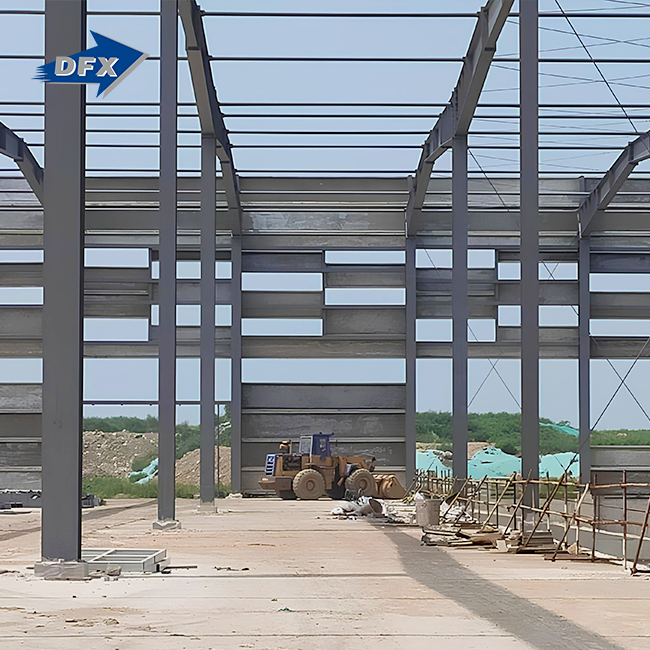
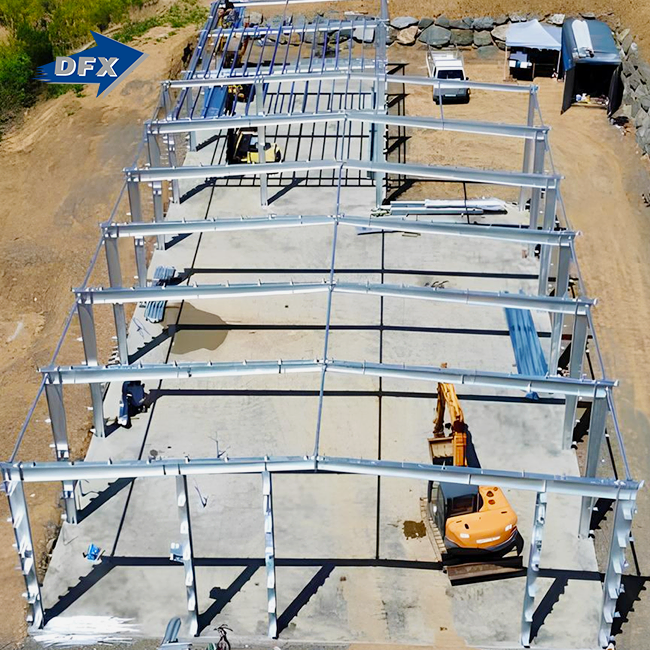
A store with a steel structure supermarket uses Pre-Engineered Building (PEB) systems that are made up of high-grade H-section steels (usually Q355B or ASTM A572 Gr50) for the main frames and cold-formed C/Z purlins for extra support. This way of building makes the insides clear, which is great for letting shelves be set up in different ways and letting customers move around. Because they are flexible, architectural covering systems like sandwich panels or glass curtain walls can fit together easily with load-bearing parts. Unlike reinforced concrete store areas that need long times of formwork and curing, steel frames come prefabricated with connections that are precisely cut, which cuts the need for on-site labor by about 40 per cent.
Key Structural Characteristics
The high strength-to-weight ratio of steel buildings means that foundation loads are much lower than with concrete options. Main steel parts have yield strengths above 345 MPa and tensile strengths between 470 and 630 MPa. This means that buildings can withstand wind loads above 0.60 kN/m² and seismic forces up to Grade 8 levels. This performance rating is very important for stores in places where bad weather happens a lot. The light framework sends fewer dead loads to the supports, which lowers the cost of civil engineering work while keeping the structure strong. Composite floor deck systems can handle live loads of 3.5 to 5.0 KN/m² in business buildings with multiple floors. They can also support parking structures above shop floors without having too much of a structural profile.
Advantages Over Traditional Construction
Parallel workflows make it possible for steel buildings to cut down on construction times by 30 to 50 percent compared to concrete ways. While work on the foundations goes on at the site, steel is being made in a controlled factory setting at the same time. This method gets rid of the delays that come from bad weather that are common in traditional buildings. Because steel is flexible, it performs better in earthquakes and lets controlled energy escape during ground motion events. When the surface is properly treated with hot-dip galvanization (zinc covering mass ≥275g/m²) or epoxy zinc-rich painting, it doesn't need much maintenance. This is because they protect against humidity and condensation from refrigeration systems.
Comparing Steel Structures to Traditional Supermarket Construction
Construction Speed and Project ROI
Through faster plans, prefabrication changes the economy of a project. A normal 50,000-square-foot steel structure supermarket reaches enclosure 12 to 16 weeks after the foundation is finished, while it takes 24 to 30 weeks for a cast-in-place concrete building. This shortening of the timeline has a direct effect on making money, letting stores start operating months earlier. EPC companies like having set schedules because they don't have to worry about cost overruns caused by long-term labor contracts. The bolt-together method of assembly needs fewer skilled workers on-site, which makes planning easier and cuts down on administrative costs.
Life-Cycle Cost Analysis
Unit prices for steel materials may seem higher at first, but a full life-cycle study shows that they save a lot of money in the long run. Because foundations don't have to be as strong, 25–35 per cent less concrete and drilling is needed. Shorter building times lower the costs of financing and managing the site. With the right upkeep, steel buildings can last longer than 50 years, about the same as concrete ones, but with a higher scrap value when they're done. Using 50mm-100mm polyurethane sandwich panels to make energy-efficient envelope systems achieves R-values that improve HVAC performance and lower running costs over the life of the building.
Seismic Resistance and Safety Compliance
The ability of steel to bend is very helpful in areas prone to earthquakes. The fact that the material can bend elastically under stress without breaking completely makes it safer for people inside. Engineered links successfully spread out lateral forces, meeting the needs of high-seismic-risk areas as stated in the International Building Code. For legal compliance and insurance reasons, this trait is very important for procurement managers who work with places like California or the Pacific Northwest. When applied to structural parts, intumescent fireproof coatings spread when heated. This keeps steel warm for two to four hours and meets fire safety standards without affecting the look of the building.
The Steel Structure Supermarket Construction Process
Design and Engineering Phase
A thorough structural design that takes into account operating needs is the first step to a successful project. Engineers work with stores to find the best column grid spacing, taking into account areas for cooling, loading dock locations, and customer flow patterns. Clear-span features let you see clearly and change the layout of your merchandise easily. For HVAC ducts, electrical raceways, and fire suppression lines to work together with MEP systems, they need to be coordinated. Building Information Modelling (BIM) software finds problems before they are built, so costly changes don't have to be made in the field. Qingdao Director Steel offers in-house architectural design and detailing services to help customers through this important phase, making sure that plans match up with the company's manufacturing skills and the order in which the structures are put up.
Fabrication and Quality Control
Making things out of steel is done in controlled factories with high-tech tools that make sure the measurements are correct. At places like Director Steel's 40,000-square-metre business, six automatic welded H-beam production lines make parts that are always the same and meet strict standards. As part of quality control, the mill test certificate is checked to make sure that the chemical make-up (carbon, silicon, manganese, phosphorus, and sulfur) and mechanical traits are correct. Non-Destructive Testing, like Ultrasonic Testing for full-penetration butt welds and magnetic particle testing for fillet welds, makes sure that the weld is solid and doesn't have any cracks or holes inside it. Laser measurements make sure that the placement of the bolt holes is within ±2 mm, which ensures that the assembly goes smoothly on-site.
On-Site Installation and Testing
When prefabricated parts come, they are put together in a way that makes the space less crowded. Crane workers put up the main frames, and secondary members follow the set routines for connecting them. Using modules makes the process less dependent on the weather, so work can still be done when the weather stops concrete pours. Installation teams quickly finish the structure frames, which allows cladding systems to be put up early. Post-erection checks test the structural integrity by deflection testing roof trusses under virtual loads, which confirms the formulas used in the design. Dry film thickness testing makes sure that protective coats meet the requirements, which are usually 75 to 125 microns for painted surfaces or certain thicknesses for galvanised finishes. This keeps the investment safe from rust.
Procurement and Cost Considerations for Steel Structure Supermarkets
Total Cost Components
To be good at buying, you need to know more about cost models than just the prices of materials. Steel structure supermarket projects include materials like structural steel, cladding panels, and fasteners, as well as manufacturing labor, logistics for shipping, and on-site assembly services. When projects are far from where they are being made, shipping issues become important, but containerised parts make freight more efficient. Installation costs are still lower than those of options made of concrete because less work needs to be done and less equipment is needed. Clear quotes that include these details make it possible to accurately plan budgets and find ways to save money.
Supplier Evaluation Criteria
Risk is reduced by procurement teams' thorough evaluation of suppliers. Quality management skills can be seen in certifications like ISO9001, CE marks, and project-specific standards (COC and PVOC). Portfolios of past projects show skill with projects of a similar size and level of difficulty. Client references can tell you a lot about how well you communicate, stick to your plan, and solve problems when things go wrong. Verification of manufacturing capacity makes sure that providers keep enough production tools and inventory management to make sure that deliveries happen on time. Partnering with well-known companies like Director Steel, which has been in business since 2011 and can produce up to 20,000 tons of welded H-beams and columns every year, gives buyers trust in the company's ability to carry out their plans.
Long-Term Value Considerations
In addition to the starting cost of capital, buying choices should also take into account how the goods will be used. Steel structure supermarkets can be expanded in the future with modular additions. The end-wall cladding is easy to remove, so new bays can be bolted onto old frames without affecting the structure. This versatility is helpful for stores that want to grow or change the layout of their stores to fit new ways of displaying goods. With regular checks and coatings, maintenance costs stay stable, and security systems last longer. The salvaging value of steel parts gives you ways to get your assets back that you can't get with concrete removal, which supports environmentally friendly business practices.
Designing and Optimizing Steel Structures for Supermarkets for B2B Needs
Operational Efficiency Integration
Putting functional systems into structural frameworks needs to be done carefully in retail settings. Special attention needs to be paid to the details in refrigeration zones. Thermal break technology and polyurethane sandwich walls keep freezers and coolers within the main building shell at a controlled temperature. Parts made of galvanised or stainless steel can handle the corrosive, high-humidity conditions in fresh food areas. With clear-span designs, there are no poles in the customer areas, which makes it easier to move around and see the goods. Forklifts can work alongside shopping lines in warehouse-style high-rack storage systems like those at Costco or Sam's Club. These systems take advantage of the clear spaces that can only be found in steel-framed supermarkets.
Future Expansion Planning
Steel is naturally flexible, so growth plans can be carried out without affecting operations. When the market calls for growth, structural links that are built to handle future loads make it possible to add on vertically or laterally. This is very different from concrete buildings, where changes need to be made by tearing them down and starting over. Retailers who are planning a gradual development can use steel's flexibility to build the first stages while still having options for growth. The modular method lets building happen during off-season windows, which has less of an effect on shops that are already open. This kind of strategy planning gives you an edge in retail markets that are always changing and where speed determines market share.
Sustainability and Energy Performance
Envelope systems that use less energy lower running costs and help companies meet their environmental goals. Sandwich panel technologies with polyurethane or polyisocyanurate bases provide better insulation, which lowers the need for HVAC systems in climate-controlled spaces. Steel can be recycled, which is in line with the ideas of the green economy. About 90% of structural steel is recovered when it's no longer useful, which reduces its impact on the environment. Using transparent panels or clerestory windows in steel frames as part of daylight harvesting techniques lowers the need for artificial lighting. These design choices make Environmental, Social, and Governance (ESG) profiles better, which is becoming more and more important to big investors and business users.
Conclusion
Faster building times, cost-effective life-cycle performance, and operating freedom that can adapt to changing retail needs make steel-structure supermarkets very appealing. Steel frameworks are the best choice for procurement managers and EPC contractors in charge of business retail projects because they offer clear-span internal areas, are resistant to earthquakes, and can be changed in the future. Manufacturers who focus on quality and offer integrated planning, fabrication, and installation services make it easier to complete projects and make sure they meet international standards. Steel buildings have a history of being reliable in a wide range of settings, from big hypermarkets to multi-storey business complexes. This is because it can handle different operational needs and weather conditions.
FAQ
1. What Timeline Should We Expect for Steel Structure Supermarket Projects?
Most projects finish the structure within 12 to 16 weeks of the foundation being ready. This means that the whole project takes 30 to 50 per cent less time than a regular concrete building. Parallel processes are made possible by prefabrication, which shortens schedules and helps store owners make more money faster.
2. How Does Steel Construction Handle Corrosion in Humid Environments?
When surface processes are done correctly, they provide great corrosion protection. Hot-dip galvanisation with a zinc covering mass of at least 275 g/m² or epoxy zinc-rich painting methods keep steel safe in places with a lot of moisture, like fresh food stores. Stainless steel fasteners make structures last longer in harsh settings by making them more durable.
3. Can Steel Supermarkets Accommodate Future Expansion?
Steel construction is modular, which makes it easy to add on by joining new structural bays and removing the end-wall cladding. This ability gives you strategy freedom that you can't get with rigid concrete structures. It lets you grow in stages that match market possibilities.
4. What Fire Safety Measures Apply to Steel Structures?
Building rules say that intumescent fireproof coatings must be able to protect structural steel for two to four hours after it gets hot. These solutions keep the look of the building while making sure people are safe and property is protected during fires.
Partner with Trusted Steel Structure Supermarket Experts at DFX
When retail developers and building workers look for reliable steel structure supermarket options, working with experienced manufacturers can give them a strategic edge. DFX, doing business as Qingdao Director Steel Structure Co., Ltd, has more than 12 years of experience in commercial steel buildings and more than 200 skilled workers spread out over 40,000 square meters of production space. We offer complete solutions from the idea stage to the installation phase, including structural design, precise manufacturing using six automatic welded H-beam lines, and coordination with MEP and façade systems. International quality standards are guaranteed by CE and ISO9001 certifications, and project-based production makes sure that methods are tailored to your specific needs. To talk about your steel structure supermarket project, procurement managers can email Jason directly at jason@bigdirector.com if they need full technical specs or competitive quotes. Find out how working with a well-known source can change the time it takes to build a store and how well the assets work in the long term.
References
1. American Institute of Steel Construction. (2016). Specification for Structural Steel Buildings (ANSI/AISC 360-16). Chicago: AISC.
2. Chen, W.F., & Lui, E.M. (2005). Handbook of Structural Engineering (2nd ed.). Boca Raton: CRC Press.
3. Lawson, R.M., & Ogden, R.G. (2008). Application of Modular Construction in High-Rise Buildings. Journal of Architectural Engineering, 14(2), 148-153.
4. Newman, A. (2013). Metal Building Systems: Design and Specifications (3rd ed.). New York: McGraw-Hill Education.
5. Pekoz, T., & Soroushian, P. (1982). Behaviour of Cold-Formed Steel Structures. Journal of the Structural Division, 108(ST11), 2064-2075.
6. Salmon, C.G., Johnson, J.E., & Malhas, F.A. (2009). Steel Structures: Design and Behaviour (5th ed.). Upper Saddle River: Pearson Education.
Learn about our latest products and discounts through SMS or email