- English
- French
- German
- Portuguese
- Spanish
- Russian
- Japanese
- Korean
- Arabic
- Greek
- German
- Turkish
- Italian
- Danish
- Romanian
- Indonesian
- Czech
- Afrikaans
- Swedish
- Polish
- Basque
- Catalan
- Esperanto
- Hindi
- Lao
- Albanian
- Amharic
- Armenian
- Azerbaijani
- Belarusian
- Bengali
- Bosnian
- Bulgarian
- Cebuano
- Chichewa
- Corsican
- Croatian
- Dutch
- Estonian
- Filipino
- Finnish
- Frisian
- Galician
- Georgian
- Gujarati
- Haitian
- Hausa
- Hawaiian
- Hebrew
- Hmong
- Hungarian
- Icelandic
- Igbo
- Javanese
- Kannada
- Kazakh
- Khmer
- Kurdish
- Kyrgyz
- Latin
- Latvian
- Lithuanian
- Luxembou..
- Macedonian
- Malagasy
- Malay
- Malayalam
- Maltese
- Maori
- Marathi
- Mongolian
- Burmese
- Nepali
- Norwegian
- Pashto
- Persian
- Punjabi
- Serbian
- Sesotho
- Sinhala
- Slovak
- Slovenian
- Somali
- Samoan
- Scots Gaelic
- Shona
- Sindhi
- Sundanese
- Swahili
- Tajik
- Tamil
- Telugu
- Thai
- Ukrainian
- Urdu
- Uzbek
- Vietnamese
- Welsh
- Xhosa
- Yiddish
- Yoruba
- Zulu
Structural Steel Garage Building Advantages
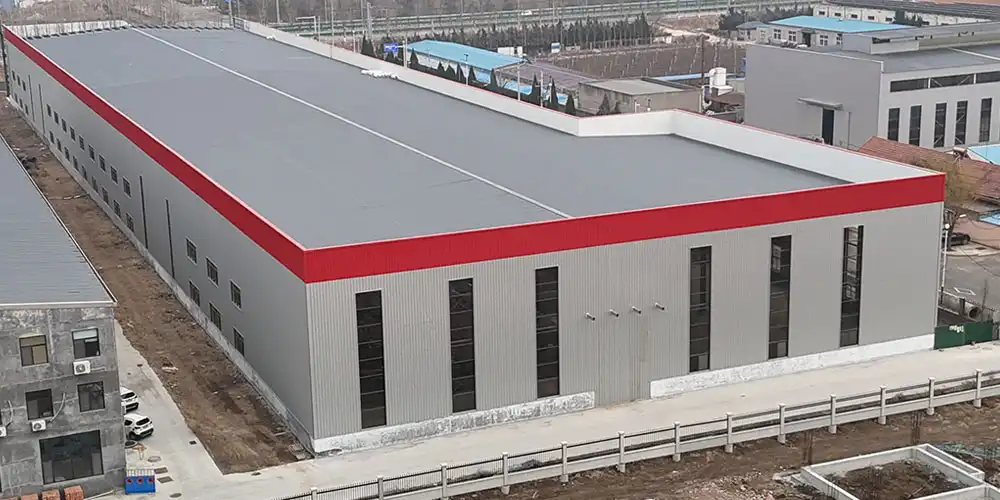
The Steel Structure Residential Garage is always the best option when project managers and procurement workers look at ways to store cars today. High-strength steel framing, usually light H-sections or square tube frames with galvanized purlins, is used to make these engineered buildings. They are long-lasting and cost-effective, and can be used for parking, storing equipment, and repair facilities. Compared to traditional wood or masonry garages, steel garages are faster to build, last longer, and can be designed in a variety of ways. This makes them a great choice for builders, factories, and farms all over the United States.
Understanding Structural Steel Garages and Their Benefits
Steel Structure Residential Garages are a more advanced type of pre-engineered building. The main structure of these garages is made of cold-formed or hot-rolled structural steel components. Over the past ten years, these small steel structure residential garages with sealed structures have changed the way people store things at home and in businesses.
What Distinguishes Steel Frame Construction
Using materials like Q355B or ASTM A572 grade steel, which have yield strengths higher than 345 MPa, is what makes metal garage buildings work. This means that it has a better ratio of strength to weight than other materials. The galvanized purlins and main frames don't rust because they are coated with a 600g/m² layer of hot-dip galvanizing. This makes the structure last longer than 50 years, even in harsh settings. ISO-certified quality control is used throughout the whole production process in places like Qingdao. The parts come already cut, drilled, and put together, which solves the speed problem that many workers have when they have to keep to tight project plans.
Core Performance Advantages
One thing that makes something unique is its weather protection. When temperatures and humidity change, which can cause wood to bend or concrete to crack, the steel frame stays the same size. Steel is naturally resistant to fire because it doesn't catch on fire. It keeps its shape longer than flammable materials during heat events. Pest immunity gets rid of the termite damage and rot problems that wood buildings have. This is especially helpful for farmers who are in charge of livestock sites where biological threats are always DIY steel garage kit present. The clear-span features—often more than 40 feet without internal columns—make the inner area unobstructed, which is very important for moving vehicles or installing overhead equipment like cranes or lifts.
Design and Construction Considerations for Structural Steel Garages
To get the most out of your prefabricated metal sheds, you need to pay close attention to the design specs and the way you buy them. We've helped a lot of clients make these choices, and they have a big effect on how the project turns out.
Customization and Architectural Integration
Modern steel building systems can be used by architects with a wide range of tastes. Residential clients like how garages can match the style of their homes thanks to different roof pitch angles, door designs, and outer cladding choices. You can choose wall panels made of curved steel sheets or insulated sandwich panels with polyurethane cores that get R-values close to those required for home building. Eave heights can be changed from the normal 10 feet to 16 feet or more for customers who store RVs or use car lifts. The layout of windows, personnel doors, and the size of overhead doors (single or multi-bay configurations) can be changed to fit different use patterns without affecting the building's structural stability.
Installation Timeline Management
Putting up a Steel Structure Residential Garage is usually 40–60% faster than putting up a similar concrete garage. When you mix the short production cycle for manufactured parts with bolt-together assembly methods, you need a lot fewer workers on-site. A group of four workers can usually finish a normal home garage frame in two to three days. Depending on how complicated it is, the cladding and finishing can take an extra week.
Comparative Analysis: Steel Structure Garages vs. Alternative Garage Types
People who make decisions should know how Steel Structure Residential Garage compares to other materials in a number of different rating factors. There are clear differences in the facts that affect the long-term value of the project.
Steel vs. Wood Construction
At first glance, timber framing seems appealing because DIY steel garage kit it uses well-known building methods, but a lifetime study reveals otherwise. Wooden buildings need regular upkeep to fix problems like damage from water, bugs, and structural movement caused by yearly changes in lumber size. Every three to five years, paint and finishes need to be refreshed to keep them from wearing down. Steel gets rid of these ongoing costs. The galvanized layer and available powder-coat finishes protect for decades without any upkeep other than washing every so often. Dimensional stability means that the door tracks stay straight and the mechanical systems stay in the right place throughout the life of the building. This saves money on repairs and adjustments that are common with wooden buildings.
Insulation Performance and Energy Efficiency
Managing heat is what makes professional Steel Structure Residential Garage different from regular metal sheds. Steel panels that aren't sealed cause condensation and don't control the temperature. Good setups use thermal break systems on the purlins and sandwich panels with either polyurethane foam or mineral wool cores to stop thermal bridging where metal enters the building shell. For warm or cool garages, these insulated systems save energy in a measured way. The R-values that were reached are on par with those found in traditional buildings. This means that comfortable working temperatures are maintained while HVAC costs are lowered. This is very important for manufacturing clients who use sheds as workshops or for farmers who keep equipment stored in climate-controlled areas.
Procurement Insights and Market Options for Steel Structure Garages
To make a good buy, you need to look at more than just the original purchase price. We work with buying experts to find the factors that really affect the overall cost of the project and the customer's happiness in the long run.
Cost Analysis and Budget Planning
Steel Structure Residential Garage prices depend on a number of factors, including the size of the building, the height of the eaves, the level of customization needed, the need for insulation, and the mechanics of delivery. Basic home garages cost between $15 and $35 per square foot, while insulated and custom garages can cost between $45 and $65 per square foot, based on the needs. When comparing quotes, you need to pay attention to what each one says. Some sellers only give buyers the basic frame and roof purlins; they have to find their own wall panels, doors, trim, and fixings. Complete packages that include all the parts, installation instructions, and technical help make buying easier and remove the chance that parts that don't work together or are missing will be found during assembly.
Delivery Logistics and Installation Support
How well containers are shipped, a 2-car steel garage has a big effect on how much they cost to send. Freight costs per square foot of building can be cut by optimizing packing to make the best use of containers. Suppliers who have worked with export markets before know how to package goods so they don't get damaged in transportation and how to provide paperwork that makes customs processes go more quickly. How easily an erection goes depends on how clear the installation plan is. Foundation anchor bolt plans with exact dimensional tolerances, assembly processes, connection details, and material specs should all be part of the full paperwork. Buyers should check with providers to see if they offer technical support during installation. Being able to talk to experts who can answer questions in the field can help avoid mistakes and delays that cost a lot of money.
Long-Term Value and Maintenance of Steel Structure Garages
Asset management goes beyond just building things. Knowing what repairs are needed and how to get better protection for the investment over many years of use.
Proactive Maintenance Strategies
Steel Structure Residential Garage doesn't need as much maintenance as other types, but there are things that can be done to make them last longer. Inspections should be done once a year to check the state of the covering, especially in high-stress areas like base plates and connection points, for scratches or abrasions that show bare metal. Rust doesn't spread when touch-up paint is applied quickly. Pay attention to the gutters and draining systems so that water doesn't build up near the supports or against the wall panels. Getting rid of debris and cleaning it every so often keeps the water flowing properly. In seaside areas or places where road salt is common, washing wall panels and frames once a year gets rid of corrosive leftovers before they damage the galvanized coating.
Safety and Regulatory Compliance
Fire resistance has built-in safety benefits that are important to building officials and insurance companies. Non-combustible steel framing keeps structures stable during fires longer than wood, which lowers the risk of collapse. When projects need specific fire-resistance scores (REI 60 or REI 120 grades), intumescent coatings can be used. In places where earthquakes are common, seismic performance traits become very important. Because steel is ductile, it can lose energy through controlled bending instead of breaking in a big way. Steel Structure Residential Garage can meet Level 8+ seismic resistance standards if its links and bracing systems are properly designed and built. This protects both the building 2-car steel garage and its goods during ground motion events.
Modular Expansion Capabilities
Being able to react to the future is a strategic edge for businesses that are growing. Adding on is easier to do with a Steel Structure Residential Garage than with a solid concrete building. The building can be made longer by taking down the end walls. On the sides, you can add more rooms. The bolt-together assembly methods that made the original building easier also make changes easier without having to tear down and rebuild. The ability to be put together in different ways is helpful for industry clients whose storage needs grow as their businesses do, or for farmers who need to add space for more animal housing. Moving a Steel Structure Residential Garage, if businesses move to new locations, gives you the freedom that you can't get with permanent building types.
Conclusion
When it comes to the metrics that mean most to procurement workers and project managers, Steel Structure Residential Garage is clearly the best choice. Fast building times, high durability, design freedom, and low lifecycle costs all work together to solve major problems in projects that store vehicles or house equipment. Better strength-to-weight ratios, resistance to pests, dimensional stability, and fire resistance are some of the material qualities that translate into measured performance benefits that standard materials can't match. When business-to-business buyers are looking at their options for contractor projects, industrial growth, or farming facilities, Steel Structure Residential Garage is a clear choice because they are well-engineered and has a history of success. They will also be valuable in the long term.
FAQ
1. How do steel garages perform in extreme weather conditions?
When properly designed, steel frame buildings work well in a wide range of climates. Local natural loads, like snowfall in mountainous areas, hurricane-force winds on the coast, or earthquakes in earthquake zones, are taken into account during the planning process. Lateral forces can't bend portal frames and X-bracing systems, and roof truss designs that have been estimated can handle snow loads of more than 2 kN/m². Coastal sites that use galvanized coatings and marine-grade paint systems (C5-M classification) are protected against saltwater rust. This keeps the concrete from flaking and breaking down in the same conditions.
2. What foundation requirements do steel garages need?
In a steel structure residential garage, loads are concentrated at the base of the columns, instead of being spread out evenly like in concrete walls. To do this, you usually need strengthened isolated footings or plinths with M24 or M30 grade anchor bolts that are carefully placed to match the base plates of steel columns. Total concrete volume often goes down compared to continuous foundations, but the engineering requires precise placement within ±2mm. Specific foundation depth and strengthening requirements are based on the type of soil and the amount of frost in the area.
3. Can electrical and mechanical systems be easily integrated?
Because a steel building is open-frame before the covering is put on, it is easier to integrate services. During production, service holes can be pre-punched in C-channel and Z-purlins to make room for conduit and pipe paths. It's easier to do this than to cut holes through concrete walls or work around rigid frame members. The clear-span interior design gets rid of the columns that get in the way of workshop plans and lets you put electrical outlets, lights, and HVAC equipment in different places.
Partner with DFX for Your Steel Garage Requirements
Qingdao Director Steel Structure Co., Ltd. has been making steel Steel Structure Residential Garage structures for business buildings and private garages for demanding global markets for more than 12 years. Our 40,000-square-meter factory has six automatic welded H-beam lines, as well as dedicated sandwich panel and C/Z section steel manufacturing. This lets us be a one-stop shop for Steel Structure Residential Garage for projects ranging from simple vehicle storage to complex industrial uses. We offer complete solutions, from engineering design to fabrication, packing, and installation support. Our ISO quality control systems and CE certification make sure that we meet all foreign standards. Get in touch with jason@bigdirector.com to talk about your specific project needs and get full technical specs that are made to fit your buying needs. Our short production processes and track record of on-time deliveries help contractors, makers, and agricultural clients all over the United States choose the best configurations that meet their performance needs and price limits.
References
1. American Institute of Steel Construction. (2016). Specification for Structural Steel Buildings (AISC 360-16). Chicago: AISC.
2. Chen, W.F., & Lui, E.M. (2005). Handbook of Structural Engineering (2nd ed.). Boca Raton: CRC Press.
3. Dubina, D., Landolfo, R., & Ungureanu, V. (2012). Design of Cold-formed Steel Structures: Eurocode 3: Design of Steel Structures, Part 1-3 – Design of Cold-formed Steel Structures. Berlin: Ernst & Sohn.
4. Galambos, T.V., & Surovek, A.E. (2008). Structural Stability of Steel: Concepts and Applications for Structural Engineers. Hoboken: John Wiley & Sons.
5. Mehta, M., Scarborough, W., & Armpriest, D. (2013). Building Construction: Principles, Materials, and Systems (2nd ed.). Upper Saddle River: Pearson.
6. Newman, A. (2004). Metal Building Systems: Design and Specifications (2nd ed.). New York: McGraw-Hill Professional.
Learn about our latest products and discounts through SMS or email