- English
- French
- German
- Portuguese
- Spanish
- Russian
- Japanese
- Korean
- Arabic
- Greek
- German
- Turkish
- Italian
- Danish
- Romanian
- Indonesian
- Czech
- Afrikaans
- Swedish
- Polish
- Basque
- Catalan
- Esperanto
- Hindi
- Lao
- Albanian
- Amharic
- Armenian
- Azerbaijani
- Belarusian
- Bengali
- Bosnian
- Bulgarian
- Cebuano
- Chichewa
- Corsican
- Croatian
- Dutch
- Estonian
- Filipino
- Finnish
- Frisian
- Galician
- Georgian
- Gujarati
- Haitian
- Hausa
- Hawaiian
- Hebrew
- Hmong
- Hungarian
- Icelandic
- Igbo
- Javanese
- Kannada
- Kazakh
- Khmer
- Kurdish
- Kyrgyz
- Latin
- Latvian
- Lithuanian
- Luxembou..
- Macedonian
- Malagasy
- Malay
- Malayalam
- Maltese
- Maori
- Marathi
- Mongolian
- Burmese
- Nepali
- Norwegian
- Pashto
- Persian
- Punjabi
- Serbian
- Sesotho
- Sinhala
- Slovak
- Slovenian
- Somali
- Samoan
- Scots Gaelic
- Shona
- Sindhi
- Sundanese
- Swahili
- Tajik
- Tamil
- Telugu
- Thai
- Ukrainian
- Urdu
- Uzbek
- Vietnamese
- Welsh
- Xhosa
- Yiddish
- Yoruba
- Zulu
Steel Structure Supermarket Design and Functional Analysis
Using Pre-Engineered Building (PEB) methods and high-grade H-section steel frames, a steel structure supermarket is a cutting-edge way to build a store. This method creates clear inner spaces between 20 and 60 meters without any columns getting in the way. This gives you more options for how to display your goods and cuts down on project times by 30 to 50 percent compared to concrete alternatives. Composite floor systems and ornamental coverings are used together in modern retail steel buildings to make business areas that are durable, look good, and work well.

Understanding Steel Structure Supermarkets: Design Principles and Key Benefits
Core Components of Modern Retail Steel Buildings
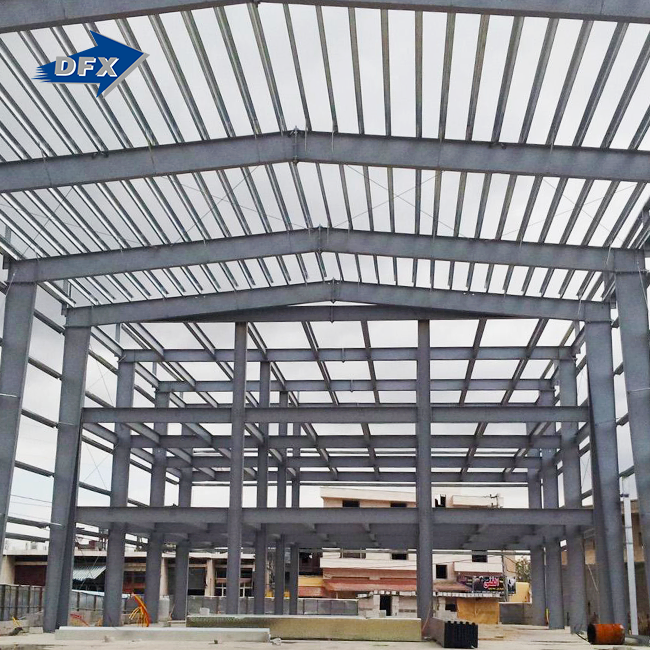
The main frames should be made of Q355B or ASTM A572 Gr50 grade steel, and the roof loads should be spread out well with cold-formed C/Z purlins. These pieces work together to create open areas that don't have columns and can handle large storage systems, truck traffic, and customer flow all at the same time. The design of the building is based on clear-span layouts that don't get in the way of marketing plans. This means that shops can change their plans whenever their business needs do so without having to worry about problems with heavy loads.
Critical Design Principles for Commercial Applications
When designing store areas, load spread is the most important thing to think about. Wind loads greater than 0.60 KN/m², area snow loads, and earthquake needs up to Grade 8 strength are used to set the conditions for a structure. The composite floor deck systems can handle live loads of 3.5 to 5 KN/m² and have thinner curves than regular concrete beams. This way of doing engineering makes vertical integration possible for mixed-use projects that have both stores and parking garages.
Longevity and Performance Advantages
When hot-dip galvanization is used to cover solid-story buildings with zinc covering masses of 275 g/m² or more, the buildings will last longer than 50 years. It works better in shocks than hard concrete buildings because the material is naturally bendable. In hot places, fire protection layers expand and cover steel parts for two to four hours, following strict safety rules. When buying managers worry about an asset's long-term value and security, these success traits give them peace of mind.
Comparing Steel Structure Supermarkets with Traditional Building Materials
Construction Timeline and Cost Analysis
Project schedules compress dramatically when prefabrication occurs parallel to foundation work. While concrete supermarkets require sequential on-site construction phases, steel frameworks arrive pre-cut and pre-welded, reducing field labor by 40%. Foundation loads decrease proportionally to steel's superior strength-to-weight ratio, cutting civil engineering expenses by 15-25%. The accelerated occupancy timeline translates directly to earlier revenue generation, a critical factor for retail investment returns.
Durability and Maintenance Requirements
Steel buildings require periodic inspections of protective coatings and fastener integrity, whereas steel-structure supermarket facilities and concrete structures face challenges with cracking and moisture penetration. Galvanized steel components resist corrosion in high-humidity fresh food departments where HVAC condensation occurs regularly. The predictable maintenance schedule allows facility managers to budget accurately for long-term operations. Concrete's inflexibility creates costly challenges when retrofitting mechanical systems or expanding footprints.
Environmental Impact Considerations
Steel's recyclability positions it as the sustainable choice for environmentally conscious developers. At end-of-life, structural steel retains 90% of its material value through recycling channels, while demolished concrete becomes low-value aggregate. Manufacturing steel sections generates lower carbon emissions than cement production when normalized per unit of structural capacity. Green building certifications increasingly reward steel selection for its circular economy contributions.
How to Design and Build a Steel Structure Supermarket: A Step-by-Step Guide?
Initial Planning and Site Assessment
The building process starts with a full site study that checks for things like power access, the ability of the dirt to support weight, and compliance with zoning laws. Depending on the project's budget, either pre-made kits or custom-engineered options will work better. To improve working movement, engineering teams look at things like parking rates, traffic trends, and the location of loading docks. For most store projects, this part of planning takes between 4 and 6 weeks.
Material Selection and Structural Engineering
For main sections, the steel grade must have a yield strength of at least 345 MPa and a tensile strength between 470 and 630 MPa. Roof and wall panels with 50–100 mm polyurethane or polyisocyanurate cores achieve R-values good for climate-controlled rooms while still staying within budget. All structural steel comes with mill test certificates from the manufacturer that prove its chemical makeup and mechanical qualities. Dry film thickness tests are done on surface treatments to make sure that 75–125 micron paint coats or a certain galvanization thickness is correct.
Construction Phases and Quality Assurance
Foundations are still being put in place while building parts are being made off-site by fabricators. This creates schedule conflict that can't be done with traditional ways. The erection teams use lasers to make sure that the main frames are bolted together precisely, with a range of no more than 2 mm for link alignment. Non-destructive testing methods, such as ultrasonic testing for full-penetration welds and magnetic particle testing for fillet welds, make sure that the structure is solid. Utility rough-in, insulation installation, and covering connection all happen in a planned way that reduces the risk of weather exposure.
Maintenance Protocols for Extended Service Life
Protective coats are checked once a year by preventative maintenance programs, which fix small rust before it weakens the structure. Verifying the tightness of fasteners keeps connections from coming loose when temperatures change and the wind blows. Every so often, HVAC systems are serviced so that condensation doesn't damage things in cold storage areas. These simple practices keep the building's performance high even after decades of busy business use.
Procurement Considerations: Choosing the Right Steel Structure Supermarket Supplier
Evaluating Manufacturer Credentials
ISO9001 certification demonstrates quality management system implementation throughout production workflows. CE marking confirms compliance with European safety and performance standards, expanding potential project applications. Client references from completed steel structure supermarket projects provide insight into delivery reliability and technical support quality. Manufacturing capacity indicators such as annual tonnage production and equipment inventories help assess whether suppliers can meet project timelines without compromising quality.
Qingdao Director Steel Structure Co., Ltd. operates 40,000 square meters of enclosed production facilities with a capacity reaching 20,000 tons of welded H beams and columns annually. Six automatic welded H-beam production lines maintain consistent quality through computer-controlled processes. The in-house architectural design team supports customers from conceptual engineering through on-site erection, eliminating coordination challenges between multiple contractors.
Prefabricated Kits Versus Custom Solutions
Standardized building kits reduce engineering costs and shorten lead times to 8-10 weeks for typical retail footprints. Custom-engineered solutions accommodate irregular site geometries, specialized loading requirements, or architectural features that differentiate branded retail environments. The modular nature of steel construction permits future expansion through end-wall removal and bay addition, unlike rigid masonry construction. Procurement teams should clarify whether suppliers offer post-delivery erection supervision to ensure proper assembly.
Cost Transparency and Budget Management
Detailed quotations separate material costs, fabrication labor, surface treatment, and delivery logistics to prevent hidden expenses. International projects require clear Incoterms defining responsibility transitions during shipping. Payment structures typically involve deposits securing production capacity, with balances released upon quality inspection completion. Volume negotiations benefit EPC contractors managing multiple simultaneous retail developments.
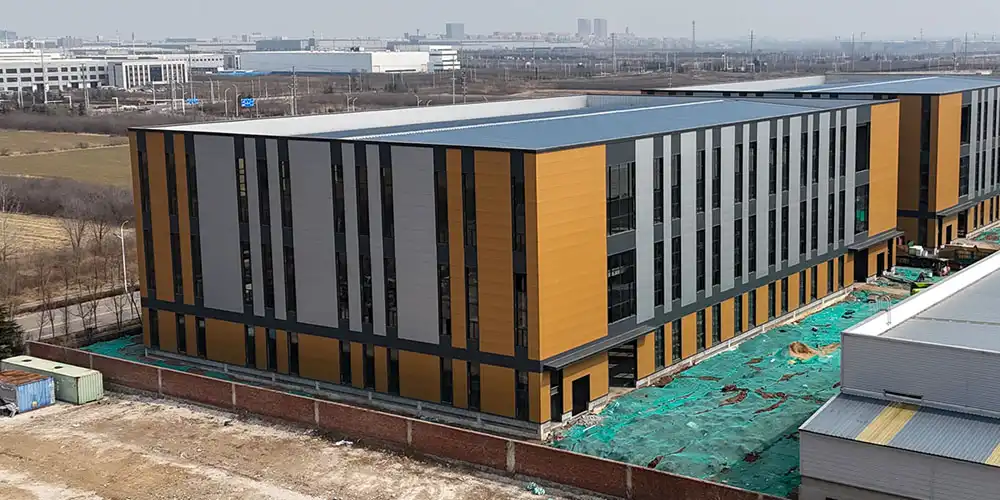
Enhancing Energy Efficiency and Sustainability in Steel Structure Supermarkets
Recycled Content and Material Sourcing
Modern steel production incorporates 25-30% recycled content from scrap processing, reducing primary ore extraction. Specifying steel with Environmental Product Declarations quantifies embodied carbon for LEED or BREEAM certification pursuits. Transportation emissions decrease when sourcing from manufacturers located near shipping ports, particularly relevant for international projects. These material decisions influence corporate sustainability reporting and stakeholder perceptions.
Thermal Performance Optimization
Sandwich panel selection dramatically impacts operational energy consumption. Polyurethane cores with thermal conductivity values of 0.022 W/mK create effective barriers against heat transfer. Thermal break technology at panel connections eliminates thermal bridging that undermines insulation effectiveness. Reflective roof coatings reduce solar heat gain by 30%, lowering HVAC demands during peak cooling seasons. These envelope improvements pay back investment costs through utility savings within 3-5 years.
Renewable Energy Integration
Steel roof structures accommodate solar panel installations without additional reinforcement in most steel structure supermarket configurations. The wide clear spans provide unobstructed surfaces for photovoltaic arrays sized to offset significant portions of retail electricity consumption. Energy management systems monitor lighting, refrigeration, and climate control to minimize waste. Battery storage systems capture excess solar generation for evening peak demand periods. These integrated approaches position retailers as environmental leaders within their communities.
Conclusion
Steel frameworks revolutionize commercial retail construction through accelerated timelines, design flexibility, and lifecycle value. The pre-engineered building approach reduces costs while delivering structures capable of 50-year service lives. Clear-span interiors maximize merchandising potential, while composite systems enable multi-story mixed-use developments. Procurement professionals gain competitive advantages by selecting certified manufacturers with proven track records, comprehensive service offerings, and transparent pricing structures. Sustainability benefits, including recyclability and energy efficiency, align with corporate environmental commitments. Steel retail building technology serves contractors, manufacturers, and agricultural enterprises seeking cost-effective commercial infrastructure.
FAQ
1. How does construction speed compare between steel and concrete retail buildings?
Steel supermarkets complete 30-50% faster than concrete equivalents because prefabrication occurs parallel to site work. Once foundations cure, pre-manufactured components arrive ready for bolt-together assembly. Weather delays impact steel projects less severely since most fabrication happens in controlled factory environments. This timeline advantage accelerates revenue generation and reduces financing costs.
2. What maintenance does a steel retail building require over its lifetime?
Annual coating inspections identify areas needing touch-up before corrosion progresses. Fastener tension checks prevent connection loosening under vibration and thermal cycling. HVAC maintenance prevents condensation damage in climate-controlled zones. These straightforward protocols cost significantly less than concrete repairs addressing cracking, spalling, or water infiltration issues.
3. Can steel structures withstand extreme weather, including hurricanes and earthquakes?
Engineering specifications account for regional wind loads, seismic intensities, and snow accumulations during design phases. Steel's ductility provides superior earthquake performance compared to brittle concrete. Properly specified connections transfer lateral forces without brittle failure. Fire-resistant coatings protect structural members for code-required durations. These characteristics make steel excellent for challenging climate zones.
Partner with a Trusted Steel Structure Supermarket Manufacturer
Director Steel brings 12 years of specialized experience fabricating commercial retail structures for shopping centers and retail complexes worldwide. Our ISO9001 and CE certified production facilities deliver complete turnkey solutions from structural design through installation coordination. With annual capacity exceeding 20,000 tons of welded H beams and comprehensive MEP system integration capabilities, we support contractors and developers managing complex retail projects. Contact jason@bigdirector.com to discuss your steel structure supermarket requirements and receive detailed technical proposals backed by proven project performance. Our engineering team provides competitive quotations tailored to your site conditions, timeline constraints, and budget parameters.
References
1. American Institute of Steel Construction. (2022). Specification for Structural Steel Buildings (ANSI/AISC 360-22). Chicago: AISC.
2. Newman, Alexander. (2021). Pre-Engineered Metal Buildings: Design and Construction Practices. New York: McGraw-Hill Professional.
3. Lawson, R.M., & Ogden, R.G. (2020). Sustainable Steel Construction in Commercial Buildings. Journal of Constructional Steel Research, 167, 245-259.
4. Smith, Bryan J. (2019). Steel Structures: Design and Behavior Emphasizing Load and Resistance Factor Design. Upper Saddle River: Pearson Education.
5. Chen, Wai-Fah, & Lui, E.M. (2018). Handbook of Structural Engineering (Second Edition). Boca Raton: CRC Press.
6. Trahair, N.S., Bradford, M.A., & Nethercot, D.A. (2017). The Behaviour and Design of Steel Structures to EC3. London: Taylor & Francis.
Learn about our latest products and discounts through SMS or email