- English
- French
- German
- Portuguese
- Spanish
- Russian
- Japanese
- Korean
- Arabic
- Greek
- German
- Turkish
- Italian
- Danish
- Romanian
- Indonesian
- Czech
- Afrikaans
- Swedish
- Polish
- Basque
- Catalan
- Esperanto
- Hindi
- Lao
- Albanian
- Amharic
- Armenian
- Azerbaijani
- Belarusian
- Bengali
- Bosnian
- Bulgarian
- Cebuano
- Chichewa
- Corsican
- Croatian
- Dutch
- Estonian
- Filipino
- Finnish
- Frisian
- Galician
- Georgian
- Gujarati
- Haitian
- Hausa
- Hawaiian
- Hebrew
- Hmong
- Hungarian
- Icelandic
- Igbo
- Javanese
- Kannada
- Kazakh
- Khmer
- Kurdish
- Kyrgyz
- Latin
- Latvian
- Lithuanian
- Luxembou..
- Macedonian
- Malagasy
- Malay
- Malayalam
- Maltese
- Maori
- Marathi
- Mongolian
- Burmese
- Nepali
- Norwegian
- Pashto
- Persian
- Punjabi
- Serbian
- Sesotho
- Sinhala
- Slovak
- Slovenian
- Somali
- Samoan
- Scots Gaelic
- Shona
- Sindhi
- Sundanese
- Swahili
- Tajik
- Tamil
- Telugu
- Thai
- Ukrainian
- Urdu
- Uzbek
- Vietnamese
- Welsh
- Xhosa
- Yiddish
- Yoruba
- Zulu
How Fast Can You Build a Steel Factory Building?
Timing is very important when it comes to opening new production sites or growing existing ones. From breaking ground to being ready to use, a steel factory building can be built in as little as 8 to 16 weeks, based on how complicated the project is and how big it is. This faster schedule is possible with pre-made H-section beams, galvanised C/Z purlins, and simplified engineering processes that are simplified. Because steel building is modular, there are no long curing times for concrete. This means that makers can start making things faster and take advantage of market possibilities without having to wait.

Understanding the Steel Factory Building Construction Timeline
Understanding the timeline for building the steel factory building involves several key stages, each optimised for speed and precision.
Pre-Construction Planning and Design Phase
Careful planning sets the stage for success before any steel parts even get to the site. Two to four weeks are set aside at Director Steel for architectural planning and engineering details. In this step, our technical team makes standard design papers, fabrication drawings, and assembly plans that are unique to your needs. This planning makes sure that every H-beam, purlin, and connection plate fits properly when they are put together, so expensive changes don't have to be made on-site.
During this time, project managers usually work with local authorities to get the permits they need. If you work with building departments ahead of time, you can avoid legal bottlenecks that could delay your job by weeks or months.
Steel Fabrication and Component Manufacturing
How quickly your facility takes shape is directly related to how efficiently your factory works. Every year, our six automatic welded H-beam production lines make about 20,000 tons of structural parts. Each project order is handled in three to five weeks. The controlled environment of the plant ensures precise tolerances of within ±2mm, which is much higher than the accuracy of production in the field.
Secondary parts like C/Z section steel purlins, curved steel sheets, and sandwich panels move through separate production streams at the same time. When compared to the sequential construction methods used in standard concrete buildings, this way of manufacturing things at the same time cuts down on the time it takes to build things.
Site Preparation and Foundation Work
While the steel parts are being made, the site is being prepared separately. Depending on the land and the size of the building, base work for pre-engineered structures usually takes two to three weeks. Because steel framing isn't as heavy as concrete options, foundation designs can often be made easier, which means less digging and less concrete.
The factors of the ground are very important here. Rocks or high water tables can make foundation times longer, but experienced builders can work around these problems by doing the right geotechnical analysis during the planning phase.
Structural Assembly and Erection
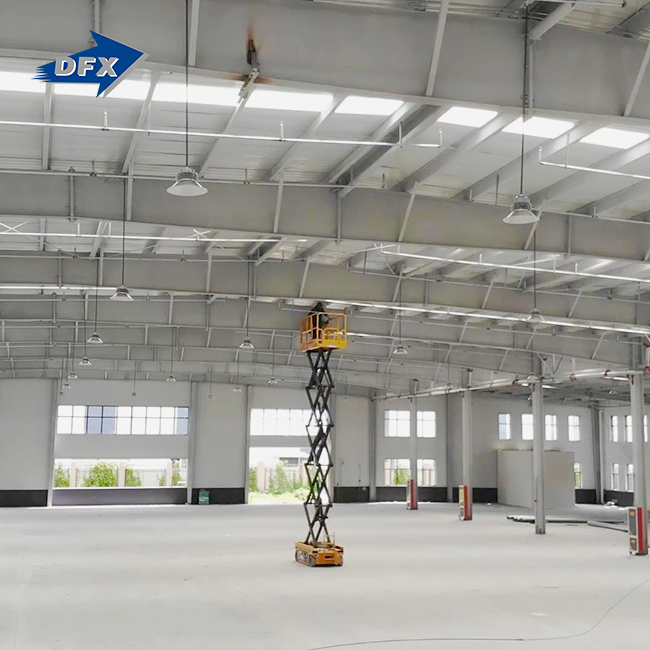
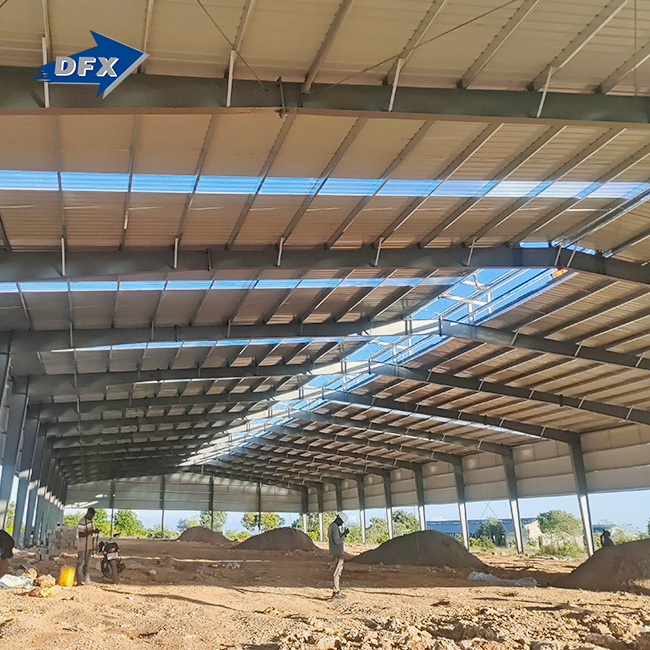
The real speed advantage of a steel building is shown during the installation phase. Once the parts get to the site, a skilled crew can put together a 10,000-square-foot industrial workshop in two to four weeks. Our coloured sheet steel-framed houses are put together quickly and safely with bolted links that don't affect the structure's strength.
When requested, overhead crane systems work smoothly with frame assembly. The H-section beam and column design make the building strong enough to hold heavy lifting equipment while keeping the open spaces inside that are needed for smooth production processes.
Building Envelope and Systems Installation
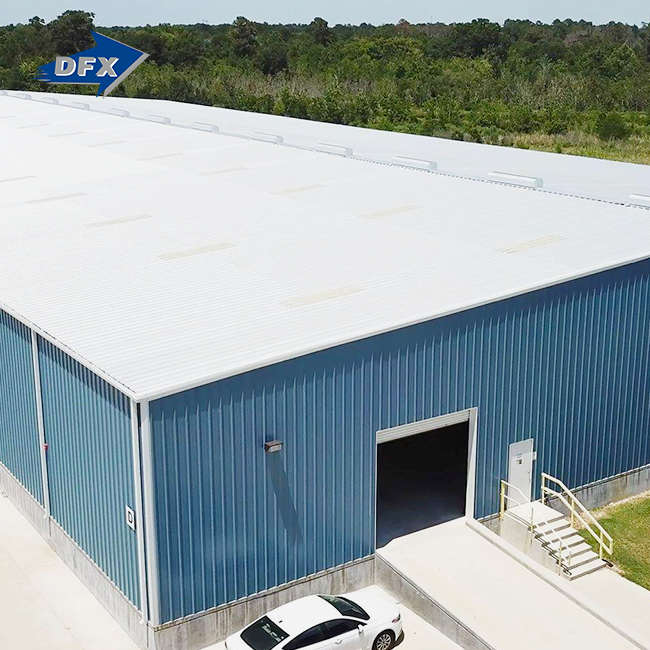
Installing wall panels, ceiling systems, doors, and windows usually takes one to two weeks after the main structure is up and standing. Modern sandwich panel technology is very good at keeping heat in and makes fitting easier. Accessories like sunlight panels, roof air systems, and others make operations more efficient without adding time to the building process.
Installations of electrical, water, and HVAC systems happen at the same time, and most of them are up and running within two to three weeks. Unlike buildings with lots of load-bearing walls, steel structures have open interiors that make it easier for services to get to where they need to go.
Factors Affecting How Fast You Can Build a Steel Factory Building
Things that affect how quickly you can build a steel factory building range from design choices to workforce expertise.
Design Efficiency and Prefabrication Approach
Delivery times are greatly affected by whether you choose custom-engineered options or stock designs. Pre-engineered building systems use tried-and-true structure models that cut down on engineering time while still meeting safety and performance standards. Over the past 12 years at Director Steel, we've developed design standards that match the need for customisation with the need to make things quickly.
With prefabrication, building work is moved from uncertain job sites to controlled factories. When 80% of the building parts come ready to be put together, problems like weather delays, lack of materials, and planning problems that happen with traditional construction don't have as much of an effect. This method works especially well for jobs in harsh conditions or in places that are hard to get to.
Material Selection and Supply Chain Management
The supply of parts directly affects the speed of building. With a yearly production capacity of 8,000 tons of C and Z section steel and 50,000 square meters of sandwich panels, we can make sure that projects don't get held up by a lack of materials. Certifications like ISO9001 and CE make sure that quality control methods don't get in the way of delivery dates.
When you buy something internationally, shipping factors come up that local sellers don't have to deal with. But the lower costs of making things in places like ours in China usually make up for the longer transport times. Managing supplies strategically and making sure there are clear lines of communication help procurement managers make plans.
Workforce Expertise and Construction Techniques
Speed and quality of building are greatly affected by how skilled the teams are. Director Steel has more than 200 skilled workers who know how to build with current steel building methods. Teams that have worked together before can spot possible fit-up problems before they become major project delays. They also know how to use fixed connection systems to make assembly quick and reliable.
Steel buildings have changed a lot because of new lifting tools and installation methods. Mobile cranes that can hold up to 100 tons make it easy to put big structural parts in place, and laser alignment tools make sure of accuracy that can't be achieved by hand. Because of these technological advances, project timelines are cut down directly.
Permitting and Regulatory Compliance
Different places have very different ways of getting regulatory permission. Some cities and towns give out building permits in two weeks, while others take two months or longer. Smart project managers start the permit application process during the design phase so that the approval timelines run at the same time as the manufacturing timelines instead of one after the other.
Environmental compliance reviews can cause delays that were not planned for, especially at sites that work with dangerous chemicals or in areas that are sensitive to the environment. Early talks with regulatory bodies help find possible problems, and answers stay adaptable and low-cost.
Advantages of Faster Steel Factory Building Construction for B2B Clients
Why faster steel factory building construction is better for business-to-business clients involves both financial and operational benefits.
Accelerated Time-to-Operation and ROI
Every week saved during building means that the ability to make money will be ready sooner. Companies that make things that are increasing production to meet market demand can't afford to have building take too long, which lets rivals take market share. Because steel construction takes so little time, companies can quickly take advantage of growth possibilities.
The effects on finances go beyond increasing income. Shorter building times lower the costs of short-term loans, keep project management costs low, and reduce the risk of material and labour prices going up. All of these things make return on investment estimates better, which makes steel buildings more appealing financially than just technically.
Reduced Labor and Overhead Costs
Using traditional building methods requires a lot of work to be done on-site over a long period of time. Compared to concrete options, steel building needs 30% to 50% less work in the field. Less time spent on-site by fewer workers leads directly to lower labour costs and lower costs for temporary housing, security, and site control.
Project managers like that fixed systems make things more predictable. When manufacturing takes place in controlled settings with standard procedures, fixed-price contracts are more reliable. With steel building methods, budget overruns caused by bad weather or a lack of workers are much less likely to happen.
Uncompromised Quality and Safety Standards
Speed should never be a reason to compromise the purity of a structure. Director Steel's welding methods are in line with AWS D1.1 standards, and key links are checked for quality with ultrasonic testing. Shot blasting and epoxy zinc-rich bases protect against rust, which means that a building can be used for at least 50 years with little upkeep.
Intumescent coatings are carefully applied to structural parts to make them fire-resistant. These coatings achieve 2 to 4-hour fire ratings based on ISO 834 standards. These safety measures fit right in with rushed building plans and don't slow things down or lower the quality of the work.
Scalability and Future Expansion Flexibility
As businesses grow, their needs change, and industry buildings must change with them. Steel framing makes it easy to add on in the future by letting you easily connect more bays or vertical additions. Our buildings all use bolted link systems that make changes easier without having to do a lot of removal or structural strengthening.
This flexibility is especially helpful for growing producers who aren't sure how much room they will need in the future. Instead of building too much at first, businesses can build facilities that meet their current needs and then expand cheaply as their operations grow. This kind of flexibility lowers the original cost of capital while keeping future choices open.
Case Studies: How Quickly Are Steel Factory Buildings Built?
Why do steel factory buildings take so long to build? These case studies demonstrate how the process is expedited.
Prefabricated Assembly Success: 12-Week Manufacturing Workshop
A company in the Philippines that makes electronics needed a 15,000-square-foot production space that could be up and running in four months. In just 12 weeks, Director Steel provided a full turnkey answer, from getting approval for the plan to cutting the ribbon. The project used standardised H-beam shapes and prefabricated wall panels. The panels were made at the same time as the base work.
Key parts of the schedule were three weeks for planning and making the building, two weeks for shipping, one week for finishing the base, three weeks for putting up the structure, and three weeks for installing the building skin and systems. The client got production up and running six weeks earlier than planned, meeting seasonal demand that many rivals missed.
Optimized Traditional Build: 20-Week Industrial Warehouse
A transportation company in Australia needed a warehouse that was 40,000 square feet and had 20-ton overhead cranes and cold storage areas built in. Due to the larger size and more specific needs, the project took 20 weeks, when a similar concrete building would have taken 8 to 10 months.
Coordinated placement of thermal break bridges to stop condensation in cold areas and precise alignment of crane rails within a 5mm error were some of the problems that had to be solved. Even with all of these problems, the project was finished on time thanks to careful planning and construction teams with a lot of experience working with specific industrial needs.
Procurement Insights: Selecting Suppliers and Contractors for Speedy Delivery
Advice for Buying Things: Picking Suppliers and Contractors for Fast Delivery.
Evaluating Manufacturing Capacity and Track Record
Managers in charge of buying things should make sure that possible sellers keep up enough production capacity to meet project deadlines without lowering quality. Director Steel's 40,000 square meters of protected production space and many specialized production lines make it possible to work on multiple projects at the same time.
Look at the profiles of suppliers for projects that are similar to yours in terms of size and difficulty. Our track record of building aeroplane hangars, industrial plants, and logistics centres shows that we can handle a wide range of tasks. ISO9001 approval and CE compliance show that there is structured quality management in place, which keeps delays from happening because of rejected materials or extra work.
Installation Service Assessment
Being able to make things doesn't mean much if the services that put them together can't keep up. Check out installation partners' client recommendations and samples of past work. Ask specific questions about how long it usually takes to build buildings that are similar to what you need, and get information about the skills of the tools and crew.
Director Steel's integrated method, which includes planning, fabrication, and installation support, makes it easier for makers and erectors to work together. This streamlined process always finishes projects faster than fragmented procurement methods that involve many separate providers, handling all of your steel factory building needs through a single source.
Cost Transparency and Pricing Structures
For faster building, prices shouldn't be difficult to understand, or costs shouldn't go up without warning. Ask for detailed quotes that break down the costs of materials, assembly, shipping, and labour for installation. This openness makes it possible to compare sources in a smart way and find possible problems.
Procurement workers can make better strategic choices when they understand the connection between price and time. It usually costs more to speed up manufacturing or shipping, but these extra costs are often worth it when you compare them to the costs of longer financing terms and slower income growth.
Conclusion
Steel construction technology has completely changed how long it takes to build steel factory buildings. Projects that used to take a year to finish now only take months. We at Director Steel can offer manufacturing facilities that meet tight deadlines without sacrificing safety or structural integrity, thanks to our six automatic H-beam production lines and experienced installation teams. When prepared parts, skilled labour, and organised project management are used together, the results are reliable, and procurement managers and project engineers can show these results to stakeholders with confidence. As competition in manufacturing grows around the world, being able to quickly bring new output capacity online gives companies a competitive edge that has a direct effect on their bottom line.
FAQ
1. How does weather affect steel factory building construction timelines?
When building a steel factory building, how does the weather affect the schedule? Because most of the work is done inside, the weather has less of an effect on steel buildings than on traditional ways. During extreme weather, site work like base pouring and construction can be delayed, but experienced teams can work well in all kinds of weather. Scheduling around local weather trends helps keep problems to a minimum.
2. Can steel factory buildings accommodate future production equipment changes?
Of course. The clear-span design and modular frame make it easy to change the layout of internal areas without having to change the structure. It is easy to add more crane systems, mezzanine levels, or utility additions to steel frames that are already in place. This gives businesses the freedom to change their operations as their needs do.
3. What certifications should I verify when selecting a steel building supplier?
Check for ISO9001 quality management certification; CE marking to make sure it works in Europe; and material certifications like Mill Test Certificates that confirm the grade and features of the steel. These qualifications prove that there is regular quality control and material traceability, which are important for the long-term performance of the structure.
4. How do prefabricated steel buildings compare in cost to traditional construction?
At first glance, the prices of materials may seem about the same, but steel construction saves a lot of money because it requires less work, takes less time, costs less to finance, and requires fewer changes. When all factors are taken into account, the total project cost analysis always favours steel.
Ready to Accelerate Your Manufacturing Expansion?
Are you ready to speed up your manufacturing growth? Director Steel has been building steel factory buildings professionally for more than 12 years, meeting tight deadlines without sacrificing quality. Our combined design, manufacturing, and installation services cut down on coordination problems, and our ISO9001 and CE certifications make sure that our products meet international quality standards. Because we can make up to 20,000 tons of H-beams every year and have a wide range of other services in-house, we can handle all of your needs quickly and easily. Email Jason at jason@bigdirector.com to talk about your unique needs and find out how our tried-and-true methods can shorten your construction timeline.
References
1. American Institute of Steel Construction. (2022). "Steel Construction Manual: Design Standards and Specifications for Structural Steel Buildings."
2. Chen, W.F. & Lui, E.M. (2019). "Handbook of Structural Engineering: Principles of Steel Frame Design and Construction."
3. National Steel Building Institute. (2021). "Pre-Engineered Metal Building Systems: Manufacturing and Construction Best Practices."
4. Parker, S.R. (2020). "Industrial Facility Design: Comparative Analysis of Construction Methods and Project Timelines."
5. Smith, J.K. & Davis, M.L. (2023). "Modern Steel Fabrication Techniques: Quality Control and Production Efficiency in Structural Steel Manufacturing."
6. Zhou, F. (2021). "Fast-Track Construction Methods for Industrial Buildings: Case Studies in Steel Structure Project Management."
Learn about our latest products and discounts through SMS or email