- English
- French
- German
- Portuguese
- Spanish
- Russian
- Japanese
- Korean
- Arabic
- Greek
- German
- Turkish
- Italian
- Danish
- Romanian
- Indonesian
- Czech
- Afrikaans
- Swedish
- Polish
- Basque
- Catalan
- Esperanto
- Hindi
- Lao
- Albanian
- Amharic
- Armenian
- Azerbaijani
- Belarusian
- Bengali
- Bosnian
- Bulgarian
- Cebuano
- Chichewa
- Corsican
- Croatian
- Dutch
- Estonian
- Filipino
- Finnish
- Frisian
- Galician
- Georgian
- Gujarati
- Haitian
- Hausa
- Hawaiian
- Hebrew
- Hmong
- Hungarian
- Icelandic
- Igbo
- Javanese
- Kannada
- Kazakh
- Khmer
- Kurdish
- Kyrgyz
- Latin
- Latvian
- Lithuanian
- Luxembou..
- Macedonian
- Malagasy
- Malay
- Malayalam
- Maltese
- Maori
- Marathi
- Mongolian
- Burmese
- Nepali
- Norwegian
- Pashto
- Persian
- Punjabi
- Serbian
- Sesotho
- Sinhala
- Slovak
- Slovenian
- Somali
- Samoan
- Scots Gaelic
- Shona
- Sindhi
- Sundanese
- Swahili
- Tajik
- Tamil
- Telugu
- Thai
- Ukrainian
- Urdu
- Uzbek
- Vietnamese
- Welsh
- Xhosa
- Yiddish
- Yoruba
- Zulu
Efficient Steel Pig House Steel Structure for Healthy Herd Growth
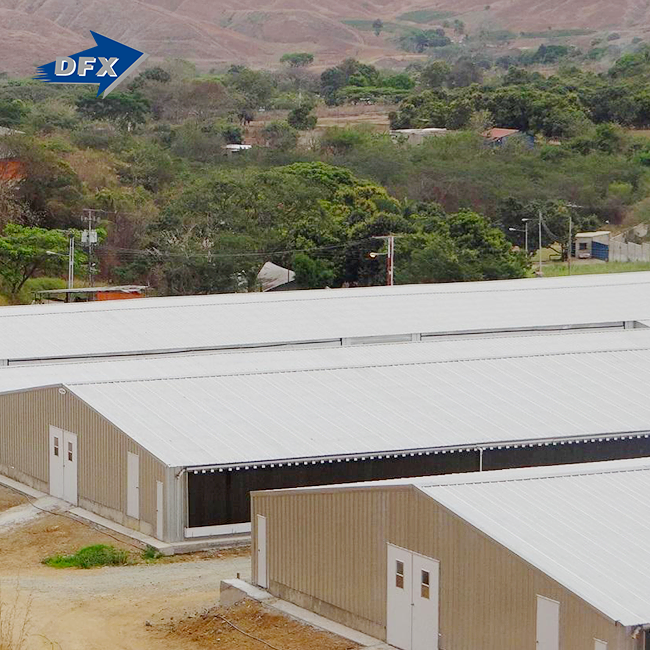
A Steel Pig House is a pre-engineered farm house made for raising pigs in large groups. It has a galvanized steel frame and enclosed roof and wall panels. Steel Pig Houses are better at biosecurity, durability, and temperature control than standard wooden or concrete buildings. They help farmers deal with problems like disease protection and environmental stress. These enclosed livestock buildings have longitudinal ventilation systems that keep the air quality at its best. This helps the animals grow in a healthy way and lowers the costs of running the business by allowing them to be built faster and needing less upkeep over many years of use.

Understanding Steel Pig Houses: Benefits and Design Essentials
What Makes Steel Pig Houses Different from Traditional Structures
Traditional piggeries are made of wood, concrete, or stone. Steel-framed cattle houses are a big improvement over those. The galvanized steel framework is usually made of Q235B or Q355B carbon steel, which has a yield strength of more than 235MPa and provides excellent structural stability. Hot-dip galvanization with a zinc coating layer of 275g/m² to 600g/m² provides strong protection against the highly corrosive ammonia and hydrogen sulfide gases produced by pig dung, which is an ongoing issue that quickly breaks down traditional materials.
In addition to being strong, Steel Pig House housing has smooth, non-porous surfaces that make cleaning easier and lower the amount of germs that can live there. This trait directly handles biosecurity issues that are very important to modern hog farms, where disease attacks can ruin profits. With clear-span options from 12 to 24 meters wide, there are no more internal columns. This lets you set up your pen in any way you want and makes it easy to connect to automatic feeding lines and waste management systems.
Core Advantages of Steel Pig Housing Systems
There are many ways that steel-based swine facilities are better than other types, and these improvements directly affect farm output and animal comfort. We've worked with farming businesses in six countries, and the feedback we get always points out these game-changing benefits.
ISO9001-certified steel structures can withstand severe snow and typhoon gusts, preserving important animals. The building will survive for at least 30 years since it resists corrosion, unlike timber constructions that require repairs every 10-15 years.
Superior Ventilation and Climate Control: Longitudinal ventilation Steel Pig Houses maintain the ideal developmental stage temperatures. Farrowing piglets require 22–24°C, while finishing house adult pigs need adjustable climate control. The airtight structure uses negative pressure ventilation to maintain air quality, reducing respiratory ailments and heat stress.
Energy Efficiency with Advanced Insulation: Sandwich panels with polyurethane, EPS, or rock wool cores and widths from 50 mm to 100 mm offer thermal insulation needed to maintain microclimates without overheating or cooling. When PU core density exceeds 40 kg/m³, thermal performance meets HVAC requirements, reducing energy usage by 20-30% compared to poorly insulated barns.
Rapid Construction and Faster ROI: regulated workshop-made prefabricated pieces enable on-site assembly in weeks instead of months. This faster timeline helps animal enterprises start breeding cycles earlier, increasing ROI. Checking the trial assembly and aligning the bolt holes to within 2 mm prevents on-site alterations that might harm the anti-corrosion coatings.
These advantages eliminate the challenges agricultural project managers and owners have when adding to or improving livestock facilities reliably and affordably. Steel Pig Houses are suitable for long-term pig rearing due to their strength, environmental management, and low cost.
Design Essentials for Optimal Herd Management
To make a Steel Pig House that works well, you need to carefully plan how to divide up the room, how to keep the pigs cool, and how to run the house during different times of breeding. For breeding and gestation barns, strong portal frames that can cover large areas are needed. These frames often go over 100 meters in length to handle groups with a lot of animals. Heavy automatic drop-feeding systems must be able to hang straight from steel rafters without affecting the stability of the buildings.
Finishing houses in harsh climates benefits from estimated load-bearing resilience in places where light-gauge buildings would fail when snow or wind builds up. The technical specs have to take into account the local weather while also being able to handle the high humidity that pigs that are getting close to market weight produce. Planning for ventilation is especially important in these places because they need systems that can be adjusted to fit changing weather conditions and herd sizes during production cycles.
Choosing the Right Steel Pig House: Comparison and Material Analysis
Steel versus Traditional Building Materials
Choosing the right building materials has a huge effect on how well they work and how much they cost to maintain over time. Agricultural businesses that are thinking about investing in infrastructure need to be able to make clear comparisons so that they can make decisions that are in line with their project needs and budget.
Steel Pig Houses are superior to wooden ones in every way that can be measured that affects pig output. Wood breaks down quickly when it comes in contact with ammonia and water, so it needs to be fixed and replaced often. Problems with structural stability and biosecurity are caused by pest populations, especially termites and rodents. Buildings made of concrete last a long time, but they don't keep heat or cold out well, so they cost more to heat or cool. Because concrete is so stiff, it can't be changed easily in the future as farm operations change or grow.
Plastic buildings are cheaper at first, but they can't stand up to the physical demands of large-scale animal operations. When exposed to UV light and changes in temperature, the material breaks down. Within 10 to 15 years, it loses its structural stability. Steel frames made in China that meet CE standards have better strength-to-weight ratios, which means they can handle longer spans without having support beams in the middle that get in the way of animals and automated equipment.
Evaluating Prefabricated Kits versus Custom Designs
People must choose between prefabricated choices and constructions tailored to the location and company when buying. Each approach has advantages depending on work size and duration.
Prefabricated Steel Pig House kits let farmers build pig homes fast and cheaply. Most pig enterprises may use these systems' conventional sizing and pre-calculated construction needs. The pieces are ready to assemble with explicit instructions, making construction simpler and cheaper. Standardisation simplifies quality control. The firm performs ultrasonic weld inspection and galvanisation thickness testing before shipping.
Custom structures may handle uncommon site difficulties, including uneven terrain, integrating infrastructure, or particular breeding programs that need unconventional layouts. Engineering teams can determine ventilation, insulation, and construction reinforcements using precise temperature data and herd management. This strategy works effectively for large operations when planning costs and lead periods are worth it for operational efficiency.
Building and Maintaining Your Steel Pig House for Optimal Performance
Step-by-Step Construction Best Practices
A well-built Steel Pig House starts with a well-prepared site and careful planning to avoid expensive delays or problems with the structure. We suggest hiring suppliers who offer full services, from designing the structure to helping with installation. This way, all parts of the project will run smoothly together.
A site survey should look at how much weight the soil can hold, how it drains, and how easy it is to get to for the delivery of materials and future activities. The design of the foundation has to take into account the loads that are passed through the steel beams and keep water out so that the floor systems and animals' health are not affected. Correct grading is important for managing flow, which is especially important in places that generate a lot of garbage.
Assembling parts needs trained people who know how to keep anti-corrosion coatings and structural steel links in good shape. To get even load distribution across links, the order in which the bolts are tightened must be exactly as specified by the engineers. Damaged galvanization should be fixed right away with zinc-rich coats so that the structure stays protected against rust for its entire life.
Ventilation Systems That Support Herd Health
Controlling the temperature is the most important part of hog housing because it directly affects how fast the pigs grow, how well they use their food, and how resistant they are to illness. Longitudinal ventilation systems move air along the length of the building. This keeps the temperature stable and gets rid of harmful gases before they reach dangerous levels.
Tunnel ventilation systems work especially well in finishing houses where a lot of animals create a lot of heat and wetness. At one end, big vent fans create negative pressure, which pulls in fresh air through regulated holes in the walls. Variable-speed controls change the flow of air based on temperature monitors. This keeps things running at their best even as the seasons change outside. This automated method cuts down on the amount of work that needs to be done and keeps temperatures from changing, which stresses animals out and makes them more likely to get sick.
Maintenance Protocols for Long-Term Durability
Routine inspections help structures last longer and find problems early, before they become too big to fix affordably. We've found that quarterly walkthroughs that focus on specific parts catch most problems early, when they are still easy and cheap to fix.
Checking the integrity of a galvanized covering means looking for white rust or damage to the coating from machine impacts. Touch-ups for small scratches should be done with zinc-rich paint to stop rust from getting worse. Checking the tightness of fasteners keeps connections from coming loose due to vibrations and changes in temperature. This is especially important in places that use mechanical air or hanging feeding systems.
The state of insulated panels affects both biosecurity and the energy economy. Damaged panels let water in, which lowers the insulation's effectiveness and makes it easier for bacteria to grow. Panel seals and caps need to be checked on a regular basis to keep the airtight construction that is needed for negative pressure airflow to work. Taking care of these maintenance tasks right away protects the investment and makes sure that the herd performs the same way every year.
Procurement Guide: How to Source and Purchase Steel Pig Houses
Selecting Reliable Manufacturing Partners
To find approved Steel Pig House makers, you need to look at more than just the first price quotes. To make sure projects are completed successfully, agricultural project managers need sources who can help with planning, fabrication, and installation.
A supplier's manufacturing capacity shows how well they can meet project deadlines and quality standards. The size needed for commercial farming projects can be seen in facilities that have 40,000 square meters of enclosed production space and automatic H-beam production lines, sandwich panel lines, and C/Z section steel lines. A production capacity of more than 20,000 tons of structural components per year says that the company has been around for a while and has consistent quality control systems in place.
Certification badges are an objective way to check that manufacturing standards and selling skills are met. ISO9001 approval proves that a quality management system is being used, and CE marking shows that the product meets European safety, health, and environmental protection standards. Extra certificates, such as COC and PVOC, show that a company has worked with specific regional markets before, which lowers the risk of not following the rules when buying things internationally.
Comparing Cost-Effectiveness and Lead Times
When making a budget for steel pig housing projects, it's important to think about how much it will cost to own the housing over time, not just how much it will cost to buy it. Lower prices up front are often a sign of lower quality products or fewer services, which lead to higher costs during installation and operation.
Made-to-order production times depend on how complicated the project is and how busy the maker is. Standard prefabricated systems usually ship 6 to 8 weeks after the order is confirmed. Custom-engineered buildings, on the other hand, may need 10 to 14 weeks for thorough engineering and construction. To make sure that building crews and other trades can work together well, procurement managers should ask for specific delivery schedules that include production milestones, shipping plans, and expected arrival dates at the site.
Service scope has a huge effect on how well a project turns out and how much it costs to install. Suppliers who offer structural design, manufacturing, transport, and fitting help are more valuable than those who only sell made parts. In-house architectural design and detailing services help customers with all stages of a project, from the original idea to the final installation. This makes it easier for everyone involved to work together instead of having to coordinate with many different workers.
Ensuring Healthy Herd Growth through Efficient Steel Pig Housing
How Climate Control Impacts Swine Productivity
The environment in cattle housing has a direct effect on performance measures like average daily gain, feed conversion ratios, and death rates. Steel Pig Houses designed with the right amount of insulation and ventilation create stable microclimates that reduce stress and promote growth.
Compared to traditional buildings that don't have enough ventilation, piglets in farrowing units live 15-20% longer in climate-controlled facilities that keep precise temperature ranges. When air flows freely and stays the same temperature, young animals can focus on growing instead of keeping their body temperature stable. This leads to higher weaning weights and better performance in the nursery afterward.
When finishing pigs are kept in steel buildings with good ventilation, they use their food more efficiently. According to research from American farming colleges, lowering heat stress in the summer improves feed conversion by 8–12%. This directly leads to lower production costs per pound of market-weight pork. Steel buildings have smooth, easy-to-clean surfaces that make it even less likely for diseases to spread. This means that antibiotics are used less often and the health of the whole herd is better.
Real-World Performance from Leading Operations
Large-scale pig farms in North America and Europe have seen better results after switching from old-fashioned houses to modern steel structures. During the winter, operations in the Midwest of the United States reported 22% lower heating costs after installing steel buildings with better insulation than their earlier concrete-walled buildings.
Australian poultry and cattle farms that used steel buildings made to international standards had fewer problems with structural upkeep along the coast, where salt air speeds up the corrosion of weaker materials. When they invested in properly coated steel frames, they got rid of the ongoing repair costs that came with their old wooden structures. This increased their profits by cutting down on downtime and making the buildings last longer.
Future Trends in Swine Housing Technology
Smart farming integration is the next step toward making homes for animals more efficient. Sensor networks that keep an eye on temperature, humidity, air quality, and animal behavior patterns let managers make choices based on facts that are best for both animals and the economy. These technological additions are easy to make to steel buildings, and the open internal spans make it easier to install and maintain equipment.
Regulatory trends that focus on protecting the environment and animal health are growing in favor of modern living systems that are clearly better than older ones. Steel Pig Houses that are built to last, run efficiently, and be environmentally friendly are in line with these changing standards. This protects farm assets against regulations that may change in the future.
Conclusion
Steel Pig House building for pigs is a tried-and-true way to deal with the main problems that modern pig farms face. Galvanized steel frames with insulated panels make conditions that are good for healthy herd growth while lowering long-term costs. This is because they are structurally durable, better at controlling temperature, and more efficient to run. Agricultural businesses that are thinking about investing in infrastructure get real benefits like faster construction, less upkeep, and better animal performance compared to traditional building methods. Established steel structure experts can make sure that projects of all sizes and in all kinds of weather are successful by using their production skills, licensing standards, and a wide range of services. Putting money into properly designed steel livestock buildings sets farms up to make money in markets that are getting more competitive over time.
FAQ
1. How does steel compare to concrete for pig housing durability?
How does steel hold up against concrete when it comes to pig housing? Steel Pig Houses with hot-dip galvanized parts that have a zinc covering thickness of more than 275g/m2 are more resistant to rusting than concrete in places with a lot of ammonia. Although concrete seems to last a long time at first, its porous nature lets water and acidic gases soak in. This causes the rebar to break and the surface to flake, which requires expensive repairs. Steel buildings stay strong for more than 30 years with only regular checks and small coating touch-ups needed for upkeep.
2. What ventilation system works best for different herd growth stages?
In what stages of growth does the herd need the best ventilation? Zone-controlled warmth and air in farrowing units keep the temperature between 22 and 24°C for newborn pigs while keeping sows comfortable. Nursery schools need systems that can be adjusted to handle kids gaining weight quickly and changing how much heat they produce. Finishing houses work best with tunnel ventilation, which moves air continuously through dense populations and gets rid of heat and gases effectively during the last few critical stages of growth before they are sold.
3. Can steel pig houses be customized for specific farm sizes and requirements?
Can Steel Pig Houses be changed to fit the needs and size of a farm? Reliable makers offer both standard pre-built systems and solutions that are completely designed and built just for you. Custom designs can work with odd site conditions, unique breeding plans, and facilities that are already in place. Engineers make sure that the finished building is the right size, with the right amount of insulation and ventilation based on the exact size of the herd, the weather in the area, and how things are run on the farm.
Partner with DFX for Your Next Steel Pig House Project
Director Steel Structure Co., Ltd. (DFX) has been making high-performance farm steel structures for over 12 years. These structures protect your livestock investment and keep your herd healthy. Our protected Steel Pig Houses have galvanized steel frames that are made to last in the harsh environment of heavy pig operations. They also have insulated sandwich panels that keep heat in better than other materials. Our 40,000-square-meter facility is where we make parts. We use strict ISO9001 quality control systems, and all of our goods have CE certification to make sure they meet foreign standards.
As a seller of Steel Pig Houses with a lot of experience, we offer full solutions that include structural design and fabrication, shipping, and installation advice. We help farming businesses throughout the whole project lifecycle. Our expert team works with farm managers and purchasing agents to find the best plans, ventilation systems, and materials for your breeding programs and the conditions in your area. Get in touch with jason@bigdirector.com right away to talk about your project needs and find out how our tried-and-true animal housing options can help your business be more productive and make more money.
References
1. Johnson, M. & Peterson, R. (2021). Modern Livestock Housing: Engineering Principles for Swine Facilities. Agricultural Engineering Press.
2. Anderson, K. (2020). "Comparative Analysis of Building Materials in Commercial Pig Production." Journal of Agricultural Structures, 45(3), 112-128.
3. Williams, T. et al. (2022). Climate Control Systems for Intensive Livestock Operations. International Farming Technology Institute.
4. Roberts, S. (2019). "Economic Assessment of Steel-Framed Agricultural Buildings." Farm Management Quarterly, 38(2), 67-82.
5. Chen, L. & Davis, P. (2023). Corrosion Protection in Agricultural Steel Structures. Industrial Construction Research Foundation.
6. Thompson, E. (2021). "Ventilation Design Optimization for Swine Finishing Facilities." Applied Agricultural Engineering Review, 52(4), 201-219.
Learn about our latest products and discounts through SMS or email