- English
- French
- German
- Portuguese
- Spanish
- Russian
- Japanese
- Korean
- Arabic
- Greek
- German
- Turkish
- Italian
- Danish
- Romanian
- Indonesian
- Czech
- Afrikaans
- Swedish
- Polish
- Basque
- Catalan
- Esperanto
- Hindi
- Lao
- Albanian
- Amharic
- Armenian
- Azerbaijani
- Belarusian
- Bengali
- Bosnian
- Bulgarian
- Cebuano
- Chichewa
- Corsican
- Croatian
- Dutch
- Estonian
- Filipino
- Finnish
- Frisian
- Galician
- Georgian
- Gujarati
- Haitian
- Hausa
- Hawaiian
- Hebrew
- Hmong
- Hungarian
- Icelandic
- Igbo
- Javanese
- Kannada
- Kazakh
- Khmer
- Kurdish
- Kyrgyz
- Latin
- Latvian
- Lithuanian
- Luxembou..
- Macedonian
- Malagasy
- Malay
- Malayalam
- Maltese
- Maori
- Marathi
- Mongolian
- Burmese
- Nepali
- Norwegian
- Pashto
- Persian
- Punjabi
- Serbian
- Sesotho
- Sinhala
- Slovak
- Slovenian
- Somali
- Samoan
- Scots Gaelic
- Shona
- Sindhi
- Sundanese
- Swahili
- Tajik
- Tamil
- Telugu
- Thai
- Ukrainian
- Urdu
- Uzbek
- Vietnamese
- Welsh
- Xhosa
- Yiddish
- Yoruba
- Zulu
Can a Steel Structure Garage Withstand Extreme Weather?
Extreme weather is still a big worry for project managers and procurement workers around the world when it comes to protecting expensive cars and equipment. It is possible for a properly designed steel structure garage to survive hurricanes, heavy snowfall, high winds, and significant changes in temperature. Good materials, correct technical formulas, and the right protective coatings are the keys. When faced with nature's worst conditions, modern pre-engineered steel buildings made with high-strength grades like Q355B, hot-dip galvanisation, and earthquake-resistant designs always do better than traditional building methods.

Understanding the Challenges of Extreme Weather on Garages
Events of extreme weather are a major threat to building stability in every region. In North America and Europe, we've seen storms destroy coastal buildings, heavy snowfall bring down roofs, and floods destroy foundations.
Regional Weather Threats and Their Impact
Different parts of the world have different environmental problems that have a direct effect on buying choices. Coastal places have to deal with salt, rust, and hurricane-force winds of more than 150 km/h. In the north, snow loads higher than 0.5 kN/m² and freeze-thaw cycles that break concrete are problems. In the Midwest, there are tornadoes and big changes in temperature, and mountain areas are at risk for snow, wind, and earthquakes.
Vulnerabilities of Traditional Garage Materials
Traditional wooden huts degrade quickly when damp. Within 10–15 years, rot, mould, and termites will occur. Concrete buildings crack due to heat expansion and water infiltration. Crack repair costs climb quickly. Both materials struggle to meet big, clear-span requirements, which means they need intermediate columns that take up space that could be used for storage or vehicle movement. Joint leaks and poor drainage worsen these concerns, weakening the structure and costing a lot to rectify.
Decision Factors for Procurement Professionals
How we choose materials is affected by how well we understand these environmental problems. Construction companies working on industry projects need buildings that won't fall down in the middle of the project. Agricultural businesses, on the other hand, need buildings that will protect their animal investment all year. Managers of manufacturing facilities want to make sure that operations don't stop, so weather damage-related downtime is not acceptable. Because of these real-world pressures, we need to build systems that are made to work in harsh environments.
The Durability and Weather-Resistance of Steel Structure Garages
Traditional construction has major flaws that pre-engineered metal buildings don't have because they use better materials and more advanced engineering methods.
Material Strength and Protective Systems
The main frames of modern prefabricated steel structure garages are made of Q355B high-strength steel, which has a yield strength of 355 MPa, which is a lot higher than regular materials. At factories like Director Steel, the steel is shot-blasted to a grade of Sa2.5 and then hot-dip galvanised with a coating thickness of at least 85μm. This creates a barrier against rust that makes the structure last longer than 50 years. This framework is made of stainless steel, which doesn't rust even in salty seaside areas where other materials would break in ten years.
Here are the main technical benefits that make it more resistant to weather:
High Wind Load Capacity: Engineers use PKPM and Tekla tools to figure out the best frame shape for wind speeds that can be changed above 120 km/h. High-strength bolted parts make the link between columns and beams rigid. This makes moment-resisting frames that can bend without permanently changing shape during storms.
Snow Load Performance: The size of the beams gets bigger regularly based on how much snow falls in the area. For projects in areas with a lot of snow, H-section beams with a deeper web and wider flanges are used. These beams evenly distribute roof loads so that the roof doesn't bow or fall down from too much weight.
Seismic Resistance: The Grade 8 seismic design includes base anchor bolts (M24–M72, depending on the load estimates) and lateral bracing systems that keep the structure strong even when the ground moves.
Fire Safety: The structure has Class A fire protection when it is covered with rockwool sandwich panels. This protects the goods and keeps the structure stable during fires.
These technical solutions work better together, blocking more than one threat at the same time instead of just fixing one issue at a time.
Real-World Performance Evidence
Contractors in Northern Europe say that steel-framed buildings stay open all winter, even when the temperature drops to -30°C and more snow falls than was planned. Coastal transportation centres in the southeast of the United States have been through Category 3 storms with only slight damage to the cladding. In Australia, mining companies use these buildings in the desert, where daily temperature changes of 40°C would crack concrete. However, the steel framework can adapt because it has thermal expansion joints built in.
Engineering Design Optimization
Site-specific load calculations are the first step in the manufacturing process. These take into account the local temperature, building rules, and the planned use. The parts come already cut and drilled, so there is no need for on-site welding, which can leave heat-affected areas that are easy for rust to form. This 100% bolted connection system cuts down on building time by 40–60% compared to old ways of doing things. It also makes sure that quality is handled consistently in the factory instead of in the field, where conditions can change.
Insulation and Maintenance Strategies for Extreme Weather Protection
It doesn't matter how strong the structure is if the conditions inside aren't right or if the building falls apart early from lack of care. For full safety, you need to control heat properly and do regular maintenance.
Insulation Options for Climate Control
Controlling the temperature is especially important in steel structure garages that store sensitive tools or are used as workspaces. Based on your price and performance needs, we usually suggest three main ways to insulate.
Polyurethane (PU) sandwich panels have R-values of up to R-7 per inch, which means they are very good at keeping heat and cold out. They also make airtight boxes that lower heating and cooling costs. These plates attach directly to the frame of the building and act as both insulation and a weather shield. Rockwool panels have a Class A grade for fire protection and thermal performance, which makes them perfect for places that store flammable materials or need to meet higher safety standards. Fibreglass batts are the least expensive choice, but they must be installed correctly with vapour barriers to prevent moisture from building up in the wall spaces.
Which of these methods to use depends on the details of the job. Rockwool is good for commercial repair shops because it keeps fires out, but sealed PU panels are better for chicken houses because they keep out wetness. In places where it gets very cold, factories often ask for extra layers of insulation to keep the temperature inside stable and protect the machines that make things.
Essential Maintenance Protocols
Regular assessments for weak places and repairs before they fail are needed to keep structures functional.
Galvanised coats are examined annually for scratches or abrasions that reveal the base metal. Zinc-rich epoxy touch-ups prevent rust in certain areas. Drainage channels and ditches are monitored since stagnant water rusts even on covered surfaces.
After one year, high-strength nuts calm down. Retorque all structural connections every year using precise torque wrenches and following the manufacturer's directions. This simple step avoids any movement that could hinder load movement during wind occurrences.
Roof and Cladding Care: Walking on roofs every three months can reveal cracked panels, loose screws, and faulty drainage routes. Capillary leaks can occur between corrugated steel sheets. These are immediately glued with polyurethane glue to prevent water from entering the insulation.
Foundation and Drainage: Ground settlement affects anchor bolt tightness and structure alignment. Laser level surveys every six months identify base-supporting movement. Clear rubbish from perimeter drainage systems to prevent water from gathering against foundation walls.
Maintaining problems is cheaper than resolving them before they worsen. Procurement managers can protect capital investments and extend building life by implementing these rules in site management plans.
Comparing Steel Structure Garages with Other Materials Under Extreme Weather
The choice of materials has a big effect on both the original prices of a project and its performance over its entire life. Knowing the relative strengths makes it clear when a steel garage is better than other options.
Steel Versus Wood Construction
Timber frames appeal since materials are inexpensive upfront, and the building procedure is established. Stressing the structure quickly reveals performance shortcomings. Wind-blown debris and water damage wooden buildings in storm zones, requiring repair or replacement. Insects and fungi break things down organically, requiring pricey, environmentally harmful chemicals. Most wood shelters need support posts every 6–8 meters, which block cars. Clear-span choices are still limited.
Steel frames eliminate these flaws. Termites and water can't eat steel; therefore, clear spans can reach 60 meters without middle posts. The project is significantly shorter due to the 40–60% faster building period. Builders on tight business build schedules benefit from this.
Steel Versus Concrete Structures
For some uses, concrete sheds are a good choice because they are strong against compression and fire. But because concrete is weak in strain, it needs a lot of rebar to support it, which costs more in materials and work. In places where temperatures change a lot, thermal expansion leads to cracks. These cracks let water in and freeze and expand during the winter, making the damage worse over time. Once the concrete has hardened, it is hard and expensive to change or add to it.
A steel building has better tensile strength, which lets structural parts be thinner and lighter. This cuts down on the need for and cost of foundations. The bolted assembly makes it possible to add rooms to the current frame to make changes or add on in the future. The weight advantage is especially useful in places with bad soil, where the heavy concrete would need expensive, deep supports.
Steel Versus Aluminum Framing
Although aluminium buildings are heavy, they are very resistant to rust and can be used in a variety of settings. Most cost studies show that steel is 20–30% cheaper than other materials with the same load capacity. Because aluminium has a lower elastic modulus, it needs bigger cross-sections to be as stiff as steel, which somewhat cancels out its weight benefits. Welding aluminium requires special tools and skilled workers, but most builders know how to use standard tools and techniques for bolted steel connections.
The above-mentioned performance traits are used to make strategic buying choices in a wide range of situations. Heavy industry uses steel for its high strength; farming facilities use steel for its ability to resist pests and span long distances; and seaside sites need steel for its strength and galvanised protection against salt corrosion.
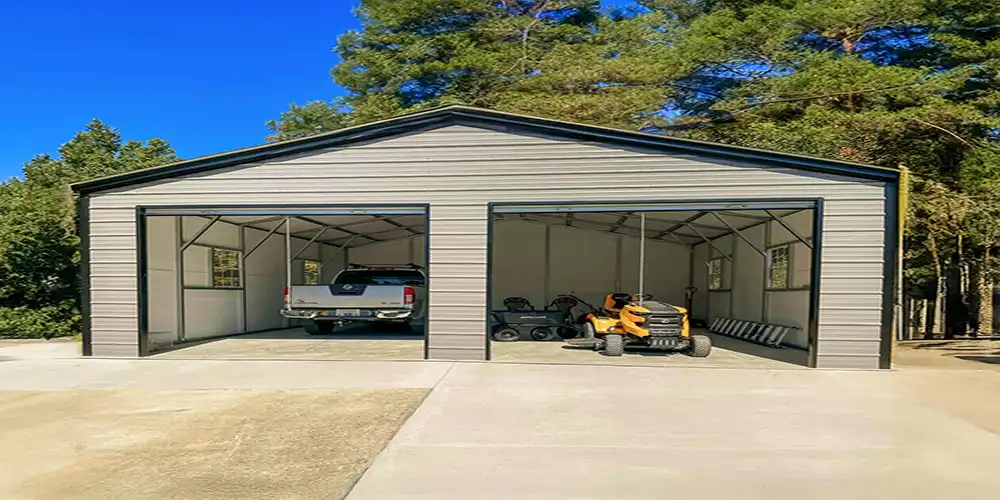
Procurement Guidance: Selecting the Right Steel Structure Garage for Extreme Weather
To make sure the project is a success, choosing the right China steel structure garage designs means looking at a lot of technical and business factors.
Technical Specification Criteria
Weather resistance ratings must reflect local weather conditions from building codes and meteorological records. Wind load calculations must be authorised to AISC 360 (USA) or Eurocode 3 (EU) requirements for structures to be used in hurricane-prone coastal areas. They must indicate that they can resist winds faster than the greatest known speeds while fulfilling safety standards. Using structural engineering stamping to ensure the beam size can manage snow load specifications is essential.
Designs can be customised for specific operations. High eave heights (6–8 meters) allow hydraulic lifts and ceiling cranes in auto repair shops. Agricultural chicken houses have built-in air systems. Workshops need long, clean gaps without columns or moving instruments to manufacture things.
Supplier Evaluation Parameters
The name of a manufacturer can tell you a lot about how consistent and reliable the quality is. Companies that have been around for more than ten years and have detailed project files show that they are stable and skilled. ISO9001 certification checks that quality management systems are in place, and CE, COC, and PVOC certifications make sure that you meet foreign standards that are important to your target market.
When handling project timelines, production ability is important. Large orders can be filled quickly and easily at places like Director Steel, which has 40,000 square meters of protected production space with twenty corrugated steel sheet lines and six automatic welded H-beam lines. With an annual capacity of up to 20,000 tons of welded H-beams, the company can meet the needs of even the biggest business or industrial projects.
Installation and Support Services
Pre-fabricated modular systems come with thorough installation plans and parts that have already been drilled. This makes it easy for general builders who don't have steel erection teams to put the systems together quickly. Some makers offer complete packages that include structure design, fabrication, material supply, and installation support. This is especially helpful for projects that are done overseas, where it can be hard to coordinate the work of many suppliers.
Service after the sale is what sets professional providers apart from product sellers. For skeletal frames, the warranty should last at least 10 years, and for protection coatings, it should last 5 years. Field questions are quickly answered by technical help during installation, which avoids mistakes that cost a lot of money. Long-term maintenance is possible because new walls and parts are available years after the building was first built.
Conclusion
Engineered metal buildings have been shown to be able to survive harsh weather thanks to their better material qualities, improved structure design, and protection coating systems. When you combine Q355B high-strength steel with hot-dip galvanisation and careful engineering formulas, you get structures that will last for 50 years or more in harsh settings where other materials would fail. When procurement pros look at choices for business, industrial, or agricultural uses, these prefabricated systems offer the best lifecycle value because they take less time to build, require less upkeep, and last a very long time. By investing in high-quality steel structure garage options, you can protect your assets, keep your business running, and avoid the high repair costs that come with other building methods.
FAQ
1. Can hurricanes or tornadoes directly hit steel garages?
Structures that are properly engineered can stand up to hurricane-force winds if they are built to meet the load needs of the spot. When AISC 360 or Eurocode 3 standards are used to figure out wind load, they take into account high wind speeds, building geometry, and exposure groups. It depends on how strong the tornado is, but rigid frame designs with moment links are better able to handle EF2 to EF3 events than most other types of buildings. Anchoring the foundation is very important. Cast-in-place concrete with inserted anchor bolts (M24–M72) keeps the building from being pulled apart by uplift forces.
2. Which insulation performs best in extreme cold climates?
Polyurethane sandwich walls work well in very cold weather because they have high R-values and let little air in. With batt insulation between frame members, thermal bridging happens. The continuous connected core stops this from happening. If the temperature stays below -20°C for a long time, you should mention double-panel systems or extra insulation layers inside. Vapour shields are needed to stop condensation from forming in wall spaces, which freezes and lowers the insulation's effectiveness.
3. How do I ensure compliance with regional building codes?
Manufacturers of reputable steel structure garages offer engineering stamps that have been signed off by licensed professional engineers who know the rules in your area. Please ask for proof that the work complies with the relevant standards (AISC 360 for US projects, Eurocode 3 for European installs, and GB 50017-2017 for Chinese projects). Manufacturers who have worked with foreign certifications can quickly get permits and provide sealed drawings and load estimates that meet the needs of local building officials.
Partner with DFX for Weather-Resilient Steel Structure Solutions
Choosing the right manufacturer of steel garage structures will determine whether your project lasts for decades through harsh weather or needs to be replaced early at a high cost. For more than 12 years, Director Steel has made pre-engineered buildings for tough uses around the world. Our Qingdao factory covers 40,000 square meters and has more than 200 trained workers who use high-tech tools like six automatic welded H-beam lines and quality systems that are approved to ISO9001, CE, COC, and PVOC standards. We offer full turnkey solutions that cover everything from the initial structure design to manufacturing, material supply, and fitting support. This ensures that the project runs smoothly. We manufacture our small steel structure garages in China using light H-section or square tube steel frames with zinc purlins. They are designed to be used for parking cars, storing tools, and upkeep. Get in touch with jason@bigdirector.com to discuss your unique weather problems and receive personalised specifications from a reputable supplier who will protect your investment.
References
1. American Institute of Steel Construction. (2016). Specification for Structural Steel Buildings (AISC 360-16). Chicago: AISC.
2. European Committee for Standardisation. (2005). Eurocode 3: Design of Steel Structures – Part 1-1: General Rules and Rules for Buildings. Brussels: CEN.
3. Newman, Alexander. (2019). Pre-Engineered Metal Building Systems: Design and Construction Practices. New York: Engineering Press International.
4. Roberts, T.M., & Sabouri-Ghomi, S. (2018). "Performance of Cold-Formed Steel Structures Under Extreme Weather Loading." Journal of Structural Engineering, 144(8), 04018097.
5. Zhang, Wei & Chen, Lifeng. (2020). Corrosion Protection Systems for Structural Steel in Harsh Environments. Shanghai: Construction Technology Publications.
6. National Association of Home Builders Research Center. (2021). Comparative Durability Assessment of Residential Building Materials Under Climate Stress. Upper Marlboro: NAHB.
Learn about our latest products and discounts through SMS or email