- English
- French
- German
- Portuguese
- Spanish
- Russian
- Japanese
- Korean
- Arabic
- Greek
- German
- Turkish
- Italian
- Danish
- Romanian
- Indonesian
- Czech
- Afrikaans
- Swedish
- Polish
- Basque
- Catalan
- Esperanto
- Hindi
- Lao
- Albanian
- Amharic
- Armenian
- Azerbaijani
- Belarusian
- Bengali
- Bosnian
- Bulgarian
- Cebuano
- Chichewa
- Corsican
- Croatian
- Dutch
- Estonian
- Filipino
- Finnish
- Frisian
- Galician
- Georgian
- Gujarati
- Haitian
- Hausa
- Hawaiian
- Hebrew
- Hmong
- Hungarian
- Icelandic
- Igbo
- Javanese
- Kannada
- Kazakh
- Khmer
- Kurdish
- Kyrgyz
- Latin
- Latvian
- Lithuanian
- Luxembou..
- Macedonian
- Malagasy
- Malay
- Malayalam
- Maltese
- Maori
- Marathi
- Mongolian
- Burmese
- Nepali
- Norwegian
- Pashto
- Persian
- Punjabi
- Serbian
- Sesotho
- Sinhala
- Slovak
- Slovenian
- Somali
- Samoan
- Scots Gaelic
- Shona
- Sindhi
- Sundanese
- Swahili
- Tajik
- Tamil
- Telugu
- Thai
- Ukrainian
- Urdu
- Uzbek
- Vietnamese
- Welsh
- Xhosa
- Yiddish
- Yoruba
- Zulu
Steel Factory Building vs. Concrete: Which Is Better?
If you need to build an industrial building, you should choose between a steel factory building and a concrete one. Steel is better for most current industry needs. When compared to standard concrete buildings, steel structures can be built faster, have more design options, and use less money. Because pre-engineered steel systems are flexible, project managers can get them up and running weeks before they could with concrete options. This makes steel factory buildings the best choice for procurement managers who want to save time and money and expand the business. In this study, we'll look at why steel is still the most popular building material for factories.

Understanding the Core Differences Between Steel and Concrete Factory Buildings
The main difference between building a plant out of steel and concrete is how the materials are made, how they work over time, and how they are fabricated.
Material Composition and Structural Components
Modern steel factories use Q355B or ASTM A572 Grade 50 HSLA steel. Its yield strength is 345–355 MPa. The main structure is H-section beams and supports, and the secondary structure is C/Z steel purlins. This blend creates a strong, light skeleton that can span great lengths without intermediary beams. These high-quality materials safeguard and enable design alternatives in our colored sheet steel-framed constructions.
However, concrete companies employ Portland cement, gravel, and steel rebar-reinforced concrete. Due to its solid nature, cast concrete possesses mass and compressive strength but not tensile strength like structural steel. Formwork, curing, and weather-dependent concrete placement take time, which adds to the project plan.
Construction Process and Timeline Comparison
Through prefabrication, steel construction changes the way buildings are made. Making things happens in controlled factories where accurate measurements are used for cutting, welding, and finishing the outside of things (within ±2mm). Compared to concrete, parts arrive at the job site already put together, which cuts the amount of work that needs to be done in the field by about 40%. After the foundation is finished, a normal 10,000-square-foot steel industrial building can be made weathertight in 6 to 8 weeks.
When working with concrete, you have to do things in a certain order. Setting up the forms, putting in the rebar, filling the concrete, and waiting the required 28 days for full strength all cause delays that can't be avoided. If the weather changes during filling, it can weaken the structure and cost a lot to fix. When compared to steel options, the cumulative effect often makes building take twice as long.
Environmental Considerations and Sustainability
Steel is eco-friendly because it's recyclable. Steel structural parts fulfill LEED certification standards because they retain their mechanical properties after infinite recycling. Modern steelmaking has greatly reduced carbon emissions. Electric arc furnaces reduce CO₂ emissions by 60% compared to blast furnaces.
Concrete production emits 8% of the world's CO₂ from cement calcination. Thermal mass in concrete saves energy but initially harms the environment. Steel buildings compensate with advanced insulation technologies, including roof ventilation and sunshine screens that maximize natural light and reduce HVAC costs. We strategically place windows and doors to let in as much air as possible, creating comfortable, mechanically free work areas.
Performance and Durability: Which Offers Better Lifespan and Maintenance?
Both materials last for decades if they are properly cared for, but their lifetime ratings are very different.
Expected Lifespan and Influencing Factors
Well-maintained steel factory building structures last 40–60 years with proper maintenance. Using 600 g/m² zinc in hot-dip processes creates galvanized coatings that prevent corrosion from air. Shot blasting to SA 2.5 and adding epoxy zinc-rich primers creates a multi-layer defence system. Chemical plants and coastal structures benefit from fluorocarbon coatings that resist acidic and alkaline air.
Even though most concrete buildings last 50–100 years, they have unique breakdown issues. Because concrete is porous, it absorbs water; rusting rebar weakens the structure and chips it. Frost-thaw cycles accelerate damage in the north; therefore, repairs and sealants must be used frequently.
Maintenance Requirements and Protocols
Coating integrity is a big part of steel building upkeep. Visual checks done once a year find early signs of rust, which are usually rated on the Re scale. Small spots at Re 3 are cleaned with a power tool (St 3 standard), and then a touch-up finish is applied. Facilities near salty coastlines should be washed every two years to get rid of toxic layers. This proactive method makes the coating last longer than 15 years before it needs to be completely redone.
Maintenance for concrete includes stopping cracks from spreading, replacing joint caulk, and stopping water from getting in. Because concrete is so stiff, it can crack when it settles, which needs to be fixed with cement filling. These solutions often cost more and cause more trouble than the steel upkeep costs over the life of a building.
Fire Resistance and Seismic Performance
At 600°C, steel loses about half of its load-bearing ability, so fire safety is needed in some situations. As required by ISO 834 standards, intumescent layers get bigger when heated, keeping steel members from catching fire for two to four hours. Many places let you install a sprinkler system instead of passive fireproofing in low-risk storage areas, which lowers the original costs.
Because it has a high heat mass and can't catch fire, concrete naturally resists fire. Extreme heat, on the other hand, causes violent spalling because the trapped water evaporates quickly.
When it comes to earthquakes, steel's flexibility makes it better. The material takes and releases energy through controlled bending, which keeps the structure from breaking when the ground moves. Because concrete is brittle, it can fail catastrophically under seismic stress if it isn't heavily strengthened, which increases the cost of materials and makes building more difficult. The strength-to-weight ratio of steel is about one-third that of concrete. This means that steel lowers earthquake forces more than concrete does, making people inside safer.
Cost Analysis and Procurement Insights
Financial considerations fundamentally influence material selection, encompassing initial investment, timeline implications, and lifecycle costs.
Initial Construction Investment Breakdown
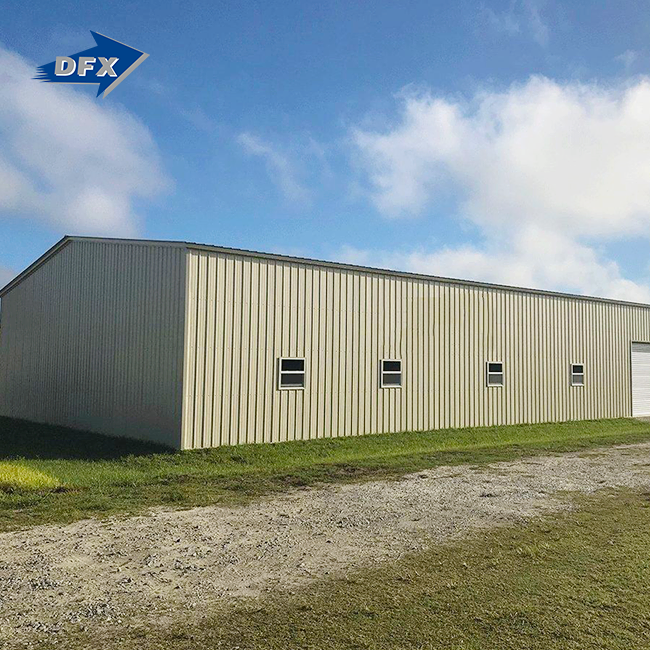
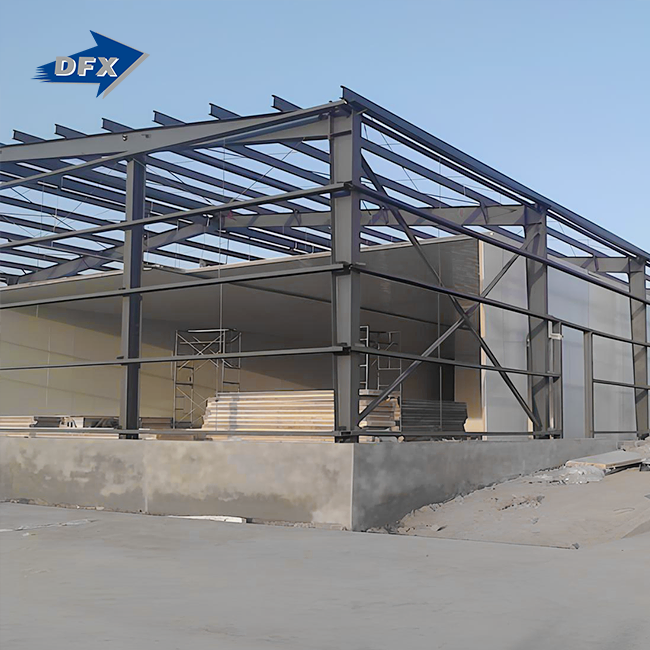
Steel factory buildings cost $45–$85 per square foot for full delivery, including planning, manufacturing, and assembly drawings. This photo displays basic roof ventilation systems, colored steel covering, typical doors and windows, and H-section beam frames. An optional ceiling crane costs $15,000 to $50,000, depending on area. Our ISO9001, CE, COC, and PVOC-certified manufacturing ensures quality and reasonable pricing through efficient production.
Concrete building costs $80 to $150 per square foot due to the enormous quantity of materials, personnel, and forms needed. Because concrete is thick, it needs stronger foundations, which raises grade-level drilling and concrete prices.
Steel projects have 30% labour costs compared to 50% for concrete structures, making planning easier. In areas with a shortage of building personnel, prefabricated steel parts reduce the need for on-site skilled labor.
Lead Times and Supply Chain Logistics
Supply chains that are easier to manage are good for steel building projects. Our 40,000-square-meter factory has twenty corrugated steel sheet lines, two sandwich panel lines, two C/Z section steel lines, and six automatic welded H-beam lines. Every year, this infrastructure makes 20,000 tons of welded beams, 8,000 tons of C/Z sections, 50,000 square meters of sandwich panels, and 8,000 tons of folded steel products. This makes sure that production cycles are short and delivery dates are reliable.
Standard setups usually take between 4 and 6 weeks to make, and the parts are shipped in weatherproof packages. Shipping to U.S. ports in containers takes three to four weeks, so project managers can expect materials to arrive eight to ten weeks after placing the order.
Concrete projects depend on a steady supply of local ready-mix, which can run out during building booms. When deliveries are interrupted during filling, cold joints can form that weaken the structure and need expensive repairs.
Design Flexibility and Customization Advantages
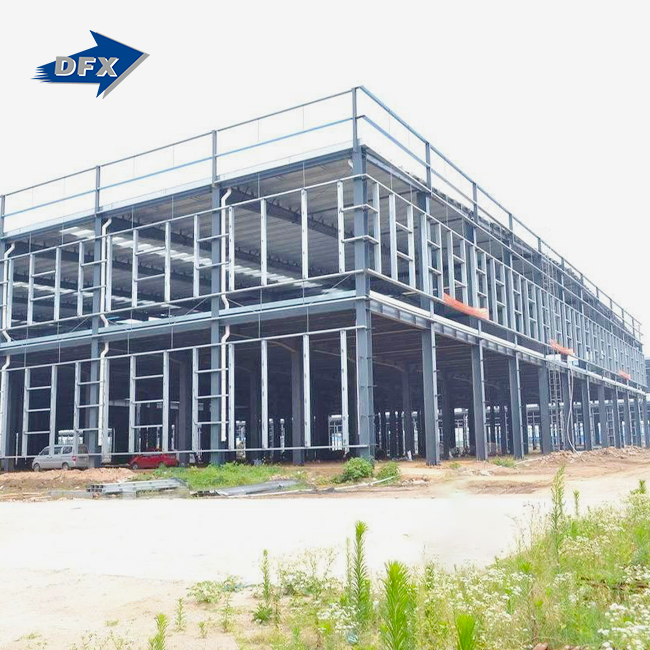
Pre-engineered steel buildings can suit several operating needs due to modular architecture. Internal beams are unnecessary for clear spans beyond 60 meters. This feature improves manufacturing line plans and material handling equipment operation. Eaves can reach 20 meters for automatic storage and recovery systems or multi-level production.
Steel buildings make expansion planning easy. Attaching bolt-on expansions to existing buildings causes little disruption. This supports market-driven phased expansion strategies. Mezzanine floors allow offices, quality control labs, and parts storage to grow without expanding laterally.
Concrete buildings need extensive dismantling and structural alterations to grow. Monolithic businesses are difficult to adapt, resulting in original patterns that may not function for their future needs.
Comparative Advantages: Which Material Suits Your Project Needs?
Understanding how each material's properties translate to operational benefits guides appropriate selection for specific industrial applications.
Structural and Functional Properties
Steel buildings have three times the strength-to-weight ratio of concrete. This characteristic makes the supports lighter, which reduces site preparation expenses by 20–30%. Because steel is bendable, it can withstand high cranes, severe mechanical vibrations, and earthquakes without breaking.
Heat mass and compression strength are better in concrete. The density naturally reduces sound transfer, making it useful for soundproofing. Thermal mass limits interior temperature variations, which is advantageous in places with large night-to-day temperature differences. These features make them ideal for cold storage and precision production in stable weather.
Scalability and Operational Adaptability
Manufacturing processes are always changing. Increasing production output, adding new products, and integrating automation all require technology that can be changed quickly. Steel houses work well in this setting because they are easy to change because they are put together with bolts. Increasing the width of a bay, adding an overhead crane, or putting equipment mezzanines all go smoothly and don't affect the way things are done now.
The fact that concrete doesn't change easily makes it a problem when business needs change. Cutting holes in structures to make room for new equipment or to change their layout takes special tools, temporary supports, and an expensive engineering study. Often, the cost and trouble are higher than building new steel improvements.
Industry Application Case Studies
An Ohio auto part manufacturer had to build a 45,000-square-foot building in four months to satisfy contract dates. Construction of the steel buildings took 14 weeks, and production equipment was added in the final weeks. The client requested overhead crane automation, which was easy with the stronger beam pockets established during initial engineering.
Concrete is easy to clean and doesn't alter temperature, so a chicken processing plant in Arkansas chose it for its main processing room. However, steel storage and repair facilities reduced project costs by 35% while providing various functional objectives. Material selection for specific operating zones is shown in this hybrid method.
A booming Texas transportation company wanted a 100,000-square-foot distribution center with 32-foot high-density shelving. Steel construction permitted a column-free interior, and roof solar panels were considered when estimating building loads. Instead of sixteen months for concrete tilt-up construction, the building was constructed in nine months. This allowed the center to start producing money sooner.
How to Decide: Selecting the Optimal Factory Building Material for Your Business?
Informed material selection requires systematic evaluation of project-specific criteria against material capabilities.
Critical Decision Criteria
Material choices depend on project timelines. Steel's speedier building is ideal for launching new product lines, meeting contract deadlines, and seizing market opportunities. Steel's reliable programs enable firms with expiring leases or that need to quickly expand.
Due to a restricted budget, more than the building cost must be considered. Due to its cheap maintenance, energy savings via smart ventilation and natural lighting, and future growth, steel often offers a higher lifetime value than identical original expenses.
Environmental goals are becoming relevant in company facility selection. Because steel is recyclable and stores less energy, LEED-certified and carbon-conscious companies employ it. In buildings with solar panels and wind turbines, steel roofs can carry extra weight without expensive support.
Matching Applications to Materials
Steel can withstand dynamic loads and thermal stress, making it ideal for foundries, metal casting, and chemical processing. Industrial procedures that would be difficult for concrete buildings can use 50–100-tonne overhead cranes through stepped columns and strengthened beams.
Light assembly and electronics production may favor concrete structures for climate control and vibration dampening. The thermal mass automatically stabilises temperatures, reducing HVAC cycles and supporting strict manufacturing tolerances.
Steel buildings are preferred by most warehouses and delivery centers. Clear span, building quickly, and extending cheaply meet the transport industry's need for flexible, high-cube storage. Steel is cheap and protects goods, making it useful for car parking and tool storage.
Supplier Partnership Considerations
Material selection affects provider skill. Certified steel fabricators in ISO9001-compliant factories provide quality through established methods. Our quality control techniques include evaluating the Mill Test Certificate's chemical makeup, inspecting important welds without breaking them (using ultrasound and x-rays), and assessing coating thickness to ensure compliance.
Experience matters in steel construction. For 12 years, we've built business buildings, airplane hangars, process facilities, and shopping centers, demonstrating our versatility. Because designers and manufacturers don't have to talk, in-house architectural design and finishing services make it easier to work together and avoid costly field issues.
Building contacts with local contractors aids manufacturer selection. Experienced erection teams who know your building system save installation time and quality issues. Request examples from similar projects, verify their insurance, and learn about local construction codes and permission processes.
Conclusion
When it comes to most industrial construction projects, steel factory buildings are the best choice because they can be delivered faster, save more money, and be more flexible in how they are used. Concrete can't compare. Precision that has already been planned, long-lasting materials, and a flexible design make it useful for a wide range of uses, from heavy manufacturing to farm storage. While concrete is better at keeping heat in and noise out, steel is better for all-around performance, including short production cycles, being resistant to earthquakes, and being able to expand. This is more in line with current procurement goals. By hiring experienced steel building makers who are qualified to international standards, you can be sure that your facility investment will last for decades and meet your business's changing needs.
FAQ
1. Which material costs less over the building's lifetime?
Even though the original cost is about the same, steel usually has lower lifetime costs. Steel maintenance costs, like checking and touching up the finish on a regular basis, are about $0.15 to $0.25 per square foot per year. Repairing cracks, closing joints, and keeping wetness out of concrete often costs more than $0.40 per square foot per year. Because steel is lighter than concrete, base costs are 20–30% less, and future growth can happen at about half the cost of changing the concrete. Using roof ventilation and natural light in a smart way to save energy lowers running costs, especially in big buildings.
2. Can steel buildings meet strict seismic code requirements?
Steel building works best in areas prone to earthquakes because it is naturally flexible and can take and release ground motion energy. Steel buildings that are properly designed usually meet the requirements for seismic design categories D and E. This is done by using moment-resisting frames or braced frame systems. The material is only one-third as strong as concrete, so it lessens the effects of earthquakes on the building. Modern steel building rules (AISC 341) have detailed seismic standards that engineers use based on the ground motion factors at each site. Concrete can do the same thing, but it needs a lot more reinforcing steel and very close standards during building, which raises prices and makes quality control harder.
3. What drives the cost difference between steel and concrete factory buildings?
The main thing that affects costs is the amount of material used. Because concrete is denser than steel, it needs about three times as much material weight to hold the same amount of weight. This makes the cost of raw materials and shipping higher. Concrete needs skilled formwork teams, constant on-site presence during pours, and long curing times. Steel erection, on the other hand, goes quickly with smaller groups putting together premade parts. The weight of the superstructure affects the size of the foundations. Lighter steel frames need less solid footings, which means less digging and less concrete at grade. Timelines have secondary costs; for example, the longer time it takes to build with concrete delays the facility's activities bringing in money.
Partner with DFX for Your Steel Factory Building Supplier Needs
The Qingdao Director Steel Structure Co., Ltd. has been making high-quality steel factory buildings for tough industry uses for more than 12 years. Our 200-person team runs high-tech factories that make 20,000 tons of welded H-beams every year. These factories are certified by ISO9001, CE, COC, and PVOC, which are world quality standards. We offer full turnkey solutions that include structural design, the manufacture of H-section beams and columns, C/Z galvanized purlins, colored steel cladding, provisions for an overhead crane, and detailed installation plans. Our short production processes and shipping in containers make sure that your project stays on track with its tight deadlines. Get in touch with jason@bigdirector.com right away to talk about how our steel factory building skills can help you make your manufacturing idea a reality through reliable, cost-effective construction solutions.
References
1. American Institute of Steel Construction (AISC). Steel Construction Manual, 15th Edition. Chicago: AISC, 2017.
2. Mehta, P.K. and Monteiro, P.J.M. Concrete: Microstructure, Properties, and Materials, 4th Edition. New York: McGraw-Hill Education, 2014.
3. Newman, Alexander. Pre-Engineered Building Systems: Design and Construction Best Practices. Industrial Construction Press, 2019.
4. Portland Cement Association. Life Cycle Assessment of Concrete and Steel Building Systems. Skokie: PCA Research Report, 2018.
5. Trahair, N.S. and Bradford, M.A. The Behaviour and Design of Steel Structures to AS 4100, 4th Edition. London: CRC Press, 2017.
6. United States Green Building Council. LEED Reference Guide for Building Design and Construction. Washington, D.C.: USGBC, 2020.
Learn about our latest products and discounts through SMS or email