- English
- French
- German
- Portuguese
- Spanish
- Russian
- Japanese
- Korean
- Arabic
- Greek
- German
- Turkish
- Italian
- Danish
- Romanian
- Indonesian
- Czech
- Afrikaans
- Swedish
- Polish
- Basque
- Catalan
- Esperanto
- Hindi
- Lao
- Albanian
- Amharic
- Armenian
- Azerbaijani
- Belarusian
- Bengali
- Bosnian
- Bulgarian
- Cebuano
- Chichewa
- Corsican
- Croatian
- Dutch
- Estonian
- Filipino
- Finnish
- Frisian
- Galician
- Georgian
- Gujarati
- Haitian
- Hausa
- Hawaiian
- Hebrew
- Hmong
- Hungarian
- Icelandic
- Igbo
- Javanese
- Kannada
- Kazakh
- Khmer
- Kurdish
- Kyrgyz
- Latin
- Latvian
- Lithuanian
- Luxembou..
- Macedonian
- Malagasy
- Malay
- Malayalam
- Maltese
- Maori
- Marathi
- Mongolian
- Burmese
- Nepali
- Norwegian
- Pashto
- Persian
- Punjabi
- Serbian
- Sesotho
- Sinhala
- Slovak
- Slovenian
- Somali
- Samoan
- Scots Gaelic
- Shona
- Sindhi
- Sundanese
- Swahili
- Tajik
- Tamil
- Telugu
- Thai
- Ukrainian
- Urdu
- Uzbek
- Vietnamese
- Welsh
- Xhosa
- Yiddish
- Yoruba
- Zulu
Mining Equipment Steel Workshop: Custom Fabrication Solutions
A mining equipment steel workshop is a purpose-built industrial facility constructed with heavy-duty structural steel to house, maintain, and manufacture large-scale mining machinery — from gyratory crushers and ball mills to ultra-class haul trucks. Unlike standard industrial buildings, these workshops are engineered to carry extreme dynamic loads from overhead bridge cranes (50–200 tons), resist vibrations from mineral processing equipment, and endure abrasive, corrosive site conditions. At Director Steel, we design and fabricate these structures to meet your exact project specifications, delivering full-service solutions from structural design to on-site installation guidance.

Understanding Steel Workshop Equipment for Mining Applications
To choose the right building and tools for a mining fabrication plant, you must first know what these places really need. Heavy machinery, constant vibration, and chemical exposure put a lot of stress on any structure at a mining site.
Core Fabrication Machinery
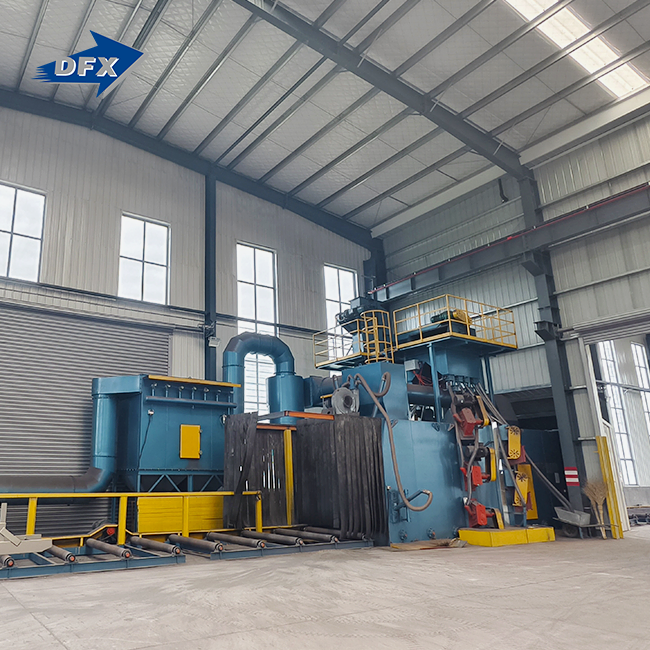
Plasma and oxy-fuel cutting tables, Submerged Arc Welding (SAW) machines, and heavy-duty hydraulic press brakes are the most important tools in any mining equipment steel workshop that works with mining equipment. At Director Steel, we have six automatic welded H-beam production lines that we use for our own work. These lines let us make precise frame members for even the busiest workshop layouts.
Safety Equipment and Compliance
Facilities for mining equipment steel workshops must fully follow OSHA rules and international building codes like AISC and AISI. Non-Destructive Testing (NDT) methods, such as Ultrasonic Testing (UT) and Magnetic Particle Testing (MT), must be used to test structural members. This is especially important for crane beam welds and column connections, where failures have the most serious effects.
The Role of Automation and CNC Systems
To improve accuracy and throughput, modern workshops rely more and more on CNC plasma cutters, robotic welding arms, and automated beam assembly lines. Our plant at Director Steel pre-assembles main frames to make sure that the bolt holes are lined up within ±1mm of each other. This standard makes remote assembly reliable and error-free, even when there is no welding available on-site.
Setting Up a Mining Equipment Steel Workshop: Step-by-Step Guide
Making plans for a mining equipment steel workshop is more complicated than building a normal shed. The building has to be able to handle overhead crane tracks, heavy floor loads, and being in harsh conditions for a long time. Here is a step-by-step guide to the planning process.
Space Planning and Workflow Optimization
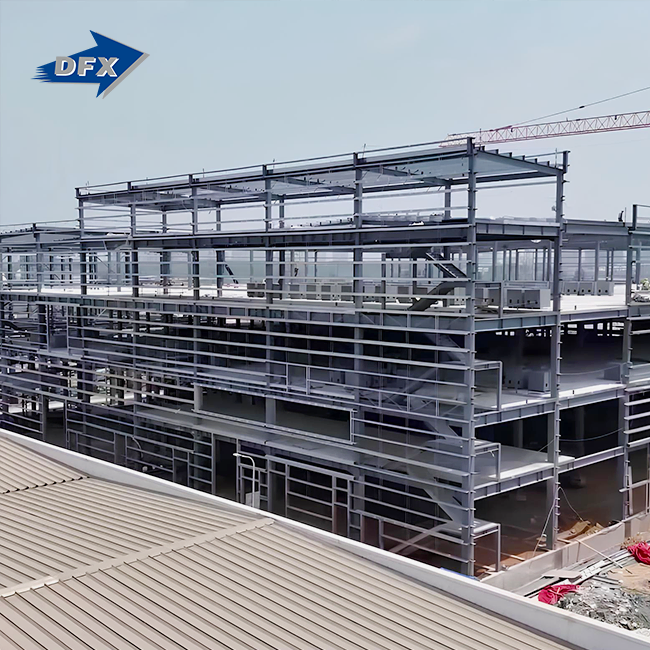
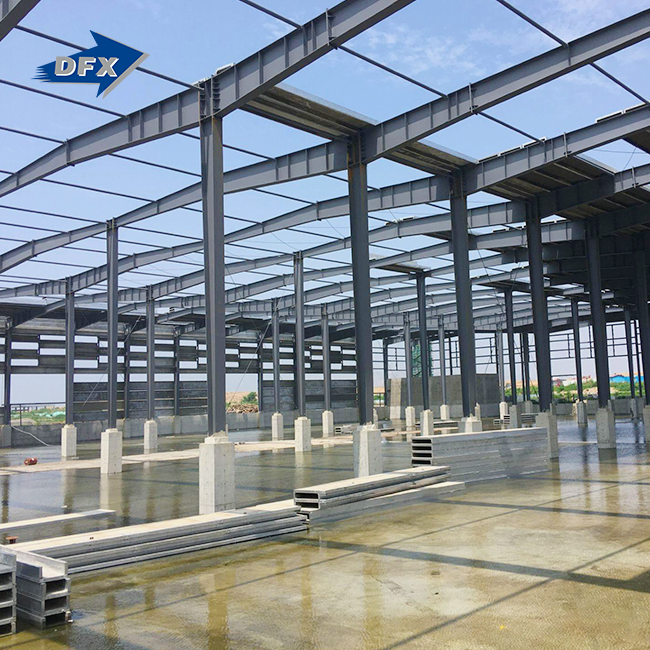
It's important to have clear-span plans. For shops that house 400-ton dump trucks or hydraulic shovels, the eaves must be 10–16 meters high, and the internal widths must be 30–60 meters without any columns. We can get these lengths without lowering the load-bearing capacity of our welded H-section steel frames made of Q355B/C steel. The open space inside makes it easy for heavy equipment and an overhead crane to move around.
Selecting Manual vs. Automated Equipment
Automated welding and cutting systems cut down on worker costs and improve accuracy in fabrication shops that do a lot of work. Manual equipment with modular structural systems works better for smaller repair shops that are far away from the mine. The bolt-connected modular design of Director Steel makes it easy to put together quickly and move it to a different place in the future. This is useful for builders who work on multiple projects at once.
Maintenance and Downtime Prevention
A well-designed building needs less upkeep. We use a C5-M grade anti-corrosion treatment system, which includes an Epoxy Zinc-Rich Primer, a Micaceous Iron Oxide Intermediate, and a Polyurethane Topcoat. We can also hot-dip galvanize items that are more than 85 microns thick. These surface processes protect steel from acidic and salty mine environments, so structures can last for 50 years or more with little to no repair work.
Comparing and Choosing Steel Workshop Equipment for Mining Fabrication
Buying buildings for mining equipment steel workshops is about more than just price. Verification of quality, track record of the supplier, and help after the sale all play a role in figuring out if a building works as expected over its entire working life.
Evaluating Supplier Credibility
When looking for a steel structure building supplier, make sure they have ISO9001 certification, CE marking, and materials that meet ASTM standards. Director Steel has all three certifications and provides Mill Test Certificates (MTC) for every structural member to show that the values for yield strength and impact toughness are in line with what was planned. Since 2011, our company has been building steel structures. We have 40,000 m² of enclosed production space and more than 200 trained workers.
Comparing Structural Systems
Here are the core technical parameters buyers should compare when selecting a mining workshop structure provider:
- Steel grade: Q355B/C/D or ASTM A572 Gr.50 for main framing; this is necessary for crane runway beam use.
- Connection type: Bolted connections are best for remote sites; they can be moved in containers and put together with only a few tools.
- Cladding options: For insulation in harsh areas, you can choose between 0.6–0.8mm corrugated steel sheets or PU/rock wool sandwich panels (50–150mm).
- Lead time: For made-to-order items, the time between approval of the drawing and shipment is usually 25–49 days.
These factors have a direct effect on the safety of the structure, the speed of installation, and the long-term costs of running it. If you rush through them when buying, you may have to make expensive changes to the site.
New vs. Used Structures and Financing Options
When buying a mining workshop, purpose-built new steel buildings are the norm. When it comes to crane loads, it's particularly problematic to buy used buildings that don't have their fatigue records known. Director Steel offers phased project solutions for clients who are limited on funds and can work with your purchase timeline to plan fabrication in steps.
Custom Fabrication Solutions: Delivering Tailored Steel Equipment for Mining
No two mining operations have the same site conditions, inventory of equipment, or needs for production. Often, off-the-shelf building methods don't work well enough. The main thing that Director Steel does is custom fabrication for each mining equipment steel workshop.
Identifying Client Requirements
Before starting any job, our engineers do a load analysis and site study to find out things like the required crane capacity, the local wind and snow loads, the seismic zone classification, and the environmental exposure category. As required by the AISC/AISI code, we figure out how to support structures at open mine sites for wind speeds of more than 120 km/h and snow loads of up to 2.5 kN/m².
Quality Control and Testing Protocols
Director Steel uses the rules set out in AWS D1.1 and EN 1090 for quality assurance. There is a 100% UT or MT inspection of every full-penetration butt weld on crane beams and columns. Anti-corrosion coating meets ISO 12944 C4/C5 standards, as shown by Dry Film Thickness (DFT) tests with electromagnetic gauges. Before sending out our products, we put together the main frames in our factory to make sure they are the right size. Standard practice allows for ±1mm of error in bolt hole alignment.
After-Sales Support and Installation Guidance
Every job gets thorough 3D installation drawings and help from Director Steel on-site. Our drawings are carefully made so that local teams can put them together. This way, we don't have to rely on expert welding workers in faraway places. We also give civil engineers reaction force data, such as axial loads, shear forces, and bending moments, for building foundation systems. This includes pile foundations and reinforced concrete pedestals that can hold heavy crane loads.
Future Trends and Innovations in Mining Equipment Steel Workshops
A lot of work in mining is being done with data these days, and mining equipment steel workshops are going in the same direction.
AI and IoT Integration in Workshop Design
IoT sensors are now built into crane runway beams and column bases to make structural health tracking systems that can track stress buildup in real time. By using sensor data to train predictive maintenance models, operations teams can plan repairs before they happen, which cuts unplanned downtime by measurable amounts.
Sustainable Fabrication and ESG Alignment
Precision CNC nesting software that cuts steel sheets with few scraps is helping steel fabricators waste less material. Hot-dip galvanized parts last longer and don't need to be re-coated as often, which lowers lifetime costs and the damage to the environment. Director Steel's sandwich panel lines make insulated wall and roof panels that make processing areas much more energy efficient.
Digital Procurement and Supply Chain Models
More and more, B2B buyers want digital products like BIM models, 3D shop drawings, and material traceability records along with real things. Director Steel's in-house design team creates complete paperwork that is BIM-compatible. This makes it easier to integrate with client project management platforms and cuts down on coordination delays in global supply chains.
Conclusion
Building a mining equipment steel workshop for mining use is a long-term investment that needs careful planning, the right choice of materials, and a supplier with a track record of fabrication experience. Director Steel has been making structural steel for more than 12 years and has a full in-house design team and approved production methods. We can design and build a structure that fits your load needs, site conditions, and project schedule, whether you need a single-span maintenance bay or a multi-level mineral processing enclosure.
FAQ
Q1: What steel grades are used in a mining workshop structure?
Most primary framing members are made of ASTM A572 Gr.50 (US standard) or Q355B/C/D (Chinese standard). Both grades meet the requirements for yield strength and toughness in crane runway beams and heavily loaded columns in mines.
Q2: Can the structure support multiple overhead cranes?
Yes. We design cross-brace systems and stepped columns that can hold bridge cranes from 50T to 200T. For the whole life of the building, each plan takes into account dynamic wheel loads, stopping forces, and fatigue cycles.
Q3: How do you protect steel in corrosive mining environments?
We use a coating system with a C5-M rating or hot-dip galvanizing that goes beyond 85 microns. This keeps you safe from the acidic and highly salty air that you'll find in copper, gold, and sulfur-bearing mines.
Q4: How is the structure shipped to remote sites?
Parts are made to fit into standard shipping containers, such as open-top containers for long structural members. Local teams can put the building together without having to bring welding tools with them because the joints are bolted together.
Get Your Custom Mining Workshop Quote from Director Steel
Director Steel has been supplying steel structure buildings to builders, manufacturers, and industrial owners on several continents since 2011. We are a reliable mining equipment steel workshop manufacturer. Our materials are certified by ISO9001, CE, and ASTM, and we back up every project with full technical paperwork and on-site installation help. Send information about your project, such as the size of the crane, its span, and where it will be used, to jason@bigdirector.com. Our team will get back to you with a full technical plan and a fair price.
References
1. American Institute of Steel Construction (AISC). Steel Construction Manual, 16th Edition. AISC, 2023.
2. American Welding Society. AWS D1.1/D1.1M: Structural Welding Code — Steel. AWS, 2020.
3. International Organization for Standardization. ISO 12944: Paints and Varnishes — Corrosion Protection of Steel Structures by Protective Paint Systems. ISO, 2018.
4. Mining Engineering Journal. Structural Requirements for Heavy-Duty Mining Maintenance Facilities. Society for Mining, Metallurgy & Exploration (SME), 2021.
5. European Committee for Standardization. EN 1090-2: Execution of Steel Structures and Aluminium Structures. CEN, 2018.
6. World Steel Association. Steel in Mining: Applications and Performance Standards. World Steel Association, 2022.
Learn about our latest products and discounts through SMS or email