- English
- French
- German
- Portuguese
- Spanish
- Russian
- Japanese
- Korean
- Arabic
- Greek
- German
- Turkish
- Italian
- Danish
- Romanian
- Indonesian
- Czech
- Afrikaans
- Swedish
- Polish
- Basque
- Catalan
- Esperanto
- Hindi
- Lao
- Albanian
- Amharic
- Armenian
- Azerbaijani
- Belarusian
- Bengali
- Bosnian
- Bulgarian
- Cebuano
- Chichewa
- Corsican
- Croatian
- Dutch
- Estonian
- Filipino
- Finnish
- Frisian
- Galician
- Georgian
- Gujarati
- Haitian
- Hausa
- Hawaiian
- Hebrew
- Hmong
- Hungarian
- Icelandic
- Igbo
- Javanese
- Kannada
- Kazakh
- Khmer
- Kurdish
- Kyrgyz
- Latin
- Latvian
- Lithuanian
- Luxembou..
- Macedonian
- Malagasy
- Malay
- Malayalam
- Maltese
- Maori
- Marathi
- Mongolian
- Burmese
- Nepali
- Norwegian
- Pashto
- Persian
- Punjabi
- Serbian
- Sesotho
- Sinhala
- Slovak
- Slovenian
- Somali
- Samoan
- Scots Gaelic
- Shona
- Sindhi
- Sundanese
- Swahili
- Tajik
- Tamil
- Telugu
- Thai
- Ukrainian
- Urdu
- Uzbek
- Vietnamese
- Welsh
- Xhosa
- Yiddish
- Yoruba
- Zulu
Logistics Park Steel Warehouse vs Traditional Warehouse: Key Differences
When procurement workers have to choose between a logistics park steel warehouse and a regular warehouse, they have to make a decision that has a big effect on project timelines, prices, and long-term freedom. Steel buildings use high-strength steel frames and modular prefabricated parts to make construction go quickly and provide large, clear-span spaces that last a long time. Traditional buildings made of concrete, brick, or wood have been used for a long time and have been proven to work. However, they are not always flexible and take a long time to build. Knowing these differences helps project managers and engineering leaders make decisions that are in line with what the current supply chain needs.

Understanding Logistics Park Steel Warehouses vs Traditional Warehouses
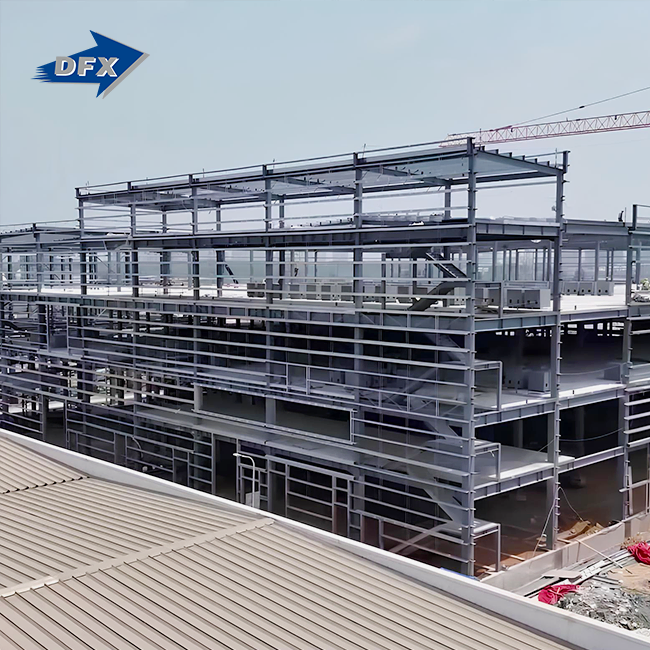
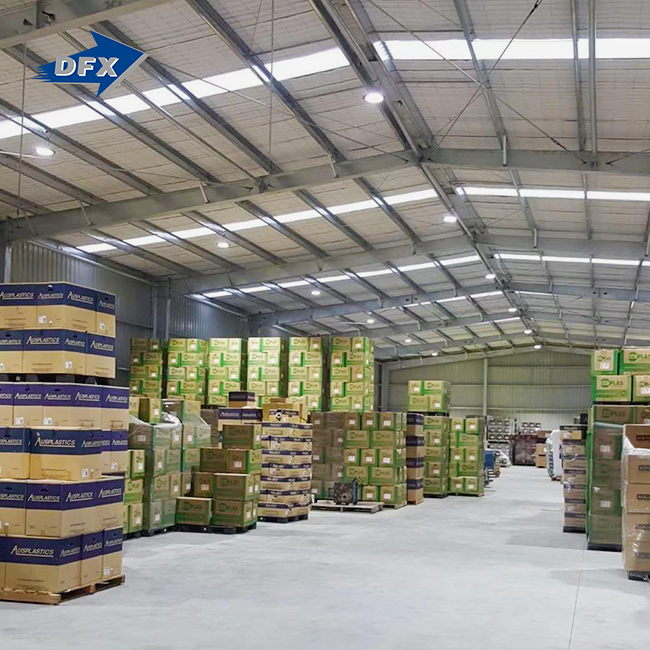
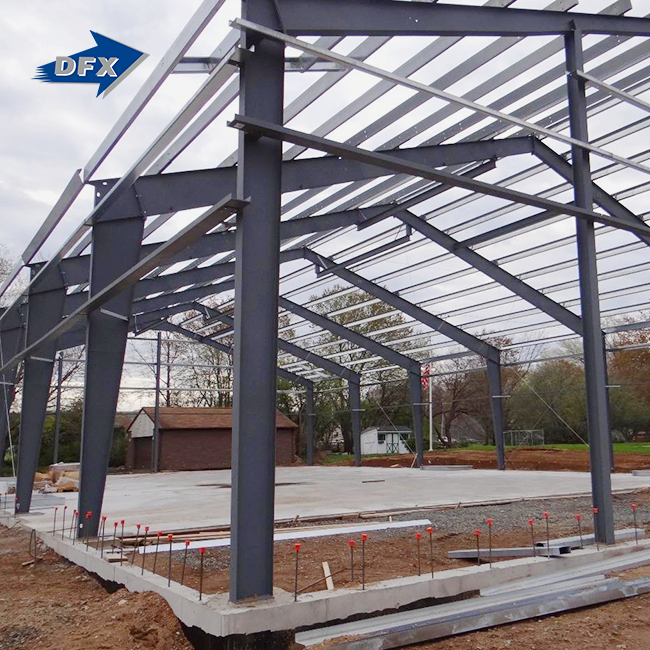
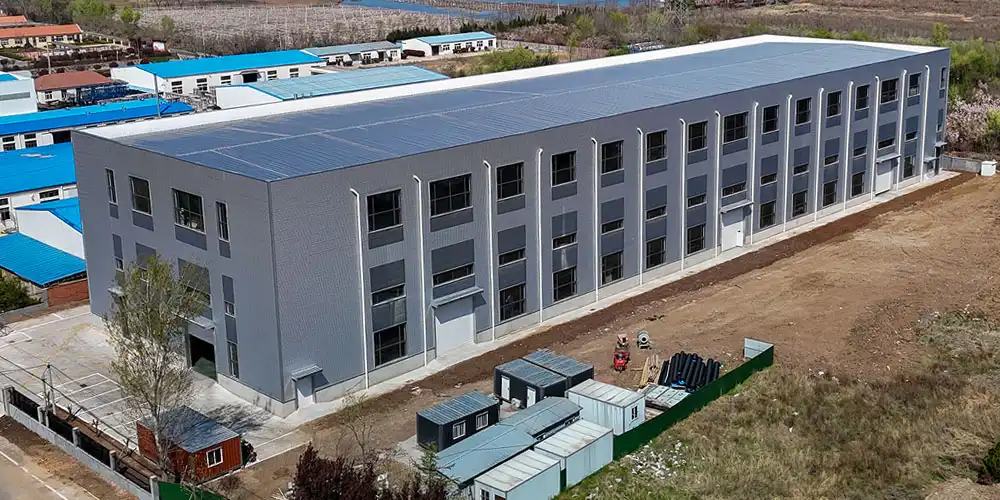
The fundamental difference between these warehouses is in construction and materials. Logistics Park Steel Warehouses feature PEB systems with welded C/Z purlins, H-beam primary steel frames, and complete bracing. Clear-span architecture, which can be over 30 to 50 meters long without columns, eliminates internal impediments. This maximises floor area and allows contemporary racking systems and automated storage solutions.
Traditional stores feature reinforced concrete towers, stone walls, and composite building technologies. These buildings have been utilised in industry for decades, but they need a lot of foundation work, take longer to cure, and have limited column spacing, which makes the inside less flexible. Because concrete and brick buildings are stiff, future alterations are costly and time-consuming. Businesses must consider this when expanding or changing their operations.
Material Composition and Structural Systems
Steel warehouses employ high-tensile steels like Q355B or ASTM A572 Gr. 50, which can bend over 345 MPa. Engineers can exploit this strength-to-weight ratio to produce lighter, stronger frames. These frames support solar panels, HVAC equipment, and suspended conveyor systems. Cold-formed galvanised steel with a zinc coating thickness of up to 275g/m² is used for the secondary frame to prevent rusting. This is useful in humid areas and coastal traffic hubs.
Warehouses are traditionally built using poured concrete with compressive strengths of 25 to 35 MPa, clay or concrete block units, and wood roof trusses in smaller buildings. Natural heavy materials require deeper supports and lengthier building processes. To reach design strength, concrete must cure for 28 days. Other building processes and project completion are delayed.
Architectural Flexibility and Scalability
Modular prefabricated steel storage buildings are the most flexible type of building on the market. End-wall frames can be made to be flexible structures that can be extended linearly by removing covering panels and adding new bays without stopping what's already being done. This ability to grow is very helpful for building and manufacturing businesses that are planning for capacity increases or managing projects that are delivered in stages.
With traditional building methods, owners are stuck with a set size. To make a concrete building bigger, load-bearing walls have to be taken down, a new base has to be dug, and the old and new structures have to be carefully put together so that the structure stays strong. These projects usually cost 40–60% more per square meter than the original building, and they stop warehouse activities for long periods of time.
Core Differences in Construction and Design
Different building methods are used for these categories. Off-site steel structure production occurs in supervised factories. Precise welding, automated cutting, and quality control ensure accurate measurements within ±2mm tolerances. The job site receives pre-assembled pieces, reducing on-site work and weather delays.
Project managers can better plan procurement and operational launch dates when building timeframes shift. Steel buildings usually finish 30–50% faster than normal ones. A 5,000-square-metre steel warehouse becomes weather-tight in 8–12 weeks after the base is constructed, while a concrete building takes 20–28 weeks. This acceleration allows building contractors and EPC firms to start making money faster and spend less on capital.
Durability and Maintenance Requirements
If you keep up with maintenance, steel buildings made in China that are certified by ISO9001 and CE will last a very long time. The main steel frame is covered by epoxy zinc-rich paint that has a dry film thickness of 80 to 120 microns and can last for more than 50 years. Galvanised parts don't rust or oxidise, so they only need to be inspected once a year, their gutters cleaned, and the coating touched up every so often. Roof and wall covering systems usually last 20 to 30 years before they need to be replaced. They are made of standing seam metal panels or sandwich panels with polyurethane cores.
When it comes to upkeep, traditional stores have different problems. Cracks appear in concrete because of temperature expansion, settlement, and freeze-thaw cycles. These cracks need to be sealed and fixed on a regular basis. Masonry walls need to be repointed so that they stay weatherproof. Concrete roofs with a flat or low slope often have barrier failures that let water in and damage stored goods and weaken structural parts. Over the course of 30 years, the regular costs of maintaining a standard warehouse are usually 25–35% higher than those of steel options.
Environmental Impact and Energy Efficiency
Transportation operations increasingly prioritise sustainability. SS316 efficient steel logistics warehouse construction decisions affect firms' ESG aims. Steel buildings produce little waste during development, and all offcuts and scrap can be repurposed. Structural steel is 25–30% recycled, according to the steel industry. This means it has less carbon than fresh concrete.
Another benefit is energy savings. Steel constructions employ 100–200 mm sandwich panels with polyurethane or mineral wool insulation. These systems maintain a constant building temperature and reduce HVAC load with R-values between 20 and 40. Traditional buildings with concrete walls and regular insulation have R-values between 10 and 15, making heating and cooling more energy-intensive. In cold chain transport hubs that store temperature-sensitive commodities, thermal break-insulated steel panels maintain -25°C to +5°C. This greatly reduces working costs.
Operational Efficiency and Performance
The choice of warehouse has a direct effect on daily operations, changing everything from the route of forklifts to the accuracy of inventory. Steel buildings are more efficient because they are smartly designed to use space and have structural features that work with current logistics technology.
Interior Layout Optimization
With a clear-span steel building, there are no columns across large floor areas. This lets facility managers make the best storage plans without having to work around structural problems. It is very important to have this freedom for high-bay shelving systems, Automated Storage and Retrieval Systems (AS/RS), and Very Narrow Aisle (VNA) forklift activities. Steel buildings can easily have super-flat floors that meet Fmin 100 standards, which automatic guided vehicles and precise material-handling equipment need.
In traditional warehouses with column grids spaced every 6 to 8 meters, there are empty spaces around the building's structural parts that make storage 20% to 15% less dense. These columns get in the way of normal traffic flows, making trips longer and picking less efficient. For standard warehouses to be automated, expensive solutions are needed to fit equipment around columns that are already there.
Safety and Security Features
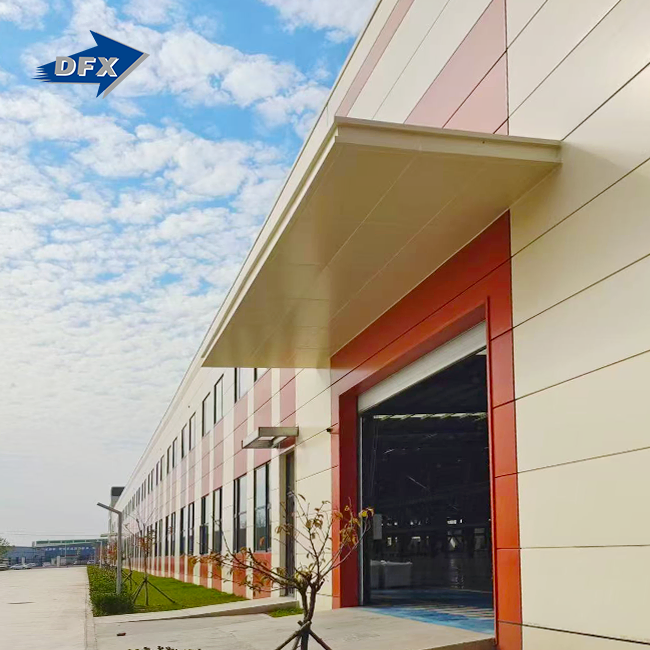
Logistics centres storing pricey items need fire protection. Steel buildings provide passive fire protection because intumescent coatings grow when heated to insulate structural sections and maintain load-bearing capacity. Non-combustible sandwich panels with mineral wool cores fulfil that store fire standards (REI 120–240), providing people time to escape and save property.
Steel architecture inherently repels bugs better than wood or wood-based buildings. Rats and mice can't gnaw steel framing or panels; thus, they can't get to food in food delivery and agriculture storage facilities. Because they seal tightly, interlocking metal panels make it tougher for unauthorised entry. Important consideration when storing valuables.
Weather Resistance and Structural Integrity
Logistics parks in different areas have to deal with different natural problems. Steel buildings that are designed to work in certain areas can withstand high levels of seismic activity (usually Grade 8+ earthquake protection) and wind speeds of up to 120–150 km/h. Because steel is naturally flexible, buildings can bend and absorb energy during earthquakes without falling apart, and then they can return to their original shape.
Earthquakes can do a lot of damage to traditional buildings made of rigid concrete and brick, which crack and fall apart under shear stress. Fixing concrete buildings that have been damaged by earthquakes is often not cost-effective, so the buildings are destroyed. In traditional buildings, wind resistance is based on mass rather than designed flexibility. This means that foundations and walls need to be heavier and thicker to get the same level of performance.
Cost and Investment Considerations for B2B Buyers
When procurement managers look at warehouse choices, they need to look at both the original capital cost and the costs over the project's lifetime to get a true picture of its value. The financial picture includes costs for building, budgets for upkeep, gains in operational efficiency, and the value of assets going up or down.
Initial Construction Investment
SS316 efficient steel logistics warehouse construction costs range from $45 to $75 per square metre for simple buildings to $90 to $140 for fully enclosed ones. Engineering calculations, production, transportation planning, and structural assembly advice are included. This covers all the services experienced steel structure makers offer. Traditional warehouses cost $60–$95 per square metre for plain buildings and $110–160 for enclosed ones.
The standard building has a competitive starting price. The project timeline impacts the whole investment picture. Each month the project is delayed, practical income is lost, and financing costs rise. A steel warehouse constructed four months earlier than a normal option makes money and doesn't pay construction loan interest, increasing ROI by 8–15% in the first year.
Maintenance and Lifecycle Costs
Operating spending changes significantly throughout the 30 years of ownership. Steel building maintenance, including inspections, paint touch-ups, and gutter cleaning, costs $0.80 to $1.20 per square metre each year. Traditional warehouses charge $1.50–$2.50 per square metre each year for concrete repair, membrane roof maintenance, tuckpointing, and structural tracking.
Energy expenditures are another long-term cost of homeownership. Steel sandwich panel systems reduce heating and cooling expenses by 20–30% due to their greater insulation. This means they save $2–4 per square metre each year in mild climates and $4–7 in difficult regions. The energy savings can cover 15–25% of the building's initial cost over 30 years.
Financing and Procurement Strategies
Working with well-known steel structure makers makes it easier for building companies and EPC firms to get what they need. With project-based fabrication, you can make payments in stages that match the stages of production. For example, you can pay a deposit when you accept the order, a progress payment when 50% of the work is done, and the rest before shipping. Compared to traditional building, where bills for labour and goods are sent out often, this payment system makes it easier to keep track of cash flow.
Manufacturers who are certified with ISO9001, CE, and, if desired, EN1091 give buyers peace of mind that the product meets the standards of foreign financing. Because they last longer, are built to a standard, and have a higher resale value, banks and development finance institutions see certified steel buildings as lower-risk investments and may offer better loan terms.
Choosing the Right Warehouse Type for Your Logistics Park Needs
When choosing a warehouse, decision processes should look at more than just the original cost. Structured evaluation criteria that take into account practical needs and strategic goals are helpful for procurement managers who work with building workers, manufacturing companies, or farms.
Critical Selection Criteria
Cost competitiveness is more than just the price of the product. It also includes the time it takes to get to market, the savings in organisational efficiency, and the cost of upkeep. A steel building is quick to set up, which is good for projects with tight deadlines. Steel's flexible nature is helpful for buildings that will need to grow in the future. Steel's excellent heat performance and recovered content make it a good choice for operations that care about the environment and saving energy.
Safety and quality in the structure are very important, especially for places that store expensive goods or have a lot of employees. Steel buildings that are built to international standards and by skilled makers offer uniform quality that can be checked by mill test certificates, ultrasonic weld testing, and checks for dimensional tolerance. When standard designs don't work for custom uses like aeroplane hangars or specialized cold storage, engineering design skills become very important.
Real-World Application Examples
E-commerce distribution hubs benefit from steel warehouses. Mezzanine picking levels, conveyor systems, and high-density shelving are available in a column-free, 12,000-square-metre steel warehouse in a regional transportation park. Construction was completed in ten weeks, allowing the operator to capitalise on heavy season traffic and earn $180,000 more than a normal build.
The thermal efficiency of steel construction benefits cold chain facilities. A 6,000-square-metre chilled building with 150 mm polyurethane sandwich panels can maintain -20°C using 28% less energy than a concrete structure with typical insulation. Agriculture and food wholesalers with temperature-sensitive products can save $42,000 a year on energy costs, a substantial ROI.
Partnering with Reliable Manufacturers
Choosing the best steel warehouse supply greatly impacts job success. Established makers with knowledge of architectural design, construction detailing, production, and installation support make projects easier. Companies with big production centres and modern tools ensure quality and on-time delivery.
It's important to have experience. Steel structure manufacturers with 12 years or more of experience can optimise containers for export handling and give foreign teams precise installation instructions. Their experience with industrial plants, logistics centres, and business steel structures proves they can handle many tasks.
Conclusion
Choosing between steel and standard warehouse buildings has a big impact on how well a logistics park steel warehouse works, how much it costs, and how flexibly it can be used. Steel warehouses can be built faster, use internal space better, have lower lifetime costs, and be more environmentally friendly. These are all benefits that are becoming more important in today's competitive supply chains. Traditional buildings are comfortable, but they can't compare to the flexibility and long-term value of steel. When procurement experts look at warehouse choices, they should put initial investment, structure performance, and future scalability, along with total cost of ownership, at the top of their list. This way, they can choose solutions that meet changing logistics needs well.
FAQ
1. How long does steel warehouse construction take compared to traditional methods?
A 5,000-square-metre steel warehouse can be built in 8–12 weeks, from the time the base is finished to the time the building is weathertight. This is about 30–50% faster than standard concrete construction, which takes 20–28 weeks. Using off-site production, pre-engineered parts, and fast on-site assembly cuts down on delays caused by bad weather and the amount of work that needs to be done.
2. What maintenance do steel warehouses require?
Steel buildings don't need much upkeep—just a once-a-year check, cleaning of the gutters, and some paint touch-ups here and there. The galvanised steel parts naturally don't rust, and good coats protect the main frames for over 50 years. Roofing and wall panels usually last 20 to 30 years before they need to be replaced. This is a lot longer than most standard roofing materials, which need to be fixed every 10 to 15 years.
3. Can steel warehouses support rooftop solar installations?
Modern steel warehouse plans can fit solar panels on the roof by increasing the load capacity of the rafters during the building process. The frame can hold an extra 15–20 kg/m² of weight for solar panels, mounting tools, and snow. This turns warehouse roofs into assets that can make money and help reach sustainability goals.
Partner with DFX for Your Steel Warehouse Solution
Director Steel Structure Co., Ltd. has been making steel warehouses for logistics parks, distribution centres, storage sites, and industrial uses around the world for more than 12 years. Our 40,000-square-meter factory has more than 200 skilled workers who use six automatic H-beam welding lines, two sandwich panel production systems, and high-tech C/Z purlin roll-forming tools. Because we can do so many things, we can be your one-stop Logistics Park Steel Warehouse manufacturer, helping you with design, manufacturing, logistics planning, and installation.
Our production methods are ISO9001 and CE-certified, which means that every project meets international quality standards. Our experienced engineering team also creates solutions that are unique to your business needs. Whether you're an EPC contractor in charge of large building projects or a manufacturing business that wants to make more things, Director Steel can help you build strong steel structures that will improve your project's logistics and return on investment. Email our team at jason@bigdirector.com to talk about your warehouse needs and get a thorough project plan that takes into account your budget, timeline, and performance goals.
References
1. Smith, J.R., & Thompson, M.K. (2021). Comparative Analysis of Pre-Engineered Steel Buildings and Conventional Construction Methods in Logistics Infrastructure. Journal of Industrial Construction Engineering, 45(3), 287-304.
2. Anderson, P.L. (2020). Lifecycle Cost Assessment of Warehouse Construction Technologies: Steel versus Traditional Materials. International Building Economics Review, 18(2), 112-129.
3. Chen, W., & Martinez, R. (2022). Sustainability and Energy Efficiency in Modern Warehouse Design. Green Building Research Quarterly, 12(4), 56-73.
4. Johnson, E.T. (2019). Structural Performance of Clear-Span Steel Buildings in Seismic Zones. Engineering Structures and Safety, 34(1), 45-62.
5. Roberts, A.M., & Davis, K.P. (2021). Rapid Construction Methodologies for Supply Chain Infrastructure. Logistics Management and Technology, 29(3), 178-195.
6. Williams, D.H. (2020). Fire Safety Engineering in Steel-Framed Warehouse Facilities. Fire Protection Standards and Practice, 23(2), 89-107.
Learn about our latest products and discounts through SMS or email