- English
- French
- German
- Portuguese
- Spanish
- Russian
- Japanese
- Korean
- Arabic
- Greek
- German
- Turkish
- Italian
- Danish
- Romanian
- Indonesian
- Czech
- Afrikaans
- Swedish
- Polish
- Basque
- Catalan
- Esperanto
- Hindi
- Lao
- Albanian
- Amharic
- Armenian
- Azerbaijani
- Belarusian
- Bengali
- Bosnian
- Bulgarian
- Cebuano
- Chichewa
- Corsican
- Croatian
- Dutch
- Estonian
- Filipino
- Finnish
- Frisian
- Galician
- Georgian
- Gujarati
- Haitian
- Hausa
- Hawaiian
- Hebrew
- Hmong
- Hungarian
- Icelandic
- Igbo
- Javanese
- Kannada
- Kazakh
- Khmer
- Kurdish
- Kyrgyz
- Latin
- Latvian
- Lithuanian
- Luxembou..
- Macedonian
- Malagasy
- Malay
- Malayalam
- Maltese
- Maori
- Marathi
- Mongolian
- Burmese
- Nepali
- Norwegian
- Pashto
- Persian
- Punjabi
- Serbian
- Sesotho
- Sinhala
- Slovak
- Slovenian
- Somali
- Samoan
- Scots Gaelic
- Shona
- Sindhi
- Sundanese
- Swahili
- Tajik
- Tamil
- Telugu
- Thai
- Ukrainian
- Urdu
- Uzbek
- Vietnamese
- Welsh
- Xhosa
- Yiddish
- Yoruba
- Zulu
Industrial Automotive Assembly Workshop Design and Build
An Automotive Assembly Workshop is a highly engineered industrial building designed to handle the complex needs of making and putting together cars. These special steel buildings are not like regular warehouses. They can hold a lot of weight, have large, column-free spaces, and can be rearranged to fit automatic production lines, robotic cells, and overhead crane systems. These workshops are made with high-quality Q235 or Q355 steel frames that are welded together. They have the structural stability needed for fast-paced production settings and allow for quick building times that keep projects on plan and on budget.
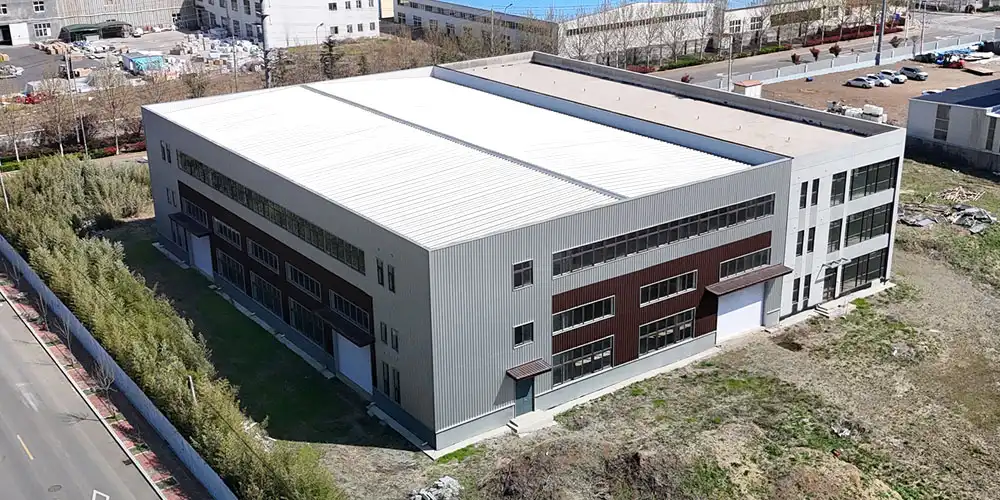
Understanding Automotive Assembly Workshops
Buildings where cars are put together need more than just a place to live. They need to be designed so that every part of the structure helps with production and keeps workers safe. The modern Automotive Assembly Workshop uses advanced steel construction methods and flexible space planning to make buildings that can do a wide range of tasks, from pressing to testing and final car trim.
Core Functional Zones in Vehicle Assembly Facilities
In these kinds of buildings, manufacturing activities are usually organized around separate output zones. The initial frame assembly is done in body-in-white areas, which need a lot of floor room and clearance above for robotic welding stations. Paint and coating areas need to be kept in a controlled environment with special ventilation systems. On the other hand, final assembly halls need to have flexible plans that can be used for a variety of car types and production numbers. Working with EPC builders and manufacturing companies has taught us that the first step in designing a successful workshop is to understand these operating needs during the planning phase.
Safety and Quality Standards in Assembly Environments
Regulatory compliance affects every part of designing and building a workshop. The manufacturing process is controlled by ISO9001 quality management systems, and structural parts are certified to meet international safety standards through CE approval. Following the ASTM standards for materials gives you peace of mind that the steel's qualities will match what you thought they would be. In addition to certifications, real safety issues include making sure there are enough exits, fire alarms, and environmental controls that keep workers and sensitive industrial equipment in a car manufacturing plant safe during normal operations.
Industrial Design Principles for Automotive Assembly Workshops
A good workshop design addresses different needs, like making the most of the useful floor space while still providing the support the structure needs, meeting current production needs while also allowing for future growth, and keeping costs low without sacrificing durability in the long run. These ideas shape how we do every job, from the first idea to the finished installation for every Automotive Assembly Workshop.
Layout Optimization for Production Flow
How space is organized has a big impact on how well production works. For sequential assembly processes, linear plans work well because they let cars move easily from station to station without having to go backwards. When you group tools around specific assembly jobs in a cellular configuration, it works well for mixed-model production. A part of our structure design services is industrial flow analysis, which involves placing columns and supports in a way that helps material move instead of getting in the way. Large spans—often more than 30 meters between columns—get rid of internal obstacles that make it hard to place equipment and improve operations.
Material Selection and Structural Performance
The choice of components has a direct effect on how well and how long the workshop lasts. Q355B high-strength steel can hold more weight than normal types, so it can be used for longer spans and lighter members. Bolted links allow for quick building in the field and keep the structure's integrity when it's being loaded and unloaded. C and Z purlins support roof and wall covering systems well and can also hold insulation layers that keep the inside of the building at a comfortable temperature. We can make six automatic H-beam production lines and special purlin-making equipment. This makes sure that the quality of all the structural parts we send to your project site is the same.

How to Build and Operate an Efficient Industrial Automotive Assembly Workshop
There is a set order to successful Automotive Assembly Workshop growth, from the idea stage to the first day of operation. Our "turnkey" method includes design, fabrication, and installation support, which speeds up the process and makes it easier to coordinate, which can be hard on projects with more than one provider.
Planning and Design Phase Essentials
The first step to a successful project is careful planning that takes into account both current needs and possible future outcomes. Working closely with project managers and technical leaders helps us understand what equipment is needed, when it needs to be used, and how long it will take to run. Crane loads, process equipment weights, and weather factors unique to your site are all part of structural design work. Building information modeling helps us find problems before they happen, and detailed installation plans make it easier to put things together in the field. When compared to traditional Car manufacturing plant building methods, this planning investment usually cuts the time needed for work on-site by 30 to 50 percent.
Installation Support and Operational Readiness
How well the finished building does its job depends on how well it was put together in the field. We give you detailed construction plans that show where to put each member, how to connect them, and what the important tolerances are. On-site help from our technical team helps workers figure out how to meet specific building needs and make sure that bolted connections are done correctly. This help is especially helpful for businesses that are working on their first steel building job or in places they have never been before. After the structure is finished, we help with the final inspections and licensing steps that are needed by insurance companies and local building officials.
Procurement Insights for Automotive Assembly Workshop Equipment
As important as design choices are, procurement decisions also have a big impact on how projects turn out. Knowing what to look for in a seller and how to evaluate them helps project managers and procurement experts get things for the Automotive Assembly Workshop without going over budget or behind schedule.
Evaluating Supplier Capabilities and Reliability
When choosing a supplier, you should do more than just compare prices. How well a supplier can meet your shipping deadlines without sacrificing quality is based on their manufacturing ability. Our factories have twenty corrugated sheet lines and several beam and purlin production systems. This gives us the flexibility to work on projects of all sizes, from small workshops to huge sites with many buildings. Both technical knowledge and experience with projects of a similar size and level of difficulty to yours should be taken into account. Suppliers should be able to back up their claims with references from building companies and manufacturing clients. Certifications, like ISO9001 and CE, are concrete proof of quality control systems and the consistency of products.
Building Long-Term Supplier Relationships
When you only do one deal, you miss chances to keep adding value. Building ties with dependable steel structure makers has benefits that go beyond individual projects. Suppliers who know how your business works can speed up future growth, suggest ways to make things more efficient based on changes in the industry, and give you priority booking during busy times. Our expanding customer base, which includes building companies with 20 to 200 workers, EPC contractors, and manufacturing plants in several countries, shows that both product quality and relationship Auto factory design value are meeting customer needs. We see each project not as an end to a deal but as the start of a relationship.
Future Trends and Technologies in Automotive Assembly Workshop Design
The design of workshops is always changing as manufacturing tools get better and business goals change. Knowing about new trends helps project planners make choices for the Automotive Assembly Workshop that will be useful for many years to come, as the buildings last for decades.
Industry 4.0 and Smart Manufacturing Integration
When production systems are connected, they create huge amounts of data that help with practical choices and preventative maintenance. Modern workshop designs include the infrastructure that these technologies need, like strong electrical systems that power dense sensor networks, communication paths that connect production equipment to central control systems, and environmental monitoring that makes sure sensitive electronics are always in the best possible conditions. Building automation systems can change the lighting, temperature, and air flow based on real-time production plans. This saves energy and keeps workers comfortable. Our structural designs accommodate these systems through coordinated equipment supports, cable routing provisions, and utility distribution planning integrated during initial engineering.
Sustainability and Energy Efficiency Priorities
Environmental factors are becoming more and more important in building design decisions. Energy-efficient outer systems lower energy costs and lower the amount of carbon dioxide that a building releases. Using polycarbonate windows with UV-resistant coatings as part of daylighting techniques lowers the need for artificial lighting during the day. Adding renewable energy, especially solar panels on roofs, is possible with steel buildings that are made to hold more weight. Material selection matters too: steel's recyclability and the efficient manufacturing processes we employ at Director Steel align with corporate sustainability commitments while delivering the performance characteristics automotive manufacturing demands.
Adaptable Designs for Changing Production Needs
Manufacturing is unstable, so buildings need to be able to adapt to changes that come up out of the blue. With pre-planned connection places and knock-out wall provisions, modular steel buildings let businesses grow without stopping what they're doing. Column grid patterns and roof frame systems shouldn't just optimize for the first way the equipment is set up; they should also look at other plan options as well. This adaptability is very helpful as car designs change, output rates change, and automation technologies get better. Investing in infrastructure that can be changed guards against premature Auto factory design failure and helps businesses be flexible in markets where competition is high.
Conclusion
Designing and building an industrial Automotive Assembly Workshop requires a unique set of skills that include understanding structural engineering, knowing how to run a production process, and being able to carry out projects in the real world. Steel building systems have the performance qualities that these facilities need, like large clear spans, high load capacities, quick construction plans, and long-lasting sturdiness, all while keeping costs low enough that the projects can be completed. Director Steel has been building structures for industrial companies around the world for twelve years. This gives procurement managers and project engineers the technical background and track record they need to choose workshop providers. Our unified approach, which includes design services, quality-certified manufacturing, and installation support, speeds up project delivery and lowers the organizational challenges that come with working with multiple vendors.

FAQ
1. How do steel structures accommodate vibration from heavy manufacturing equipment?
To control shaking, the base and structure must be designed together. With separate equipment supports, big sources of shaking, like stamping presses, are kept away from the building frame. This stops energy transfer that could lead to wear damage. Heavy-duty H-beam sections with localized support make the structure stiff, which keeps it from bending when it's loaded dynamically. At key link places where sensitive equipment needs to be very stable, vibration-damping devices can be added. During the planning process, our engineering team looks at the specs of the equipment to make sure that the structural provisions meet your unique machinery and working needs.
2. Can workshops be expanded without disrupting ongoing production?
A modular steel building makes it possible to expand in stages with little effect on operations. End wall provisions are built into building plans so that future additions can join directly to current structures. For faster growth frames, perimeter poles with pre-drilled connection points are used, and bolted assembly methods are used instead of welding, which could be dangerous near production areas. With careful planning, new building activities are coordinated around manufacturing operations. This usually means that production can keep going during growth projects. This feature is especially useful for manufacturing businesses that are growing and can't afford to take long breaks from work.
3. What maintenance do steel assembly workshops require?
Surprisingly little upkeep is needed for steel buildings that are properly designed and coated. Initial surface preparation, such as shot blasting to Sa 2.5 standards, and application of marine-grade coating systems protect against rust for decades without the need to recoat. Periodic inspections should be done to make sure the coating is still intact, the connections are tight, and the drainage system is working properly. However, when the quality of the building meets standards, there shouldn't be much need for upkeep. In the same way, sandwich panel covering systems only need to be cleaned and fixed occasionally. This helps keep costs low over the life of the building, which increases the project's return on investment.
Partner With Director Steel for Your Next Assembly Workshop Project
Investing in a manufacturing plant means the Automotive Assembly Workshop is making a big promise that will affect your business for decades. If you choose the right Automotive Assembly Workshop provider, your project will have the efficiency, dependability, and flexibility that your output needs. Director Steel brings proven skills to every job. For example, our 40,000-square-meter factory makes 20,000 tons of welded H-beams every year, and our experienced team helps with everything from planning to installation during the whole project. Our competitive prices and 25–48-day shipping times keep projects on track and on budget. Our ISO9001-certified quality systems and CE-compliant goods meet the international standards that procurement workers around the world expect. Over 200 trained workers and six automatic H-beam lines, along with advanced production equipment, make sure that all of the structural parts that are sent to your site are of the same high quality. We ask you to talk to our team about your needs, whether you are a construction company in charge of industrial projects, an EPC company building full facilities, or a manufacturing company looking to increase production. Get in touch with Jason at jason@bigdirector.com to find out how our manufacturing skills in the Automotive Assembly Workshop can help you reach your project goals and give your business the high-performance space it needs.
References
1. American Institute of Steel Construction. (2022). Steel Construction Manual, 15th Edition. Chicago: AISC.
2. Gerber, D.J. & Lin, S.E. (2020). "Pre-Engineered Metal Buildings: Design Principles and Construction Practices." Journal of Structural Engineering, 146(8), 04020145.
3. National Association of Manufacturers. (2021). Manufacturing Facility Design Guidelines for Automotive Assembly Operations. Washington, DC: NAM Press.
4. Smith, R.K. & Thompson, M.A. (2019). Industrial Steel Buildings: Engineering, Fabrication, and Construction. New York: McGraw-Hill Professional.
5. Society of Automotive Engineers International. (2023). "Facility Infrastructure Requirements for Modern Vehicle Assembly." SAE Technical Paper Series, Paper No. 2023-01-0847.
6. Zhang, L., Chen, W., & Liu, Y. (2021). "Structural Performance of Heavy-Capacity Steel Workshops Under Dynamic Loading Conditions." International Journal of Steel Structures, 21(3), 892-908.
Learn about our latest products and discounts through SMS or email