- English
- French
- German
- Portuguese
- Spanish
- Russian
- Japanese
- Korean
- Arabic
- Greek
- German
- Turkish
- Italian
- Danish
- Romanian
- Indonesian
- Czech
- Afrikaans
- Swedish
- Polish
- Basque
- Catalan
- Esperanto
- Hindi
- Lao
- Albanian
- Amharic
- Armenian
- Azerbaijani
- Belarusian
- Bengali
- Bosnian
- Bulgarian
- Cebuano
- Chichewa
- Corsican
- Croatian
- Dutch
- Estonian
- Filipino
- Finnish
- Frisian
- Galician
- Georgian
- Gujarati
- Haitian
- Hausa
- Hawaiian
- Hebrew
- Hmong
- Hungarian
- Icelandic
- Igbo
- Javanese
- Kannada
- Kazakh
- Khmer
- Kurdish
- Kyrgyz
- Latin
- Latvian
- Lithuanian
- Luxembou..
- Macedonian
- Malagasy
- Malay
- Malayalam
- Maltese
- Maori
- Marathi
- Mongolian
- Burmese
- Nepali
- Norwegian
- Pashto
- Persian
- Punjabi
- Serbian
- Sesotho
- Sinhala
- Slovak
- Slovenian
- Somali
- Samoan
- Scots Gaelic
- Shona
- Sindhi
- Sundanese
- Swahili
- Tajik
- Tamil
- Telugu
- Thai
- Ukrainian
- Urdu
- Uzbek
- Vietnamese
- Welsh
- Xhosa
- Yiddish
- Yoruba
- Zulu
How to Choose the Right Steel Structure Garage Size
Choosing the proper size for your steel structure garage directly impacts project success, operational efficiency, and return on investment. When we work with construction contractors, manufacturing facility managers, and agricultural operators, the most common concern revolves around sizing—how much space actually meets current needs while accommodating future growth? Steel structure garages deliver exceptional durability and rapid installation timelines, but only when sized correctly from the outset. This comprehensive guide walks through the strategic considerations that procurement managers, project engineers, and facility planners should evaluate when specifying garage dimensions, ensuring the final structure aligns with project requirements, regulatory compliance, and budget constraints.

Understanding the Decision Scenarios for Garage Size
Choosing the right size garage depends on what you want to use it for. Before we choose the size of the building, we need to know if it will be used for business car repair, storing heavy equipment, fleet upkeep, or keeping personal vehicles.
Commercial vs. Residential Applications
When compared to residential buildings, commercial garages usually need higher eave heights and bigger clear widths. Industrial repair shops need enough space for overhead cranes and technicians to be able to move freely around cars that are being moved. Transit companies that store articulated buses need turning spaces that people who own garages for their homes never think about. Residential multi-car garages try to blend in with the current design while still allowing vehicles to get in and out.
Primary Function and Equipment Types
The main purpose of your garage decides how much space it needs. Parking for cars has very different needs than repair work, which needs motorized lifts, parts storage shelves, and desk assignments. Facilities that store farm or building equipment need to have enough height room for trucks to load and unload equipment from higher levels. Adding office spaces to garages adds another level of space planning challenges because they need to be separated into areas with temperature control and utility access.
Site Constraints and Regulatory Compliance
The greatest car size is directly limited by the amount of land that is available. Zoning laws usually say how far buildings can be set back from property lines, how tall they can be, and how much of the lot they can cover. The size of structure members is affected by wind load resistance, earthquake design standards, and snow load limits that are written in local building rules. Environmental laws might make it illegal to damage the site while it's being built on, or they might require flood control systems. We've seen projects get held up for months because the basic site analysis wasn't done well enough. This is another reason why early constraint mapping keeps expensive redesigns from happening.
Establishing Core Metrics for Selecting Garage Size
Dimensional planning starts with understanding the physical metrics that define garage functionality and structural performance.
Width, Length, and Height Requirements
Standard vehicle dimensions provide baseline measurements. Passenger vehicles typically need a 10-12 foot width per bay, while commercial trucks and buses require 12-16 feet. Length calculations must account for vehicle overhang plus door clearance—a typical 20-foot vehicle needs 24-26 feet internally. Height considerations include vehicle height plus door mechanism clearance; standard passenger vehicles function with 8-10 foot eave heights, whereas RVs and commercial buses demand 14-16 foot minimums.
Workspace allocations in a steel structure garage surrounding vehicles significantly impact total dimensions. Technicians need 3-4 feet of clearance on all vehicle sides for comfortable access. Tool carts, parts storage, and diagnostic equipment consume additional floor space. Adequate ventilation clearances, particularly when welding or paint operations occur, require extra height allowances beyond basic vehicle clearance.
Structural Load-Bearing and Material Strength
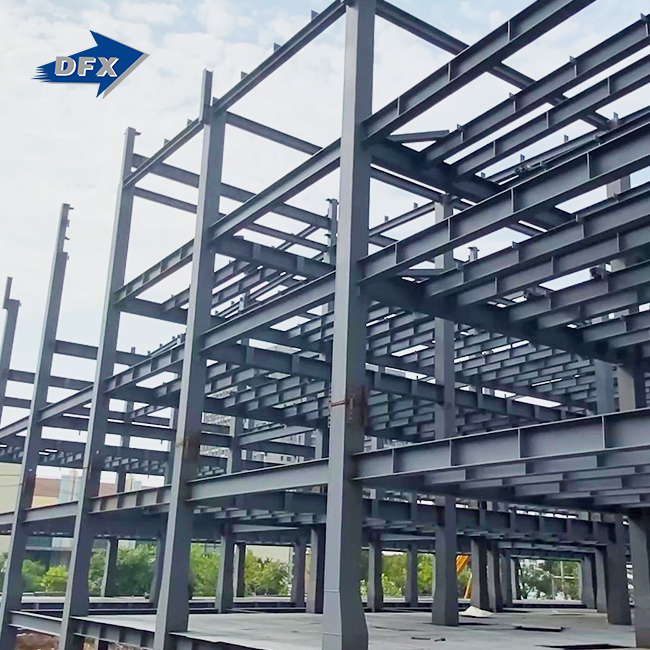
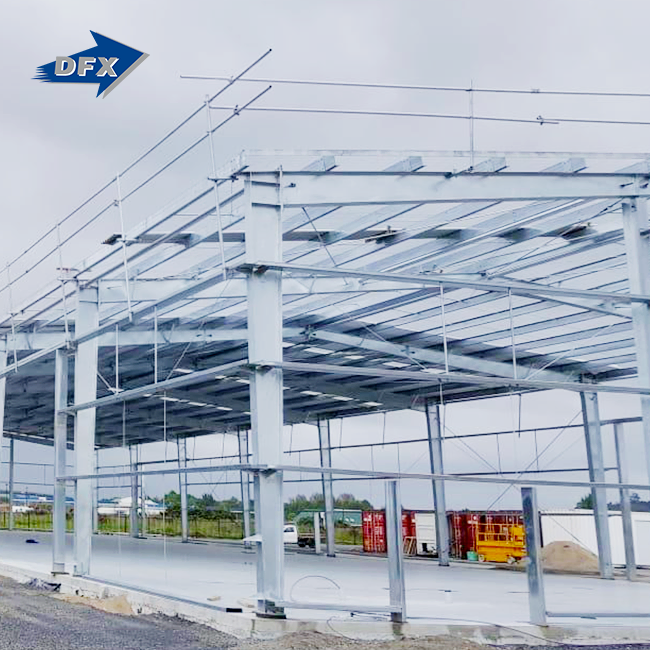
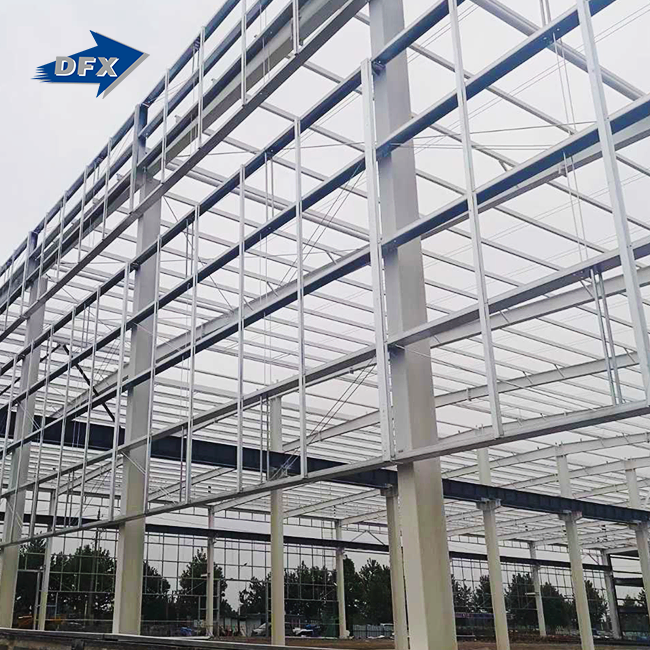
Steel structure garages utilizing Q355B or ASTM A572 Grade 50 steel deliver superior strength-to-weight ratios compared to traditional timber or masonry construction. This material advantage reduces foundation loads while supporting larger clear-span designs. Structures manufactured with light H-section or square tube steel frames paired with galvanized purlins can achieve spans exceeding 30 meters without intermediate support columns, maximizing usable interior space.
Foundation requirements correlate directly with structural loads and soil bearing capacity. Lighter steel framing reduces foundation costs compared to concrete alternatives, yet proper engineering calculations remain essential. We've seen clients underestimate foundation preparation, leading to settlement issues and structural misalignment.
Climate and Environmental Considerations
Regional climate dictates insulation requirements and weatherproofing specifications. Facilities in cold climates benefit from insulated sandwich panels maintaining interior temperatures for temperature-sensitive equipment or comfortable working conditions. Fire resistance becomes critical in maintenance facilities with flammable materials; rockwool cladding provides Class A fire ratings. Coastal locations demand enhanced corrosion protection through hot-dip galvanization with coating thicknesses exceeding 85 micrometers to withstand salt air exposure.
Evaluating Size Options: From Prefab Kits to Custom Builds
The choice between prefabricated systems and custom-engineered solutions fundamentally affects sizing flexibility, project timelines, and total investment.
Prefabricated Steel Garage Kits
Prefab kits offer standardized dimensions with accelerated delivery schedules. Manufacturers produce common sizes—20x20, 24x24, and 30x40 feet—with pre-engineered components ready for bolt-together assembly. These systems reduce on-site labor requirements and construction timelines by 40-60% compared to traditional methods. Quality manufacturers provide ISO9001 certification and CE compliance, ensuring structural integrity meets international standards.
Limitations exist within standardization. Prefab dimensions may not precisely match unique site constraints or specialized equipment requirements. Customization options within prefab systems typically include door placement, window configurations, and finish selections rather than dimensional alterations. We recommend prefab solutions when project requirements align with available standard sizes and timelines prioritize rapid occupancy.
Custom Steel Garage Builds
Custom engineering accommodates non-standard dimensions, complex site geometries, and integrated multi-functional spaces. Facilities requiring specific clear heights for overhead cranes, unusual bay widths for specialized equipment, or phased expansion capabilities benefit from bespoke design. Manufacturers like Director Steel provide in-house architectural design and detailing services, supporting clients from concept through installation.
Custom China steel structure garage builds require longer lead times—typically 8-12 weeks for engineering, fabrication, and delivery versus 4-6 weeks for prefab kits. Investment costs increase proportionally with complexity, yet the precision fit to operational requirements often justifies the premium. Projects with unique operational workflows or future expansion plans find custom solutions deliver superior long-term value.
Price Factors and Budget Planning
Material costs scale with garage size and structural specifications. Steel pricing fluctuates with global market conditions, yet reputable suppliers provide transparent quotes detailing material grades, quantities, and processing costs. Foundation expenses vary significantly based on soil conditions and structural loads—budget 15-25% of total project costs for site preparation and foundations.
Installation services impact total investment. Some suppliers provide turnkey solutions including erection supervision and technical support, while others supply materials only. Clarifying service scope during procurement prevents unexpected expenses. We've observed clients achieve 20-30% cost savings through accurate initial sizing, avoiding expensive mid-project modifications.
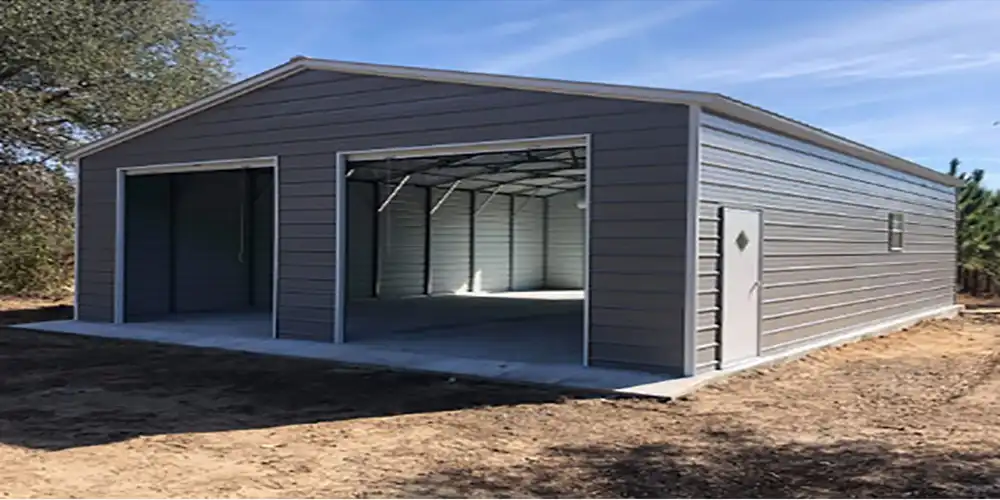
Matching Your Needs to the Right Steel Garage Size: Solution Categorization
Segmenting garage applications by scale and function streamlines the sizing selection process.
Small to Medium Garages for Limited Storage
Garages ranging from 20x20 to 30x40 feet suit private commercial vehicle storage, small equipment maintenance operations, or agricultural tool storage. These compact structures minimize land consumption and investment while delivering weather protection and security. Single-bay configurations accommodate 2-4 standard vehicles with minimal workshop space.
Construction timelines for smaller garages average 2-4 weeks from foundation completion to occupancy, enabling rapid deployment for urgent operational needs. We've supplied numerous agricultural clients with 24x30 structures for seasonal equipment protection, where the short production cycle aligned perfectly with planting schedule constraints.
Large Industrial and Multi-Use Structures
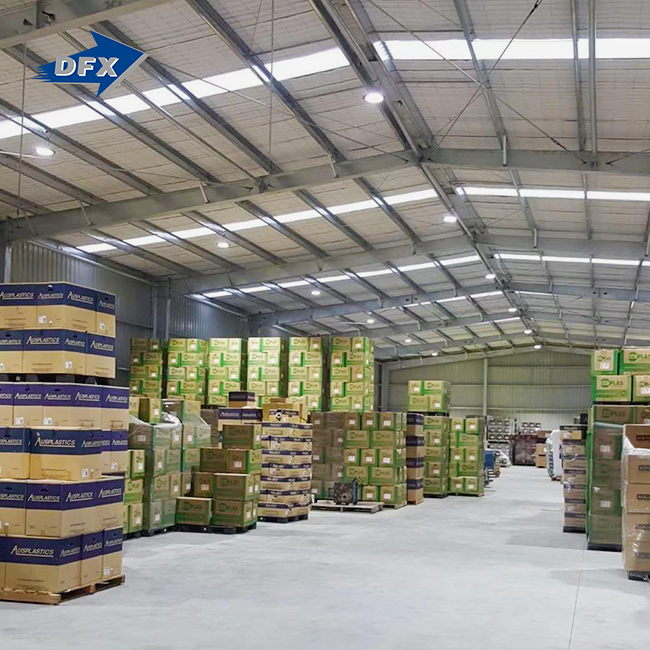
Facilities exceeding 40x60 feet address heavy-duty industrial fleet storage, commercial auto repair centers with multiple service bays, or integrated maintenance and office complexes. These structures leverage steel's clear-span capabilities, eliminating interior columns that obstruct vehicle movement and equipment placement. Multiple overhead door configurations support efficient traffic flow for simultaneous vehicle entry and exit.
Large garages often integrate office spaces, parts storage mezzanines, and utility rooms within the same structural envelope. Proper initial sizing accounts for partition walls, HVAC equipment, and electrical distribution infrastructure. We recommend adding 15-20% to calculated minimum dimensions, providing operational flexibility and future modification space.
Modular Designs and Phased Expansion
Modular construction methodologies support scalable growth aligned with business development. Initial phase structures establish core operational capacity, while engineered connection points enable seamless future expansion. This approach manages upfront capital expenditure while preventing operational disruption from undersized facilities.
Certified manufacturers design modular systems with consistent structural bays, standardized connection details, and coordinated foundation layouts. We've partnered with manufacturing clients implementing three-phase expansions over five years, where initial 60x80 structures ultimately grew to 60x200 feet without compromising structural integrity or operational continuity.
Summary and Final Decision Suggestions
Selecting optimal china steel structure garage dimensions balances immediate functional requirements against future operational evolution. Accurate vehicle and equipment inventories form the foundation for spatial calculations, yet wise planners incorporate 15-20% growth capacity to avoid premature obsolescence. Structural integrity and building code compliance cannot be compromised—partner with certified manufacturers holding ISO9001, CE, and relevant regional certifications to ensure regulatory adherence.
Climate-appropriate insulation and weatherproofing protect equipment investments and maintain comfortable working environments, directly impacting long-term operational costs. Budget planning should encompass the complete project scope, including foundations, utilities, and installation services, rather than material costs alone. Drawing from our experience across construction, manufacturing, and agricultural sectors, we've observed that disciplined upfront planning and conservative sizing assumptions consistently outperform aggressive cost minimization strategies. Projects sized with operational flexibility accommodate business growth, technological changes, and unforeseen requirements without expensive retrofits or replacement.
Conclusion
Choosing the right steel structure garage size requires methodical analysis of operational needs, site conditions, and regulatory requirements. Steel's inherent advantages—superior strength, rapid installation, and design flexibility—deliver maximum value only when dimensional specifications accurately reflect current demands and anticipate future growth. Prefabricated solutions accelerate project timelines for standard applications, while custom builds address complex requirements with precision-engineered solutions. Successful procurement teams prioritize structural integrity, climate-appropriate specifications, and certified manufacturing quality over short-term cost minimization. By following the strategic framework outlined in this guide, decision-makers can confidently specify garage dimensions that optimize operational efficiency, ensure regulatory compliance, and protect long-term investment value.
FAQ
1. What garage size do I need for different vehicle types?
Standard passenger vehicles require a 10-12 foot width per bay and a 20-24 foot length, including clearance. Commercial trucks need a 12-14 foot width and 30-35 foot length. Buses and RVs demand a 14-16 foot width, a 35-45 foot length, and a 14-16 foot minimum height. We recommend adding 3-4 feet perimeter clearance for maintenance access when garages serve repair functions rather than simple parking.
2. How do foundation requirements change with garage size?
Foundation complexity scales with structural span and load concentration. Garages under 30 feet wide often utilize simple perimeter footings with thickened edges. Spans exceeding 40 feet may require intermediate foundation piers or enhanced perimeter footings depending on soil bearing capacity. Larger structures with overhead cranes need specialized foundation calculations accounting for dynamic loads and point load concentrations.
3. Can prefab kits accommodate customization?
Prefab systems typically allow door placement modifications, window additions, and finish selections within standard dimensional frameworks. Structural dimensional changes usually require custom engineering. Some manufacturers offer semi-custom prefab lines with adjustable bay widths in 4-foot increments, providing moderate flexibility while maintaining prefab efficiency advantages.
Partner with DFX for Your Steel Structure Garage Project
Director Steel brings over 12 years of specialized experience manufacturing pre-engineered steel structure garages for diverse industrial, commercial, and agricultural applications. Our 40,000 square meter production facility operates six automatic welded H-beam lines and advanced C/Z section steel equipment, delivering 20,000 tons of annual capacity with ISO9001 and CE certification. Whether you need a compact equipment storage solution or a large-span commercial maintenance facility, our engineering team provides complimentary sizing consultations and cost estimates tailored to your specific operational requirements. We support clients throughout the complete project lifecycle—from initial design through fabrication and installation guidance—with short production cycles that meet urgent project timelines. Contact jason@bigdirector.com today to discuss your steel structure garage requirements with our technical specialists to explore our comprehensive product range and connect with a trusted steel structure garage manufacturer committed to engineering excellence.
References
1. American Institute of Steel Construction. (2016). Steel Construction Manual (15th ed.). AISC Publications.
2. Newman, Alexander. (2019). Pre-Engineered Metal Buildings: Design and Construction Principles. Structural Engineering Press.
3. Davies, J.M. (2021). Light Gauge Steel Structures: Recent Advances and Future Trends. International Journal of Steel Structures, 21(3), 892-910.
4. Chen, W.F., & Lui, E.M. (2018). Handbook of Structural Engineering (2nd ed.). CRC Press.
5. Brockenbrough, R.L., & Merritt, F.S. (2020). Structural Steel Designer's Handbook: AISC, AASHTO, AISI, ASTM, and ASCE Design Standards. McGraw-Hill Education.
6. Trebilcock, P., & Lawson, R.M. (2017). Architectural Design in Steel: A Technical Manual for Architects and Engineers. The Steel Construction Institute.
Learn about our latest products and discounts through SMS or email