- English
- French
- German
- Portuguese
- Spanish
- Russian
- Japanese
- Korean
- Arabic
- Greek
- German
- Turkish
- Italian
- Danish
- Romanian
- Indonesian
- Czech
- Afrikaans
- Swedish
- Polish
- Basque
- Catalan
- Esperanto
- Hindi
- Lao
- Albanian
- Amharic
- Armenian
- Azerbaijani
- Belarusian
- Bengali
- Bosnian
- Bulgarian
- Cebuano
- Chichewa
- Corsican
- Croatian
- Dutch
- Estonian
- Filipino
- Finnish
- Frisian
- Galician
- Georgian
- Gujarati
- Haitian
- Hausa
- Hawaiian
- Hebrew
- Hmong
- Hungarian
- Icelandic
- Igbo
- Javanese
- Kannada
- Kazakh
- Khmer
- Kurdish
- Kyrgyz
- Latin
- Latvian
- Lithuanian
- Luxembou..
- Macedonian
- Malagasy
- Malay
- Malayalam
- Maltese
- Maori
- Marathi
- Mongolian
- Burmese
- Nepali
- Norwegian
- Pashto
- Persian
- Punjabi
- Serbian
- Sesotho
- Sinhala
- Slovak
- Slovenian
- Somali
- Samoan
- Scots Gaelic
- Shona
- Sindhi
- Sundanese
- Swahili
- Tajik
- Tamil
- Telugu
- Thai
- Ukrainian
- Urdu
- Uzbek
- Vietnamese
- Welsh
- Xhosa
- Yiddish
- Yoruba
- Zulu
How Industrial Warehouse Steel Structure Revolutionizes Warehouse Expansion
Modern industrial warehouse steel structures are a revolutionary way for businesses that need to quickly and cheaply expand their facilities to solve some of their most important problems. These prefabricated metal building systems are made with high-tensile steel frames (usually Q355B or a similar grade) and modular parts that get rid of the problems that come with traditional building. Steel structures greatly shorten project timelines by using advanced manufacturing methods and design factors that can be changed. They also make the most of useful space by having column-free spans over 30 meters. This new way of building directly addresses the problems of construction delays, budget overruns, and operating disruptions that have long been a part of traditional warehouse growth projects in the manufacturing, construction, and logistics industries.

Limitations of Traditional Warehouse Expansion Methods
When companies want to add more space to their warehouses using the usual concrete-based building methods, they quickly run into big problems that slow them down and cost a lot of money. The usual way of doing things includes long building phases that can last from 12 to 18 months from the start of work to its completion. During these times, business activities are constantly interrupted.
Extended Construction Timelines and High Capital Requirements
A lot of work has to be done on-site to build a concrete building, and the drying process is very complicated and cannot be sped up without affecting the structure's strength. Pouring foundations, building walls, and adding roof systems are all steps that must be done in a certain order in concrete construction. This causes dependencies where delays in one part affect the whole project. This longer timeline means longer financial commitments and a later return on investment. Construction companies that work on industrial projects for clients are always under pressure to explain why the plan got pushed back to people who expected the facilities to be ready faster.
Structural Inflexibility and Maintenance Burden
There are some design flaws in traditional warehouses that make them hard to change in the future. Concrete buildings usually need support beams inside that are spaced out regularly. This takes up floor space and makes it hard for forklifts to move around. When factories need to change the way their production lines work or when transport companies need to change how their storage areas are set up, tearing down and rebuilding concrete buildings can be very expensive. Over time, concrete buildings also need more and more upkeep. Cracks, water leaks, and foundation settlement all need to be fixed, which takes money away from core business activities.
Operational Disruption During Expansion
Manufacturing plants and distribution hubs have a lot of problems running their businesses when they try to add on to old concrete buildings. Businesses have to cut back on their operations or close down completely in areas nearby because of the noise, dust, and safety rules that come with standard building. This interruption has a direct effect on income streams and customer service promises. It's especially bad for EPC contractors who are responsible for meeting their own clients' tight project delivery schedules.
Introduction to Industrial Warehouse Steel Structures
The introduction of premade steel building systems has completely changed how companies expand their warehouses. These flexible solutions combine precise engineering with efficient manufacturing to make buildings that fix the problems that come with the old ways of building.
Modular Prefabricated Components for Accelerated Delivery
Specialized fabricators, such as Qingdao Director Steel Structure Co., Ltd., make industrial warehouse steel structures in factory-controlled production settings where H-beam primary frames, galvanised C/Z purlins, and bracing systems are made to exact specs. This way of making things makes sure that the quality is always the same while drastically cutting down on building times. With steel buildings, projects that would take 18 months to finish with concrete can often be finished in 6 to 8 months. Because the modules are separate, they can be worked on at the same time. For example, while the base is being prepared on-site, steel parts are being made off-site. During the rapid assembly phase, both streams come together.
Scalability and Customization Advantages
Steel structures are the most adaptable type of building for businesses whose room needs change over time. Steel frames can often span more than 40 meters without the need for intermediate beams. This makes for huge, clear floor spaces that are perfect for heavy machinery or automatic storage and retrieval systems. In the event that more space is needed in the future, steel buildings can be made longer by adding extra bays that fit in perfectly with the current structures. This scalability is especially helpful for transportation companies that are growing or for makers who want to increase their production capacity gradually instead of building huge factories all at once.
Economic and Environmental Performance
The economic case for steel buildings goes beyond the original costs of construction to include costs that come up over the course of their lifetime. Because steel is stronger than concrete, it doesn't need as much of a base, which lowers the cost of preparing the spot. Steel that has been properly treated, like hot-dip galvanised or covered with epoxy coating systems, lasts for decades without needing much upkeep. Steel can be recycled, which is in line with companies' promises to sustainability, and buildings that have reached the end of their useful lives still have a lot of value. Thermal-break design features and high-performance insulation systems that lower the need for heating and cooling make buildings more energy efficient.
Key Design Considerations for Industrial Steel Structure Warehouses
To be successful, steel warehouse projects need well-thought-out planning that balances the needs of current operations with the ability to be changed in the future. During the planning process, parameters are set that will affect how well the building works over its entire life.
Structural Integrity and Load Engineering
A full load study of the building's self-weight, kept goods and equipment, and environmental loads (wind, snow, and earthquakes) is the first step in designing an industrial warehouse's steel structure. In places where wind speeds are common, buildings need stronger bracing systems and anchors that can handle lifting forces. When buildings have high bridge cranes, they need special column and beam sizes to handle dynamic loads and vibrations without wearing out the structure. Engineers have to carefully plan the connections between the crane runway beams and the building columns, making sure that the connections are strong enough to keep the beams from bending and making the crane less useful.
Fire Protection and Thermal Performance
Steel has many benefits, but the way it reacts to fire means that certain safety measures need to be taken. When temperatures get close to 600°C, structural steel loses a lot of its power. Intumescent coatings that expand when heated protect the steel core and keep the building's structural strength during situations. They are used in buildings that need to meet certain fire resistance ratings. When thinking about thermal efficiency, you should also think about insulation systems that keep the inside of a building cool and dry. Thick polyurethane sandwich panels (100mm to 200mm) and vapour shields that keep wetness from building up on the inside of surfaces are good for cold storage facilities.
Future Expansion Provisions
Intelligent design takes into account possible changes that could happen in the future without having to completely rebuild the structure. This could include supports that are too big so the building can be taller, or end-wall framing that is made to be easy to take down when the building expands along its length. The choice of material affects how easily the structure can be expanded. For example, bolt-connected frame systems are easier to take apart and reassemble than soldered connections. These forward-looking design features are especially helpful for manufacturing businesses that aren't sure what their long-term capacity needs will be but don't want to build too much too soon.
Steel Structure Warehouse Construction Process Explained
Project managers and procurement teams can better understand why industrial warehouse steel structures can be finished faster than standard ways when they know how the building process works.
Foundation Preparation and Steel Fabrication
Before construction can start, the site has to be prepared. This includes levelling, installing drains, and laying the base. At the same time, steel fabrication is going on in the manufacturer's building. H-beams and columns are being made using automated welding lines that follow technical plans. Six automatic welded H-beam production lines at Qingdao Director Steel Structure handle about 20,000 tons of H-beams every year, making sure that the quality of the welds and the accuracy of the dimensions are always the same. Because of this continuous process, by the time the foundations are dry enough to put up the superstructure, the steel parts have already been fabricated and quality checked according to ISO9001 standards.
Frame Assembly and Enclosure Installation
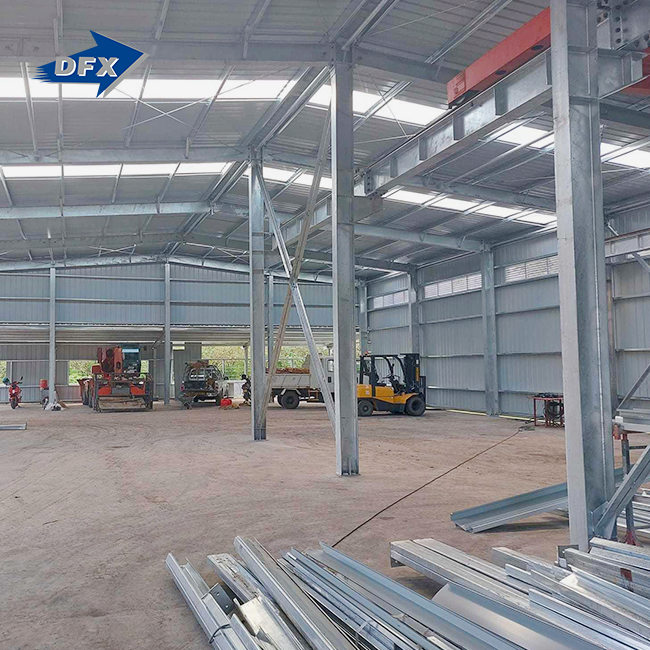
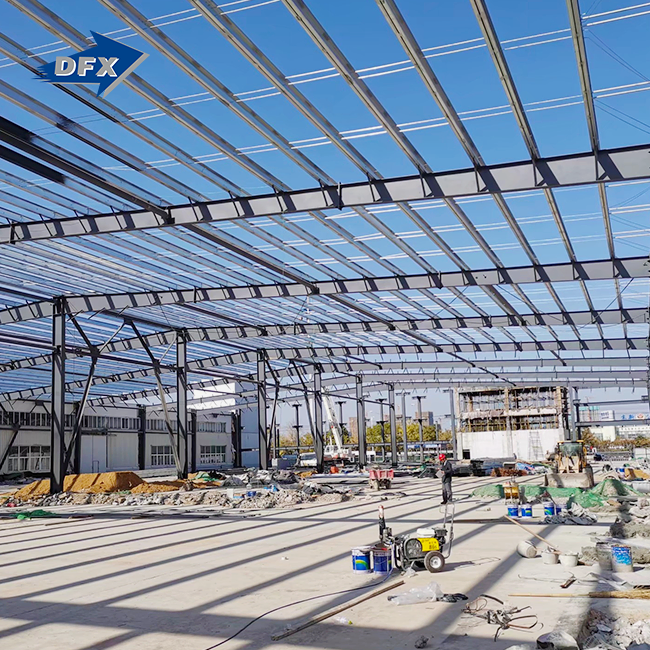
Once the parts get to the site, putting up the steel frame goes quickly. Crews on cranes put columns into anchor bolt units and then connect beams to make the main structure grid. The fixed connection method lets parts be put together in the field without hot work permits or welding gear. After the first layer of framing, which includes purlins and girts, the framework for the wall and roof panels is built. The building shell is finished with sandwich panels, whose sides fit together to make weathertight seals. Putting together a 5,000-square-metre building usually takes 4 to 6 weeks if the crews work together well.
Cost Transparency and Budget Predictability
When compared to traditional building, where change orders and unplanned events often cause costs to go up, steel warehouse price structures are more reliable. Detailed planning before manufacturing lets you get accurate estimates of how much material you will need, which lowers the error in your estimates. With project-based fabrication models, clients get full quotes that include engineering calculations, production, shipping planning, and advice on how to put the structure together. This openness makes it easier for building companies and EPC firms that are handling multiple projects at the same time to make more accurate budget plans.
Comparative Analysis: Steel vs. Traditional Warehouse Structures
A comparison of data shows that industrial warehouse steel structures and concrete warehouse construction perform very differently across a number of rating factors.
Initial Investment and Lifecycle Economics
Initial building costs depend on the details of the project, but steel structures often have 15–25% lower costs because they take less time to build and don't need as many foundations. A lifecycle study that goes back 30 to 40 years tells a more interesting business story. When properly treated, steel buildings have better corrosion protection and don't have problems with concrete flaking off or rebar rusting. This means that they need less upkeep. It turns out to be easier to fix things because broken panels can be changed one at a time without changing the structure's strength. If the right protection layers are put on steel, it can perform better in fires, which could lower insurance costs.
Environmental Impact and Sustainability Metrics
Using electric arc furnace technology and more recovered content in steel production has made a big difference in protecting the earth. The average amount of recovered material in modern structural steel is 90%. This means that it has a lot less carbon than steel made from new materials. When a building is no longer needed, steel parts keep their value and can be recycled, but concrete structures usually have to have their waste dumped in a landfill. During the use phase, steel buildings with high-performance insulation systems that reduce heat bridging at structural links use less energy.
Performance in Extreme Conditions
Because steel is flexible, it performs better in earthquakes than hard concrete because it absorbs energy through controlled bending instead of catastrophic failure. When the right bracing systems and link details are designed, wind resistance is very good. Hot-dip galvanising (minimum 85 microns' thickness) or duplex painting methods that combine zinc-rich primers with epoxy topcoats can help stop rust in coastal areas. These protective methods make the service life longer than 40 years, even in harsh sea environments that are classed as C4 or C5 corrosivity.
Conclusion
The switch to industrial warehouse steel structures is more than just a change in how things are built; it's also a smart business choice that affects the company's ability to compete, make money, and be flexible in how it runs. Steel building systems offer clear benefits, including shorter construction times that speed up the creation of income, lower lifetime costs that boost return on investment, and design flexibility that can adapt to changing business needs. Steel structures offer clear-span interiors, quick setup, and scalability that are useful for manufacturing companies, building workers, and logistics operators. As companies make decisions, climate issues become more important. Steel's ability to be recycled and use less energy is in line with environmental responsibility promises. Steel sheds have been used in a wide range of settings, from heavy manufacturing plants to temperature-controlled transport centres. This shows that they are more flexible than traditional buildings.
FAQ
1. What is the expected lifespan of a steel warehouse building?
Steel warehouses that are properly designed and kept usually last between 40 and 50 years, and many structures keep working well after the original design limits have been reached. Lifespan is mostly determined by how well rust protection is installed and how often it is maintained. In mild areas, buildings with hot-dip galvanised parts usually don't need much maintenance other than regular checks. On the other hand, painting buildings in harsh environments should get a touch-up coat every 7 to 10 years.
2. Can steel warehouses accommodate heavy overhead cranes?
Bridge cranes with capacities ranging from 5 tons to 100 tons are easily supported by steel buildings. The most important thing is to include crane loads in the initial design, not in repair situations. For buildings with cranes, the columns need to be strengthened, the runway beam links need to be customised, and the lateral support needs to be improved to withstand horizontal surge forces. Dynamic load estimates take into account things like impact and shaking to make sure the structure is strong enough for the whole time the crane is in use.
3. How do I select a reliable steel structure supplier?
Checking the company's ability to make things, looking at its quality certifications (ISO 9001, CE marking, EN 1090 performance class), looking at its project portfolio to see if it has related experience, and checking its technical abilities, such as its in-house engineering services. It's easier to coordinate projects when suppliers offer "turnkey" options that include everything from planning to installation support. Ask for full technical specs that include steel grades, connection methods, and corrosion protection systems to make sure that plans meet the needs of the project and don't just take the cheapest route.
Partner with DFX for Your Next Steel Warehouse Project
Qingdao Director Steel Structure Co., Ltd. has been providing custom steel building solutions to builders, makers, and infrastructure producers around the world for more than 12 years. Our 40,000-square-metre factory has six automatic H-beam welding lines and more than 200 skilled workers who build structures that meet the strict quality standards set by ISO9001 and CE certification. We offer full support, including engineering calculations, precise fabrication, logistics coordination, and erection guidance, whether you're an EPC contractor looking for reliable parts for client projects, a manufacturing company planning to expand your facility, or a logistics operator needing to set up a warehouse quickly. Our modular manufactured steel storage buildings are made with H-beam main frames and galvanised C/Z purlins, which gives your project the structural strength and longevity it needs. Please email our team at jason@bigdirector.com to talk about your specific needs with an experienced industrial warehouse steel structure maker who can make your vision for growth a reality.
References
1. American Institute of Steel Construction. (2016). Specification for Structural Steel Buildings (AISC 360-16). Chicago: AISC.
2. Lawson, R.M., & Ogden, R.G. (2008). Design of Steel Framed Buildings for Service Integration and Sustainability. The Steel Construction Institute.
3. Trahair, N.S., Bradford, M.A., Nethercot, D.A., & Gardner, L. (2017). The Behaviour and Design of Steel Structures to EC3 (5th ed.). CRC Press.
4. European Convention for Constructional Steelwork. (2010). Design of Steel Structures: General Rules and Rules for Buildings (EN 1993-1-1). Brussels: CEN.
5. Newman, Alexander. (2004). Metal Building Systems: Design and Specifications (2nd ed.). McGraw-Hill Professional.
6.Davies, J.M. (2001). Lightweight Sandwich Construction. Wiley-Blackwell.
Learn about our latest products and discounts through SMS or email