- English
- French
- German
- Portuguese
- Spanish
- Russian
- Japanese
- Korean
- Arabic
- Greek
- German
- Turkish
- Italian
- Danish
- Romanian
- Indonesian
- Czech
- Afrikaans
- Swedish
- Polish
- Basque
- Catalan
- Esperanto
- Hindi
- Lao
- Albanian
- Amharic
- Armenian
- Azerbaijani
- Belarusian
- Bengali
- Bosnian
- Bulgarian
- Cebuano
- Chichewa
- Corsican
- Croatian
- Dutch
- Estonian
- Filipino
- Finnish
- Frisian
- Galician
- Georgian
- Gujarati
- Haitian
- Hausa
- Hawaiian
- Hebrew
- Hmong
- Hungarian
- Icelandic
- Igbo
- Javanese
- Kannada
- Kazakh
- Khmer
- Kurdish
- Kyrgyz
- Latin
- Latvian
- Lithuanian
- Luxembou..
- Macedonian
- Malagasy
- Malay
- Malayalam
- Maltese
- Maori
- Marathi
- Mongolian
- Burmese
- Nepali
- Norwegian
- Pashto
- Persian
- Punjabi
- Serbian
- Sesotho
- Sinhala
- Slovak
- Slovenian
- Somali
- Samoan
- Scots Gaelic
- Shona
- Sindhi
- Sundanese
- Swahili
- Tajik
- Tamil
- Telugu
- Thai
- Ukrainian
- Urdu
- Uzbek
- Vietnamese
- Welsh
- Xhosa
- Yiddish
- Yoruba
- Zulu
How Does a Fast Assembly Steel Logistics Warehouse Cut Costs?
A fast assembly steel logistics warehouse cuts costs through multiple compounding advantages: shorter construction timelines, reduced labor input, lighter foundation requirements, and lower long-term maintenance. Unlike poured concrete structures, prefabricated steel buildings arrive with factory-fabricated components that slot together with bolt connections, slashing on-site work by weeks or even months. Industry data from the Metal Building Manufacturers Association (MBMA) shows that prefabricated steel construction can reduce project timelines by 30–50% versus conventional methods. That time saving converts directly into earlier revenue generation and stronger return on investment for procurement managers, EPC contractors, and warehouse operators alike.

Cost Reduction Through Faster Construction and Installation
Most of the time, speed is the most obvious way to cut costs in a warehouse job. For every extra week that the building is used, more money is spent on rent, wages, and other costs before it makes any money from sales.
How Modular Prefabrication Collapses Timelines
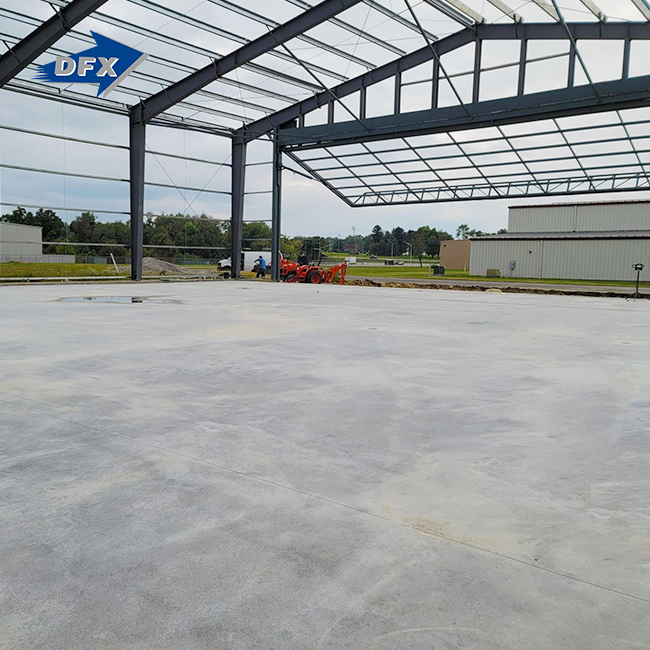
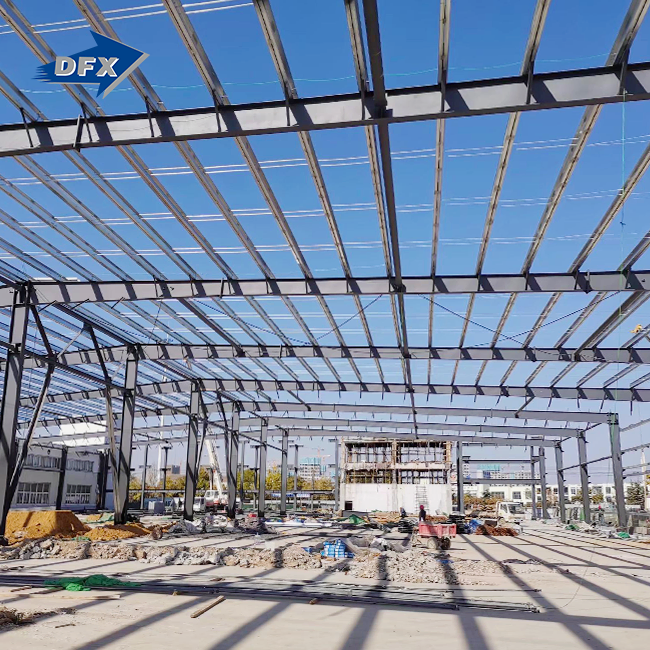
The H-beam columns, galvanized C/Z purlins, and bracing systems that make up a fast-assembly steel logistics warehouse are made off-site in a controlled factory environment. When the parts get to the job site, the building order has already been planned, so teams don't have to wing it based on what they see on the job site. This gets rid of a lot of the work that needs to be redone in brickwork or cast-in-place concrete construction. Project managers say that mid-size warehouses with bolt-together steel frames usually have their structures finished in four to eight weeks, while similar concrete structures take four to six months.
Accelerated ROI for Distribution and Logistics Operations
If the project is finished earlier, the distribution hub can start getting cargo, handling orders, or storing supplies before it's supposed to. For a transportation company that rents a site, each month of early operation can help pay for a big chunk of the total cost of building. This is the main reason why cash flow modeling always favors fast assembly steel logistics warehouses.
Material Efficiency and Structural Advantages That Lower Costs
Per unit load, steel has a strength-to-weight ratio that is about three times that of reinforced concrete. Throughout the whole project lifecycle, that fact has direct cost effects.
Lighter Structures, Shallower Foundations
The foundation method needs less concrete volume and fewer deep pilings than a similar masonry building because the H-beam steel frames move loads well. The costs of getting the site ready go down as a result. Standardized component shapes also cut down on the need for heavy-lifting cranes during installation, which saves money on the cost of renting equipment.
Durability That Reduces Lifetime Maintenance Spend
Steel made to Grade Q355B or ASTM A572 Gr. 50 (yield strength ≥ 345 MPa) doesn't bend when big roof loads, hanging conveyor systems, or solar panels on the roof are applied. With a zinc layer of at least 275 g/m², galvanized secondary framing doesn't rust, so upkeep cycles are long and repair costs are low. If you take good care of your fast-assembly steel logistics warehouse frame, it should last for 50 years. The covering systems usually last for 20 to 30 years before they need to be replaced.
Energy-saving insulation options, like PIR or Rockwool sandwich panels, are built right into the steel envelope system. This means that you don't need a separate insulation contractor. This all-in-one method lowers both the cost of building and the cost of utilities over time.
Operational Cost Savings Enabled by Steel Logistics Warehouses
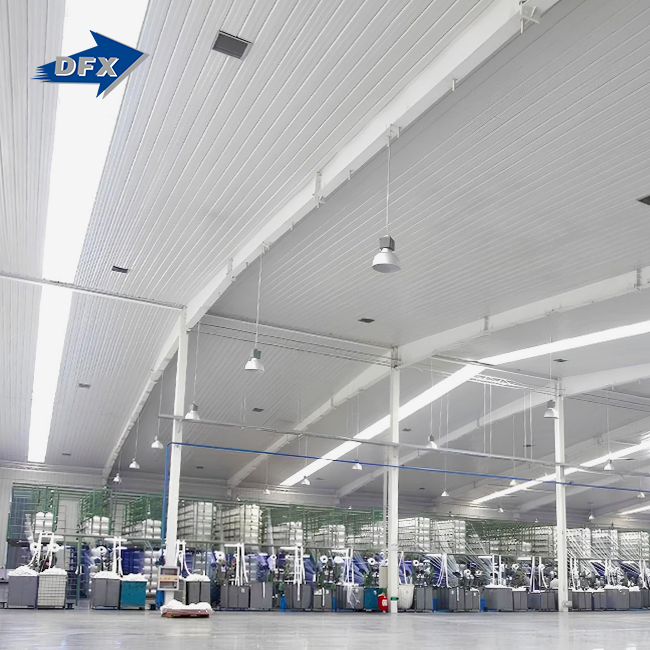
A fast-assembly steel logistics warehouse does more than just stand up straight. Because it has a clear-span design, it can often reach spans of 24–50 meters without using interior columns. This directly boosts working efficiency and lowers annual overhead costs.
Here are the main practical benefits of a fast assembly steel logistics warehouse that save money:
- Maximized cubic storage density: High-bay racking systems and Automated Storage and Retrieval Systems (AS/RS) can be used to their full potential because there are no internal columns that take up floor space. It is well known in the literature on warehouse operations that column-grid buildings have lower storage densities by 15–20%.
- Flexible layout reconfiguration: steel structures allow changes to be made to the inside without damaging them. When practical needs change, like when there are new product lines, different pallet layouts, or more levels for pick-and-pack, the building can adapt without having to be rebuilt, which would be expensive.
- Natural daylighting and energy performance: Clear roof panels and ridge ventilation can be incorporated into the design, which will lower the need for artificial lighting and power costs significantly over the course of a fiscal year.
These structural and space benefits lead to real line-item cuts in warehouse operating budgets, not just during construction but throughout the entire asset lifecycle. That long-term savings profile is just as important as the initial price for manufacturing and logistics companies that have to work with small profit margins.
Strategic Procurement and Supplier Advantages
Picking a fast assembly steel logistics warehouse seller isn't just about price. The total cost of a project varies a lot from one provider to the next. This includes coordinating the design, shipping logistics, on-site help for assembly, and support after the job is done.
Evaluating Supplier Credentials for B2B Procurement
Reliable, fast assembly steel warehouse manufacturers have quality standards that are known all over the world. System for managing quality ISO 9001 makes sure that the manufacturing methods are always the same. If the structure meets European and international standards, it will have CE certification and, if necessary, EN1091 compliance. These certifications aren't just for looks; they show that the production process was checked at every step, from the mill test certificates (MTC) for the raw materials to the visual and ultrasonic testing of full-penetration welds during welding inspection and checks for dimensional tolerances using laser measuring tools.
Turnkey Services That Reduce Indirect Project Costs
An important thing that many procurement managers find is that turnkey suppliers—those who do engineering calculations, fabrication, logistics planning, and erection direction all under one contract—make foreign buying a lot easier for them. Communication gaps get smaller, and the risk of change orders goes down when one provider does both the structural design and the steel production and installation paperwork. That kind of administrative efficiency is worth real money, especially on logistics infrastructure projects that need to be done quickly.
Environmental and Regulatory Cost Benefits
When it comes to recycling, steel is one of the best building materials. When structural steel's useful life is over, it still has a commodity value and can be fully recycled. This is a lifetime feature that affects regulatory compliance costs and ESG reporting responsibilities in the U.S. and European markets more and more.
Modular building also reduces the amount of damage to the site. Environmental cleanup risks are lower when there is less damage to the ground, which is important when permit times are already long. Warehouse designs that meet LEED or a similar green building standard can get tax breaks and energy returns that help pay for the initial cost of the building. As energy codes get stricter in North America and Europe, steel structures with flexible envelope systems let owners improve things like insulation, fire protection, or seismic bracing without having to tear down and rebuild. This protects the value of the asset over the course of regulatory cycles.
Conclusion
A fast assembly steel logistics warehouse saves money at every stage: faster site assembly cuts down on labor and overhead costs before the warehouse even opens; efficient material properties cut down on foundation and maintenance costs; clear-span layouts increase operational throughput; and recyclable steel reduces the risk of waste at the end of its useful life. It's hard to fight against the economics of fast-assembly steel logistics warehouse construction for procurement professionals, EPC contractors, and warehouse operators who are thinking about investing in infrastructure. Modern transport and storage centers should use it by default because it is a good choice for speed, structural performance, and long-term value.
FAQ
1. How long does it take to assemble a prefabricated steel warehouse?
The amount of time needed to put together a building depends on its size and the conditions of the site, but most mid-sized fast-assembly steel logistics warehouses are structurally finished four to eight weeks after the parts arrive. Including base work and cladding installation, the average job lasts eight to sixteen weeks, which is a lot less time than a similar concrete building.
2. What certifications should I look for in a steel warehouse manufacturer?
ISO 9001 verifies that a quality management system is working properly. CE approval makes sure that the building meets European building standards. Depending on where the project is located, EN1091 may be used. As a matter of course, you should always ask for mill test papers for raw steel and records of welding inspections.
3. Can a prefabricated steel warehouse be expanded later?
It is easy to add on to a fast assembly steel logistics warehouse that was built with a Pre-Engineered Building (PEB) system. End-wall frames are usually made to be load-bearing expanding frames. This means that they can be used to add new bays by removing the cladding panels and stretching the structural grid in a straight line, with little to no impact on current operations.
4. How does steel warehouse construction reduce foundation costs?
Steel frames are much lighter than similar-sized buildings made of stone or concrete, which means that less weight is transferred to the base. Less deep piles and shallower footings are needed, which directly lowers the costs of preparing the site and the concrete itself.
Partner With DFX for Your Next Steel Logistics Warehouse Project
DFX, or Qingdao Director Steel Structure Co., Ltd., has been shipping ISO 9001- and CE-certified steel structures around the world since 2011. They can make 20,000 tons of H-beams every year and have six automatic production lines. Our engineering team does all the planning, building, and setting up for you, whether you need a fast assembly steel logistics warehouse for sale, a custom distribution hub, or a turnkey prefab storage solution. Email us at jason@bigdirector.com to talk about the details of your project.
References
1. Metal Building Manufacturers Association (MBMA). Metal Building Systems Manual. 2023.
2. American Institute of Steel Construction (AISC). Steel Construction Manual, 16th Edition. 2023.
3. RS Means. Building Construction Cost Data. Gordian, 2022.
4. U.S. Green Building Council. LEED Reference Guide for Building Design and Construction. 2019.
5. International Finance Corporation (IFC). Green Building: A Finance and Policy Blueprint for Emerging Markets. World Bank Group, 2021.
6. McKinsey Global Institute. Reinventing Construction: A Route to Higher Productivity. McKinsey & Company, 2017.
Learn about our latest products and discounts through SMS or email