- English
- French
- German
- Portuguese
- Spanish
- Russian
- Japanese
- Korean
- Arabic
- Greek
- German
- Turkish
- Italian
- Danish
- Romanian
- Indonesian
- Czech
- Afrikaans
- Swedish
- Polish
- Basque
- Catalan
- Esperanto
- Hindi
- Lao
- Albanian
- Amharic
- Armenian
- Azerbaijani
- Belarusian
- Bengali
- Bosnian
- Bulgarian
- Cebuano
- Chichewa
- Corsican
- Croatian
- Dutch
- Estonian
- Filipino
- Finnish
- Frisian
- Galician
- Georgian
- Gujarati
- Haitian
- Hausa
- Hawaiian
- Hebrew
- Hmong
- Hungarian
- Icelandic
- Igbo
- Javanese
- Kannada
- Kazakh
- Khmer
- Kurdish
- Kyrgyz
- Latin
- Latvian
- Lithuanian
- Luxembou..
- Macedonian
- Malagasy
- Malay
- Malayalam
- Maltese
- Maori
- Marathi
- Mongolian
- Burmese
- Nepali
- Norwegian
- Pashto
- Persian
- Punjabi
- Serbian
- Sesotho
- Sinhala
- Slovak
- Slovenian
- Somali
- Samoan
- Scots Gaelic
- Shona
- Sindhi
- Sundanese
- Swahili
- Tajik
- Tamil
- Telugu
- Thai
- Ukrainian
- Urdu
- Uzbek
- Vietnamese
- Welsh
- Xhosa
- Yiddish
- Yoruba
- Zulu
Benefits of using a Bonded Area Steel Warehouse
A bonded area steel warehouse is a government-supervised storage facility located within a designated customs zone where imported steel products—coils, plates, beams, and pipes—can be held without immediate payment of import duties or VAT. Taxes are deferred until the goods formally enter the domestic market, and if goods are re-exported, taxes are waived entirely. For B2B procurement professionals managing large-volume steel orders, this model directly reduces upfront capital exposure while maintaining full inventory access and supply chain responsiveness.

What Is a Bonded Area Steel Warehouse and How Does It Work?
Definition and Core Function
A secured area steel building is run under the watchful eye of the customs authority. The goods that are stored inside are still not subject to duty. In normal warehousing, duties are paid when the goods arrive. This is very different. The building works as a holding area that keeps actual ownership separate from tax obligations.
Regulatory Framework
Operators have to follow strict rules about access controls, physical inventory audits, and customs EDI reporting. A bound record system keeps track of each steel item and can be checked at any time by customs officials. Discrepancies between actual stock and ledger records can lead to big fines, so it's important that procedures are always correct.
Operational Workflow
There are four steps in the process: goods arrive at the inbound gate and are inspected; Mill Test Certificates (MTCs) are compared to Bill of Lading documents; stock is given a bonded lot number; and outbound releases either pay duty for entering the country or don't pay duty for re-exporting. This batch-release approach lets you use Just-In-Time delivery without having to clear a whole package at once.
Key Benefits of Using Bonded Area Steel Warehouses in B2B Procurement
When buying steel, using a bonded area steel warehouse has clear operational and financial benefits. These are real numbers—when automotive OEMs and EPC contractors use bonded storage models, their procurement teams consistently report shorter lead times and better cash positions.
Here are the main benefits that buyers around the world care about the most:
- Tax Deferral and Help with Cash Flow: Duties on shipments of bulk steel can be 10 to 25 percent of the value of the cargo. Putting off these payments until the goods are needed frees up working capital that can be used for other project costs. This is especially helpful for building companies and investors in manufacturing that are working with limited project funds.
- Tax Deferral and Cash Flow Relief: Duties on bulk steel shipments can represent 10–25% of cargo value. Deferring these payments until the goods are actually needed frees up working capital for other project costs—particularly relevant for construction contractors and manufacturing investors managing tight project budgets.
- Price Volatility Protection: Steel prices can fluctuate by 20–30% within a single quarter. Storing inventory in a bonded facility during low-demand periods, without incurring tax costs, allows traders and procurement managers to release goods when market conditions are favorable.
- Batch Customs Clearance: Rather than clearing an entire vessel at once, buyers can release stock in portions aligned to production schedules. This significantly reduces demurrage fees and storage waste at port terminals, which typically charge after only a few weeks.
- Re-export Tax Exemption: For trading houses using a hub-and-spoke distribution model, goods re-exported to third countries attract zero import duties in the transit country. This eliminates double taxation and improves regional distribution economics.
Because of these benefits, project managers, buying leaders, and operations teams that need to buy a lot of steel should choose bonded storage. When you combine less tax risk with the ability to release items in batches, the effective procurement cycle is cut down directly.
Comparing Bonded Area Steel Warehouses with Other Storage Options
Bonded vs. Non-Bonded Warehouses
When goods arrive at non-bonded sites, they must be paid in full at customs clearance before they can be stored. This puts costs on top of each other and takes away the choice of re-export tax relief. It adds unnecessary financial risk for people who buy large amounts on speculation or to resell them.
Bonded vs. Free Trade Zone Warehouses
Free Trade Zones (FTZs) let similar duties be waived, but they usually have stricter licensing requirements and are best for large-scale, long-term trade activities. For mid-sized businesses and project-based buyers who need operating freedom but don't want to commit to FTZ registration requirements, bonded stores are easier to get into.
Location and Pricing Considerations
Ports like Qingdao, Shanghai, Rotterdam, and Jebel Ali have bonded warehouses that are well-placed for both importing and exporting. Lease rates depend on the region and the specifics of the facility, but the tax savings on even a single 5,000-ton steel shipment usually outweigh the yearly storage fees, which makes the business case easy for buying teams with a lot of experience.
How to Rent and Manage a Bonded Area Steel Warehouse
Leasing Process and Contract Terms
Buyers should make sure that the secured bonded area steel warehouse they choose has proper customs zone certification. Contracts should say how long the storage will last (usually up to 24 months, and it can be renewed), how much it will cost, and who is responsible for damage or loss. For jobs that last more than one month, it's better to negotiate set monthly rates instead of spot prices that change all the time.
Booking, Receiving, and Shipping Procedures
Good entry handling starts before the guests even arrive. By giving the warehouse manager the shipping papers ahead of time, like the business invoice, packing list, and MTC, you can pre-register them in the customs system. An organized release instruction method stops delays at the outbound stage. Most secure sites have a Warehouse Management System (WMS) that is directly connected to customs EDI so that stock levels can be seen at all times.
Inventory Management Best Practices
Steel stored in bonded zones needs to be actively monitored by the environment. If the relative humidity goes above 60%, "white rust" is more likely to happen on galvanized coils. Facilities that work well keep their climate control systems in good shape, store coils on rubber dunnage to keep them from touching wet ground, and check the dew point every day. To make sure that MTCs always match physical stock, buyers should ask for monthly inventory reports that include heat numbers that can be tracked.
Selecting the Right Bonded Area Steel Warehouse Provider
Key Evaluation Criteria
The first filter looks at how well a service has cooperated with customs officials in the past. Look for places that have few or no customs audit violations. Before making any deal, operational reliability should be checked through client references or reviews from a third party. This can be done by looking at things like on-time release rates and inventory accuracy.
Building Long-Term Supplier Relationships
Working consistently with one bonded warehouse operator builds procedural familiarity that speeds up inbound and outbound cycles over time. Providers who understand your steel grades, documentation standards, and delivery windows can act as an extension of your procurement team rather than simply a storage vendor.
Conclusion
A bonded area steel warehouse is a useful tool for procurement teams that want to control inventory timing, manage duty exposure, and support flexible distribution across international markets. It makes sense from a financial point of view: delayed taxes protect working capital, batch clearance lowers port costs, and re-export exemptions help businesses that trade. Your supply chain will stay on track and on budget if you use secured storage and work with a fabricator who knows how to meet structural needs, such as with H-beam frames and full premade building systems.
FAQ
1. Can we process steel while it's in bonded storage?
Yes. As long as the basic nature of the goods and their HS code classification don't change, most bonded zones allow simple processes like slitting coils, cutting plates, and repackaging.
2. Is there a maximum storage period?
Most secured garages let you store things for one to two years, with the choice to renew. This is a lot longer than normal port terminals, which start charging demurrage after a few weeks. For traders who want to hold on to stock through price cycles, this is the best choice.
3. What happens if steel is damaged during bonded storage?
If goods are damaged or lose their market value while being inspected by customs, you can ask for a duty reduction on the damaged part. It is necessary to have a formal survey report that has been checked by customs officials to make sure that the loss did not go to the domestic market.
4. Can I sell steel to a domestic buyer while it's still under bond?
Yes. This is known as a "bonded transfer," and it means that the goods are sold to a new buyer. The new buyer then becomes the supplier of record and is responsible for paying the tax when the goods leave the zone.
Partner with DFX for Your Next Steel Structure Project
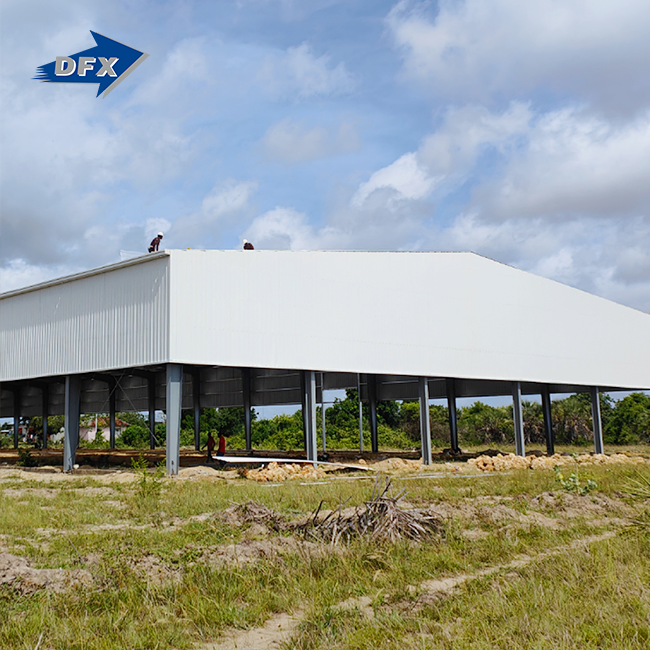
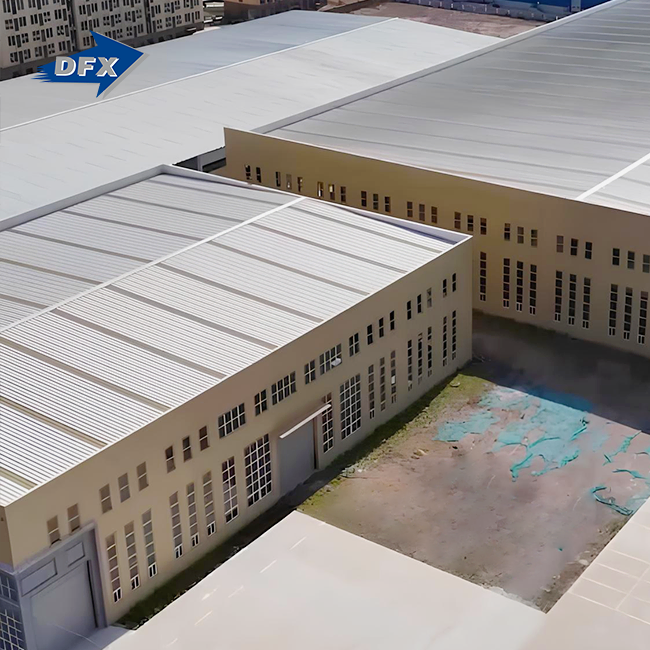
Since 2011, DFX (Qingdao Director Steel Structure Co., Ltd.) has been making and supplying prefabricated steel structures. They have over 200 production workers and 40,000 m² of enclosed fabrication space. Our steel storage buildings are made of H-beam main frames, welded C/Z purlins, and full bracing systems. They are approved under ISO9001, CE, and optionally EN1090. If you need a bonded area steel warehouse structure for a distribution center, logistics hub, or industrial storage facility, our team can do everything from engineering calculations to manufacturing to logistics planning to helping you set up the structure.
You can email our team at jason@bigdirector.com to get a quote that is tailored to your project. We are ready to help you with your next buying cycle as a verified bonded area steel warehouse maker.
References
1. World Customs Organization. Revised Kyoto Convention on the Simplification and Harmonization of Customs Procedures. WCO, 2008.
2. International Trade Administration, U.S. Department of Commerce. Foreign-Trade Zones Manual. ITA, 2020.
3. McKinsey Global Institute. Steel's New World: Transition from Growth to Consolidation. McKinsey & Company, 2022.
4. European Steel Association (EUROFER). European Steel Market Outlook and Trade Policy Report. EUROFER, 2023.
5. Deloitte. Supply Chain Risk in Industrial Manufacturing: Customs Compliance and Bonded Logistics. Deloitte Insights, 2021.
6. World Bank Group. Connecting to Compete: Trade Logistics in the Global Economy. World Bank, 2023.
Learn about our latest products and discounts through SMS or email