- English
- French
- German
- Portuguese
- Spanish
- Russian
- Japanese
- Korean
- Arabic
- Greek
- German
- Turkish
- Italian
- Danish
- Romanian
- Indonesian
- Czech
- Afrikaans
- Swedish
- Polish
- Basque
- Catalan
- Esperanto
- Hindi
- Lao
- Albanian
- Amharic
- Armenian
- Azerbaijani
- Belarusian
- Bengali
- Bosnian
- Bulgarian
- Cebuano
- Chichewa
- Corsican
- Croatian
- Dutch
- Estonian
- Filipino
- Finnish
- Frisian
- Galician
- Georgian
- Gujarati
- Haitian
- Hausa
- Hawaiian
- Hebrew
- Hmong
- Hungarian
- Icelandic
- Igbo
- Javanese
- Kannada
- Kazakh
- Khmer
- Kurdish
- Kyrgyz
- Latin
- Latvian
- Lithuanian
- Luxembou..
- Macedonian
- Malagasy
- Malay
- Malayalam
- Maltese
- Maori
- Marathi
- Mongolian
- Burmese
- Nepali
- Norwegian
- Pashto
- Persian
- Punjabi
- Serbian
- Sesotho
- Sinhala
- Slovak
- Slovenian
- Somali
- Samoan
- Scots Gaelic
- Shona
- Sindhi
- Sundanese
- Swahili
- Tajik
- Tamil
- Telugu
- Thai
- Ukrainian
- Urdu
- Uzbek
- Vietnamese
- Welsh
- Xhosa
- Yiddish
- Yoruba
- Zulu
Prefabricated Steel Buildings: The Future of Warehousing
Prefabricated steel buildings are revolutionizing warehousing infrastructure across construction, manufacturing, and logistics sectors. As a procurement manager or project engineer, you've likely faced pressure to deliver storage solutions faster while controlling costs and maintaining structural integrity. Modular steel warehouses manufactured in controlled factory environments now dominate B2B procurement discussions throughout the United States, offering predictable timelines and scalable designs that traditional construction methods simply cannot match. This comprehensive guide examines how pre-engineered steel buildings address your specific warehousing challenges—from rapid deployment logistics centers to heavy-duty industrial storage facilities. We'll walk through manufacturing processes, performance metrics, design considerations, and procurement strategies that help you select the right prefabricated steel warehouse solution for your next project. Whether you're an EPC contractor managing multi-phase infrastructure builds or a manufacturing operations manager expanding production capacity, understanding these engineered systems will strengthen your decision-making framework and ultimately improve your project outcomes.
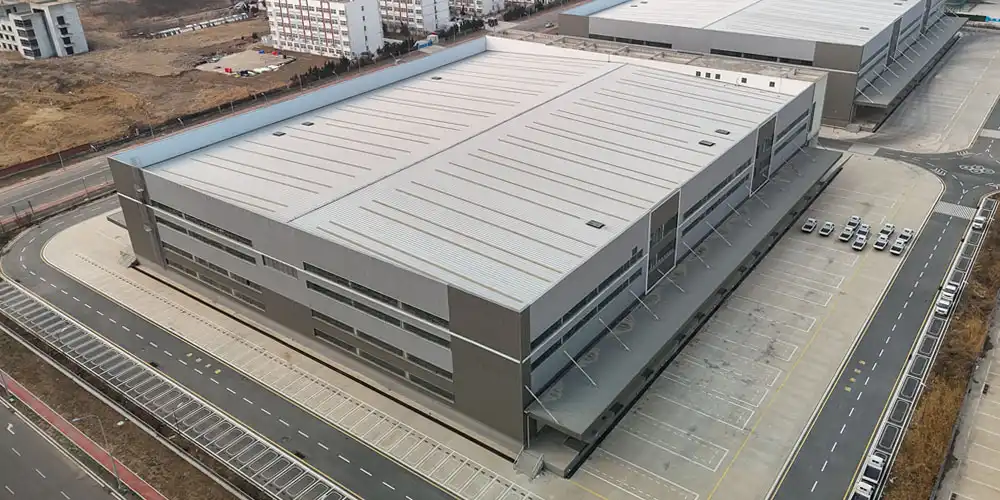
Understanding Prefabricated Steel Warehouses
What Defines Factory-Engineered Steel Storage Buildings
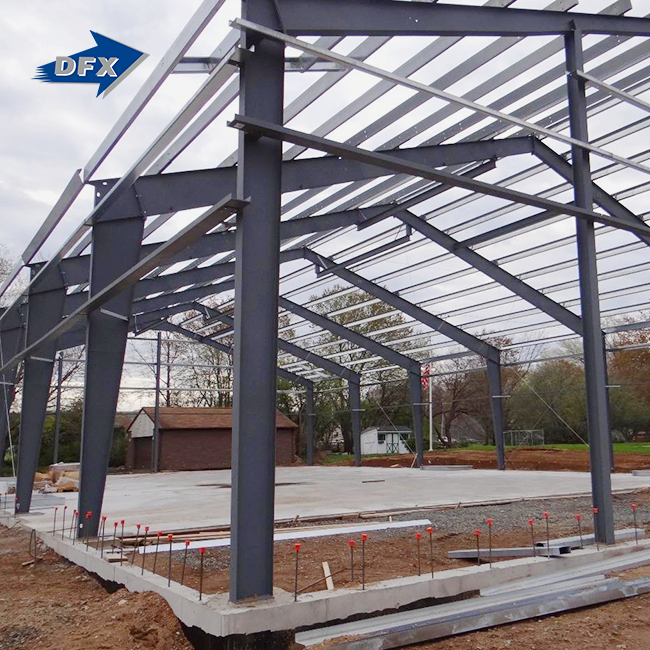
Pre-fabricated steel warehouse is a modern Pre-Engineered Building system, comprising structural elements such as H-section columns, beams, galvanized C/Z-section purlins, wall or roof cladding, which are manufactured in a controlled factory environment and then transported to the construction sites for bolted erection. This process is different from the usual on-site fabrication since it involves accurate Building Information Modeling to maximize the use of materials and the structure before manufacturing. The modular pre-fabricated steel storage building solution minimizes the uncertainty inherent in field welding and weather-dependent construction timeframes. “Key pain points addressed are speed of construction, where modular assembly slashes project times by 30-50% compared to concrete buildings, enabling logistics operators to make a faster return on investment. Clear-span capabilities provide column-free interiors up to 80 meters, increasing vertical volume for Automated Storage and Retrieval Systems and forklift maneuverability. Cost predictability can be achieved with industrial pre-fabrication by minimising material waste and removing uncertain on-site labour expenditures.
Manufacturing Process and Quality Control Standards
We have six automatic welded H-beam production lines, two C/Z section steel lines at our manufacturing site, which can produce about 20,000 tons of welded beams and columns each year. The production process starts with material inspection, using Mill Test Certificates to check chemical composition and mechanical qualities according to ASTM or GB standards. High Strength The main frame is made of Low-Alloy steel (e.g., Q355B, yield strength ≥345 MPa), which allows for great load-bearing capability with reduced material weight. Surface Treatment: Sand blasting to Sa2.5, Hot-Dip Galvanization with zinc coating ≥600g/m2 or high-performance Epoxy Zinc-Rich painting with dry film thickness ≥100μm for anti-corrosion. Critical butt welds are inspected by Ultrasonic Testing and Radiographic Testing for internal defects such as slag inclusions or cracks. Fillet welds are inspected by Magnetic Particle Testing. Trial fit-ups in the factory ensure that bolt holes are aligned within ±2mm, preventing the costly on-site adjustments that are commonplace in less conscientious factories.
Core Applications Across Industrial Sectors
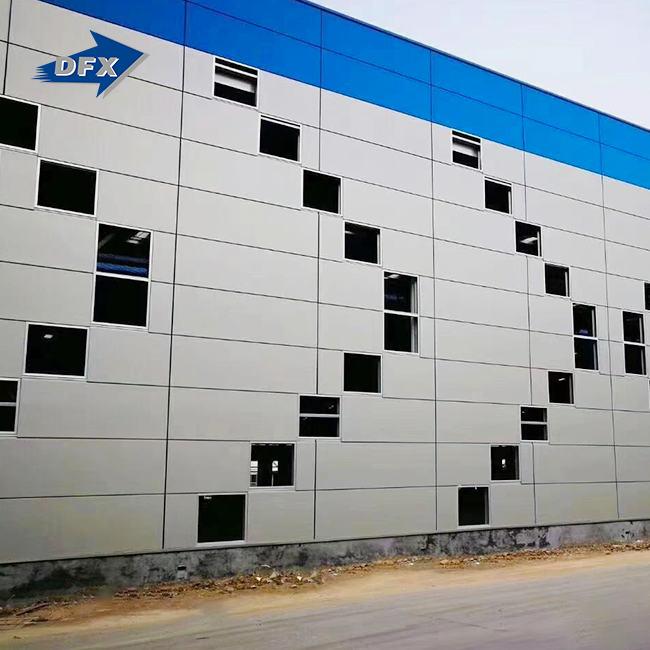
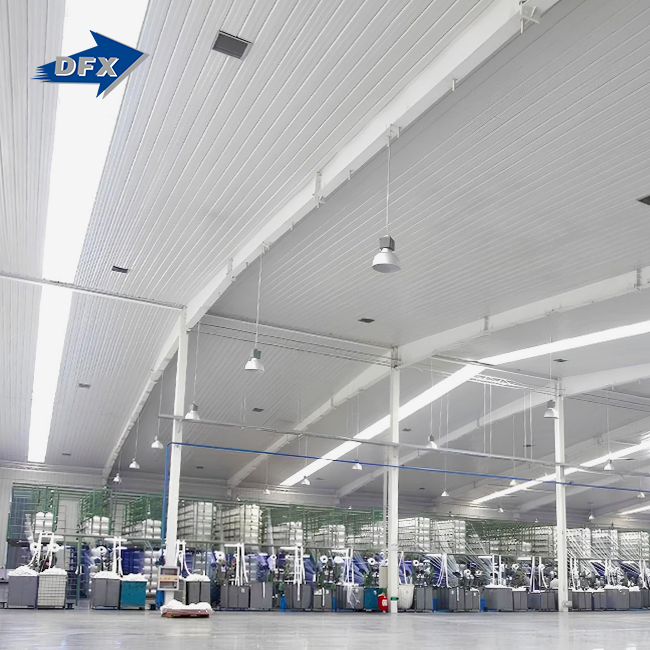
Their flexibility makes prefabricated steel warehouses the perfect choice for a wide range of B2B industrial applications. High eave heights of 12 to 20 meters are advantageous for e-commerce fulfillment centers and automated logistics facilities, as they allow for the installation of vertical racking systems and mezzanines. The clear span design provides no internal impediments for the free movement of Automated Guided Vehicles and high-speed conveyor belts. Cold chain storage facilities are designed to maintain temperatures as low as -30°C by the use of specialised thermal breaks, high-density polyurethane sandwich panels up to 200mm thick and steel frames specially treated to withstand condensation-induced corrosion common to cycling temperature settings. In heavy industrial manufacturing plants, overhead bridge cranes from 10 to 100+ tons are supported by stronger columns and crane brackets. These structures are designed for specialized dynamic loading calculations to resist vibrations and operational loads from heavy machinery and for ventilation monitoring for industrial exhaust management.
Key Benefits and Performance Advantages
Speed and Cost Efficiency Compared to Traditional Construction
Construction timelines represent one of the most compelling advantages driving adoption among project managers handling tight schedules. Traditional concrete warehouses typically require 12-18 months from groundbreaking to operational readiness, while prefabricated steel warehouses can achieve full assembly within 4-8 months, depending on project complexity. This acceleration stems from simultaneous foundation preparation and factory fabrication, eliminating sequential dependencies that plague conventional builds. Cost savings manifest through reduced labor expenses, as bolted connections require fewer specialized trades compared to on-site welding and concrete pouring. Material waste decreases dramatically when precision cutting occurs in controlled factory environments rather than job sites where weather, theft, and measurement errors inflate scrap rates. The lighter dead load of steel structures allows for reduced foundation sizes, lowering concrete costs by 15-25% compared to equivalent concrete buildings while maintaining superior structural performance.
Structural Performance and Durability Metrics
Steel warehouses built to specifications of AISC or Eurocode 3 provide wind load resistance of above 120 km/h and seismic resistance appropriate for Zone 4 locations. The naturally high ductility of steel permits much energy to be absorbed during dynamic loading events such as earthquakes, avoiding the catastrophic collapse that more brittle materials suffer. Standard steel buildings can last more than 50 years with the right maintenance program. Cladding systems include sandwich panels incorporating Polyurethane, Polyisocyanurate, or Rockwool, which often offer thermal insulation values higher than R-30. This is an important factor in achieving energy-efficient climate control that can cut the cost of operating heating and cooling by 20-40% over single skin metal buildings. Such performance qualities directly translate into total cost of ownership advantages that financially-conscious procurement managers weigh most heavily when considering long-term infrastructure projects.
Sustainability and Environmental Impact Considerations
Steel is one of the most recycled materials in the world, with more than 85% of structural elements being recycled at the end of their life. The selection of steel warehouses is in support of the company's sustainability goals, while meeting the structural performance criteria. Electric arc furnace technology is progressively being adopted in modern manufacturing facilities, making it a less carbon-intensive alternative to classic blast furnace processes. Modular prefabricated buildings can be expanded in the future without dismantling existing buildings. Simply remove the end walls and add new bays with standardized connections. This flexibility minimizes construction waste during the operation of the facility. Integrated energy-efficient insulation technologies during manufacturing help eliminate thermal bridging and air penetration, supporting LEED certification possibilities and smaller environmental footprints that comply with growing regulatory mandates across the United States.
Design, Customization, and Construction Timeline
Structural Customization Options for Specific Operations
The modular building approaches allow a high degree of customisation to meet the specific needs of individual industries while maintaining the benefits of standardized components in terms of rapidity. Studies of traffic flow optimization often reveal that logistics warehouse operators want dock levelers, overhead sectional doors, and staff access systems to be integrated into the dock area. For manufacturing plant developments, future crane installations are often planned for, and the original designs are pre-engineered with reinforced columns and additional bracing systems. Agricultural clients focus on ventilation systems and natural illumination solutions, using ridge vents, translucent panels, and strategically placed louvers to preserve air quality for animal buildings or temperature-sensitive crop storage. Climate control modification can be anything from a basic insulation package to advanced HVAC integration with thermal zoning. varying storage spaces inside the same structure can maintain varying environmental conditions to suit different inventory requirements.
Project Phases from Engineering to Erection
The usual project life cycle starts with engineering calculation services where structural loads, local code compliance, and site-specific conditions are carefully studied. We provide a complete in-house architectural design and detailing solution to support the customer throughout the whole project life cycle, from concept and engineering through to fabrication and on-site erection advice. Shop drawings are provided to clients for review to ensure that the design intent is consistent with manufacturing outputs prior to production. Fabrication times are usually 6-10 weeks, depending on the magnitude and complexity of the project. All components identified and bundled per the erection sequence documentation. Logistics coordination manages containerized shipping or truck movement to suit construction timetables, reducing the need for on-site storage. Experienced technical teams provide guidance on erection to ensure proper assembly techniques, bolt torque specifications, and quality checkpoints that test structural integrity before final commissioning.
Timeline Expectations and Project Milestones
Realistic schedule expectations enable procurement managers to develop proper stakeholder expectations and organize interdependent project operations. The engineering and detailed design are normally completed within 2-4 weeks after the purchase order is confirmed, at which time the foundation plans are available for concurrent civil work. Manufacturing time is 6-10 weeks, as mentioned above, although critical path items such as custom doors or specialist panels can increase the time frame. Delivery times vary by origin and destination. International shipping takes 4-6 weeks. Origin & Destination Shipping times may vary based on origin and destination. Domestic: Between USA states: 1-3 weeks. Between other countries: 4-6 weeks. With the right number of workers on site, weather permitting, a typical 5,000 square meter warehouse will be erected in 4-6 weeks. This time frame, compared to 12+ months for similar concrete structures, is why project managers with urgent capacity needs are increasingly opting for prefabricated steel solutions.
Procurement Considerations for B2B Clients
Evaluating Pricing Models and Total Cost of Ownership
Pricing for prefabricated steel warehouses depends on several interconnected factors that buyers must understand to make accurate comparisons. Base structure costs typically range from $30-60 per square foot, depending on span width, eave height, and wind/snow load requirements, with clear-span designs commanding premiums over post-and-beam configurations that include interior columns. Customization additions like insulated panels, translucent daylighting systems, or crane-ready reinforcements add incremental costs that should be weighed against operational value delivered. Total cost of ownership extends beyond initial purchase price to encompass foundation expenses, erection labor, transportation, and long-term maintenance. Steel structures often demonstrate superior ROI through lower insurance premiums due to fire resistance, reduced maintenance compared to wood structures susceptible to rot and pests, and energy savings from superior thermal performance. Buyers should request detailed breakdowns separating materials, fabrication, shipping, and technical services to identify cost drivers and negotiation opportunities.
Selecting Qualified Manufacturers and Suppliers
Manufacturer selection dramatically impacts project success, making due diligence essential rather than optional. Production capacity represents a fundamental qualification criterion—manufacturers operating multiple production lines with annual output exceeding 15,000 tons demonstrate the scale necessary for timely delivery on commercial projects. Quality certifications, including ISO9001, provide baseline assurance of systematic quality management, while CE marking confirms conformity with European standards increasingly referenced in international procurement specifications. Some clients require EN1090 certification verifying structural steel fabrication competence according to European execution classes. Lead time commitments must align with project schedules, requiring transparent communication about production queues and realistic delivery windows. Support services, including engineering calculation, fabrication, logistics coordination, and erection guidance, differentiate full-service suppliers from component vendors, reducing coordination burden on buyers managing complex projects. Established manufacturers like Qingdao Director Steel Structure Co., Ltd., with over 12 years of experience and 40,000 square meters of enclosed production space, offer the stability and technical depth that risk-averse procurement managers prioritize.
Understanding Warranty Coverage and After-Sales Support
Warranty terms and after-sales support significantly influence procurement decisions, particularly for buyers managing multiple facilities or planning future expansions. Structural warranty coverage typically spans 10-25 years for primary framing components, protecting against manufacturing defects and premature corrosion when maintenance guidelines are followed. Cladding and accessory warranties often extend 10-15 years, with specific exclusions for improper installation or unauthorized modifications. Buyers should clarify warranty claim processes, including notification requirements, inspection protocols, and remediation timelines that minimize operational disruption. Technical support availability throughout the project lifecycle—from design consultation through post-occupancy troubleshooting—adds substantial value beyond initial transaction costs. Manufacturers offering multilingual support teams and documented experience serving the United States market reduce communication friction and cultural misunderstandings that complicate international procurement. Payment terms and financing options affect cash flow management, with progressive payment schedules tied to project milestones, providing balanced risk allocation between buyers and suppliers.
Maintenance, Longevity, and Future Trends
Routine Maintenance Requirements and Best Practices
Maintaining prefabricated steel warehouses ensures they deliver on durability and performance promises throughout their operational lifespan. Routine inspections should occur semi-annually, focusing on bolt tightness at connections, coating integrity on exposed steel surfaces, and weatherproofing at penetrations or flashing details. Preventive measures against corrosion become especially critical in coastal or high-humidity environments where salt spray accelerates degradation—regular washing to remove salt deposits and touch-up painting of damaged coatings extends protective system effectiveness. Insulation system upkeep includes checking for moisture intrusion that compromises thermal performance and inspecting fastener back-out that creates thermal bridges. Gutters and drainage systems require periodic cleaning to prevent water accumulation that overloads structural members designed for specific roof loads. Panel fasteners should be inspected for proper sealing, as failed gaskets allow water infiltration, leading to interior damage and insulation saturation. These maintenance activities represent minimal expense compared to major repairs required when neglect allows small issues to compound into structural concerns.
Resilience Against Environmental Stresses and Operational Loads
Steel structures are extremely resilient to environmental stress, such as harsh weather occurrences and the heavy operational loads of industrial warehouses. Prefabricated designs are based on local wind speed data and exposure categories to provide for wind resistance. Properly constructed buildings may withstand hurricane-force winds, which destroy lighter construction. Snow load estimates are used to prevent the collapse of roofs during extraordinary winter weather, strengthened purlins and higher column sizing are used to accommodate regional accumulation patterns. Steel is ductile and can bend in a controlled way, absorbing the energy of an earthquake without failing catastrophically like brittle materials. This means that steel structures do well in earthquakes. Foundation design and floor slab standards linked with structural framing will support operational loads from forklifts, pallet racking systems, and overhead cranes. Steel construction is also modular, making extension very simple. Removing end-wall panels and expanding bays provides continuity of structure and can accommodate changing operational needs without having to replace entire facilities.
Emerging Innovations and Industry Evolution
The ongoing innovation in materials, design techniques, and environmental practices is changing prefabricated steel warehousing with consequences for supply chain optimisation. Advanced coating technologies, such as nano-technology enhanced paints, increase corrosion protection intervals and decrease the environmental impact of maintenance activities. With the combination of Building Information Modeling and fabrication equipment, more complicated geometries and tighter tolerances may be achieved, thereby opening up design options without compromising on manufacturing efficiency. Photovoltaic solar panel integration is more widespread as warehouse owners realize the benefits of generating their own renewable energy and reducing their dependence on the grid. Standing seam roof systems offer suitable mounting platforms for solar panels without the need to penetrate waterproofing membranes. Automation-ready designs that have power distribution infrastructure and ceiling-mounted robotic handling devices are a sign of warehouse managers embracing modern material handling technologies. These growing tendencies reinforce proactive procurement methods that equip facilities to meet changing operational and regulatory landscapes during their multi-decade service lifetimes.
Conclusion
Prefabricated steel warehouses deliver compelling advantages for procurement managers, engineers, and contractors seeking reliable, cost-effective storage infrastructure. The combination of accelerated construction timelines, structural performance exceeding traditional materials, and customization flexibility makes these engineered buildings ideally suited for logistics warehouses, manufacturing facilities, and specialized storage applications across diverse industries. Understanding manufacturing processes, performance specifications, and procurement considerations empowers you to make informed decisions that align technical requirements with budget constraints and schedule demands. As sustainability expectations intensify and supply chain efficiency becomes increasingly critical, prefabricated steel solutions position your organization to meet both current operational needs and future expansion requirements with minimal disruption and maximum return on investment.
FAQ
1. How long does installation typically take for a prefabricated steel warehouse?
Installation timelines range from 4-8 weeks for standard warehouses around 5,000 square meters, depending on site preparation, crew size, and weather conditions. Larger or more complex projects with specialized equipment like overhead cranes may extend to 10-12 weeks. Concurrent foundation work during manufacturing significantly reduces total project duration compared to traditional construction.
2. Can prefabricated steel warehouses perform efficiently in extreme cold climates?
Steel warehouses perform excellently in cold environments when properly specified with appropriate insulation. High-density sandwich panels with thermal resistance values exceeding R-30 minimize heat loss and prevent interior condensation. Specialized thermal breaks at connections eliminate thermal bridging, maintaining consistent interior temperatures even during severe winter conditions while controlling heating costs.
3. What warranty terms should buyers expect from reputable manufacturers?
Reputable manufacturers typically provide 10-25-year structural warranties covering primary framing against manufacturing defects and corrosion when maintenance guidelines are followed. Cladding and panel systems generally carry 10-15-year warranties. Buyers should verify specific coverage details, claim procedures, and exclusions in writing before finalizing procurement agreements to ensure adequate protection.
Partner with DFX for Your Next Warehousing Project
DFX, operating through Qingdao Director Steel Structure Co., Ltd., brings over 12 years of specialized experience manufacturing high-quality prefabricated steel warehouse solutions for construction contractors, manufacturing companies, and logistics operators throughout the United States. Our 40,000 square meter production facility, equipped with six automatic H-beam lines and comprehensive C/Z section steel capabilities, delivers the production capacity and quality consistency your project demands. We provide complete turnkey solutions from engineering calculation and fabrication through logistics coordination and erection guidance, ensuring seamless project execution. Our ISO9001 and CE certified products meet international standards, while our experienced team of 200+ skilled workers maintains the precision and quality control that distinguishes professional prefabricated steel warehouse suppliers. Contact our team at jason@bigdirector.com to discuss your specific requirements, receive detailed project quotations, and discover how our modular steel building solutions can accelerate your warehousing infrastructure development while controlling costs and ensuring long-term structural performance.
References
1. American Institute of Steel Construction. (2022). Steel Construction Manual, 15th Edition. Chicago: AISC.
2. Metal Building Manufacturers Association. (2021). Energy Performance of Metal Building Systems: Design Guide for Thermal Efficiency. Cleveland: MBMA.
3. Trahair, N.S., Bradford, M.A., Nethercot, D.A., & Gardner, L. (2017). The Behaviour and Design of Steel Structures to EC3, Fifth Edition. London: Taylor & Francis.
4. Newman, Alexander. (2020). Pre-Engineered Buildings: Design and Construction Practices for Modern Industrial Facilities. New York: McGraw-Hill Professional.
5. Davies, J.M. (2019). Steel-Framed Systems for Industrial Buildings: Performance, Sustainability and Lifecycle Considerations. Journal of Constructional Steel Research, 158, 412-425.
6. Lawson, R.M. & Ogden, R.G. (2018). Sustainable Steel Construction: Design Strategies for Low Carbon Buildings. London: The Steel Construction Institute.
Learn about our latest products and discounts through SMS or email