- English
- French
- German
- Portuguese
- Spanish
- Russian
- Japanese
- Korean
- Arabic
- Greek
- German
- Turkish
- Italian
- Danish
- Romanian
- Indonesian
- Czech
- Afrikaans
- Swedish
- Polish
- Basque
- Catalan
- Esperanto
- Hindi
- Lao
- Albanian
- Amharic
- Armenian
- Azerbaijani
- Belarusian
- Bengali
- Bosnian
- Bulgarian
- Cebuano
- Chichewa
- Corsican
- Croatian
- Dutch
- Estonian
- Filipino
- Finnish
- Frisian
- Galician
- Georgian
- Gujarati
- Haitian
- Hausa
- Hawaiian
- Hebrew
- Hmong
- Hungarian
- Icelandic
- Igbo
- Javanese
- Kannada
- Kazakh
- Khmer
- Kurdish
- Kyrgyz
- Latin
- Latvian
- Lithuanian
- Luxembou..
- Macedonian
- Malagasy
- Malay
- Malayalam
- Maltese
- Maori
- Marathi
- Mongolian
- Burmese
- Nepali
- Norwegian
- Pashto
- Persian
- Punjabi
- Serbian
- Sesotho
- Sinhala
- Slovak
- Slovenian
- Somali
- Samoan
- Scots Gaelic
- Shona
- Sindhi
- Sundanese
- Swahili
- Tajik
- Tamil
- Telugu
- Thai
- Ukrainian
- Urdu
- Uzbek
- Vietnamese
- Welsh
- Xhosa
- Yiddish
- Yoruba
- Zulu
Unlocking the Secrets of Grain Storage Steel Warehouse: A Modern Storage Solution
When you deal with thousands of tonnes of grain every year, picking the right storage equipment can mean the difference between losing stock to moisture damage and keeping the quality. A grain storage steel warehouse is designed to meet the special physical and biological needs of storing large amounts of grain, going above and beyond what regular warehouses can do. In contrast to regular storage facilities, these unique buildings control hydraulic grain pressure while creating controlled environments that slow respiration and keep food from going bad. Whether you're a building company bidding on farm infrastructure or a project manager looking at storage options for a client, knowing what makes these warehouses unique can make a big difference in the success of your project and the happiness of your clients in the long run.

Understanding Grain Storage Steel Warehouses: Features and Benefits
What Makes These Warehouses Different?
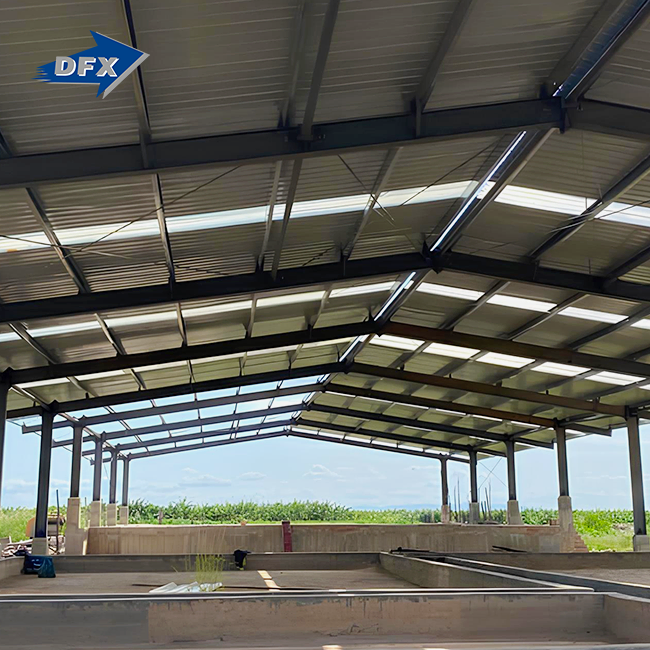
The main difference is in the mindset of engineering. In traditional shops, goods are kept on shelves. But grain storage steel warehouses have to be able to handle lateral grain pressure that acts like liquid. For example, a 10-metre-high grain pile puts a lot of force outward on supporting walls. Our modular manufactured steel storage buildings are made with H-beam main steel frames, galvanised C/Z purlins, and smart bracing systems that are meant to fight these forces. High-tensile steel (Q355B/S355JR) is used for the structure's load-bearing parts because it's strong enough when grain loads hit levels of 750–850 kg/m³.
Galvanised steel strips with zinc coating masses of between 275 g/m² and 600 g/m² protect the main structural parts, depending on the weather. This isn't just for looks; it protects against rust caused by grain acidity and weather outside. We've seen projects in coastal areas where walls failed early because they weren't galvanised properly within five years. The cost of replacing them was much higher than the cost of the update itself.
Core Benefits That Matter to Procurement Managers
The benefits go beyond keeping the structure strong. Insulated sandwich panels with polyurethane or polyisocyanurate bases keep the temperature inside the panel as stable as possible, which is very important when heat is being controlled from the grains' respiration. Airtightness is achieved with precision roll-formed joints and EPDM sealing strips. This allows for the gas-tight performance needed for fumigation processes that keep goods from bug infestation.
Pay extra attention to modularity. Fast building with bolt-assembly designs is possible for workers who have to meet tight project deadlines. We've helped EPC builders who needed storage up and running within 90 days of breaking ground, which is almost impossible with alternatives to cast-in-place concrete. The design's adaptability also lets the building grow in the future without tearing down current buildings, which is helpful for farming businesses as their operations grow.
These warehouses solve four major problems in the industry: they keep walls from falling down due to lateral grain pressure, they keep moisture under control to avoid mould and aflatoxin contamination, they keep pests out through hermetic sealing, and they make it easier to install under-floor aeration systems that are needed for stable long-term storage. The mixture solves the problem that keeps procurement managers up at night: the chance of a catastrophic structure failure or product loss that wipes out the project's return on investment (ROI).
Comparative Analysis: Grain Storage Steel Warehouses vs Alternative Storage Options
How Steel Stacks Up Against Traditional Materials
Concrete buildings are durable, but they can't be changed easily. It takes at least six months to build something, and it's too expensive to make changes once it's done. At first, wooden buildings may seem like a good way to save money, but the risk of fire and the fact that bugs love them make insurance companies very wary of them. Traditional steel silos are good for vertical storage, but they need a lot of infrastructure for conveyors and don't give many farming operations the practical freedom they need to mix different types of grain.
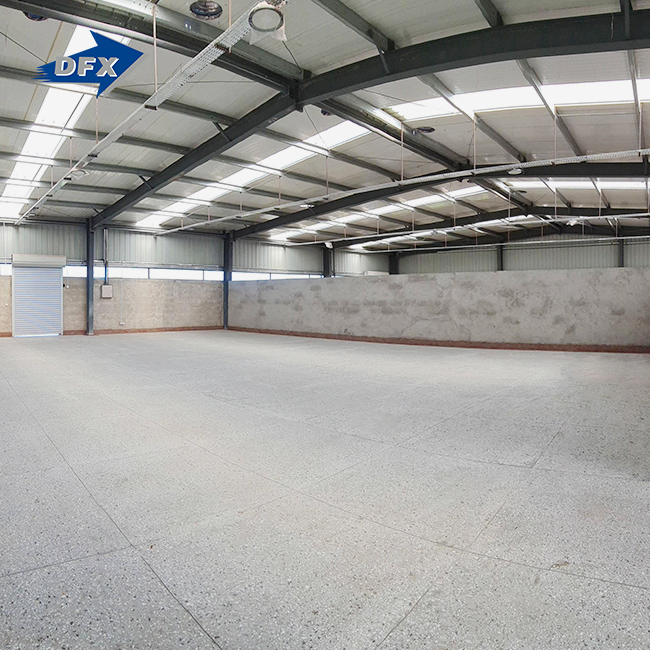
Grain Storage Steel warehouses with steel frames are a good compromise. They make the clear-span workspace—usually 20-metre to 60-metre spans—so that tipping trucks and front-end loaders can work without being blocked by columns. The building plan includes strengthened retaining walls that were estimated according to ISO 11697 standards to handle lateral loads. This is something that large wooden structures can't do safely.
Fire safety is very important and should be emphasised. Steel doesn't burn, but when it gets really hot or cold, it loses power. Systems that are properly built have fire-resistant coatings on the structure parts and enough air flow to keep dust from building up, since grain dust is very flammable. Compared to concrete, which cracks and needs to be sealed regularly, or wood, which needs to be treated for pests and protected from moisture every year, minimal maintenance is still needed.
Selecting the Right Configuration for Your Project
The choice between modular and permanent building is a smart one. When project deadlines are tight, or moving is possible in the future, modular solutions work great. Companies that make things and are growing like this have freedom. Permanent installs make sense for farms that have been around for a while and want to get the most out of their structures. This is especially true if the storage site won't change. We've built both types, and the choice usually comes down to whether the client sees the building as temporary equipment or a long-term fixed asset.
To plan for capacity, you need to know not only the current amount but also how it will grow in the future. A 5,000-tonnene facility might be enough for now, but if grain production in the region is growing, planning for an 8,000-tonnene capacity and building it in stages can save a lot of money compared to building brand-new facilities later. This forward-thinking method works well for project managers who are in charge of building infrastructure over a number of years.
Designing and Maintaining an Efficient Grain Storage Steel Warehouse
Essential Design Elements That Prevent Failures
The choice of insulation material has a direct effect on the beauty of the grain. Polyurethane sandwich panels with thicknesses between 50 mm and 100 mm act as thermal shields to stop differences in temperature from causing condensation on the inside walls. During cooler nights, when the temperature inside the grain is higher than the temperature outside, moisture condenses on steel surfaces that aren't protected. This causes the moisture to drip onto the grain and create spoilage pockets. This "sweating" that destroys saved value can be stopped with the right shielding.
Ridge ventilators, eave vents, and active air fans that are controlled by temperature monitors are all part of ventilation systems. Professional designs have pipes under the floor that move air through the grain mass to even out the temperatures and get rid of the metabolic heat that comes from the grains breathing. If you don't do this, hot spots will form where bugs and mould grow quickly. We figured out how much airflow is needed based on the type of grain, how long it will be stored, and the temperature. For example, wheat and corn respire at different rates, so they need different amounts of airflow.
Some structural features include perimeter ring beams or strengthened concrete supports with thickened ends that can handle horizontal thrust from retaining walls. The form of the base takes into account things like the angle of repose and the bulk density of the grain. If the supports aren't strong enough, the walls will bow, which weakens both the structure and the seal, letting pests and water in.
Maintenance Protocols That Extend Service Life
Quality checking starts before the work is done. Verification of raw materials includes testing the tensile strength of steel batches and analysing their chemical makeup. Magnetic induction scales are used to measure the thickness of zinc coatings and prove grades like Z275 or Z450. Weld integrity is checked without damaging the weld itself using ultrasonic and magnetic particle inspection on the main links. Cracks below the surface that can't be seen with the naked eye can spread during cyclic loading and finally lead to a catastrophic failure.
Annual checks of sealing parts are part of ongoing maintenance for the grain storage steel warehouse. This is especially important for door gaskets and sheet metal gaps, where weather damage weakens EPDM seals over time. High-pressure water spray tests done in the rain show that roof gaps and wall joints are waterproof. For fumigation-grade stores, air pressure decline tests show that the buildings are airtight. Leaking gas not only wastes fumigant but also puts workers nearby in danger.
Safety compliance also includes making sure that the air system works properly, with fans that turn on and off and ductwork that doesn't get clogged. We give building managers thorough maintenance schedules that are in line with ISO quality management systems and CE certification standards. This helps them keep up with both performance and compliance with the rules. These rules aren't extra work for the government; they're organised ways to avoid small mistakes that turn into costly problems.
Market Insights and Procurement Guidance for Grain Storage Steel Warehouses
Understanding Manufacturer Capabilities and Cost Variables
When choosing a steel structure manufacturer, you need to look at their production capability, technical skills, and quality control methods. Our business has a production area of 40,000 square metres, which includes six automatic welded H-beam lines that can make 20,000 tonnes of steel per year, two C/Z section steel lines that can make 8,000 tonnes, and sandwich panel lines that can make 50,000 square metres of insulated covering. This vertical integration makes sure that all parts are of the same high standard and gets rid of the delays that come from having to coordinate with many suppliers.
The price of steel changes with the global market, as do the needs for galvanisation and insulation, and the difficulty of engineering formulas. When we use project-based construction, we design each building to fit the specifics of the site. For example, wind loads, seismic needs, and the strength of the soil can be very different from one place to another. As part of our service, we offer installation advice and transportation coordination. This eases the worries that project managers have about how to coordinate between manufacturing and on-site assembly.
A lot of buyers don't understand how important certificates are at first. Our ISO9001 certification shows that we handle quality in a planned way, and our CE marking shows that we meet European safety standards, which are becoming more and more important for international projects. Optional EN1097 approval gives clients who need proof of compliance even more peace of mind. These aren't just pieces of paper; they show methods that have been checked and are safer for the project.
Evaluating Suppliers and Installation Support
The manufacturing ability and project schedule should be taken into account when choosing a supplier. If their production plan is already full, a source that normally makes 15,000 tonnes a year might have trouble getting you a 5,000-tonne project in time. We keep our production schedules flexible so that we can work with the ever-tightening schedules in the building business.
There are pros and cons to both international and local sources. Chinese manufacturing is cheaper because of economies of scale and specific knowledge. For over 12 years, we've only worked with structural steel. Logistics for transportation have gotten a lot better. Now, pre-fabricated parts are shipped in containers to ports, where they are ready to be moved to project sites by truck. Installation support includes full erection plans, technical help on-site, and working with local companies to do the base work and final assembly.
After-sales help shows which manufacturers are dedicated to long-term client relationships and which ones see projects as transactions. For

, we answer questions about maintenance on a regular basis, send new parts when they're needed, and offer growth engineering when our clients' businesses grow. This all-encompassing method covers the whole project lifecycle, from the idea and planning stages to the manufacturing and on-site assembly. It makes it easier for EPC workers to coordinate the delivery of difficult tasks.
Conclusion
Choosing the right framework for storing grains will determine whether your project is long-lasting and useful or one that needs a lot of upkeep. Procurement managers need buildings with steel frames that are designed to withstand the pressures of storing grains, have the right insulation and air systems, and are built with high-quality materials so that they last and work well. Because these structures can be built faster, require less upkeep, and can be expanded more easily than structures made of other materials, they are perfect for contractors who need to meet tight deadlines and farming businesses that want to grow. If you know about the technical requirements, upkeep needs, and supplier skills, you can make buying choices that will help the project reach its goals now and in the years to come.
FAQ
1. How long does a properly maintained grain storage facility last?
In rural areas, structures can last longer than 30 to 50 years with regular upkeep and a galvanised finish of 275 g/m² or more. To get the same level of durability, higher-grade finishes or epoxy paints are needed in coastal or industrial areas. Initial material quality and regular upkeep are the most important factors. Small problems that turn into big ones can be avoided by inspecting the system once a year and replacing seals when they wear out.
2. Can flat storage warehouses be automated like silos?
Of course. Vertical silos use gravity to empty, but flat buildings can have overhead chain conveyors for loading and sweep augers or mobile belt conveyors for emptying. This automation cuts down on human work a lot and makes operations more efficient. This makes flat storage competitive with silos for large-scale operations that value operational flexibility.
3. What foundation requirements do these structures need?
The shape of the foundation is very important and relies on the grain's properties. For flat storage, you usually need reinforced concrete blocks with thicker sides or exterior ring beams that can handle the force from the walls. Calculations take into account the bulk density of the grain and the angle of rest. If the supports aren't good, the walls will bow, which will weaken the structure and make it harder to seal. Professional engineering makes sure that the supports are strong enough to hold the weight of the goods being kept.
Partner with DFX for Your Next Grain Storage Steel Warehouse Project
Director Steel Structure Co., Ltd. has been making specialized steel structures for more than 12 years and brings that knowledge to every grain storage job. As a Grain Storage Steel Warehouse manufacturer that is ISO9001-certified and CE-compliant, we offer full turnkey solutions that include engineering estimates, manufacturing, transportation coordination, and advice on how to set up the warehouse. Our production center is 40,000 square meters, and we have more than 200 trained workers to make sure that your project gets the technical help and production capacity it needs. We offer the design flexibility, quality assurance, and after-sales support that turns good projects into great ones, whether you're an EPC contractor bidding on farm infrastructure or a project manager looking at storage options. Get in touch with Jason at jason@bigdirector.com to talk about your needs and find out how our modular built steel storage buildings can fit your budget, schedule, and performance requirements.
References
1. Thompson, R. (2021). Structural Design Principles for Agricultural Bulk Storage Facilities. American Society of Agricultural Engineers Press.
2. Chen, W. and Liu, M. (2020). Steel Structures in Agricultural Applications: Engineering and Construction Standards. International Journal of Steel Structures, Volume 20, Issue 3.
3. Martinez, J. (2022). Modern Grain Storage: Technology, Design, and Management Practices. Agricultural Engineering Publications.
4. ISO 11697:2012. Bases for Design of Structures – Loads Due to Bulk Materials. International Organization for Standardization.
5. Peterson, L. and Anderson, K. (2019). Corrosion Protection Systems for Agricultural Steel Buildings. Journal of Protective Coatings and Linings, Volume 36, Number 8.
6. Williams, D. (2023). Prefabricated Steel Construction Methods: Efficiency and Quality in Modern Building. Construction Technology Press.
Learn about our latest products and discounts through SMS or email