- English
- French
- German
- Portuguese
- Spanish
- Russian
- Japanese
- Korean
- Arabic
- Greek
- German
- Turkish
- Italian
- Danish
- Romanian
- Indonesian
- Czech
- Afrikaans
- Swedish
- Polish
- Basque
- Catalan
- Esperanto
- Hindi
- Lao
- Albanian
- Amharic
- Armenian
- Azerbaijani
- Belarusian
- Bengali
- Bosnian
- Bulgarian
- Cebuano
- Chichewa
- Corsican
- Croatian
- Dutch
- Estonian
- Filipino
- Finnish
- Frisian
- Galician
- Georgian
- Gujarati
- Haitian
- Hausa
- Hawaiian
- Hebrew
- Hmong
- Hungarian
- Icelandic
- Igbo
- Javanese
- Kannada
- Kazakh
- Khmer
- Kurdish
- Kyrgyz
- Latin
- Latvian
- Lithuanian
- Luxembou..
- Macedonian
- Malagasy
- Malay
- Malayalam
- Maltese
- Maori
- Marathi
- Mongolian
- Burmese
- Nepali
- Norwegian
- Pashto
- Persian
- Punjabi
- Serbian
- Sesotho
- Sinhala
- Slovak
- Slovenian
- Somali
- Samoan
- Scots Gaelic
- Shona
- Sindhi
- Sundanese
- Swahili
- Tajik
- Tamil
- Telugu
- Thai
- Ukrainian
- Urdu
- Uzbek
- Vietnamese
- Welsh
- Xhosa
- Yiddish
- Yoruba
- Zulu
How to Select a Steel Structure Hangar Supplier: A Practical Checklist
Choosing a steel structure hangar supplier is a choice that will impact your project’s budget, schedule, and long-term structural safety. Without an organized review process, contractors may be left with unclear quotations, missed deadlines, or structures that won’t hold up to local wind and snow loads. This checklist leads project managers, procurement teams, and engineering directors through the particular criteria that differentiate the good fabricators from the bad using genuine specification requirements, industry certifications, and a proven assessment system.

What Should a Steel Structure Hangar Supplier Provide?
A competent steel structure hangar supplier is more than a steel beam cutter and welder. “The company should be a project partner, covering everything from initial structural concept to final erection support. Buyers who get merely a price estimate ignore the services that really influence how well a hangar operates during its 30-plus-year service life.
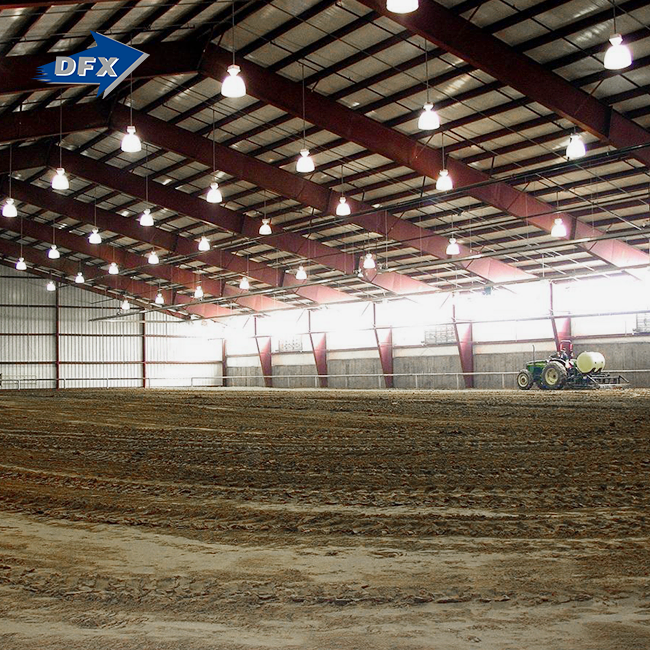
A steel structure hangar is a big-span steel building used for storing, maintaining, or repairing aircraft. It normally has a column-free interior so that equipment and the wings have freedom to maneuver. The majority of designs have the entrance opening the whole width of the structure; therefore, the depth of engineering from the supplier is more important here than in a normal warehouse.
Structural Design and Engineering Support
The supplier should provide in-house structural calculations, not outsource to a third party. This comprises wind load analysis, snow load analysis, and seismic assessments based on the actual coordinates of your project. Ask whether the design team provides stamped calculation reports that you can submit to local building authorities, since many EPC contracts demand this paperwork before a permit is awarded.
Fabrication and Material Supply
Besides design, the supplier must have the physical capabilities to manufacture H-section steel columns, roof trusses, purlins, and cladding panels under one roof. A fabricator that produces its own sandwich panels and corrugated steel sheets may manage material uniformity and eliminate delays that occur with coordinating many sub-suppliers.
Installation and Site Support
Erection instruction is very important, and many purchasers underestimate it. A trusted supplier supplies precise installation drawings, bolt lists, and, when the contract permits, a site supervisor for important stages such as door track alignment. That eliminates the most prevalent source of hangar project delays – rework on site.
You don’t have to gamble in terms of choosing a steel structure hangar manufacturer. Since 2011, DFX has been manufacturing airplane hangars, heavy equipment shelters, and huge industrial structures for customers in Africa, South America, and Southeast Asia. We can have our engineers get you a precise price in a matter of days. Start by sending your span, door height, and project location to jason@bigdirector.com.
How Do You Verify a Hangar Supplier's Manufacturing Capacity?
There are many claims of ‘large-scale production’ in this market, but you need particular data points to confirm capability. If the supplier is going to overload their production line, they won’t be able to meet your delivery date. The size of the production floor, the number of machines, and the headcount of the crew all link directly with that.
Production Facility Size and Equipment
Request enclosed production area in square meters and a list of current manufacturing lines. For example, Director Steel has 40,000 square meters of enclosed manufacturing area, comprising six automated welded H-beam production lines, two sandwich panel lines, two C/Z section steel lines, and twenty corrugated steel sheet lines. That spread of equipment enables one facility to create every major steel structure hangar component without having to subcontract.
Workforce and Technical Team
The combination of skilled labor and engineering personnel is what counts, not the headcount. “We have a factory with more than 200 skilled workers and a dedicated technical and design team, so we are able to run multiple hangar orders at the same time and ensure quality is equal across the board.”
Annual Output Capacity
Ask the supplier what their yearly tonnage production is for welded H-beams and columns. This number will tell you whether your order will be fighting for machine time with dozens of other customers. 20,000 tons of welded H-beams and columns, 8,000 tons of C and Z section steel structure hangar, and 50,000 square meters of sandwich panels, all per annum, suggest a facility designed for constant big-volume export activity, not some odd side project.

Which Certifications Should a Hangar Supplier Have?
Certifications are not paperwork formalities. They are proof that a fabricator's welds, materials, and quality processes have been independently audited against recognized standards. For a structure as safety-critical as a steel hangar, certification gaps translate directly into structural and legal risk.
ISO 9001 Quality Management
ISO 9001 certification confirms that a supplier follows a documented quality management system covering design review, material traceability, and defect correction [2]. Without it, buyers have no independent evidence that the factory's internal quality claims match its actual production practices.
CE Marking for European Compliance
CE marking indicates that structural steel products meet European Union safety, health, and environmental protection requirements. Even outside Europe, many EPC contractors treat CE certification as a proxy for material and fabrication quality on international tenders.
COC and PVOC for Import Clearance
Certificate of Conformity (COC) and Pre-Export Verification of Conformity (PVOC) documents are required by several African and Middle Eastern customs authorities before steel shipments clear port. A supplier that cannot produce these on request will delay your container at the border, regardless of how good the steel itself is.
| Certification | What It Verifies | Why It Matters for a Hangar Buyer |
|---|---|---|
| ISO 9001 | Documented quality management system across design, fabrication, and inspection | Reduces the risk of undetected fabrication defects |
| CE Marking | Conformity with EU structural safety and material standards | Accepted as a quality benchmark on many international tenders |
| COC | Product conformity confirmed before shipment | Required for customs clearance in several import markets |
| PVOC | Pre-export inspection of goods against destination-country standards | Prevents port delays and additional inspection fees |
How Can You Assess Steel Hangar Material Quality?
Material quality is harder to judge from a photo or a sample panel than buyers assume. A steel structure hangar's structural steel, coating, and welds each need separate scrutiny, since a failure in any one of them can shorten the building's service life by years.
Steel Grade and Section Type
Ask which steel grade the supplier uses for main columns and rafters, and request the mill certificate for that grade. Welded H-section steel remains the standard choice for hangar main frames because it delivers a strong strength-to-weight ratio across long clear spans.
Corrosion Protection and Coatings
Coastal and high-humidity sites accelerate steel corrosion, so ask what primer and topcoat system the supplier applies, and at what dry film thickness. A hangar built near the coast without adequate coating can show visible rust within two to three years.
Welding Standards (AWS D1.1)
Structural welds should follow a recognized code such as AWS D1.1, the Structural Welding Code – Steel published by the American Welding Society, which sets requirements for welder qualification, weld procedure specifications, and inspection [3]. A supplier that cannot name the welding standard it follows is a warning sign, not a minor gap.
What Engineering Services Should a Hangar Supplier Offer?
The engineering phase is where a steel structure hangar's real cost and safety margin get decided, well before a single beam is fabricated. Buyers who treat engineering as an afterthought often pay for costly redesigns once site conditions are properly accounted for.
Structural Calculations and Load Analysis
Full structural calculations should account for dead load, live load, wind load, and, where relevant, snow and seismic load, based on your site's actual coordinates rather than generic assumptions [5]. Ask the supplier to share a sample calculation package from a comparable past project so you can judge its depth.
Custom Design for Aircraft Dimensions
Hangar clear span and clear height must match the wingspan, tail height, and overhead clearance of the aircraft or equipment being stored, plus a workable safety margin. A generic warehouse template will not fit these dimensions correctly, so confirm the supplier customizes span and eave height for each order.
Fire Protection Planning
Every steel structure hangar carries unique fire risks from fuel vapor and maintenance activity, which is why the United States National Fire Protection Association publishes NFPA 409, a standard covering hangar construction and fire protection requirements [4]. Even where NFPA 409 is not the governing local code, its classification logic is a useful reference point for planning fire compartments, door ratings, and smoke control.
How Do You Compare Hangar Suppliers by Price and Lead Time?
Only if the quotes are for the same scope does it make sense to compare prices across providers. A lower amount on paper might mask missing things like bolts, anchor plates, or installation drawings that become unanticipated expenses down the road.
Comparing Total Delivered Cost
Break down each quotation into steel tonnage cost, panel and cladding cost, door system cost, freight, and any installation assistance price. The most typical error procurement teams make on foreign steel purchases is to compare simply the headline figure, without checking what is within the scope.
Understanding Lead Time Variables
Lead time is dependent on order backlog, availability of steel plate, and the bespoke nature of your span and door arrangement. Always ask for a production timeline with design approval, fabrication, and shipping windows, not just a combined figure. A single number does not tell you where delays will most likely happen.
What Questions Should You Ask Before Choosing a Supplier?
A short, direct question list during supplier calls filters out vague answers faster than reviewing a glossy brochure. The questions below are grouped so you can work through them systematically during a vendor screening call.
Questions About Capacity and Timeline
Before placing a budget order, be sure the fabricator can really fit your order into its timetable. So, these are the questions worth asking during that early screening call:
- What is your order backlog today, and where is my project in your production queue against obligations currently on the floor of the factory?
- Who will build the main structure, purlins, and cladding of my hangar? Do you outsource any of these operations to external workshops?
- Can you provide me a production plan that breaks out the design, manufacturing, and shipping phases? Can you give me actual dates instead of the single combined delivery estimate?
Answer these three questions, and you will generally discover if a supplier’s quoted lead time is reasonable, or just optimistic marketing.
Questions About Certifications and Warranty
Be sure to clarify warranty conditions and certifications properly before the contract is signed, since they protect you after the contract is signed. When you make your calls to evaluate suppliers, ask the following:
- Before I sign, please supply current ISO 9001, CE, COC, and PVOC certifications and the name of the certifying authority so I can independently check.
- What is the guarantee duration for the structural warranty on the main frame, and does it cover manufacturing faults independently of natural wear and tear or coating deterioration over time?
- Once installed, who deals with warranty claims if a problem occurs? What paperwork do you need to complete the claim quickly?
Suppliers who can answer these questions with names, documentation, and timelines are far more likely to follow through after the sale.

How Can You Evaluate a Supplier's Previous Hangar Projects?
Past project history tells you more about a supplier's real capability than any sales presentation. Reviewing completed steel structure hangar projects, ideally with site photos and client references, shows whether the fabricator has handled your building type before.
Reviewing Project Portfolios and References
Ask for at least three complete military hangar steel structure specifications or large-span projects with the client's industry, project location, and approximate completion date. A supplier willing to connect you with a past client, even briefly, has far more confidence in its own work than one that offers only rendered images.
Case Study: Comparing Three Hangar Quotes in Port Moresby
The example below shows how an effective checklist might alter procurement results. It is provided as a reference for illustration purposes and is not intended to be a proven case history.
Port Moresby, Papua New Guinea – An EPC contractor in Port Moresby, Papua New Guinea, was working with a small airline customer that had a strict six-month timetable for the building of a maintenance steel structure hangar. The project manager developed a scorecard of certification, engineering depth, and delivered cost and applied it to three competing quotes.
One supplier’s estimate had no verified welding standard and no structural calculation package, so the team cut it early despite a cheap headline price. The total delivered cost, documented lead time, and warranty conditions of the other two vendors were compared with the table below.
| Evaluation Criteria | Supplier A | Supplier B |
|---|---|---|
| Total delivered cost | $418,000 | $392,000 |
| Certifications provided | ISO 9001 only | ISO 9001, CE, COC, PVOC |
| Documented lead time | 22 weeks | 18 weeks |
| Structural calculation package | Summary only | Full stamped report |
Supplier B won the contract despite a smaller price gap, because the full certification set and stamped calculations reduced permit-approval risk. The contractor reported the Aircraft hangar steel building was erected roughly four weeks ahead of the original 18-week fabrication estimate, and the scorecard approach cut the internal evaluation time by close to a third compared with the team's previous, unstructured supplier reviews.
What Should a Steel Hangar Supplier Quote Include?
A complete steel structure hangar quote protects both sides from disputes once fabrication begins. Vague quotes are a leading cause of change orders, which almost always cost more than the same item priced correctly from the start.
Technical Specifications in the Quote
The quote should list steel grade, section sizes, coating specification, cladding thickness, and door system type by name, not just "standard specification." It should also state the design load assumptions used, so you can confirm they match your actual site conditions before signing.
Payment Terms and Delivery Schedule
Confirm the deposit percentage, milestone payment schedule, and Incoterm used for shipping, since these details affect your project's cash flow planning. A quote that separates fabrication completion from vessel departure date gives you a clearer picture of real delivery risk.
How Do You Build a Reliable Steel Hangar Supplier Checklist?
Turning everything above into a single scoring tool makes Airplane hangar steel structure supplier comparison faster and less subjective. A weighted checklist also gives procurement teams a documented rationale for their final decision, which matters when project sponsors ask how the choice was made.
Building Your Evaluation Scorecard
Assign a weight to each category based on what matters most for your specific project, then score every supplier from one to five within each row.
| Checklist Category | Weight | What to Score |
|---|---|---|
| Certifications (ISO 9001, CE, COC, PVOC) | 20% | Documents provided and independently verifiable |
| Engineering depth | 25% | Stamped calculations, custom span design, load analysis |
| Manufacturing capacity | 20% | Facility size, active production lines, annual tonnage |
| Total delivered cost | 20% | Full scope, no hidden exclusions |
| Track record and references | 15% | Comparable completed hangar projects |
Finalizing the Supplier Shortlist
Score at least three suppliers on the same scorecard, then shortlist the top two for a direct video call with their engineering team. That call typically reveals more about a supplier's real capability than another round of written quotes ever will.
Conclusion
Selecting a steel structure hangar provider is all about confirming claims, not believing them. Certifications, manufacturing capacity, technical depth, and complete quote transparency are the foundation of every reliable checklist. Applying them regularly preserves your money and your project timetable. It is these same buyer goals that DFX designed its manufacturing system around, with a combination of in-house engineering and approved, factory-direct manufacture of hangars and other large-span steel structures.

FAQ
1. How long does it take to fabricate a steel structure hangar?
Most hangar orders take between 12 and 24 weeks from design approval to shipment, depending on span size, door complexity, and the supplier's current order backlog.
2. What is the typical clear span for an aircraft hangar?
Clear spans commonly range from 24 meters for small general-aviation hangars up to 80 meters or more for wide-body maintenance facilities, depending on the aircraft being stored.
3. Do I need a local structural engineer to review the supplier's calculations?
Yes, in most jurisdictions, a locally licensed engineer must review and stamp imported structural calculations before a building permit is issued, even when the supplier's own engineering package is complete.
4. Can a steel structure hangar be customized after the initial design is approved?
Minor changes such as door width or interior partition layout are usually possible before fabrication starts, but changes after steel cutting begins add cost and delay.
5. What maintenance does a steel structure hangar require after installation?
Routine maintenance includes annual coating inspection, gutter and drainage checks, and periodic bolt-tightness verification at door tracks and bracing connections.
6. How do I confirm a supplier's certifications are genuine?
Request the certificate number and issuing body, then contact that body directly or check its public registry, rather than relying on a scanned copy alone.
Getting Your Steel Structure Hangar Project Started
Ready to move from checklist to contract? DFX supplies engineered steel structure hangar packages backed by ISO 9001, CE, COC, and PVOC certification, in-house structural calculations, and factory-direct pricing as a steel structure hangar manufacturer built for export projects. Send your span, door type, and project location to jason@bigdirector.com, and our team will return a detailed comparison quote.
References
1. American Institute of Steel Construction, "Fabricator & Erector Certification," AISC, 2025. Referenced in the Certifications section for third-party quality verification standards. https://aisc.org/why-steel/resources/fabricator-and-erector-certification
2. International Organization for Standardization, "ISO 9001:2015 Quality Management Systems — Requirements," ISO, 2015. Referenced when explaining ISO 9001 certification scope. https://www.iso.org/standard/62085.html
3. American Welding Society, "D1.1/D1.1M:2025, Structural Welding Code – Steel," AWS, 2025. Referenced in the Material Quality section on welding standards. https://www.aws.org/standards-and-publications/codes-and-standards/d1-1/
4. National Air Transportation Association, "NFPA 409: Standard on Aircraft Hangars White Paper," NATA, 2009 (summarizing NFPA's Standard on Aircraft Hangars). Referenced in the Engineering Services section on fire protection planning. https://nata.aero/nfpa-409-standard-on-aircraft-hangars-white-paper/
5. National Institute of Standards and Technology, "Wind Load Factors for Tall Building Design and the ASCE 7 Standard," NIST, 2017. Referenced in the Engineering Services section on wind load analysis. https://www.nist.gov/publications/wind-load-factors-tall-building-design-and-asce-7-standard
6. IMARC Group, "Prefabricated Building and Structural Steel Market Report, 2026–2034," IMARC Group, 2025. Referenced for global market growth context supporting manufacturing capacity claims. https://www.imarcgroup.com/prefabricated-building-structural-steel-market
Learn about our latest products and discounts through SMS or email