- English
- French
- German
- Portuguese
- Spanish
- Russian
- Japanese
- Korean
- Arabic
- Greek
- German
- Turkish
- Italian
- Danish
- Romanian
- Indonesian
- Czech
- Afrikaans
- Swedish
- Polish
- Basque
- Catalan
- Esperanto
- Hindi
- Lao
- Albanian
- Amharic
- Armenian
- Azerbaijani
- Belarusian
- Bengali
- Bosnian
- Bulgarian
- Cebuano
- Chichewa
- Corsican
- Croatian
- Dutch
- Estonian
- Filipino
- Finnish
- Frisian
- Galician
- Georgian
- Gujarati
- Haitian
- Hausa
- Hawaiian
- Hebrew
- Hmong
- Hungarian
- Icelandic
- Igbo
- Javanese
- Kannada
- Kazakh
- Khmer
- Kurdish
- Kyrgyz
- Latin
- Latvian
- Lithuanian
- Luxembou..
- Macedonian
- Malagasy
- Malay
- Malayalam
- Maltese
- Maori
- Marathi
- Mongolian
- Burmese
- Nepali
- Norwegian
- Pashto
- Persian
- Punjabi
- Serbian
- Sesotho
- Sinhala
- Slovak
- Slovenian
- Somali
- Samoan
- Scots Gaelic
- Shona
- Sindhi
- Sundanese
- Swahili
- Tajik
- Tamil
- Telugu
- Thai
- Ukrainian
- Urdu
- Uzbek
- Vietnamese
- Welsh
- Xhosa
- Yiddish
- Yoruba
- Zulu
Electronic assembly steel workshop Design for Clean Production
When you're planning a new factory to make electronics, a lot is at stake. A single piece of dust can damage a circuit board. After months of work, static electricity can destroy it all in milliseconds. That's why an Electronic Assembly Steel Workshop isn't just another factory; it's a precision tool made to keep your goods safe and your profits high. These special steel-framed buildings are necessary for anyone serious about making electronics in today's market because they are strong and have environmental controls that keep pollution out and produce high output.

Understanding Electronic Assembly Steel Workshop Design for Clean Production
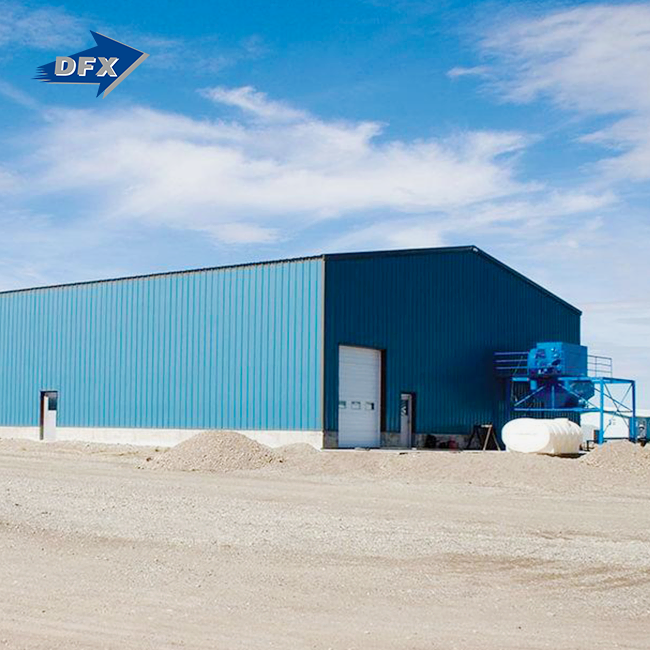
An Electronic Assembly Steel Workshop is the main building that supports all the operations that go into making electronics, from SMT assembly lines to packaging semiconductors. These facilities are different from regular warehouses because they use high-quality structural steel frames and advanced environmental management systems to create clean workspaces.
Core Components of Clean Production Steel Workshops
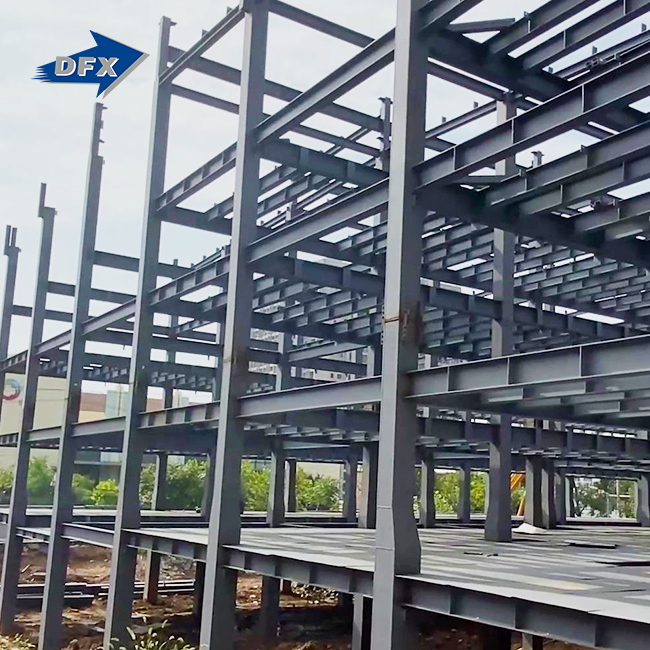
Main frames of welded H-section steel, commonly Q235 or Q355, form the basis. These materials have excellent yield strength and retain their form after repeated heating and cooling. The open-span design eliminates production-slowing internal columns. This allows manufacturers to build assembly lines without structural issues. Bolted steel connections enable fast construction and future manufacturing adjustments.
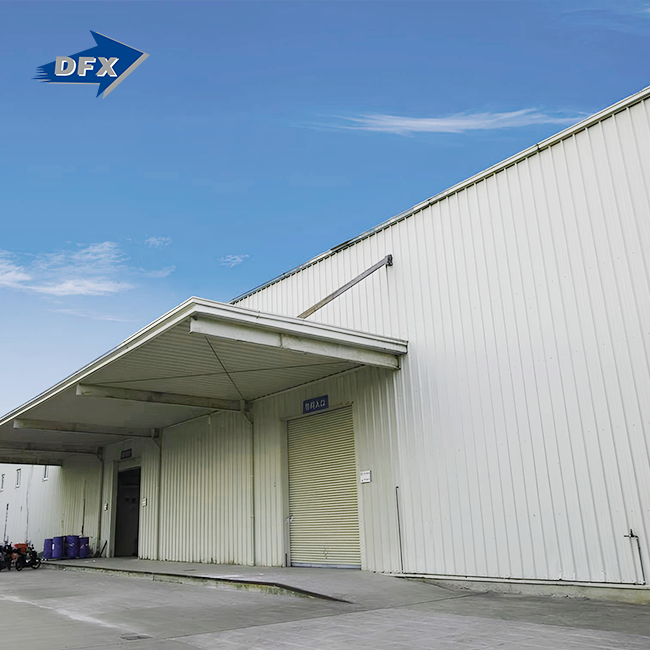
Due to stringent temperature tolerances, electronics assembly requires sandwich panel cladding systems with polyurethane or rockwool cores that offer thermal insulation over R-30. Our facilities consistently maintain a temperature of 22°C ±2°C and humidity of 50% RH ±10%. To prevent twisting and solder joint failure, these conditions are crucial.
ESD Protection Through Structural Design
Static electricity is a major issue while constructing electronics. The issue is solved by well-designed steel workshops' grounding systems. The steel frame may connect to earth grids below 4 ohms by welding specific grounding connections to the column base plates. This structural grounding creates a complete ESD safety network that swiftly removes static charges using conductive epoxy flooring systems.
Vibration Mitigation for Precision Equipment
Modern pick-and-place and reflow ovens require solid platforms. Steel workshops for electronics assembly have greater stiffness ratios that restrict displacement to L/500 or L/800 spans. This rigidity reduces minor vibrations that affect placement accuracy, increasing yield rates on PCB systems with many components. To maintain quality, automotive electronics manufacturers need vibration control on battery management system assembly lines.
Designing the Layout of an Electronic Assembly Steel Workshop
Smart layout planning is what makes the difference between electronics facilities that work well and those that have problems with contamination and slowdowns in workflow. Through hundreds of projects, we've learned that how space is organised has a direct effect on both the quality of the result and how quickly it can be made.
Zoning Strategies for Cross-Contamination Prevention
In an Electronic Assembly Steel Workshop, effective zones construct physical and environmental barriers to divide clean and dirty places. New-material receiving regions are less clean than SMT assembly zones, which regulate particles. The steel frame supports partition walls and airlocks without beams. You may create various cleaning zones.
We recommend organizing PCB handling, assembly, testing, and packaging into separate regions. Controlled transfer points with positive pressure differences prevent flying pollutants from entering cleaner zones. The clear-span steel construction allows HVAC ducting to be connected directly to overhead purlins without interfering with manufacturing equipment, making pressure cascades straightforward to set up.
Material Flow Optimization
Linear manufacturing reduces handling time and contamination. Steel workshops benefit from the rooms' lack of columns, allowing equipment to be lined up from raw materials to final items. We've created facilities that carry circuit boards 200 meters through several manufacturing phases without rotating. This reduces handling, which often causes contamination.
Modular steel desk systems suit these processes and provide adjustable surfaces for building work. Overhead cranes backed by strengthened roof trusses handle heavy equipment during line modifications. This allows variable manufacturing without compromising hygiene.
Ergonomic and Safety Considerations
Quality production depends on worker comfort. Adjustable-height steel workbenches reduce strain injuries during gadget assembly. ESD flooring with anti-fatigue mats protects workers and products. Since the structure accommodates hanging LED lamps to eliminate shadows and glare at inspection stations, steel workplaces are simpler to illuminate.
Safety standards apply outside the building. Fire-rated steel is safer than wood or prefab. Open floor layouts clear emergency exits, and the steel structure won't contribute to the fire, which is vital for storing solder paste and cleaning solvents.
Choosing the Right Steel Materials and Equipment
The materials you choose will affect how well your building works for decades. When procurement teams know the pros and cons of the different steel grades and surface treatments, they can make decisions that balance initial costs with long-term performance.
Carbon Steel Versus Stainless Steel Applications
Most electronics workshops are built with Q235 and Q355 carbon steels as their main building materials. These materials are very strong for how much they cost, and they can be coated in a number of different ways to protect them. Hot-dip galvanising at 600g/m² gives strong corrosion resistance, which is important in cleanrooms with a lot of humidity. Epoxy zinc-rich primers are an additional form of protection that has lower outgassing rates. This keeps volatile organic compounds from getting into sensitive assembly areas.
Stainless steel is only used in places where rust is likely to happen and on certain types of tools. Type 304 stainless steel workbenches can't be cleaned with chemicals that are used to remove flux and get parts ready. The material's natural conductivity meets ESD standards without any extra treatments, but it is still important to make sure that all of the connections are properly grounded.
Workshop Furniture and Fixturing Options
Steel racks and shelving systems made for electronics shops have smooth welds and rounded edges that won't damage ESD bags or component packaging. Modular shapes let them be rearranged when the mix of products changes. We make C/Z steel purlins that can also be used as paths for managing cables. This way, power and data lines stay organised above work surfaces instead of strewn all over the floor.
The form of a workbench depends on what it will be used for. Microscopes and measuring tools need to be able to stand on hard surfaces at SMT inspection stations. Benches for manual building have perforated tops that have lights and magnification arms built in. Steel building meets both needs, with heavier-gauge materials for flexible workstations and reinforcements where they're needed for big tools.
Supplier Selection Criteria
When picking a steel frame provider, you need to look at more than just price. Look for ISO9001 approval, which shows that quality control is always the same. Putting a CE mark on structural steel means that it meets European safety standards, which is important for businesses that do business around the world. ASTM material compliance makes sure that different grades of steel have the right chemical makeup and mechanical properties.
When delivery times are tight, production capacity is important for an Electronic Assembly Steel Workshop. Facilities with a lot of H-beam production lines and automated panel manufacturing systems can meet tight deadlines. We have twenty corrugated steel sheet lines and 40,000 square meters of protected production space. This lets us make full workshop packages, from structural frames to wall cladding, without having to deal with the organisational problems that come with buying from more than one source.
Implementing Maintenance and Environmental Best Practices
To keep up with clean output standards, even the best-designed building needs regular upkeep. Setting up regular check routines keeps small problems from turning into expensive shutdowns.
Routine Maintenance Protocols
Roof sealants and gutter systems should be checked every three months because water getting into a cleanroom quickly destroys the conditions inside. When rust forms on steel, it means that the coating is failing and needs to be fixed right away. We suggest testing the thickness of structural members in corrosive environments with ultrasonic waves once a year to find section loss before it affects the load capacity.
The stability of an ESD grounding device needs to be checked every six months. Multiple resistance measures taken throughout the building make sure that the steel framework as a whole stays properly conductive. Over time, cleaning chemicals and foot traffic wear down conductive flooring systems, which means they need to be restored on a regular basis to keep resistance levels within certain ranges.
Steel equipment racks and workbenches need to be checked regularly for damage to the structure and wear on the paint. Powder-coated surfaces that get scratches or chips should be fixed right away so that corrosion doesn't spread under the complete coats.
Sustainability and Waste Reduction
Because steel can be recycled, it fits with companies' goals for sustainability. When they are no longer useful, structural steel parts still have a lot of worth as scrap and can be remelted into new goods with little quality loss. This closed-loop recyclability is better for the earth than composite materials that end up in landfills.
Insulation is the first step toward saving energy. High-R-value sandwich panels lower the load on HVAC systems, which lowers costs and the amount of carbon dioxide released into the air. When compared to fluorescent fixtures, LED lighting built into the steel structure uses 60% less energy and provides better lighting for quality inspection tasks.
Addressing Common Challenges
When condensation forms on steel surfaces, it hurts electronics and raises the risk of contamination. Thermal-break insulation and vapour barriers that are placed correctly keep surfaces inside from getting to dew points. On the warm side of the insulation, we put up vapour shields that stop moisture from moving and condensing on the cold steel sections.
Sometimes, electromagnetic interference can mess up sensitive testing gear. Steel buildings don't make EMI, but they can pass it on to other devices. When you ground the building frame properly, you make a low-impedance path that keeps stray currents away from the production equipment. In the worst situations, we add copper mesh grounding grids to the steel columns to make the shielding stronger.
Procurement Considerations for Electronic Assembly Steel Workshops
Smart buying takes into account both short-term budget limits and long-term costs of doing business. Knowing the full lifecycle economics helps make the case for investing in good infrastructure.
Cost Analysis: Steel Versus Alternative Materials
When prices are first set, lighter materials like aluminium framing or prefabricated panel systems are often more popular. LCA, on the other hand, shows a different picture. Steel buildings stay stable in their dimensions for more than 50 years with little upkeep. Because they are less resistant to fatigue, aluminium frameworks need to be inspected and parts replaced more often.
At first glance, concrete tilt-up construction seems like a good deal, but it doesn't offer the flexibility that electronics manufacturers need. Adding more space or changing the layout of a concrete building costs a lot of money because it needs to be cut and reinforced. Steel structures can be changed by unscrewing old links and adding new ones. This makes renovations much cheaper as production needs change.
Scalability and Modular Expansion
The market for electronics changes quickly. A factory that was built to put together parts for smartphones could switch to making sensors for cars within 18 months. A steel building can handle these changes because it can be expanded in modules. Extra rooms can be added to buildings that are already there without stopping production. HVAC systems and utilities that are mounted on the roof grow slowly as manufacturing capacity does.
For an Electronic Assembly Steel Workshop, steel frameworks and modular cleanroom systems work well together. Instead of building permanent walls, many manufacturers use pre-made cleanroom panels that are suspended from steel purlins above. This method lets the size of the cleanroom be changed to match changes in production volume without making major structural changes.
Why Choose Director Steel for Your Electronics Facility?
Qingdao Director Steel Structure Co., Ltd. has been making high-quality industrial buildings for more than twelve years. In the past, we've worked on complicated projects that needed the exact weather limits that electronics manufacturing needs. We make 20,000 tonnes of structural members every year that meet ASTM standards and have CE certification on six automatic welded H-beam production lines.
Our bundled service model takes care of everything from the idea to the final commissioning. Layouts that work best for making gadgets are made by in-house building design teams. Fabrication is done using ISO9001 quality methods, and every steel part can be traced back to its source. We give your contractor full installation drawings and technical help on-site to make sure the structure is put together exactly how you want it.
Manufacturing workshops we've delivered for clients processing automotive electronics and consumer devices consistently achieve the environmental stability required for high-yield production. Surface treatments, including hot-dip galvanising and multi-layer protective coatings, ensure decades of service even in challenging climates.
Conclusion
For electronics production to work, the infrastructure needs to be able to balance solid performance with environmental accuracy. This is possible with steel workshop construction because it has large-span designs that don't get in the way of work, built-in ESD protection systems, and strong building envelopes that keep contamination under control. Along with initial pricing, smart procurement looks at lifecycle costs and operational flexibility. Steel workshops have been a stable part of making high-quality electronics for decades, thanks to careful material choice, regular upkeep, and suppliers with a lot of experience. Putting money into purpose-built facilities pays off with higher yields, less contamination loss, and the ability to change with changing manufacturing needs.
FAQ
Q1: What makes steel superior to other materials for electronics assembly facilities?
Steel has the structural rigidity, ESD compatibility, and environmental sealing that electronics manufacturing needs. When properly connected to earth systems, the material's natural conductivity makes good grounding lines for getting rid of static electricity. Large clear spans get rid of columns that would get in the way of the layout of a production line. Steel's ability to keep its shape even when heated and cooled many times keeps the tight limits that cleanroom wall systems need to keep air out.
Q2: How do I verify a supplier's quality standards for critical electronics facilities?
Ask for proof that they are ISO9001 certified and look over their quality management procedures. Ask for test reports on the materials that show that the steel grades meet ASTM or similar standards. Check the qualifications of the inspectors and the way they weld. Ultrasonic testing and magnetic particle inspection should be standard on all main structural connections. You should try to visit their factory to see how they make their products and how they make sure they're of good quality.
Q3: Can existing steel workshops be upgraded for electronics production?
Many regular steel buildings can be converted into cleanrooms by adding the right equipment and controlling the air. The most important things are making sure the roof can hold the weight of the HVAC equipment and that the structure is rigid enough not to shake too much. We've improved a lot of buildings by adding extra roof purlins, insulating the covering, and putting ESD grounding into the steel frame that was already there. A structural review finds out what changes can be made and what improvements are needed.
Partner with DFX for Your Next Electronics Production Facility
To improve your ability to put together electronics, you need to build infrastructure that protects product quality and helps operations run more smoothly. It's what DFX does best: providing complete Electronic Assembly Steel Workshop solutions that work in clean production settings and solve their unique problems. Our manufacturing skills, backed by ISO9001 and CE certifications, guarantee the durability and environmental friendliness of the structures we build.
We know that procurement teams need sellers who can meet their deadlines without lowering the level of their work. As a well-known maker of Electronic Assembly Steel Workshop, we've built our business on meeting tight deadlines and keeping the high standards that electronics centers need. Our full range of services includes designing the structure so it works well with your production methods, making it with full quality control records, and helping you put it together correctly during installation.
Email our team at jason@bigdirector.com to talk about the needs of your project. We'll give you thorough technical specs, production schedules, and prices that are competitive, which shows how valuable it is to work with an experienced steel structure expert. We need to lay the groundwork for your manufacturing success.
References
1. Electronics Manufacturing Services Industry Standards Committee. "Environmental Control Requirements for SMT Assembly Facilities." Journal of Electronics Manufacturing, vol. 28, no. 3, 2022, pp. 145-162.
2. Zhang, Wei and Thompson, Robert. "Structural Design Considerations for Vibration-Sensitive Electronics Production." Industrial Building Systems Review, vol. 15, no. 2, 2021, pp. 89-107.
3. American Institute of Steel Construction. "Guidelines for Steel Structures in Controlled Environment Manufacturing." AISC Design Manual, 15th edition, 2023.
4. Patterson, Michelle. "ESD Protection Through Building Infrastructure Integration." Electronics Assembly Technology Quarterly, vol. 19, no. 4, 2022, pp. 234-248.
5. International Facility Design Association. "Lifecycle Cost Analysis for Industrial Building Materials in High-Tech Manufacturing." IFDA Research Report, 2023.
6. Kumar, Rajesh and Lee, Susan. "Cleanroom Integration Strategies for Steel-Frame Manufacturing Facilities." Semiconductor Manufacturing Review, vol. 31, no. 1, 2023, pp. 67-84.
Learn about our latest products and discounts through SMS or email